
Spotsaas Editorial
15 Best HR Management Software in 2026: Complete Guide for Every Business Size
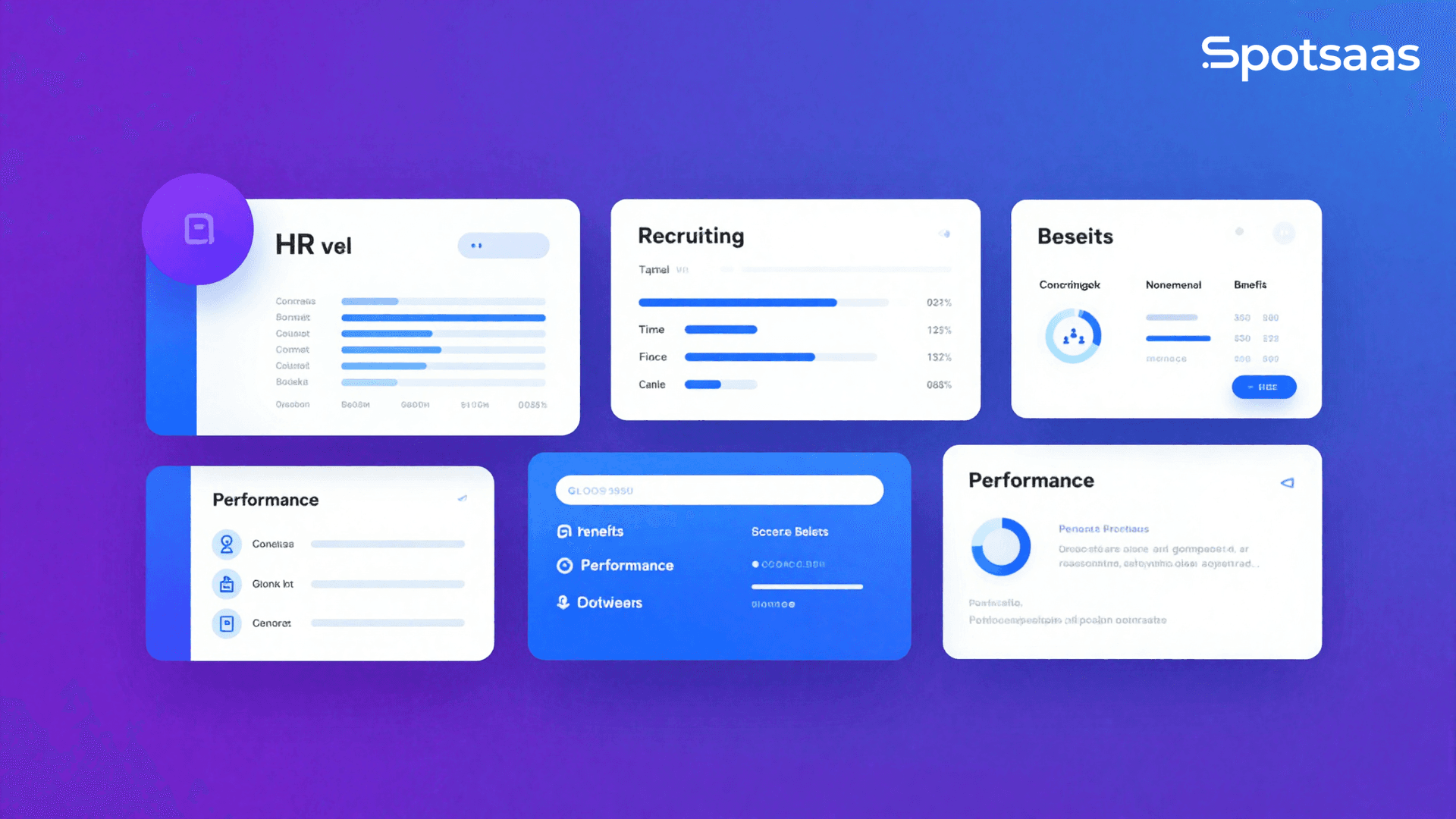
Choosing the right HR management software can transform how your business handles hiring, payroll, compliance, and employee engagement. Whether you run a five-person startup or a 500-person enterprise, the wrong tool wastes hours every week.
This guide covers the 15 best HR software solutions available in 2026, with honest comparisons, pricing data, and expert-backed recommendations to help you decide fast.
What Is HR Management Software and Why Does It Matter in 2026?
Quick Answer: HR management software is a digital platform that automates and centralizes core human resources functions including hiring, onboarding, payroll, benefits, performance reviews, and compliance tracking. The best platforms reduce manual admin work by up to 40%, improve employee experience, and give HR teams real-time workforce data to support smarter business decisions.
Modern HR software has evolved well beyond basic payroll processing. Today’s platforms integrate artificial intelligence to screen candidates, automate onboarding workflows, flag compliance risks, and generate performance insights without manual input.
According to SHRM (2026), organizations using integrated HR platforms report 32% faster time-to-hire and 27% lower employee turnover compared to companies relying on spreadsheets and disconnected tools. The data is clear: investing in the right HR system pays dividends across the entire employee lifecycle.
For small businesses especially, HR software levels the playing field. A ten-person company using a modern HRIS can manage compliance, run payroll, and track performance with the same precision as a Fortune 500 HR department.
Key Statistics: The State of HR Technology in 2026
Understanding the market helps you choose a platform that is built for where HR is heading, not where it has been.
- According to Gartner (2026), 80% of HR leaders plan to increase HR technology investment in 2026, with AI-powered automation as the top priority.
- According to McKinsey (2026), companies using automated HR workflows save an average of 14 hours per HR employee per week on administrative tasks.
- According to SHRM (2026), 69% of employees say a smooth digital onboarding experience increases their likelihood of staying with a company for three or more years.
- According to Deloitte (2026), only 42% of small businesses currently use dedicated HR software, meaning the majority still rely on manual or fragmented processes.
- According to Josh Bersin, founder of the Josh Bersin Academy, “The companies winning the talent war in 2026 are those treating HR software not as an administrative tool but as a strategic business platform.”
How to Choose the Best HR Management Software for Your Business
Not every HR platform fits every business. The right choice depends on your company size, budget, existing tech stack, and the specific HR pain points you need to solve first.
- Define your core needs first. List the top three HR problems costing you the most time or money — payroll errors, slow hiring, compliance gaps, or poor onboarding are common starting points.
- Set a realistic budget. Most HR platforms charge per employee per month. Small businesses should plan for $6–$15 per employee; enterprise tools can run $20–$30 or more.
- Check integration compatibility. Your HR tool must connect cleanly with your existing payroll provider, accounting software, and communication platforms like Slack or Microsoft Teams.
- Evaluate mobile accessibility. In 2026, distributed and hybrid workforces expect full HR functionality on mobile devices. Prioritize platforms with highly rated iOS and Android apps.
- Assess compliance support. If you operate across multiple states or countries, choose a platform with built-in compliance updates for labor law, tax regulations, and benefits requirements.
- Request a live demo. Never purchase based on a feature list alone. Test the actual interface with your HR team before committing.
- Review customer support quality. Check response time guarantees and whether dedicated account managers are included at your pricing tier.
The 15 Best HR Management Software Solutions in 2026
The following platforms represent the strongest options across different business sizes and use cases. Each has been evaluated on feature depth, ease of use, pricing transparency, integration ecosystem, and user satisfaction data as of 2026.
| Platform | Best For | Starting Price | Key Strength | Company Size |
|---|---|---|---|---|
| BambooHR | SMBs | Custom quote | Ease of use, reporting | 10–1,000 |
| Rippling | Tech companies | $8/user/month | HR + IT integration | 10–2,000 |
| Workday HCM | Enterprise | Custom quote | Global HR + finance | 500+ |
| ADP Workforce Now | Payroll-first businesses | Custom quote | Payroll accuracy | 50–10,000+ |
| Gusto | Startups, small biz | $40/month + $6/user | Simple payroll + benefits | 1–100 |
| Paychex Flex | All sizes | Custom quote | Scalability + HR advisory | 1–10,000+ |
| Namely | Mid-market | Custom quote | Culture + compliance | 50–1,000 |
| TriNet HR Platform | Growing SMBs | $10/user/month | All-in-one SMB suite | 10–150 |
| SAP SuccessFactors | Global enterprise | Custom quote | Talent + succession | 1,000+ |
| Oracle HCM Cloud | Large enterprise | Custom quote | AI workforce analytics | 1,000+ |
| Lattice | Performance-driven teams | $11/user/month | Performance + OKRs | 50–1,000 |
| Greenhouse | Recruiting-focused | Custom quote | Applicant tracking | 10–5,000 |
| Personio | European businesses | Custom quote | EU compliance | 10–500 |
| HiBob | Modern mid-market | Custom quote | Analytics + modularity | 50–500 |
| Zoho People | Budget-conscious SMBs | $1.25/user/month | Value + Zoho ecosystem | 1–250 |
Pricing shown is approximate; check vendor websites for current rates.
1. BambooHR
BambooHR remains the gold standard for small and mid-sized businesses in 2026. It covers applicant tracking, onboarding, employee self-service, time tracking, and performance management in a clean, intuitive interface. Its reporting tools are particularly strong for businesses that want data without a dedicated analytics team.
2. Rippling
Rippling is the most technically integrated HR platform available. It unifies HR, IT, and finance operations, letting you onboard an employee and provision their laptop, email, and software access in a single workflow. Ideal for fast-scaling tech companies and businesses with remote-first teams.
3. Workday HCM
Workday is the enterprise benchmark. Its Human Capital Management suite handles global payroll, workforce planning, talent management, and financial reporting in a single platform. Best suited for organizations with 500+ employees that need deep customization and international compliance support.
4. ADP Workforce Now
ADP Workforce Now is the go-to for businesses that prioritize payroll accuracy and compliance above all else. With decades of payroll infrastructure behind it, ADP handles complex multi-state payroll, benefits administration, and tax filing reliably at scale.
5. Gusto
Gusto is the top-rated HR and payroll platform for small businesses and startups. Its interface is genuinely easy to use, automated payroll runs in minutes, and it includes benefits administration, PTO tracking, and compliance alerts. Pricing starts at $40 per month plus $6 per employee.
6. Paychex Flex
Paychex Flex scales from sole proprietors to enterprises, making it one of the most versatile platforms on this list. It covers payroll, HR administration, benefits, and learning management. Its dedicated HR advisor service is a standout feature for businesses without in-house HR expertise.
7. Namely
Namely is designed specifically for mid-sized companies between 50 and 1,000 employees. It combines HRIS, payroll, benefits administration, and performance reviews in a modern interface. Its social newsfeed feature helps maintain company culture in hybrid and remote environments.
8. Zenefits (now TriNet HR Platform)
The TriNet HR Platform, formerly Zenefits, is a strong all-in-one option for growing SMBs. It offers automated compliance management, benefits enrollment, and time tracking alongside a mobile-first employee experience. Pricing is competitive for businesses with 10 to 150 employees.
9. SAP SuccessFactors
SAP SuccessFactors is an enterprise-grade HCM platform used by global organizations managing thousands of employees across multiple countries. Its strengths lie in talent management, succession planning, and learning development. It integrates deeply with SAP’s broader ERP ecosystem.
10. Oracle HCM Cloud
Oracle HCM Cloud delivers AI-driven workforce insights that few platforms can match. Its predictive analytics tools help HR teams identify flight risks, skill gaps, and workforce trends before they become problems. Best for large enterprises already invested in Oracle’s technology stack.
11. Lattice
Lattice is the performance management specialist on this list. While it handles core HR functions, its real strength is in continuous performance reviews, OKR tracking, employee engagement surveys, and career development planning. It is the platform of choice for companies with a strong people-development culture.
12. Greenhouse
Greenhouse is widely considered the best standalone applicant tracking system available. It provides structured hiring workflows, interview scorecards, DEI reporting, and deep integration with every major job board. If recruiting is your primary pain point, Greenhouse is the clear choice.
13. Personio
Personio is built for European SMBs and businesses with European operations. It handles HR, payroll, and recruitment with strong compliance coverage across Germany, the UK, Spain, and other EU markets. Its clean interface and localized compliance support make it the top HR tool for European companies in 2026.
14. HiBob (Bob)
HiBob is one of the fastest-growing HR platforms globally, particularly popular among tech-forward companies with 50 to 500 employees. Its modular design lets businesses activate only the features they need, and its workforce analytics dashboard is among the most intuitive on the market.
15. Zoho People
Zoho People is the best-value HR platform for budget-conscious small businesses. It covers attendance, leave management, performance appraisals, and employee self-service at a fraction of the cost of enterprise platforms. For companies already in the Zoho ecosystem, the integration benefits are significant.
What Features Should the Best HR Software Include?
According to Lars Schmidt, founder of Amplify and a recognized HR technology analyst, “The best HR platforms in 2026 are not feature lists — they are ecosystems that reduce friction at every stage of the employee journey, from first job post to final offboarding.”
When evaluating any HR management software, prioritize platforms that include all of the following core capabilities:
- Core HRIS: Centralized employee database, org chart, document management, and role-based access controls.
- Payroll processing: Automated salary runs, tax calculations, direct deposit, and year-end filings.
- Applicant tracking system (ATS): Job posting, candidate pipeline management, interview scheduling, and offer letter generation.
- Onboarding automation: Digital paperwork, task checklists, welcome portals, and equipment provisioning workflows.
- Time and attendance: Clock-in tools, PTO request management, overtime tracking, and shift scheduling.
- Benefits administration: Open enrollment, plan comparisons, carrier connections, and benefits usage reporting.
- Performance management: Goal setting, review cycles, continuous feedback tools, and development planning.
- Compliance management: Automated labor law updates, audit trails, EEO reporting, and I-9/E-Verify integration.
- Analytics and reporting: Headcount dashboards, turnover analysis, compensation benchmarking, and custom report builders.
- Employee self-service: Mobile app access for pay stubs, benefits, PTO requests, and personal data updates.
HR Software for Small Businesses: What to Look for Specifically
Small businesses have different HR needs than enterprises. According to the National Federation of Independent Business (NFIB) 2026 survey, the top three HR challenges for small businesses are compliance management, payroll accuracy, and recruiting qualified candidates.
For small businesses, the ideal HR software should be affordable at low headcounts, require minimal IT support to set up, and cover payroll plus compliance as a minimum. Platforms like Gusto, BambooHR, and Zoho People consistently rank highest for small business usability and value.
Avoid over-engineered enterprise platforms if you have fewer than 50 employees. The implementation complexity and cost rarely justify the feature depth for smaller teams.
How HR Software Reduces Compliance Risk in 2026
Employment law changes constantly. Minimum wage updates, paid leave requirements, healthcare mandates, and remote work tax regulations have all shifted significantly over the past two years. Managing compliance manually is no longer viable for most businesses.
The best HR platforms deliver compliance protection through three mechanisms: automated policy updates pushed directly into your workflows, built-in audit trails that document every HR decision, and proactive alerts when your current practices fall outside legal requirements.
According to compliance attorney Rachel Sauser, HR practice lead at Littler Mendelson, “Employers who use HR software with embedded compliance engines face significantly fewer Department of Labor investigations and resolve them faster when they occur.” This risk reduction alone can justify the investment for many businesses.
AI-Powered Features Changing HR Software in 2026
Artificial intelligence has moved from a marketing buzzword to a genuine differentiator in HR software. Here is where AI is delivering measurable impact as of 2026:
- Resume screening: AI tools scan thousands of applications in seconds, ranking candidates by fit score against job requirements.
- Predictive attrition: Machine learning models flag employees at risk of leaving based on engagement signals, compensation benchmarks, and tenure patterns.
- Compensation intelligence: Real-time market data helps HR teams price new roles competitively without manual research.
- Sentiment analysis: AI processes employee survey responses to surface themes and risk areas that human readers would miss at scale.
- Chatbot HR support: 24/7 AI assistants answer employee HR questions about benefits, policies, and PTO without HR team involvement.
How to Successfully Implement HR Management Software
- Audit your current HR processes. Document every existing workflow before selecting software so you know exactly what needs to be replaced or improved.
- Get buy-in from HR, finance, and IT. The platforms that fail most often do so because of internal resistance from stakeholders who were not consulted during selection.
- Start with a phased rollout. Launch payroll and core HRIS first, then add recruiting, performance, and advanced analytics in subsequent phases over 60 to 90 days.
- Migrate data carefully. Employee records, historical payroll data, and compliance documents must be reviewed and cleaned before import to avoid errors in the new system.
- Train all user groups separately. HR administrators, managers, and employees each use different parts of the system. Provide role-specific training sessions rather than one general walkthrough.
- Set measurable success metrics. Define what success looks like before go-live — time-to-hire, payroll error rate, onboarding completion scores — and track them from day one.
- Schedule a 90-day review. Evaluate adoption rates, user feedback, and metric performance 90 days after launch and adjust configuration accordingly.
HR Software Pricing: What to Expect in 2026
HR software pricing has become more transparent in recent years, though enterprise platforms still rely heavily on custom quotes. Here is a realistic breakdown of what businesses pay in 2026:
Pricing shown is approximate; check vendor websites for current rates.
Frequently Asked Questions About HR Management Software
What is HR management software?
HR management software is a digital platform that centralizes and automates human resources functions including payroll, hiring, onboarding, performance reviews, compliance, and employee data management. It replaces manual spreadsheets and disconnected tools with a single integrated system that saves time and reduces costly errors across the entire employee lifecycle.
What is the best HR software for small businesses in 2026?
Gusto, BambooHR, and Zoho People are consistently rated as the best HR software for small businesses in 2026. Gusto leads for payroll simplicity and benefits, BambooHR excels at onboarding and reporting, and Zoho People offers the strongest value for budget-constrained teams needing core HRIS functionality without enterprise-level pricing.
What is the difference between HRIS, HCM, and HRMS?
HRIS (Human Resource Information System) covers core employee data and basic HR functions. HRMS (Human Resource Management System) adds payroll and time tracking. HCM (Human Capital Management) is the broadest category, encompassing strategic talent management, workforce planning, and analytics on top of all HRIS and HRMS functionality. Most modern platforms market themselves as HCM.
Can HR software handle payroll automatically?
Yes. Most full-suite HR platforms include automated payroll that runs on a set schedule, calculates taxes, processes direct deposits, and files federal and state tax forms automatically. Platforms like Gusto, ADP, and Paychex are particularly strong for payroll automation, with error rates significantly lower than manual processing methods.
Is HR software suitable for remote and hybrid teams?
Modern HR software is built for distributed workforces. Features like digital onboarding, cloud document storage, mobile self-service apps, virtual performance reviews, and multi-state payroll compliance are standard in leading platforms. Rippling, HiBob, and BambooHR are particularly strong for remote-first and hybrid organizations managing employees across multiple locations.
How long does it take to implement HR software?
Implementation timelines vary significantly by platform and company size. Small businesses using Gusto or Zoho People can be fully operational within one to two weeks. Mid-market platforms like BambooHR or Rippling typically take four to eight weeks. Enterprise implementations of Workday or SAP SuccessFactors often require three to nine months of configuration and data migration work.
What integrations should HR software have?
At minimum, your HR software should integrate with your accounting platform (QuickBooks, Xero, NetSuite), communication tools (Slack, Microsoft Teams), and any existing ATS or payroll providers. Leading platforms like Rippling and BambooHR offer 500+ native integrations. Always verify specific integrations before purchasing, especially for industry-specific tools your business relies on daily.
Does HR software help with compliance?
Yes. Quality HR software significantly reduces compliance risk by automatically updating labor law requirements, generating audit-ready documentation, flagging policy violations in real time, and managing required government filings. Platforms with strong compliance tools include ADP Workforce Now, Paychex Flex, and Rippling, which cover federal, state, and in some cases international regulatory requirements.
What is the best enterprise HR software in 2026?
Workday HCM, SAP SuccessFactors, and Oracle HCM Cloud are the three leading enterprise HR platforms in 2026. Workday leads in usability and financial integration, SAP SuccessFactors excels in talent management and learning, and Oracle HCM Cloud is strongest for AI-driven workforce analytics. The right choice depends on your existing technology infrastructure and global compliance requirements.
Can small businesses use enterprise HR software?
Technically yes, but it is rarely advisable. Enterprise HR platforms like Workday and SAP require significant implementation investment, IT resources, and ongoing administration that most small businesses cannot justify. Small businesses with under 100 employees will get better ROI from purpose-built platforms like Gusto, BambooHR, or Zoho People that are designed for their scale and budget.
How does HR software improve employee experience?
HR software improves employee experience by replacing paper-based and email-heavy processes with fast, mobile-friendly self-service. Employees can view pay stubs, request time off, enroll in benefits, complete onboarding, and access company policies from any device at any time. Platforms with strong employee experience ratings include HiBob, Lattice, and BambooHR, which consistently score highest in employee satisfaction surveys.
Final Verdict: Which HR Management Software Should You Choose?
The best HR management software for your business depends entirely on your size, budget, and most urgent HR challenges. There is no single right answer — but there is always a best fit.
If you are a small business prioritizing payroll simplicity, start with Gusto. If you are a mid-sized company needing full HRIS plus great reporting, BambooHR is your benchmark. If you are scaling fast with a tech-forward team, Rippling’s HR and IT integration is unmatched. For enterprises with global workforces, Workday and SAP SuccessFactors remain the industry standard in 2026.
The key is to stop managing HR manually. According to McKinsey, businesses that automate core HR workflows recover their software investment within an average of seven months through time savings and reduced compliance penalties alone.
Ready to find the perfect HR software for your business? Explore detailed reviews, feature comparisons, verified user ratings, and pricing breakdowns for all 15 platforms and hundreds more on SpotSaaS. Compare options side by side and make a confident, data-backed decision for your team today.
Related Articles

HR software
BambooHR Pricing 2026: Plans, Costs, and Is It Worth It?
Continue reading →
HR software
What Is Employer of Record (EOR)? A Complete Guide for 2026
Continue reading →
HR software
Employer of Record Pricing Guide 2026: What EOR Services Actually Cost
Continue reading →
HR software
Best Performance Management Software in 2026: Reviewed for HR Teams
Continue reading →