
WhenToWork vs Schedulefly Comparison

WhenToWork
Starting at Contact for pricing
- Free Trial
- Large Enterprises
- Medium Business
WhenToWork is a scheduling and tracking tool for small businesses. It also helps large companies with overtime, benefits, social club management and more. Employee scheduling software from WhenToWork is used by medium si…

Schedulefly
Starting at $30 /Month
- Free Trial
- Freelancers / Consultants
- Medium Business
Schedulefly is an easy-to-use staff scheduling platform designed specifically for restaurants and hospitality businesses that want a hassle-free way to manage their teams. Built for restaurant owners, franchise operators…
WhenToWork leads on user satisfaction with a 4.4-star rating across 284 reviews.
SpotSaaS Analysis
WhenToWorkSchedulefly
The core difference between WhenToWork and Schedulefly lies in their target industries and specific functionalities, with WhenToWork focusing on broader sectors like healthcare and education, while Schedulefly is tailored specifically for the restaurant and hospitality industries. Ideal buyers for WhenToWork are medium to large enterprises needing comprehensive scheduling solutions, while Schedulefly is perfect for smaller hospitality teams looking for an intuitive scheduling tool.
- Best for medium to large enterprises - Suitable for various industries including retail and healthcare - Offers color-coded shifts for easy management - Provides automated reports and real-time notifications - Ideal for organizations with 10 to 500 employees - Targeted at shift managers and HR coordinators
- Designed specifically for the restaurant and hospitality sectors - Ideal for smaller teams with 10 to 200 employees - Focuses on improving team communication and accountability - Offers a simple and intuitive user interface - Priced at $30, making it accessible for small businesses - Targets general managers and restaurant owners
WhenToWork vs Schedulefly — at a glance
| Feature | WhenToWork | Schedulefly |
|---|---|---|
| Rating | 4.4 / 5 | 4.1 / 5 |
| Reviews | 284 | 28 |
| Starting price | Contact for pricing | $30 /Month |
| Free trial | Yes | Yes |
| Free version | No | No |
| Best for | Large Enterprises, Medium Business, Small Business | Freelancers / Consultants, Medium Business, Small Business |
| Category | Employee Scheduling Software | Employee Scheduling Software |
| Platforms | SaaS/Web/Cloud, Mobile - Android, Mobile - iOS | SaaS/Web/Cloud |
| API | — | — |
| Support modes | 24/7 (Live rep), Business Hours, Online | Online |
| Certifications | — | — |
| Data residency | US | US |
Key differences between WhenToWork and Schedulefly
- Pricing: Schedulefly starts at $30 /Month. WhenToWork pricing is not publicly listed.
- Target audience: WhenToWork is built for Large Enterprises and Medium Business, while Schedulefly targets Freelancers / Consultants and Medium Business.
- User satisfaction: WhenToWork scores higher with a 4.4-star average.
- Deployment: WhenToWork supports SaaS/Web/Cloud, Mobile - Android, Mobile - iOS; Schedulefly supports SaaS/Web/Cloud.
WhenToWork vs Schedulefly — find the better fit before you commit.
Which tool fits your team best
Which is actually cheaper for your team size
Where each product wins, per real buyers
Most Employee Scheduling Software tools look identical on paper. This comparison cuts to the differences that matter — pricing structure, team fit, and what real buyers found after signing up.
Biggest differences
Features
Pricing
Buying details
Security
Buyer feedback
Integrations
Product tour
Other options
Talk to an expert Talk to an expert | Talk to an expert Talk to an expert |
Biggest differences
Start here before you go deeper into features.
Best for straightforward employee scheduling with efficient shift management.
- You need a simple, user-friendly scheduling tool with color-coded shifts.
- Your organization values automated reports and real-time schedule notifications.
- You want employee self-service for shift swaps and time-off requests.
- Your company requires extensive customization or advanced third-party integrations.
- You need a modern, visually updated user interface with advanced editing features.
Best for simple, intuitive scheduling in restaurants and hospitality teams.
- You manage a restaurant or hospitality business with 10-200 employees.
- You want an easy-to-use platform that improves team communication and accountability.
- You need employees to self-manage availability and shift swaps without complexity.
- Your business requires extensive, highly customizable scheduling features.
- You need a robust mobile app for real-time scheduling updates on the go.
WhenToWork: Best for straightforward employee scheduling with efficient shift management. Schedulefly: Best for simple, intuitive scheduling in restaurants and hospitality teams.
Description | WhenToWork is a scheduling and tracking tool for small businesses. It also helps large companies with overtime, benefits, social club management and more. Employee scheduling software from ... Read More about WhenToWork | Schedulefly is an easy-to-use staff scheduling platform designed specifically for restaurants and hospitality businesses that want a hassle-free way to manage their teams. Built for ... Read More about Schedulefly |
|---|---|---|
Entry Level Pricing |
|
|
Free Trial Availability | ||
Spotsaas ScoreWhat's this? ↗ | 8.6/10 | 8.8/10 |
User RatingsBased on verified Spotsaas reviews | ||
Best Company Size | 10-500 employeesMedium to Large Enterprises | 10-50 employees51-200 employees |
Get pricing help | Get pricing help |
Where each option fits best
See where each product is strongest, which teams it fits, and what causes buyers to keep looking — before you commit.
Based on buyer reviews and verified product data collected by Spotsaas.
Key strengths
- Streamlined Scheduling: WhenToWork simplifies the scheduling process, allowing managers and administrators to create and modify shift schedules effortlessly. This means less time spent on administrative tasks and more focus on team productivity.
- Enhanced Communication: With WhenToWork, I can easily communicate schedule changes or updates to the entire team in real time, ensuring everyone stays informed. This fosters a culture of transparency and reduces miscommunication.
- Employee Self-Service: Empower your employees with self-service options. They can view their schedules, request time off, or swap shifts seamlessly, which enhances job satisfaction and reduces the burden on management.
- Streamlined Scheduling: With Schedulefly, we simplify the scheduling process, allowing managers to effortlessly create and manage employee shifts in just a few clicks. This means less time spent on administrative tasks and more focus on running your business.
- Enhanced Communication: Our platform fosters clear communication among team members. Employees receive instant notifications about schedule changes and can easily swap shifts, ensuring everyone stays informed and engaged.
- Employee Empowerment: Schedulefly gives staff members the autonomy to manage their own availability. This not only boosts morale but also leads to higher job satisfaction and retention rates, as employees feel valued and trusted.
Best fit
- 10 to 500 employees
- Retail, Hospitality, Healthcare, and Education
- Shift Managers, Store Managers, HR Coordinators, and Operations Supervisors
- 10 to 200 employees
- the hospitality industry, restaurants, bars, and catering services
- General Managers, Restaurant Owners, Shift Managers, and HR Coordinators
Reasons buyers look elsewhere
- Users may seek alternatives to WhenToWork if they require more robust features for complex scheduling needs, such as advanced reporting, automated shift reminders, or integration with payroll systems to streamline their operations.
- Some organizations might find WhenToWork's user interface less intuitive, prompting them to explore alternatives that offer a more user-friendly design and enhanced mobile accessibility for both managers and employees.
- Businesses with specific compliance requirements may look for alternatives that provide tailored solutions for labor laws and scheduling regulations, ensuring they remain compliant while optimizing workforce management.
- Users may seek alternatives to Schedulefly if they require more advanced scheduling features, such as automated shift swapping or enhanced reporting tools that better fit their operational needs.
- Some businesses might find Schedulefly's user interface less intuitive, prompting them to look for solutions that offer a more user-friendly experience for staff and management alike.
- Cost considerations could lead users to explore alternatives, especially if they find similar scheduling software options at a lower price point or with more flexible payment plans.
Software Demo
Demo |
|---|
Need a second opinion?
Get shortlist help from a software advisor
Share your priorities, budget, and team needs, and we’ll help you narrow the options and understand the tradeoffs before you talk to vendors.
How do WhenToWork and Schedulefly Compare on Features?
Total Features | 9 Features | 10 Features |
|---|---|---|
Unique Features | No unique features | No unique features |
Get Quote | Get Quote |
Compare WhenToWork and Schedulefly on pricing
Review starting price, plan structure, and free-trial access side by side so you can see which option fits your budget and buying process.
Pricing Option | ||
|---|---|---|
Starting From |
|
|
Pricing Plans |
|
|
Pricing Page |  |  |
Other Details
Organization Types supported |
|
|
|---|---|---|
Platforms Supported |
|
|
Modes of support |
|
|
API Support |
|
|
Get help choosing | Get help choosing |
Security & Compliance
Certifications, data handling, and security controls for IT and compliance evaluators.
HIPAA | — | ✗ No |
|---|---|---|
Data Residency | 🇺🇸 US | 🇺🇸 US |
WhenToWork User Reviews & Rating Comparison
User Ratings | ||
|---|---|---|
Rating Distribution | ||
Spotsaas Editor’s POV generated by AI | Buyer sentiment Overall positive sentiment highlights ease of use and scheduling efficiency, tempered by concerns over outdated interface and limited customization. What buyers like
Common complaints
| Buyer sentiment Users generally appreciate Schedulefly for its ease of use and improved team communication but note limitations in mobile access and scheduling flexibility. What buyers like
Common complaints
|
Pros and Cons |
|
|
Positive Reviews | No reviews available for the product | No reviews available for the product |
List of Customers
Customers |  The Magic house  Extravagante  Laniar |  Coronato Pizza  Maxie's Super Club  Taco Boy |
|---|
Media and Screenshots
Screenshots |  1 Screenshots | 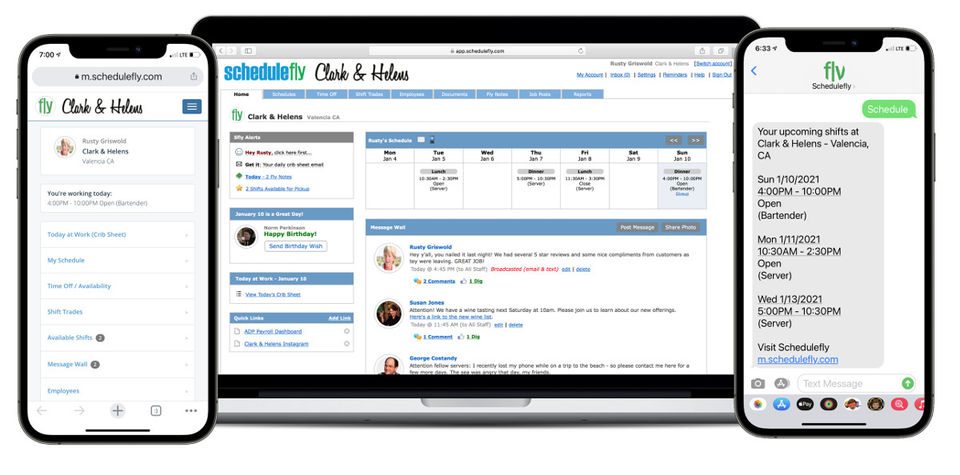 2 Screenshots |
|---|---|---|
Videos |  3 Videos |  1 Videos |
Top Alternatives to WhenToWork and Schedulefly in 2026
Alternatives |
|---|


Add another option to compare side by side
Search by product name to compare pricing, fit, and buyer feedback in one view.Compare similar software options


Related Blogs and Articles for Employee Scheduling Software



Disclaimer: This research has been collated from a variety of authoritative sources. We welcome your feedback at [email protected].
Frequently asked questions
- Which is better, WhenToWork or Schedulefly?
- WhenToWork edges out the other on user ratings (4.4 vs 4.1). That said, the best pick depends on your use case — use the comparison tables above to evaluate each dimension.
- Do WhenToWork and Schedulefly offer a free trial?
- Yes, both WhenToWork and Schedulefly offer a free trial.
- What is the starting price of WhenToWork vs Schedulefly?
- WhenToWork starts at Contact for pricing. Schedulefly starts at $30 /Month.
- What are the top alternatives to WhenToWork?
- Top alternatives to WhenToWork include 7shifts, Findmyshift, Schedule it, TrackSmart Scheduling, ScheduleBase.
- What are the top alternatives to Schedulefly?
- Top alternatives to Schedulefly include Findmyshift, Planday, TrackSmart Scheduling, ScheduleBase, eSchedule.