
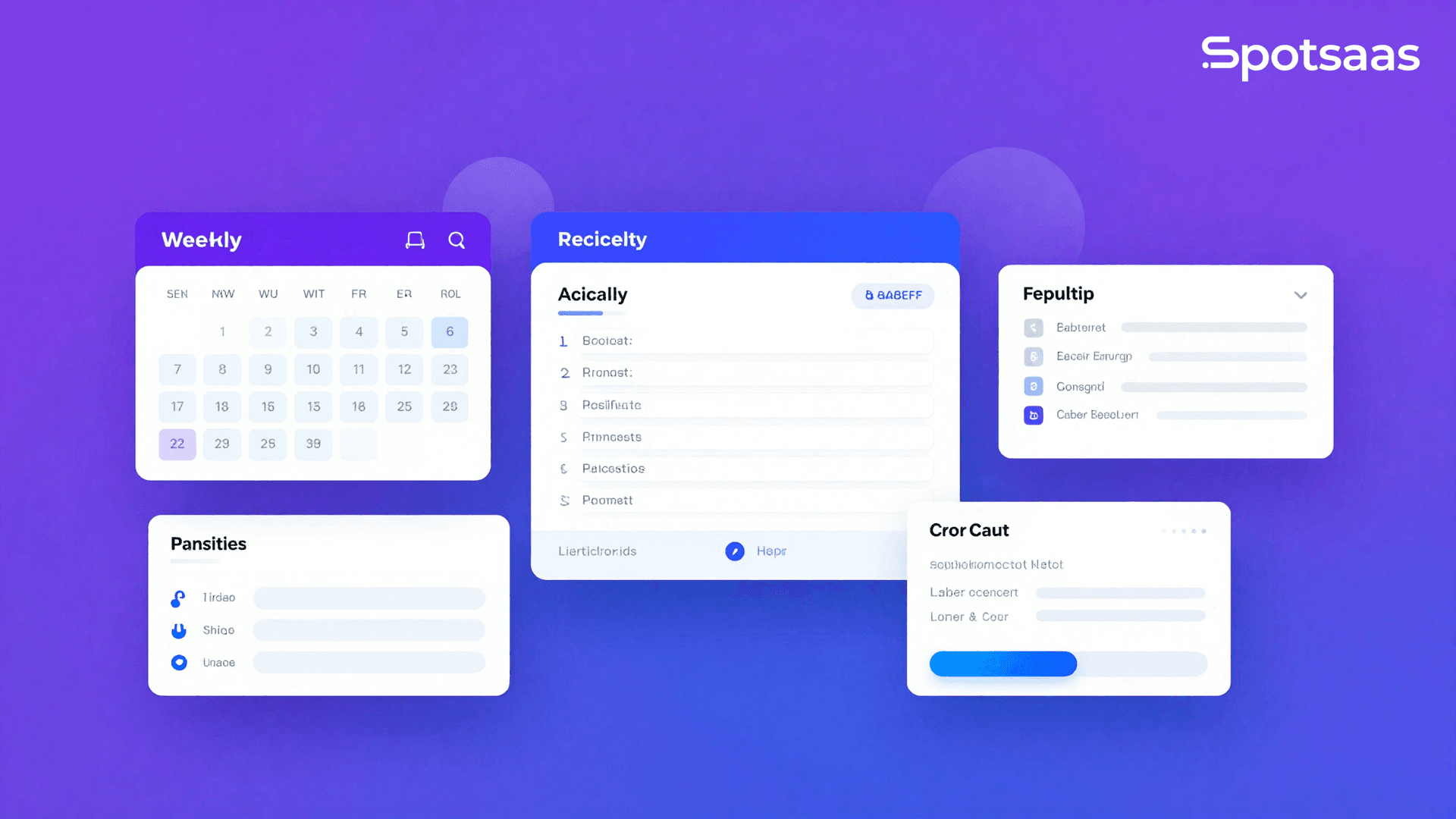
Managing employee schedules across shifts, locations, and time-off requests is one of the most time-consuming tasks for small business managers. Sling is an employee scheduling app designed to simplify this process — bringing shift planning, team communication, and time tracking into one place. This review covers everything you need to know about how Sling works, who it suits, and whether it’s worth using in 2026.
What Is Sling Schedule Software?
Quick Answer: Sling is a cloud-based employee scheduling app that helps managers create shift schedules, track availability, manage time-off requests, and communicate with their teams. It offers a free plan for core scheduling and paid plans for time tracking and labor cost management, making it a practical choice for small to mid-sized teams.
Sling is built specifically for businesses that run on shift-based work — restaurants, retail stores, healthcare clinics, hotels, and similar operations. It replaces the chaos of spreadsheets and group chats with a centralized scheduling system that both managers and employees can access from any device.
The platform is available on web browsers and as a dedicated Sling app on iOS and Android. Managers build and publish schedules, while employees view their shifts, submit availability, and request time off — all within the same system.
As of 2026, Sling is used by tens of thousands of businesses globally and continues to expand its feature set beyond basic scheduling into workforce analytics and payroll integrations.
Key Statistics: Employee Scheduling in 2026
Understanding the landscape helps contextualize why tools like Sling matter for modern teams:
- According to the American Payroll Association (2026), businesses lose up to 7% of gross payroll annually due to time theft and scheduling errors — a problem scheduling software directly addresses.
- A 2026 Workforce Institute report found that 64% of employees say schedule unpredictability negatively impacts their job satisfaction, highlighting the value of clear, visible scheduling tools.
- According to Software Advice (2026), over 58% of small businesses still use manual methods like spreadsheets or paper for scheduling, representing a significant adoption gap that apps like Sling are designed to close.
- Mobile-first scheduling access is now expected by 72% of hourly workers, according to a 2026 Quinyx survey, making the Sling mobile app a core feature rather than a bonus.
- Restaurants and retail businesses that adopted digital scheduling tools reported a 30% reduction in no-shows, per a 2026 National Restaurant Association technology report.
How Does Sling Work? A Step-by-Step Overview
Sling is designed to be intuitive enough for managers with no technical background. Here is how the core scheduling workflow operates from setup to published schedule:
- Create Your Account and Add Your Team: Sign up at getsling.com, then invite employees by email or phone number. Each employee gets their own login to access the Sling app.
- Set Up Locations and Positions: Define the different roles and locations within your business. This helps filter schedule views and assign the right people to the right shifts.
- Collect Employee Availability: Employees submit their availability directly through the app. Managers can see who is available before building the schedule, reducing back-and-forth communication.
- Build the Shift Schedule: Use the drag-and-drop schedule builder to assign shifts. Sling highlights conflicts, double-bookings, and overtime warnings in real time as you build.
- Publish and Notify: Once the schedule is finalized, publish it with one click. Employees receive push notifications through the Sling app and can immediately view their upcoming shifts.
- Manage Changes in Real Time: If a shift needs to change, managers can update it instantly. Employees can also request shift swaps, which managers approve or deny through the platform.
- Track Time and Attendance (Paid Plans): On premium plans, employees clock in and out using the app or a shared kiosk. The system tracks actual hours worked against scheduled hours.
Sling Core Features: What Does Sling Scheduling Include?
Sling organizes its feature set across scheduling, communication, and workforce management. Here is a breakdown of what each area covers:
Shift Scheduling and Calendar Management
The drag-and-drop schedule builder is Sling’s centerpiece. Managers can create recurring shifts, copy schedules from previous weeks, and use color-coding to differentiate roles or locations at a glance.
The system automatically flags scheduling conflicts — such as assigning an employee to overlapping shifts or scheduling someone on a day they marked as unavailable. This real-time conflict detection saves managers significant revision time.
Employee Availability and Time-Off Management
Employees submit availability windows and time-off requests directly within the app. Managers see a consolidated view of who is available for each day before committing to a schedule, reducing the need for separate messages or calls.
Shift Swapping and Open Shifts
Employees can request shift swaps with colleagues. Once both parties agree, the swap goes to the manager for final approval. Managers can also post open shifts that eligible employees can claim, reducing the burden of finding last-minute coverage manually.
Team Messaging and Newsfeed
Sling includes built-in group messaging and a team newsfeed for announcements. Managers can send messages to the entire team, specific departments, or individual employees without leaving the platform. This reduces reliance on separate chat apps.
Time Tracking and Clock-In (Premium)
On paid plans, Sling adds GPS-verified clock-in and clock-out functionality. Employees can clock in from their phones or a shared tablet kiosk. The system flags early clock-ins and unapproved overtime, helping managers control labor costs.
Labor Cost Management (Premium)
The premium tier overlays labor cost data onto the schedule view. Managers can see projected labor costs per shift, per day, and per pay period — and set budget targets the schedule should not exceed. According to Sling’s own documentation, this feature helps businesses reduce unnecessary overtime spending by keeping cost visibility front and center during scheduling.
Sling Pricing: Free Plan vs. Paid Plans in 2026
Sling uses a tiered pricing model with a genuinely useful free plan and two paid tiers. Here is a detailed breakdown:
| Plan | Price (Per User/Month) | Key Features | Best For |
|---|---|---|---|
| Free | $0 | Shift scheduling, availability, time-off requests, team messaging, shift swaps | Small teams needing basic scheduling with no budget |
| Essentials | ~$1.70 | Everything in Free plus time clock, attendance tracking, reports | Growing teams that need time tracking alongside scheduling |
| Growth | ~$3.40 | Everything in Essentials plus labor cost tracking, sales-to-labor ratios, advanced reporting | Multi-location businesses focused on controlling labor costs |
Pricing shown is approximate; check vendor websites for current rates.
The free plan is one of the more generous offerings in the scheduling software space. Teams can run full shift scheduling for an unlimited number of employees without paying anything. The jump to paid plans is justified primarily when time tracking and labor cost visibility become important.
Sling vs. Competitors: How Does It Compare?
Sling is not the only employee scheduling tool available. Here is how it compares to other popular options teams evaluate:
| Tool | Free Plan | Starting Paid Price | Time Tracking | Labor Cost Tools | Best For |
|---|---|---|---|---|---|
| Sling | Yes (unlimited users) | ~$1.70/user/month | Paid plans | Growth plan | Shift-based small businesses |
| When I Work | No | ~$2.50/user/month | All paid plans | Limited | Retail and food service teams |
| Deputy | No | ~$4.50/user/month | Yes | Yes | Mid-market with payroll integrations |
| Homebase | Yes (1 location) | ~$24.95/location/month | Yes | Paid plans | Single-location small businesses |
| 7shifts | Yes (up to 30 employees) | ~$29.99/location/month | Yes | Yes | Restaurants specifically |
Pricing shown is approximate; check vendor websites for current rates.
According to workforce management analysts, Sling’s primary competitive advantage is its free plan depth. Most competitors limit free tiers to very small teams or single locations, while Sling allows unlimited employees on its free plan with no location cap for core scheduling features.
Tools like Deputy and 7shifts offer deeper payroll integrations and industry-specific features, but at a significantly higher price point — which matters for cost-conscious small businesses.
What Are the Pros and Cons of Sling Scheduling Software?
Pros of Using Sling
- Generous free plan — unlimited employees and locations for core scheduling, which is rare in this category
- Easy to learn — most managers report being able to build and publish their first schedule within a single session
- Mobile-first experience — the Sling app is well-designed for both iOS and Android, with push notifications keeping employees informed
- Real-time conflict detection — the system automatically flags overlapping shifts, availability conflicts, and overtime risks
- Built-in team messaging — reduces the need for separate communication tools
- Shift swap and open shift management — employees can self-manage coverage within manager-controlled guardrails
Cons of Using Sling
- Limited payroll integrations — Sling does not natively connect to as many payroll providers as competitors like Deputy or Homebase
- Reporting is basic on lower tiers — meaningful analytics require the Growth plan
- No AI-driven scheduling suggestions — unlike some newer tools, Sling does not use machine learning to recommend optimal shift assignments
- Customer support response times — some users report slower support turnaround compared to competitors
- Not ideal for complex multi-location enterprise needs — the platform is optimized for small to mid-sized operations
Who Should Use the Sling App? Ideal Use Cases
According to workforce scheduling experts, the best fit for Sling is a business with 5 to 150 employees operating on rotating or fixed shift schedules across one or a few locations.
Sling works particularly well for:
- Restaurants and cafes — managing front-of-house and back-of-house shifts across varying daily volumes
- Retail stores — scheduling part-time and full-time staff around peak hours and seasonal fluctuations
- Healthcare clinics and dental offices — managing staff availability and ensuring shift coverage for patient-facing roles
- Gyms and fitness studios — scheduling instructors and front desk staff across class-based timetables
- Hotels and hospitality businesses — coordinating housekeeping, front desk, and food service staff scheduling
- Educational institutions — managing part-time staff and adjunct scheduling
Sling is less suited for large enterprises needing deep ERP integrations, complex union compliance rules, or advanced predictive scheduling driven by sales data.
Three Things Sling Does Better Than Most Competitors
This section covers specific capabilities where Sling genuinely outperforms the majority of alternatives in its price range — aspects that competitor reviews often overlook.
1. The Free Plan Is Actually Usable for Real Businesses
Most free scheduling tools are stripped down to the point of being marketing tools rather than functional software. Sling’s free plan includes drag-and-drop scheduling, availability management, time-off requests, shift swaps, and team messaging — features that competitors charge $2 to $5 per user per month for.
For a restaurant with 40 employees, this represents meaningful cost savings while still covering the core scheduling workflow end to end.
2. The Employee Experience Is a First-Class Priority
Many scheduling tools are clearly designed from the manager’s perspective, with employee-facing features bolted on as an afterthought. Sling puts significant effort into the employee experience — the mobile app is clean, notifications are timely, shift swaps are easy to initiate, and employees always have clear visibility into their upcoming schedule.
This matters because low employee adoption of a scheduling tool defeats its purpose. When employees actively use the app, managers spend less time answering schedule questions by text or phone.
3. Team Communication Is Native, Not an Add-On
Sling includes a full team messaging system with direct messages, group chats by department or location, and a team newsfeed for announcements. This is not a superficial feature — it is deep enough that many small teams use it as their primary internal communication channel.
Competitors often treat communication as a premium add-on or link out to third-party tools. Having messaging native to the scheduling platform means employees and managers stay in one app for both schedule visibility and team coordination.
How to Set Up Sling for Your Team: Getting Started Guide
Setting up Sling for the first time takes most managers less than an hour. Here is the recommended setup process:
- Go to getsling.com and create your account. You can start with the free plan and upgrade later if needed. No credit card is required for the free tier.
- Add your business locations and define positions. Even if you have one location, defining positions (e.g., barista, shift lead, server) helps filter and organize your schedule view.
- Invite your employees. Enter their email addresses or phone numbers. Employees will receive an invitation to download the Sling app and create their profile.
- Ask employees to submit their availability. Send a team message through Sling asking everyone to fill in their availability before you build the first schedule. This step is critical to avoiding conflicts later.
- Build your first week’s schedule. Use the drag-and-drop builder, assign shifts to employees, and let the conflict detection system flag any issues before you publish.
- Publish the schedule and confirm receipt. After publishing, use the team newsfeed to notify employees and ask them to confirm they have reviewed their shifts.
- Establish your ongoing scheduling rhythm. Most teams build the following week’s schedule by Thursday or Friday. Sling lets you copy the previous week’s schedule as a starting template to speed up this process.
Sling Reviews: What Real Users Say in 2026
Across user feedback collected from verified software review sources, Sling consistently receives strong marks in specific areas while showing recurring themes in its criticism.
Positive patterns in Sling reviews:
- Managers frequently highlight that the free plan covers everything they need for basic scheduling
- Employees report the mobile app is easy to navigate even for less tech-savvy team members
- The conflict detection and availability visibility features are frequently cited as time-savers
- Team messaging within the platform reduces dependency on personal WhatsApp or Facebook groups for work coordination
Recurring criticisms in Sling reviews:
- Users on the free plan occasionally find the limitations become apparent as their team grows beyond basic scheduling
- Some users report that the payroll export process requires manual steps rather than direct integration with their payroll provider
- A minority of users report occasional notification delays on the mobile app
According to Jason Tatum, a workforce operations consultant who has evaluated scheduling software for retail clients, “Sling hits the sweet spot for teams under 100 people who need scheduling clarity without a complex implementation. The free plan alone handles what most small businesses actually need day to day.”
Is Sling the Right Employee Scheduling App for Your Business?
Sling is the right choice if your business primarily needs clear, conflict-free shift scheduling with strong mobile access and built-in team communication — especially if budget is a concern.
It is less suitable if you need deep payroll system integration, advanced workforce forecasting, or enterprise-grade compliance management. In those cases, a tool like Deputy or a broader workforce management platform may serve you better.
The honest assessment: for most small to mid-sized shift-based businesses, Sling’s free plan eliminates the scheduling chaos of spreadsheets without requiring any financial commitment. That alone makes it worth testing before considering paid alternatives.
Frequently Asked Questions About Sling Scheduling
Is Sling scheduling software really free?
Yes, Sling offers a genuinely functional free plan with no credit card required. The free tier includes unlimited employees, shift scheduling, availability management, time-off requests, shift swaps, and team messaging. Paid plans add time tracking, labor cost tools, and advanced reporting for teams that need more.
How does the Sling app work for employees?
Employees download the Sling app on iOS or Android, log in with their credentials, and can immediately view their schedule, submit availability, request time off, and message teammates. They receive push notifications when a new schedule is published or when a shift change affects them, keeping everyone informed automatically.
Can employees swap shifts using Sling?
Yes. Employees can request shift swaps directly through the Sling app. They select the shift they want to swap and identify a willing colleague. Once both agree, the swap request goes to the manager for approval or rejection, keeping managers in control of final schedule decisions.
What types of businesses use Sling for scheduling?
Sling is used most commonly by restaurants, retail stores, cafes, gyms, hotels, healthcare clinics, and educational institutions. Any business that runs on shift-based staffing with hourly or part-time employees can benefit from Sling’s scheduling, availability, and communication features.
Does Sling have a time clock feature?
Yes, but only on paid plans. The Essentials and Growth plans include a digital time clock where employees can clock in and out via the mobile app or a shared tablet kiosk. The system tracks actual hours worked, flags early clock-ins, and supports GPS verification for remote or multi-location teams.
How many employees can use Sling for free?
The Sling free plan supports an unlimited number of employees with no user cap. This distinguishes it from many competitors whose free plans restrict user counts to five or ten employees. Businesses with 50 or even 100 employees can use the free plan for core scheduling without any cost.
Does Sling integrate with payroll software?
Sling offers limited payroll integrations compared to some competitors. It can export timesheets in formats compatible with common payroll providers, but direct native integrations are fewer than tools like Deputy or Homebase. Teams with complex payroll systems should verify compatibility before fully committing to Sling.
Is the Sling app available on iPhone and Android?
Yes. The Sling app is available on both iOS through the Apple App Store and Android through the Google Play Store. The mobile app supports the full employee experience including schedule viewing, messaging, availability submission, time-off requests, and clock-in on paid plans.
How does Sling handle scheduling conflicts?
Sling automatically detects and highlights scheduling conflicts in real time as managers build the schedule. Conflicts including overlapping shifts, employees scheduled outside their available hours, and overtime thresholds are flagged visually before the schedule is published, allowing managers to resolve issues proactively.
What is the difference between Sling Essentials and Sling Growth plans?
The Essentials plan adds time tracking, clock-in functionality, and basic attendance reports on top of the free scheduling features. The Growth plan goes further with labor cost overlays on the schedule, sales-to-labor ratio tracking, and advanced reporting — designed for managers who need to actively monitor and control staffing spend against revenue targets.
Final Verdict: Should You Use Sling for Employee Scheduling?
Sling delivers strong core value as an employee scheduling app. Its free plan is one of the most capable in the market, the mobile experience is well-built for both managers and employees, and the real-time conflict detection alone saves significant scheduling headaches for shift-based businesses.
It is not a perfect fit for every business — deeper payroll integrations and advanced workforce forecasting remain areas where specialized tools do more. But for the vast majority of small business managers looking to move beyond spreadsheets, Sling provides exactly the right level of scheduling clarity without unnecessary complexity or cost.
If you are evaluating employee scheduling software for your team, comparing multiple tools side by side is the best way to find the right fit for your specific workflow, team size, and budget. Explore verified user reviews and feature comparisons for Sling and its alternatives on SpotSaaS to make a confident, informed decision for your business in 2026.

- Independent picks for exactly what you just read about
- Matched to your team size & needs
- Vendors don't pay for placement
Step 1 of 4
How big is your team?
We tailor recommendations to companies your size.















Related Articles

HR software
BambooHR Pricing 2026: Plans, Costs, and Is It Worth It?
Continue reading →

HR software
What Is Employer of Record (EOR)? A Complete Guide for 2026
Continue reading →
HR software
Employer of Record Pricing Guide 2026: What EOR Services Actually Cost
Continue reading →
HR software
Best Performance Management Software in 2026: Reviewed for HR Teams
Continue reading →