
Payhawk vs Tide Comparison

Payhawk
Starting at Contact for pricing
- Individuals
- Freelancers / Consultants
Payhawk is a web-based expense management and reimbursement application designed to help managers better track and control company expenses incurred by their employees. Payhawk synchs with online bank accounts, keeping u…

Tide
Starting at $16 /month
- Free Version
- Large Enterprises
- Small Business
Tide is a business banking and financial management platform for sole traders, consultants, contractors, and limited companies. It offers invoicing directly from the app, Expense Cards for tracking spending, and tiered m…
Payhawk leads on user satisfaction with a 4.8-star rating across 34 reviews.
Payhawk vs Tide — at a glance
| Feature | Payhawk | Tide |
|---|---|---|
| Rating | 4.8 / 5 | — |
| Reviews | 34 | — |
| Starting price | Contact for pricing | $16 /month |
| Free trial | No | No |
| Free version | No | Yes |
| Best for | Individuals, Freelancers / Consultants, Large Enterprises | Large Enterprises, Small Business, Medium Business |
| Category | Expense Management Software | Invoice Management Software |
| Integrations | 10+ apps | 7+ apps |
| Platforms | SaaS/Web/Cloud, Mobile - Android, Mobile - iOS | SaaS/Web/Cloud, Mobile - Android, Mobile - iOS |
| API | — | — |
| Support modes | 24/7 (Live rep), Business Hours, Online | Online |
Key differences between Payhawk and Tide
- Pricing: Tide starts at $16 /month. Payhawk pricing is not publicly listed.
- Target audience: Payhawk is built for Individuals and Freelancers / Consultants, while Tide targets Large Enterprises and Small Business.
- Deployment: Payhawk supports SaaS/Web/Cloud, Mobile - Android, Mobile - iOS; Tide supports SaaS/Web/Cloud, Mobile - Android, Mobile - iOS.
Payhawk vs Tide — find the better fit before you commit.
Which tool fits your team best
Which is actually cheaper for your team size
Where each product wins, per real buyers
Most Expense Management Software tools look identical on paper. This comparison cuts to the differences that matter — pricing structure, team fit, and what real buyers found after signing up.
Biggest differences
Features
Pricing
Buying details
Security
Buyer feedback
Integrations
Product tour
Other options
Free PDF comparison
Download this Payhawk vs Tide comparison
Get the full side-by-side as a PDF — these picks plus the top Expense Management Software tools, with verified ratings, pricing and features.
- Side-by-side on pricing, features & ratings
- Plus the category top 10, scored & ranked
- Emailed to you — no on-screen download
No file downloads on screen — we email it to you. One-click unsubscribe anytime.
Payhawk vs Tide: Biggest differences
Start here before you go deeper into features.
Best for medium to large companies needing simple, automated expense management.
- You want automated approval workflows to maintain compliance.
- Your team values an intuitive interface with easy integration and setup.
- You need real-time financial insights and instant access to spending data.
- Your company requires highly customizable workflows and expense forms.
- You operate globally and need advanced international finance features and security.
Cost-effective digital banking for startups and small business financial management.
- You are a startup, freelancer, or small business owner needing zero monthly fees.
- You want integration with popular accounting software like Xero or QuickBooks.
- You need quick account setup with minimal paperwork and real-time expense tracking.
- Your business relies heavily on cash transactions requiring secure cash handling.
- You require advanced multi-user access and priority support included in free plans.
Payhawk: Best for medium to large companies needing simple, automated expense management. Tide: Cost-effective digital banking for startups and small business financial management.
Description | Payhawk is a web-based expense management and reimbursement application designed to help managers better track and control company expenses incurred by their employees. Payhawk synchs with ... Read More about Payhawk | Tide is a business banking and financial management platform for sole traders, consultants, contractors, and limited companies. It offers invoicing directly from the app, Expense Cards for ... Read More about Tide |
|---|---|---|
Entry Level Pricing |
|
|
Free Trial Availability |
|
|
SpotScoreWhat's this? ↗ | 8.8/10 | Not Available |
User RatingsBased on verified Spotsaas reviews | ||
Best Company Size | 50 to 1,000 employeesMedium to Large Enterprises | 1-10 employees11-100 employees |
Get pricing help | Get pricing help |
Where each option fits best
See where each product is strongest, which teams it fits, and what causes buyers to keep looking — before you commit.
Based on buyer reviews and verified product data collected by Spotsaas.
Key strengths
- Simplified Expense Management: Payhawk simplifies expense reporting, letting your team capture receipts and manage transactions easily. This means less time spent on paperwork and more focus on what truly matters—growing your business.
- Real-Time Financial Insights: With Payhawk, you get instant access to financial data, helping managers and executives make informed decisions. Imagine having a clear view of your spending patterns at your fingertips!
- Automated Approval Workflows: Speed up your approval process. Payhawk automates workflow approvals, reviewing expenses efficiently while maintaining compliance with company policies.
- Supports growing teams with spend control features: Businesses can issue team cards, set spending limits, and monitor transactions instantly. This reduces reimbursement hassle and keeps spending transparent. Owners control permissions and track employee expenses in real time, making it useful for small teams scaling operations, managing projects, or handling field spending efficiently.
- Helps manage cash flow with better visibility: The Tide dashboard shows incoming payments, expenses, and account activity clearly, helping business owners stay aware of cash flow health. It supports spending controls, categorized transactions, scheduled payments, and downloadable reports. This makes planning, budgeting, and financial decision-making easier for teams running multiple payments.
- Saves bookkeeping time through automation: Automated bank feeds sync directly with accounting tools like Xero, Sage, FreeAgent, and QuickBooks. This reduces manual data entry, minimizes errors, and keeps books updated automatically. Business owners spend less time on admin work and more on growth, while accountants get cleaner records and exportable statements anytime.
Best fit
- 50 to 1,000 employees
- Fintech, SaaS, Consulting, and Travel Management
- Finance Managers, Accounting Professionals, Procurement Officers, and Operations Managers
- 1–100 employees
- E-commerce, Retail, Digital agencies, Consultants, Freelancers, Creatives, Local services, Trades, Startups, Micro-enterprises
- Small business owners, Founders, Freelancers, Consultants, Accountants, Finance managers, Self-employed professionals, Startup operators
Reasons buyers look elsewhere
- Lacks deep integration with NetSuite, SAP, and Oracle — teams relying on these systems typically add dedicated middleware or switch to Workday Financials
- Doesn't offer custom fields for non-standard expense categories — companies with unique GL structures often move to Expensify or Concur
- Pricing scales aggressively above 500 employees — mid-market teams frequently evaluate Brex or American Express for cost parity
- Some users might prefer alternatives due to integration needs. Tide connects well with accounting software, yet businesses wanting direct integrations with payroll, ERP, analytics, subscription billing, or payment gateways may opt for platforms that offer broader plug-ins and API-driven automation for end-to-end workflows.
- Some users might pick other platforms for international operations. Tide focuses mainly on UK and India businesses, so companies dealing with multi-currency accounts, global payouts, or foreign teams may switch to banks offering wider cross-border support and better FX management to simplify global financial workflows.
- Some users might move to alternatives as their company grows, especially when multiple departments, approval hierarchies, or high transaction volumes come into play. Tide supports small teams effectively, but scaling organizations often look for more granular controls, expense automation, and enterprise-level finance tools offered by larger banking or spend-management platforms.
Software Demo
Demo |
|---|
Need a second opinion?
Get decision help from a software advisor
Share your priorities, budget, and team needs, and we’ll help you narrow the options and understand the tradeoffs before you talk to vendors.

- Independent advice — matched to your business
- Understand the tradeoffs before you talk to vendors
- Free 15-min call with a software advisor.
Step 1 of 4
How big is your team?
We tailor recommendations to companies your size.















How do Payhawk and Tide Compare on Features?
Total Features | 11 Features | 25 Features |
|---|---|---|
Unique Features | No unique features | No unique features |
Get Quote | Get Quote |
Compare Payhawk and Tide on pricing
Review starting price, plan structure, and free-trial access side by side so you can see which option fits your budget and buying process.
Pricing Option | ||
|---|---|---|
Starting From |
|
|
Pricing Plans |
|
|
Pricing Page | 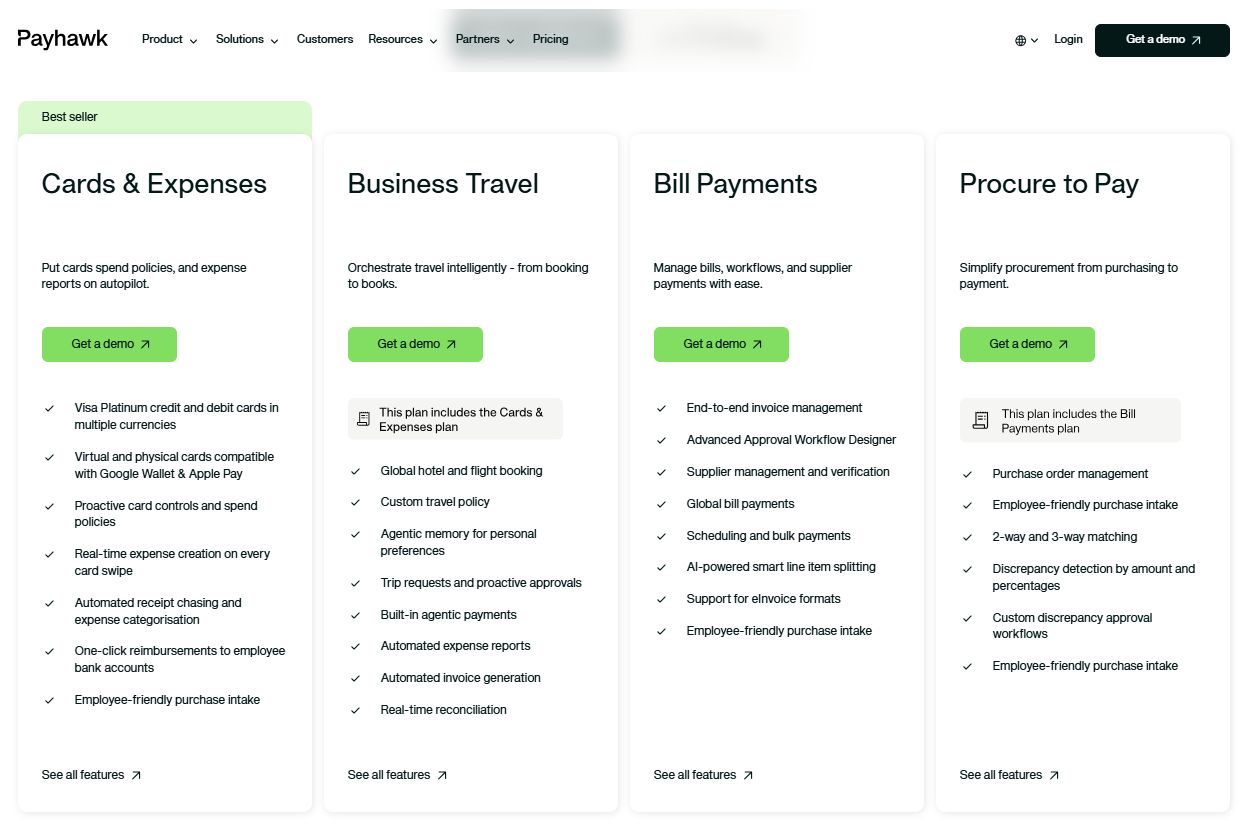 | 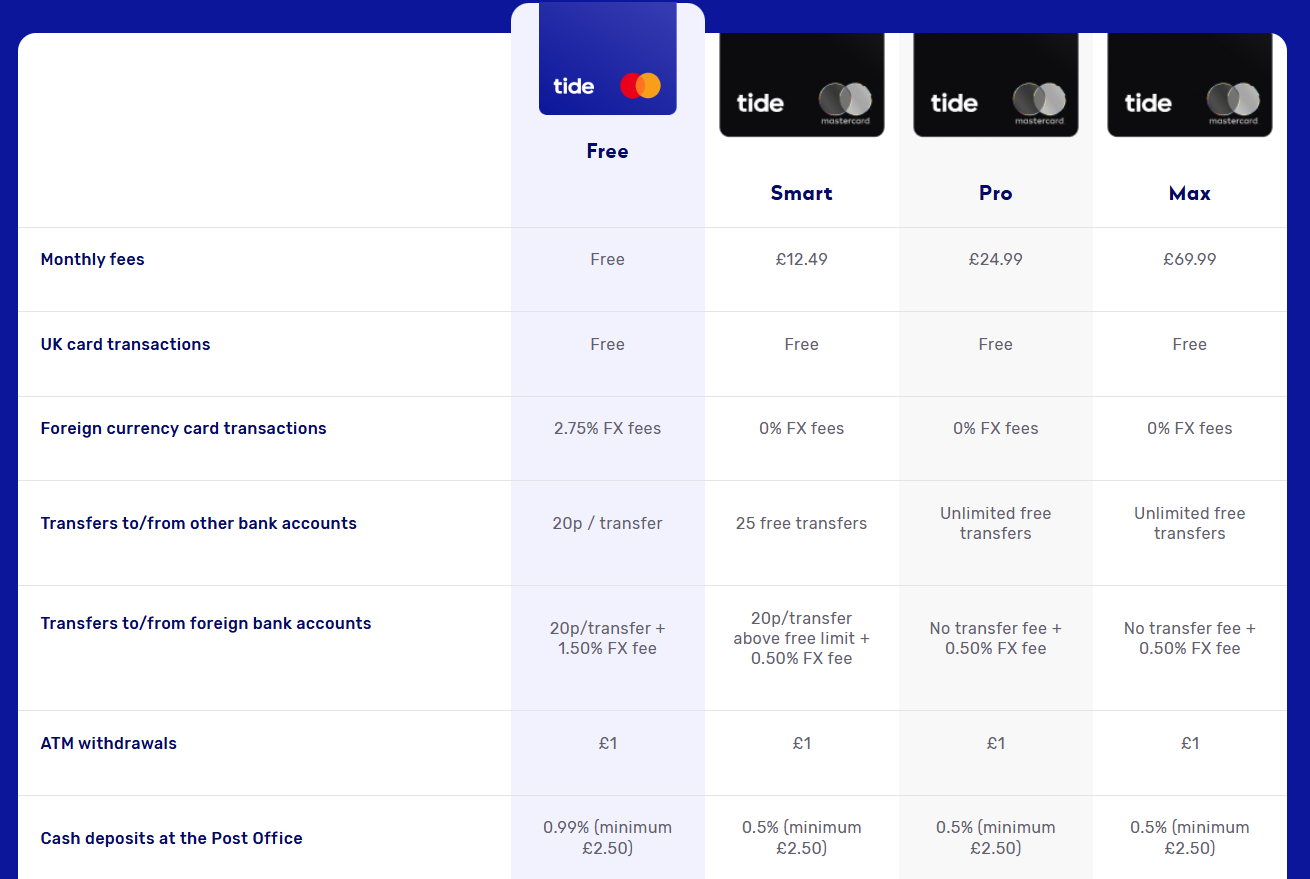 |
Payhawk vs Tide: Other Details
Organization Types supported |
|
|
|---|---|---|
Platforms Supported |
|
|
Modes of support |
|
|
API Support |
|
|
Get help choosing | Get help choosing |
Payhawk User Reviews & Rating Comparison
User Ratings | No reviews available for the product | |
|---|---|---|
Rating Distribution | No reviews available for this product | |
Spotsaas Editor’s POV generated by AI | Buyer sentiment Buyers consistently praise Payhawk for its ease of use, automation, and responsive support, though some express concerns about limited customization and security risks. What buyers like
Common complaints
| Buyer sentiment Overall positive sentiment highlights ease of use, cost savings, and accounting integration, with some concerns about limited cash handling and premium feature access. What buyers like
Common complaints
|
Pros and Cons |
|
|
Positive Reviews | No reviews available for the product | No reviews available for the product |
Integrations
Integration with other apps |
|---|



Payhawk and Tide Customers
Customers |  Gaucho  Decathlon  Babbel | No Customers information available. |
|---|
Media and Screenshots
Screenshots |  5 Screenshots |  5 Screenshots |
|---|---|---|
Videos | No videos available. |  2 Videos |
Top Alternatives to Payhawk and Tide in 2026
Alternatives |
|---|



Add another option to compare side by side
Search by product name to compare pricing, fit, and buyer feedback in one view.Compare similar software options



Related Blogs and Articles for Invoice Management Software
Disclaimer: This research has been collated from a variety of authoritative sources. We welcome your feedback at [email protected].
Frequently asked questions
- Which is better, Payhawk or Tide?
- Payhawk has a user rating of 4.8, while Tide has no user ratings yet. The right choice depends on your team size, budget, and specific Invoice Management Software needs.
- Do Payhawk and Tide offer a free trial?
- Neither Payhawk nor Tide currently lists a free trial.
- What is the starting price of Payhawk vs Tide?
- Payhawk starts at Contact for pricing. Tide starts at $16 /month.
- What are the top alternatives to Payhawk?
- Top alternatives to Payhawk include RAMP Finance, Zoho Expense, DATABASICS Expense, Spendesk, Emburse Nexonia Expenses.
- What are the top alternatives to Tide?
- Top alternatives to Tide include Billdu, Invoice Simple, Receiptor AI, Koteshen, Afloat.
- What do users say about Payhawk?
- What buyers praise about Payhawk: spend management with automation; responsive and professional customer success team. What they raise as reservations: limited customization options for workflows and forms; lacks some advanced finance features for global operations. It does not include Accounts Payable and Billing and Invoicing.
- What are the weak points of Tide?
- The case for Tide: integration with popular accounting software (Xero, Sage, FreeAgent, QuickBooks); supports spend control with team cards and real-time expense tracking. The case against: limited support for cash transactions; advanced features like priority support and multi-user access require paid plans. It also lacks Accounts Payable and Accounts Receivable.
More Invoice Management Software comparisons
Side by side breakdowns of the same products against other options in this category.