
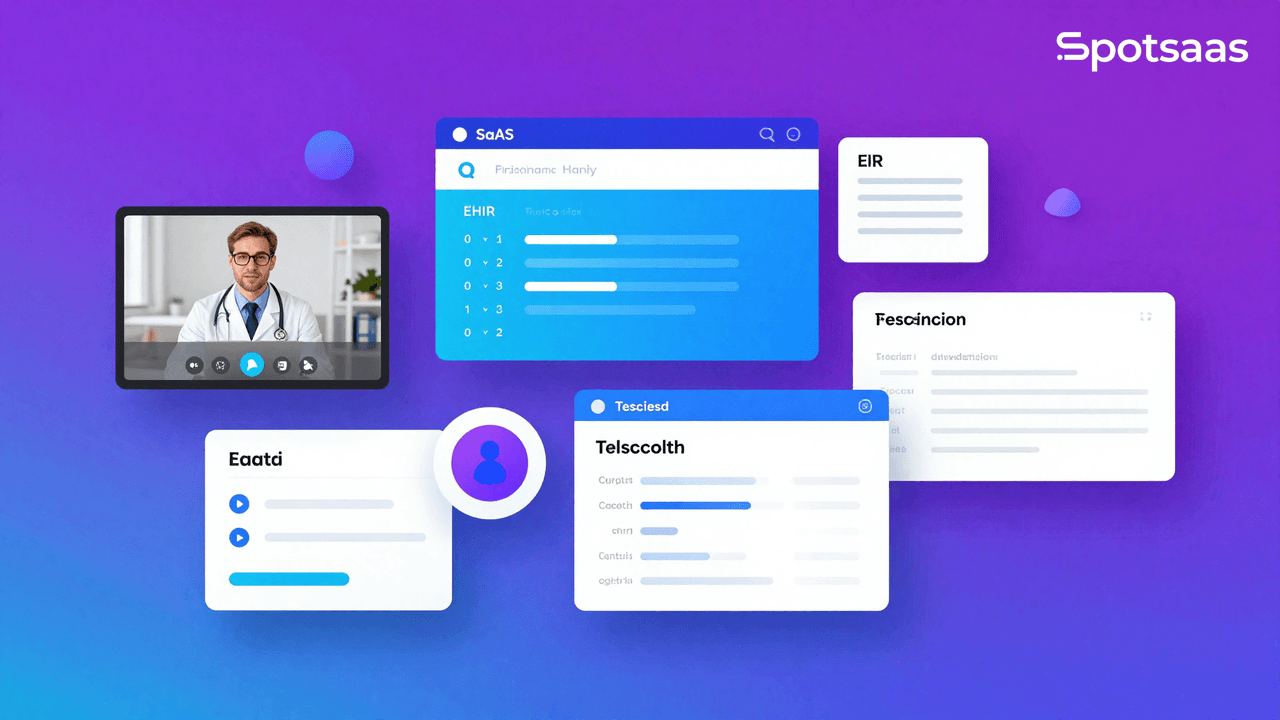
The shift to virtual healthcare is permanent. Telemedicine software has moved from a pandemic-era workaround to essential infrastructure for healthcare providers of every size — from solo practices to large health systems. With patients expecting the convenience of remote consultations, and regulatory frameworks for telehealth now firmly established, choosing the right telemedicine platform is a critical decision that affects clinical quality, patient satisfaction, and operational efficiency. This guide covers what to evaluate, what features matter most, and how to select the best telemedicine software for your practice in 2026.
What Is Telemedicine Software?
Telemedicine software is a digital platform that enables healthcare providers to deliver clinical care remotely through video consultations, secure messaging, remote patient monitoring, and digital health record management. It combines the communication tools patients see — video calls, appointment booking, intake forms — with the clinical tools providers rely on, including EHR integration, prescription management, and documentation.
The platform category spans two main types: standalone telemedicine tools focused on video visit delivery, and integrated telehealth platforms that connect with existing EHR and practice management systems for a fully unified clinical workflow. Choosing between them depends on whether you need a point solution or a comprehensive virtual care infrastructure.
Why Healthcare Providers Need Telemedicine Software in 2026
Expanding Patient Access
Telemedicine software removes geographic barriers to care. Patients in rural areas, those with limited mobility, working parents, and individuals managing chronic conditions who would otherwise face difficulty attending in-person appointments can receive consistent, high-quality care through virtual visits. According to the U.S. Department of Health and Human Services telehealth resources, telehealth utilization remains significantly elevated compared to pre-2020 levels, with patient acceptance of virtual care now mainstream across age groups.
Operational Efficiency and Revenue
Virtual visits eliminate the overhead of in-person appointments — no waiting room congestion, lower no-show rates with automated reminders, and the ability to schedule appointments in shorter time blocks. Providers can see more patients per day while reducing the administrative burden on front desk staff. For practices with high demand and limited physical capacity, telemedicine extends effective appointment availability without facility expansion.
Continuity of Care
For chronic disease management, behavioral health, and post-discharge follow-up, telemedicine enables consistent check-ins that are difficult to maintain with in-person appointments alone. Remote patient monitoring integrations allow providers to track vital signs, glucose levels, or medication adherence between visits, creating a more complete clinical picture between in-person appointments.
HIPAA-Compliant Data Security
Any telemedicine platform used in the United States must be HIPAA-compliant. This means end-to-end encryption for all video calls and messages, Business Associate Agreements (BAA) with the vendor, secure patient data storage, and audit logging of all clinical interactions. Non-compliance exposes practices to significant regulatory penalties and patient data breach liability.
Key Features to Look for in Telemedicine Software
How to Choose the Best Telemedicine Software
Identify Your Specialty and Workflow Requirements
Different medical specialties have different telemedicine requirements. A mental health practice needs robust group session support and detailed documentation tools. A dermatology practice benefits from high-resolution video and image sharing. A primary care practice prioritizes seamless EHR integration and automated billing. Define your specific workflow requirements before evaluating platforms — a general-purpose tool may miss critical specialty-specific features.
Verify HIPAA Compliance and Security Certifications
Request documentation of HIPAA compliance, including a signed BAA, before committing to any platform. Additionally ask about SOC 2 certification, penetration testing practices, and data breach notification procedures. For practices handling pediatric patients, verify compliance with COPPA requirements as well.
Evaluate EHR Integration Depth
EHR integration quality varies significantly between platforms. Ask vendors specifically how visit documentation flows into your EHR — is it fully automated, semi-automated, or manual export? What patient data is synchronized? A poorly integrated telemedicine platform creates more work for providers than it saves.
Consider the Patient Experience
A telemedicine platform that patients find confusing or difficult to access will generate friction that reduces adoption. Evaluate the patient-facing booking and visit experience from the patient’s perspective. Look for platforms with browser-based video visits that do not require app downloads, clear instructions for first-time users, and reliable mobile performance.
Assess Pricing and Scalability
Telemedicine pricing models include per-provider monthly fees, per-visit charges, and enterprise contracts. Per-visit pricing works for practices with variable telehealth volume; per-provider subscriptions are better value at consistent volume. Factor in the cost of EHR integration, setup, and any custom configuration when comparing total cost.
Top Telemedicine Software in 2026
The following platforms represent the leading options in the telemedicine software market, compared across pricing, target practice size, and key capabilities.
Doxy.me is the leading choice for independent providers and small practices due to its zero-installation browser-based approach and generous free tier. ChARM Telehealth leads for practices that need deep EHR integration within a unified platform. VSee is preferred by larger practices managing multiple providers and needing advanced workflow customization.
Final Verdict
Choosing the right telemedicine software comes down to three priorities: HIPAA compliance (non-negotiable), EHR integration quality (determines your documentation workflow), and patient experience (determines adoption rates). Start by shortlisting platforms that meet your compliance requirements, then evaluate EHR integration depth and patient-facing UX through demos and free trials. The best telemedicine software is not the most feature-rich — it is the one that fits naturally into your existing clinical workflow, reduces administrative friction, and enables you to deliver high-quality care remotely at scale.
Frequently Asked Questions About Telemedicine Software
What is telemedicine software?
Telemedicine software is a digital platform that enables healthcare providers to deliver clinical care remotely through video consultations, secure messaging, appointment scheduling, EHR integration, and remote patient monitoring. It allows patients to receive care from any location with internet access.
Is telemedicine software required to be HIPAA compliant?
Yes. Any telemedicine platform used by US healthcare providers must be HIPAA compliant. This requires end-to-end encryption for all video calls and patient communications, a signed Business Associate Agreement with the vendor, secure data storage, and audit logging.
What is the difference between telemedicine and telehealth software?
Telemedicine typically refers specifically to remote clinical care delivery by licensed healthcare providers. Telehealth is a broader term that includes telemedicine plus non-clinical services like patient education, remote monitoring, and administrative health services. In practice, the terms are often used interchangeably in software marketing.
Can telemedicine software integrate with my EHR?
Most leading telemedicine platforms offer integrations with major EHR systems including Epic, Athena Health, eClinicalWorks, and Cerner. Integration depth varies u002du002d always verify exactly how visit documentation, patient demographics, and scheduling data flow between systems before committing.
How much does telemedicine software cost?
Pricing ranges from free tiers (Doxy.me, VSee) for individual providers to enterprise contracts for large health systems. Mid-market platforms typically range from $35 to $200 per provider per month. Enterprise and RPM-integrated platforms are custom-quoted. Factor in setup fees and EHR integration costs when comparing total cost.
Does telemedicine software work on mobile devices?
Yes. All leading telemedicine platforms support mobile access for both providers and patients. Many platforms offer browser-based video visits that do not require app downloads, which significantly reduces patient-side friction.
What specialties use telemedicine software most?
Mental health and behavioral health practices have the highest telemedicine adoption rates. Primary care, dermatology, endocrinology, neurology, and chronic disease management specialties also use telemedicine extensively. Specialties requiring hands-on physical examination have lower but growing telehealth utilization.
How do patients access a telemedicine appointment?
Most platforms send patients a secure link via email or SMS. Patients click the link, complete any required intake forms, and join the video visit through their browser or the provider’s app u002du002d no special software installation required on most modern platforms.
Is telemedicine software suitable for group therapy sessions?
Yes. Platforms like VSee and Doxy.me support group video sessions, making them suitable for group therapy, chronic disease education programs, and family consultations. Always verify the maximum participant count and group session features before selecting a platform for this use case.
What happens if the internet connection drops during a telemedicine visit?
Most platforms automatically attempt to reconnect when connection is lost. Some offer backup options like phone-based audio continuation. When evaluating platforms, ask about connection resilience features and what the patient experience is when video quality degrades.
Compare alternatives to the tools in this post

- Independent picks for exactly what you just read about
- Matched to your team size & needs
- Vendors don't pay for placement
Step 1 of 4
How big is your team?
We tailor recommendations to companies your size.















Related Articles
Buyers guide
Twilio Alternatives 2026: 6 Compared and What They Cost
Continue reading →

Buyers guide
How To Choose The Best Auto Dialer Software For 2026
Continue reading →

Buyers guide
How To Choose The Best Freelance Platforms For 2026
Continue reading →

Buyers guide
How To Choose The Best Audience Response Software For 2026
Continue reading →