
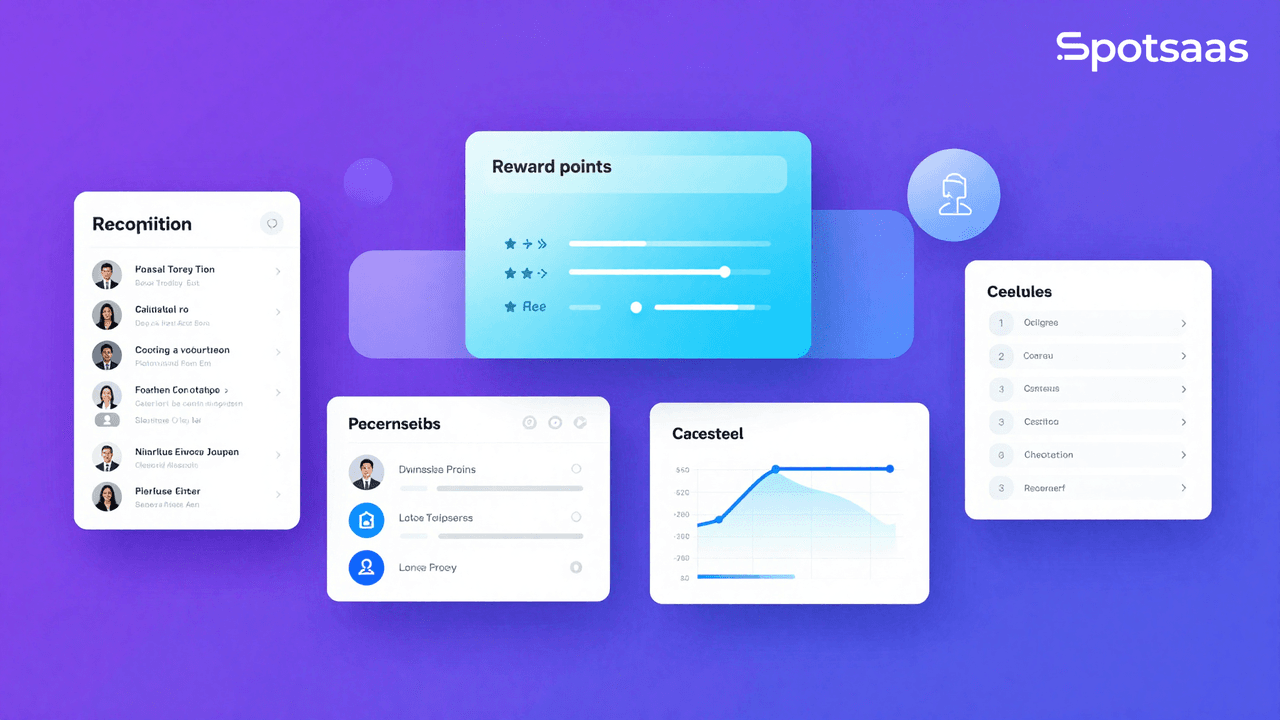
Most staff recognition programmes fail for the same reason: they depend on managers remembering. Software fixes that by making recognition visible, routine and measurable — but only if the platform matches how your people actually work.
This guide compares nine staff recognition platforms, explains what separates them, and covers how to run a rewards and recognition programme that people keep using after the first month.
What Is Staff Recognition Software?
Quick Answer: Staff recognition software is a platform for giving, receiving and tracking employee appreciation. It typically supports peer-to-peer recognition, manager awards, a points or rewards currency, a catalogue people redeem from, and reporting that shows who is being recognised and who is being missed.
The reporting is the part organisations underuse. Recognition data shows participation gaps by team and by manager, which is usually a more honest signal of how a department is run than an engagement survey taken twice a year.
The 9 Best Staff Recognition Platforms in 2026
Ratings come from verified Spotsaas user reviews. Pricing in this category is almost always quoted per employee per month plus the rewards budget you fund, so confirm both parts with any vendor.
| Platform | Best For | Spotsaas Rating |
|---|---|---|
| Bonusly | Peer-to-peer micro-recognition | 4.77 / 5 (2,335 ratings) |
| Guusto | Gift-card rewards, strong for frontline teams | 4.90 / 5 (2,129 ratings) |
| Awardco | Amazon-backed rewards catalogue | 4.83 / 5 (1,260 ratings) |
| Kudos | Culture and values-based recognition | 4.81 / 5 (1,150 ratings) |
| Vantage Circle | Global rewards across many countries | 4.72 / 5 (1,921 ratings) |
| Motivosity | Connection and appreciation for mid-market | 4.71 / 5 (1,038 ratings) |
| Achievers | Enterprise recognition with deep analytics | 4.63 / 5 (185 ratings) |
| Terryberry | Service awards and milestone recognition | 4.63 / 5 (141 ratings) |
| Assembly | Lightweight recognition inside existing tools | 4.88 / 5 (44 ratings) |
1. Bonusly
Bonusly runs on small, frequent peer-to-peer recognition, not manager-led awards. Employees give each other points tied to company values, and those points convert to rewards. It works best where you want recognition to become a daily habit instead of a quarterly ceremony.
2. Guusto
Guusto sends recognition as gift cards that recipients choose themselves, which removes the catalogue-fit problem most platforms have. Its no-email-required delivery makes it unusually practical for frontline and deskless teams who do not sit at a computer.
3. Awardco
Awardco is built around an Amazon Business integration, so the rewards catalogue is effectively the whole Amazon inventory rather than a curated selection. For organisations where reward choice drives participation, that breadth is the differentiator.
4. Kudos
Kudos ties every recognition to a named company value, which turns the platform into a record of how values actually show up in the work. Organisations running a deliberate culture programme get more from it than those wanting a rewards mechanism alone.
5. Vantage Circle
Vantage Circle handles rewards across a wide set of countries, which matters when your team spans regions with different gift-card availability and tax treatment. It is a common choice for globally distributed workforces.
6. Motivosity
Motivosity combines recognition with connection features that help people learn who does what across a growing company. It fits mid-market organisations where the team has outgrown everyone knowing everyone.
7. Achievers
Achievers targets enterprise deployments, with reporting deep enough to tie recognition activity to engagement and retention measures. It expects a dedicated programme owner, which is what distinguishes it from lighter tools.
8. Terryberry
Terryberry specialises in service awards and milestone recognition — the anniversaries and long-service moments that peer-to-peer platforms handle poorly. Many organisations run it alongside a day-to-day recognition tool rather than instead of one.
9. Assembly
Assembly embeds recognition inside Slack and Microsoft Teams instead of asking people to visit another application. For teams that resist new tools, meeting them where they already work is often the difference between adoption and a dormant licence.
Rewards and Recognition Programme Examples
Quick Answer: The four programme types that work are peer-to-peer points redeemed for rewards, manager spot awards for specific results, milestone and service-anniversary recognition, and values-based awards tied to named company behaviours. Most organisations run two or three together, not one alone.
Peer-to-Peer Points
Every employee gets a monthly allowance to give away, which makes recognition constant and removes the manager bottleneck. It generates the most activity of any model and is the easiest to start.
Manager Spot Awards
A discretionary budget managers use for specific results. Higher value per award and more meaningful when tied to a concrete outcome, but participation depends entirely on manager habit.
Service and Milestone Awards
Anniversaries, promotions and retirements. Easy to automate and easy to get wrong — a generic automated message on a ten-year anniversary reads worse than nothing.
Values-Based Awards
Every recognition names the company value it reflects. This is what turns a rewards tool into a culture record, and it is the model that produces the most useful reporting.
How Much Does Staff Recognition Software Cost?
Quick Answer: Recognition platforms typically charge $2 to $6 per employee per month for the software, separate from the rewards budget you fund. A common benchmark for the rewards pool is around 1% of payroll, though organisations start meaningfully lower and increase as participation grows.
Budget both parts explicitly. A platform fee without a funded rewards pool produces a tool nobody uses, which is the most common way these programmes stall. Our HR software pricing guide covers how this sits alongside the rest of an HR stack.
How to Choose Staff Recognition Software
Five checks separate a platform that gets used from one that gets abandoned:
- Test it where your people already are. If recognition requires opening another application, participation falls. Slack, Teams and mobile access matter more than feature depth.
- Check the rewards catalogue against your actual workforce. A US-centric catalogue frustrates international teams, and gift cards nobody wants are worse than no rewards.
- Ask what the reporting shows about participation gaps, not just totals. Who is not being recognised is the more useful number.
- Confirm frontline access. If a large share of staff have no company email, verify delivery works without one.
- Price the rewards pool alongside the licence. Vendors quote the software; the budget is yours to size.
Compare the full category — features, pricing and verified user reviews — in the Spotsaas HR software category, and read Spotsaas reviews alongside G2, Capterra and TrustRadius for a fuller picture than any single source.
How to Run a Programme People Keep Using
Adoption is decided in the first six weeks. Launch with leaders visibly participating, seed the first fortnight with genuine examples, not test messages, and report participation by team early so managers see where they stand. Programmes that launch quietly and are reviewed quarterly tend to be dead by the second quarter.
The other reliable failure mode is over-engineering. Multiple award categories, approval chains and nomination forms all reduce the number of recognitions given. Start with one simple mechanism and add structure only when volume justifies it.
Recognition Software for Frontline and Deskless Teams
Quick Answer: Frontline recognition needs delivery that does not assume a company email address or a desk. Guusto sends rewards by text or printed code, and Assembly works through Slack and Teams on mobile. Platforms built around desktop portals reliably under-perform with shift-based workforces.
This is the single biggest mismatch in the category. Retail, hospitality, healthcare and manufacturing employers buy a platform designed for knowledge workers, then find participation concentrated entirely in head office. If more than a third of your staff work a shift, not a calendar, test delivery before you test features.
A practical check during the demo: ask the vendor to send a recognition to someone with no company email and no app installed, and watch what actually arrives.
Recognition Software vs Doing It Informally
Plenty of organisations recognise people well without software — a manager who notices things and says so is worth more than any platform. What software adds is consistency and visibility: it makes recognition happen when the manager is busy, and it shows you which teams have quietly stopped.
The honest threshold is around fifty employees or the point where teams stop sharing a room. Below that, informal recognition usually reaches everyone. Above it, people start becoming invisible to everyone except their direct manager, and that is when a system earns its cost.
If engagement rather than recognition specifically is the problem you are solving, our guide to employee engagement software covers the broader category.
One detail worth settling before launch: decide who funds the rewards pool. Programmes funded centrally from an HR budget tend to be capped and cautious; programmes where each department funds its own tend to be used more freely but unevenly. Neither is wrong, but leaving it undecided until the first invoice is what stalls most rollouts.
Which Platform Should You Choose?
If you want recognition to become a daily habit, Bonusly or Assembly. If a large share of your team is frontline or deskless, Guusto. If reward choice is what drives participation in your organisation, Awardco. If you are running a deliberate values programme, Kudos. If you operate across many countries, Vantage Circle. And if you need enterprise reporting with a dedicated owner, Achievers.
Ratings sourced from verified Spotsaas user reviews, accurate as of August 2026. Recognition platforms are typically quoted per employee per month separately from the rewards budget — confirm both with each vendor.
Frequently Asked Questions About Staff Recognition Software
What is staff recognition software?
Staff recognition software is a platform for giving, tracking and rewarding employee appreciation. It supports peer-to-peer recognition, manager awards, a points or rewards currency, a redemption catalogue, and reporting showing participation across teams.
What is the best staff recognition software?
Bonusly leads for peer-to-peer recognition, Guusto for frontline and deskless teams, Awardco for rewards choice through its Amazon catalogue, and Achievers for enterprise deployments needing deep analytics. The right pick depends on where your people work and how you want recognition to happen.
What are examples of employee recognition programs?
The four common models are peer-to-peer points redeemed for rewards, manager spot awards for specific results, service and milestone anniversaries, and values-based awards naming a company behaviour. Most organisations combine two or three rather than relying on one.
How much does employee recognition software cost?
Expect $2 to $6 per employee per month for the platform, separate from the rewards budget you fund. A frequently used benchmark for the rewards pool is around 1% of payroll, though most organisations start lower and scale as participation builds.
What are the best employee recognition platforms?
Bonusly, Guusto, Awardco, Kudos, Vantage Circle, Motivosity, Achievers, Terryberry and Assembly cover the range from lightweight peer recognition to enterprise programmes. Assembly and Bonusly suit teams wanting recognition inside Slack or Teams; Achievers suits organisations with a dedicated programme owner.
Are there employee recognition apps for mobile teams?
Yes. Guusto is built for frontline delivery without requiring a company email address, and Assembly works inside Slack and Teams on mobile. For deskless workforces, how the reward reaches someone decides adoption; feature depth barely registers.
What is a rewards and recognition program for employees?
A structured way of appreciating work, combining a mechanism for giving recognition with something of value attached — points, gift cards or experiences. The software provides the mechanism and the reporting; the organisation funds the rewards and sets the behaviours being recognised.
Does employee recognition actually reduce turnover?
Recognition programmes are most effective as an early-warning system and a culture signal instead of a retention lever on their own. The participation reporting they produce shows which teams are disengaging, which is where the practical value sits.
How do you measure a recognition program?
Track participation rate, not total recognitions, broken down by team and manager. A high total driven by a handful of enthusiastic users indicates a narrower programme than the headline suggests. Redemption rate is the second useful measure — unspent points mean the catalogue is not landing.
What should a recognition platform integrate with?
At minimum your HRIS, so the employee directory stays current without manual updates, and your chat tool — Slack or Microsoft Teams — so recognition happens where people already work. Single sign-on matters once you pass a few hundred employees.
What are the four main types of employee recognition?
Peer-to-peer recognition, manager-led spot awards, service and milestone anniversaries, and values-based awards tied to named company behaviours. Effective programmes usually combine two or three instead of relying on a single model.
What is the best recognition for employees?
Specific and timely beats large and delayed. Recognition naming what someone actually did, given close to when they did it, consistently outperforms a bigger award months later. That is why peer-to-peer models deliver more impact per dollar than annual awards.
What are some effective employee recognition programs?
Peer-to-peer points with a monthly giving allowance, manager spot awards tied to specific results, automated service anniversaries, and values-based awards. Programmes that publish participation by team sustain far better than those reviewed privately once a quarter.
What is the best reward system for employees?
Choice-led rewards outperform fixed catalogues, because what motivates people varies widely. Platforms such as Awardco and Guusto let recipients pick, which raises redemption. Unredeemed points are the clearest signal a catalogue is not landing.
How can you reward employees for free?
Public acknowledgement, time back, and access — a mention in a company-wide channel, an early finish, or the chance to lead something visible. These cost nothing and often outperform small monetary rewards when given specifically, not generically.
What is a small token of appreciation for employees?
Small gift cards, a handwritten note, or a modest points award through a recognition platform all work. Specificity beats size: an award naming exactly what someone did lands better than a larger generic one.
Compare alternatives to the tools in this post

- Independent picks for exactly what you just read about
- Matched to your team size & needs
- Vendors don't pay for placement
Step 1 of 4
How big is your team?
We tailor recommendations to companies your size.















Related Articles
Buyers guide
Twilio Alternatives 2026: 6 Compared and What They Cost
Continue reading →
Buyers guide
How To Choose The Best Auto Dialer Software For 2026
Continue reading →
Buyers guide
How To Choose The Best Freelance Platforms For 2026
Continue reading →
Buyers guide
How To Choose The Best Audience Response Software For 2026
Continue reading →