
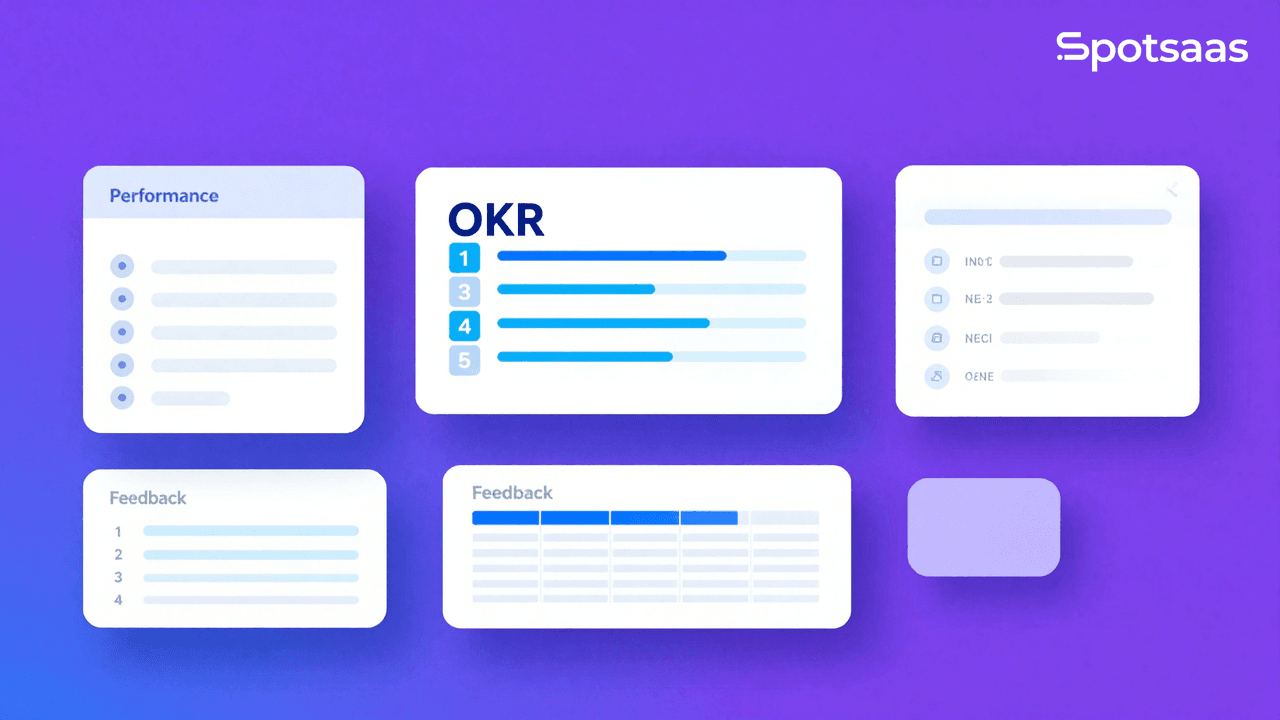
Choosing the right performance management system can directly determine whether your people processes drive growth or create frustration. With dozens of platforms competing for attention — each promising goal alignment, continuous feedback, and smarter analytics — the real challenge is not finding options. It is knowing what to prioritize for your specific organization, team size, and existing HR stack. This guide walks through everything you need to evaluate, compare, and select the best performance management system in 2026.
What Is a Performance Management System?
A performance management system (PMS) is a software platform that helps organizations set employee goals, track progress in real time, facilitate structured feedback, run performance review cycles, and support ongoing employee development. The best platforms connect individual work to company-wide objectives — giving managers visibility into performance trends and giving employees clarity on expectations, progress, and growth paths.
Modern performance management systems go far beyond the traditional annual review. According to Gartner’s employee performance management market research, organizations that implement continuous performance management practices — ongoing check-ins, real-time goal updates, and regular feedback — see measurably higher employee engagement and better performance outcomes compared to those that rely on once-a-year reviews alone.
Why Traditional Annual Reviews Are No Longer Enough
The annual performance review has a fundamental design flaw: it evaluates an entire year of work in a single conversation, usually months after the most impactful moments have already passed. Managers cannot accurately recall everything that happened, employees feel blindsided by feedback they could have acted on earlier, and the process often consumes enormous administrative time for results that drive little meaningful change.
The shift toward continuous performance management replaces the once-a-year model with structured, frequent touchpoints — regular 1:1s, real-time feedback, quarterly goal reviews, and lighter-weight check-ins between formal cycles. According to Forbes Advisor’s 2026 performance management software analysis, top-rated platforms now treat performance as an ongoing conversation rather than a periodic event, with features designed to make those conversations easier and more consistent for managers at every level.
Key Features to Look for in a Performance Management System
How to Choose the Best Performance Management System
Assess Your Organization’s Needs and Current Gaps
Before evaluating any platform, audit your current performance management process and identify where it breaks down. Are reviews happening on schedule, or do they slip because the process is too cumbersome? Are managers conducting regular 1:1s, or does consistency depend entirely on individual manager habits? Is goal-setting done in spreadsheets or disconnected tools? Is feedback confined to formal review cycles?
The gaps in your current process define your highest-priority requirements. An organization moving from annual reviews to continuous performance management needs different capabilities than one that already has a structured review cycle and wants to add stronger analytics or improve calibration consistency across managers.
Prioritize Manager Adoption, Not Just HR Admin Features
Performance management software fails when managers do not use it. The most common failure mode is a platform that feels administratively burdensome rather than genuinely useful to the people running teams day-to-day. Evaluate the manager experience specifically — not just the HR admin console.
Is the interface intuitive enough that a manager will log in between review cycles, not just when HR sends a reminder? Does the platform surface actionable information, or just collect data? Look for tools that simplify a manager’s most repetitive tasks — tracking goal progress, structuring 1:1s, and giving feedback — rather than adding another system to maintain.
Evaluate Goal-Setting and OKR Framework Support
Goal alignment is one of the most valuable functions of a performance management system. Look for platforms that support your specific methodology — whether that is OKRs (Objectives and Key Results), SMART goals, or a more flexible framework. The best systems show how individual goals cascade from team and company-level objectives, so employees can see clearly how their work connects to organizational priorities.
Verify that goal tracking is real time and not just a form field that gets filled in at review time and ignored for the next 11 months. Active goal management — with progress updates, milestone tracking, and manager visibility — is what separates useful goal-setting tools from performative ones.
Check Review Cycle Flexibility and Calibration Tools
Different organizations run different review cadences — annual, semi-annual, quarterly, or project-based. The platform must support your specific cycle without requiring significant reconfiguration each time a new review period opens. Equally important are calibration tools: the ability for HR and senior leaders to review rating distributions, identify outlier managers, and ensure consistency in how ratings are applied across departments.
Without calibration, performance ratings reflect individual manager standards more than actual performance differences. A mid-market or enterprise organization running reviews at scale needs calibration built into the workflow, not bolted on as an afterthought.
Verify HRIS Integration Quality
Performance data is only useful if it stays synchronized with your workforce data. New hires, role changes, manager changes, and terminations all need to flow from your HRIS into your performance management system automatically. A broken or manual sync creates outdated org structures in the review tool, review workflows that route to the wrong people, and data reliability issues that erode HR’s confidence in the platform.
Verify that the integration with your specific HRIS — whether that is Workday, BambooHR, ADP, or another platform — is bidirectional, automated, and does not require manual exports to remain current.
Match the Platform to Your Company Size
A 40-person startup and a 4,000-person enterprise need very different things from a performance management platform. Small organizations typically need a lightweight tool with simple goal tracking, easy review setup, and minimal configuration overhead. Mid-market companies need more structured calibration, analytics depth, and robust HRIS integration. Enterprise organizations need advanced configuration, multi-country compliance support, complex approval workflows, role-based permissions, and deep people analytics.
Most platforms target a specific company size range. Selecting a platform built for a company at your scale avoids the twin failure modes of outgrowing a tool too quickly or finding an enterprise system so complex that adoption never takes off.
Top Performance Management Systems in 2026
Based on peer review data across G2’s performance management software category, SERP analysis, and HR technology adoption patterns, these platforms consistently rank highest for feature completeness, user satisfaction, and deployment across different organization sizes in 2026.
Free vs. Paid Performance Management Software
Several platforms offer free tiers or trials that cover basic performance review functionality. Free options are generally appropriate for very small teams (under 10-15 people) or organizations that only need a lightweight annual review tool without goal tracking, continuous feedback, or analytics depth.
Paid platforms in the $4-$15 per user per month range unlock the features that drive real adoption: real-time goal dashboards, 1:1 meeting tools, continuous feedback flows, calibration modules, and people analytics. For most organizations running regular review cycles with more than a handful of managers, the productivity gain from a well-adopted paid platform far outweighs the cost.
Enterprise platforms like Betterworks, Culture Amp, and Workday Performance use custom pricing based on company size and module selection. If you are evaluating these, budget for implementation services alongside the software license — enterprise performance management deployments typically involve data migration, HRIS integration work, and manager training that add to the total cost.
Final Verdict
The best performance management system is the one your managers will actually use consistently — not the one with the longest feature list. Start by mapping your highest-priority gaps, then shortlist two or three platforms that match your company size and performance methodology. Run a structured pilot with real managers and employees before committing, and weight adoption signals — are managers logging in between review cycles? — more heavily than feature checklists during the evaluation.
For most growing companies, Lattice or 15Five will cover the majority of use cases at an accessible price point. Microsoft-centric organizations should evaluate Teamflect seriously. Enterprise organizations running formal OKR programs at scale should look at Betterworks. And if you want engagement survey data deeply integrated with performance insights, Culture Amp stands alone in that combination.
Frequently Asked Questions About Performance Management Systems
What is a performance management system?
A performance management system is a software platform that helps organizations set employee goals, track progress, deliver structured feedback, run performance review cycles, and support ongoing development. It connects individual performance to organizational objectives and provides managers and HR teams with data to make informed people decisions.
What is the best performance management system for small businesses?
For small businesses, 15Five and Teamflect offer strong value with accessible pricing and minimal configuration requirements. BambooHR is a popular choice for small to mid-sized companies that want HRIS and performance management in one system. The best option depends on whether you prioritize continuous feedback, goal tracking, or combined HRIS functionality.
What is the difference between a performance management system and a performance appraisal?
A performance appraisal is the formal evaluation event u002du002d typically an annual or semi-annual review where employee performance is assessed and rated. A performance management system is the broader, ongoing process and the software that supports it: goal setting, continuous feedback, development conversations, 1:1 meetings, and coaching throughout the year, not just at review time.
What are OKRs and how do they relate to performance management?
OKRs (Objectives and Key Results) are a goal-setting framework where objectives define what you want to achieve and key results define measurable outcomes that signal success. Many performance management systems include OKR tracking modules that connect individual and team OKRs to company-level objectives, giving everyone visibility into how their work contributes to organizational priorities.
How much does performance management software cost?
Performance management software typically costs between $3 and $15 per user per month for mid-market platforms. Enterprise platforms like Betterworks, Culture Amp, and Workday Performance use custom pricing based on company size and modules. Some platforms offer basic free tiers for very small teams. Annual billing is usually 15 to 20 percent lower than month-to-month pricing.
What is 360-degree feedback in a performance management system?
360-degree feedback is a multi-source feedback approach where an employee receives input from their manager, peers, direct reports, and sometimes cross-functional collaborators u002du002d not only their direct manager. Performance management platforms with 360-degree modules automate the request, collection, and aggregation of feedback from multiple reviewers, providing a more complete picture of how an employee performs and how they are perceived across the organization.
How does a performance management system integrate with HRIS?
Most modern performance management platforms integrate with major HRIS systems u002du002d such as Workday, BambooHR, and ADP u002du002d via API or pre-built connectors. The integration syncs employee records, manager hierarchies, department structures, and role data so that review workflows, goal visibility, and reporting always reflect the current organizational structure without manual data entry or exports.
What is a performance improvement plan (PIP) in performance management software?
A performance improvement plan (PIP) is a structured document that outlines specific performance gaps, measurable improvement goals, timelines, and support resources for an employee who is underperforming. Performance management software with PIP features provides templates, milestone tracking, manager and HR oversight, and a documented audit trail of the improvement process for compliance and consistency.
Should my performance management system be separate from my HRIS?
Most organizations use a dedicated performance management platform rather than relying on the performance module built into their HRIS, because purpose-built tools offer significantly richer features for continuous feedback, goal tracking, calibration, and people analytics. HRIS performance modules typically cover basic review forms and rating capture, but lack the depth of dedicated platforms. The exception is BambooHR and similar tools that have invested meaningfully in performance features alongside core HRIS functionality.
What are examples of performance management systems used by companies?
Commonly used performance management systems include Lattice (popular with tech and mid-market companies for its complete people management suite), 15Five (used by companies prioritizing continuous feedback and manager effectiveness), Betterworks (enterprise OKR programs), Teamflect (Microsoft 365 environments), PerformYard (service-based industries), Culture Amp (engagement-driven performance data), and Workday Performance (large enterprise). The right example to follow depends heavily on your company size, industry, and existing HR technology stack.
Compare alternatives to the tools in this post

- Independent picks for exactly what you just read about
- Matched to your team size & needs
- Vendors don't pay for placement
Step 1 of 4
How big is your team?
We tailor recommendations to companies your size.















Related Articles
Buyers guide
Twilio Alternatives 2026: 6 Compared and What They Cost
Continue reading →
Buyers guide
How To Choose The Best Auto Dialer Software For 2026
Continue reading →
Buyers guide
How To Choose The Best Freelance Platforms For 2026
Continue reading →
Buyers guide
How To Choose The Best Audience Response Software For 2026
Continue reading →