
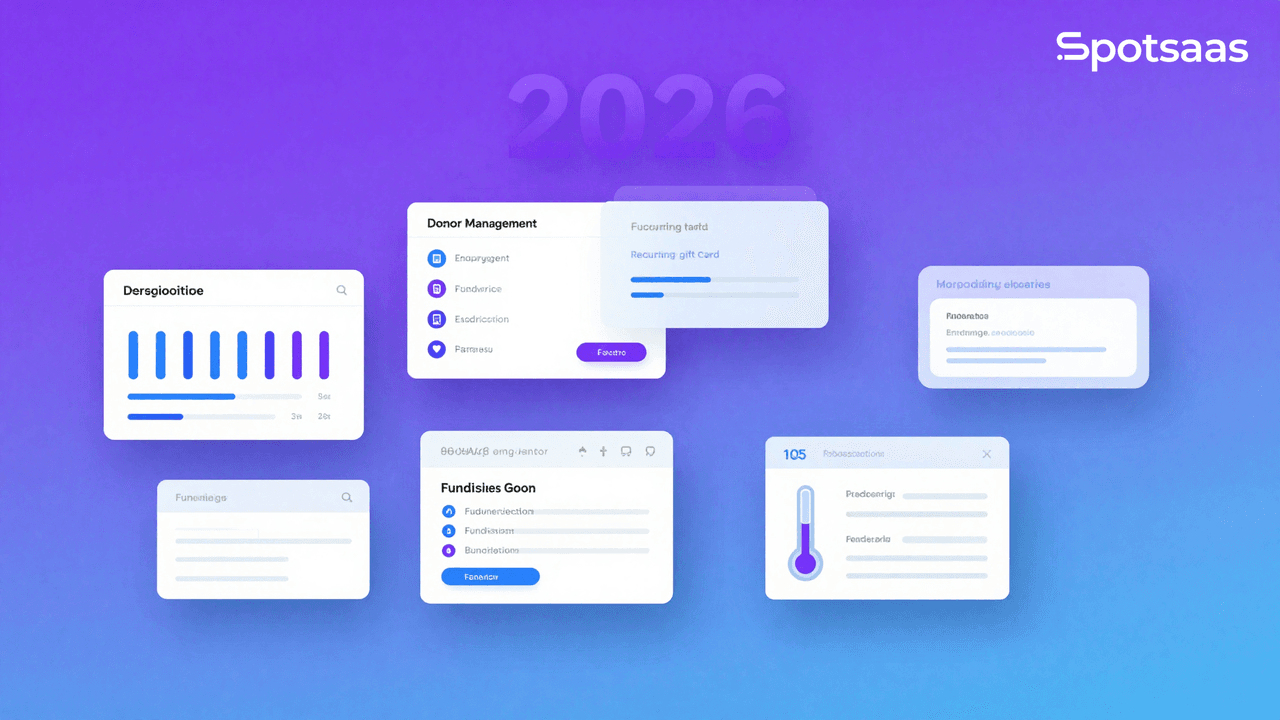
What Is Fundraising Software and How Does It Support Nonprofits?
Fundraising software is built to help organizations manage and run their fundraising work end to end. It typically covers donation tracking, campaign management, donor engagement, and financial reporting in one place. Nonprofits, charities, schools, and political campaigns all use these platforms to keep fundraising organized and grow donor contributions.
Most of these platforms connect to CRM systems, payment processors, and marketing tools, which extends their reach into outreach and donor retention. Automation and analytics built into the software let organizations track fundraising progress and get more out of the resources they already have.
Why Should Organizations Use Fundraising Software?
Simplifying donation management
Collecting donations by hand means a lot of manual bookkeeping. Fundraising software automates that collection and keeps contribution and financial records accurate, which frees up staff time for outreach and donor engagement instead of data entry.
Enhancing donor engagement
Built-in CRM features let organizations personalize communication, track what donors care about, and automate follow-ups. That combination builds stronger relationships over time and pushes more donors toward giving again rather than just once.
Optimizing fundraising campaigns
Analytics built into the software show donor behavior, how well a campaign is performing, and patterns in giving. That data lets organizations adjust strategy, set realistic goals, and see how a campaign is doing while it’s still running rather than after the fact.
Expanding reach and accessibility
Connecting the software to social media, email marketing, and peer-to-peer fundraising tools helps reach people beyond an organization’s existing donor list. Mobile-friendly donation pages mean people can give from a phone just as easily as a desktop.
Maintaining compliance and security
Payment processing and donor data need to meet regulations like GDPR, HIPAA, and PCI DSS, and fundraising software is built around that requirement. Many platforms also auto-generate tax receipts and keep audit-ready financial records so compliance isn’t a separate manual task.
What Are the Key Features of Fundraising Software?
Online donation processing
Supporting credit cards, PayPal, digital wallets, and bank transfers covers most of how people actually want to pay. Letting donors choose between a one-time gift or a recurring one adds flexibility, and secure payment gateways give people the confidence to actually complete a donation instead of abandoning it midway. Mobile-friendly donation pages matter too, since plenty of giving happens from a phone.
Campaign management
Creating and running a campaign gets easier with goal tracking, automatic donor acknowledgments, and scheduled outreach built in, rather than managing all of that by hand. Donation pages that can be customized to match an organization’s branding tend to keep donors more engaged, and features like text-to-give or email automation add more ways for people to participate.
Donor relationship management (CRM)
A shared database of donor interactions, preferences, and giving history makes it possible to personalize outreach instead of sending the same message to everyone. Automated reminders and segmentation tools help nonprofits build relationships that last beyond a single gift, and looking at donor behavior helps identify who’s likely to give again. Integrating the CRM with other tools keeps that experience consistent no matter where a donor interacts with the organization.
Recurring giving and memberships
Recurring gifts give an organization income it can actually plan around, rather than relying on one-off donations. Since the payment happens automatically, donors don’t have to remember to give again, which tends to improve how long they stick around and how much they give over time. Membership models push this further, encouraging deeper involvement, and tiered giving, perks, or recognition programs give donors a reason to keep their recurring gift going.
Social media and peer-to-peer fundraising
Letting supporters share a donation page or start their own fundraising page extends an organization’s reach past its existing donor list. Social sharing makes that easier to spread, and elements like leaderboards or milestone tracking add a bit of friendly competition that tends to push giving up. Peer-to-peer fundraising also works because people trust a recommendation from someone in their own network more than an ad.
Reporting and analytics
Real-time reporting on campaign performance, donor retention, and giving patterns gives teams a live view of what’s working. Custom reports help spot trends worth acting on, and dashboards built around key metrics make it easier to base decisions on actual data instead of guesswork. Some platforms take it further with predictive analytics that forecast giving trends and help shape outreach ahead of time.
Integration with accounting and marketing tools
Connecting to tools like QuickBooks, Mailchimp, and Salesforce keeps donor and financial data moving between systems without manual re-entry. That cuts down errors in financial reconciliation and the admin work that comes with it. Syncing donor interactions across marketing platforms also makes it possible to personalize engagement, and automating thank-you emails, receipts, and follow-ups keeps the donor experience consistent.
Event and auction management
For organizations running events, ticket sales, guest lists, and attendee tracking are handled in the same system rather than a separate spreadsheet. Online auctions with real-time bidding tend to raise more than a silent auction on paper, and virtual event features like live streaming open events up to people who can’t attend in person. Automated reminders before and follow-ups after the event help keep that engagement from fading once the event ends.
What Are the Main Benefits of Using Fundraising Software?
Increasing operational efficiency
Automating tasks like tracking donations, generating tax receipts, and reporting on campaigns frees up time that would otherwise go to administrative work. That shift lets staff spend more time on outreach and engagement, and automated workflows also mean faster responses to donors, which tends to strengthen the relationship.
Improving donor retention
CRM tools help organizations build relationships that last past a single donation, through messaging tailored to each donor rather than a generic blast. Automated reminders, thank-you notes, and recognition programs give people a reason to give again, and detailed donor data helps shape campaigns that actually speak to the people receiving them.
Achieving higher fundraising success
Real-time analytics gives organizations a way to track how a campaign is doing, how donor behavior is trending, and how many visitors actually convert into donors. That data helps refine strategy and outreach as a campaign runs rather than only after it’s over, and some platforms use AI to suggest the best times and channels to reach potential donors.
Reducing fundraising costs
Moving fundraising online cuts the costs tied to print materials, mailers, and running in-person events. Automation also means an organization doesn’t need to add staff just to manage donor records by hand, and having everything in one system avoids the redundant work that comes from juggling separate tools.
Scaling fundraising operations
Fundraising software is built to grow alongside an organization, handling a larger donor base and higher donation volume without needing to be replaced. Cloud-based platforms in particular remove the infrastructure limits that come with growth, and support for donations across multiple channels means the same system can handle a small local event or a global campaign.
What Are the Different Types of Fundraising Software?
Cloud-based fundraising platforms
Cloud-based platforms let teams work from anywhere and collaborate in real time, without needing to be in the same office. Updates and security patches happen on the provider’s end, so there’s no extra maintenance for the organization to manage. Cloud integrations with CRM, accounting, and marketing tools round out the workflow, and because these platforms scale easily, they work for a small grassroots nonprofit and a large enterprise alike.
On-premise fundraising software
On-premise software runs on an organization’s own servers, giving it full control over security, compliance, and how data is managed. That’s a good fit for organizations with strict privacy requirements that want donor data kept in-house. It also tends to be more customizable to specific organizational needs. The trade-off is an upfront investment, though it avoids the ongoing subscription costs that come with cloud-based platforms.
Crowdfunding platforms
Crowdfunding tools are built around single campaigns rather than ongoing operations, and they’re used by nonprofits, businesses, and individuals alike to raise money for a specific cause. The model relies on small contributions from a lot of different donors, which makes it well suited to grassroots fundraising. Platforms like GoFundMe and Kickstarter can reach a wide audience, and a campaign that gets shared widely on social media can raise money quickly.
Event-based fundraising tools
These tools center on planning, ticketing, and sponsorship management for events, whether in person or virtual. Live-streaming, auction functionality, and donation tracking help get the most out of the event itself, and automated reminders and follow-ups keep donors engaged once it’s over. Integration with CRM and marketing tools means attendee interactions get recorded rather than lost after the event wraps up.
Open-source fundraising solutions
Open-source fundraising software works best for organizations with the technical staff to customize it to their own requirements. It’s typically budget-friendly and flexible, with basic functionality out of the box and room for deeper modification. Since nonprofits host and maintain it themselves, there’s no recurring subscription fee, though that also means needing in-house technical support. In exchange, an organization gets full control over customization and how its data is managed.
How Can You Choose the Best Fundraising Software for Your Organization?
Picking the right fundraising software matters for any nonprofit, charity, or business trying to get more out of its donations, donor engagement, and fundraising efforts generally. With so many options on the market, understanding the key features, integrations, and scalability each one offers is what separates a good decision from a rushed one.
What Goals Should You Define Before Selecting Fundraising Software?
Getting clear on your goals first is what keeps the software choice tied to your organization’s actual mission instead of just a features checklist.
Simplifying Donation Processing
Good fundraising software should make donating simple across credit and debit cards, digital wallets, bank transfers, and cryptocurrency. The easier that process is, the more people follow through on a donation instead of abandoning it partway.
Enhancing Donor Engagement
Retention and recurring gifts both depend on how engaged donors stay after their first contribution. A solid fundraising platform supports that with personalized email automation, recognition tools, and engagement analytics that help build support over the long run.
Supporting Multi-Channel Fundraising
Fundraising rarely happens in just one place anymore, it spans websites, social media, peer-to-peer campaigns, SMS, and live events. A system flexible enough to support all of those channels lets an organization reach more people while keeping its branding consistent across each one.
Improving Campaign Management
Running a campaign well takes goal setting, performance tracking, and budget oversight, all at once. The software should support that with campaign dashboards, progress trackers, and automated insights that help fine-tune strategy while the campaign is still live.
Ensuring Security and Compliance
Because fundraising means handling financial transactions and donor data, staying compliant with standards like PCI DSS, GDPR, and IRS tax regulations isn’t optional. Encrypted transactions, fraud detection, and data protection features are what keep an organization on the right side of both donor trust and the law.
What Types of Fundraising Software Are Available?
The right software model depends on how your organization actually fundraises, what it needs operationally, and where it’s headed long term.
Cloud-Based Fundraising Software for Accessibility and Scalability
Cloud-based software gives real-time access to donor data along with integrations into marketing, accounting, and CRM systems, and updates happen automatically. It’s generally the cheaper option too, since there’s little maintenance required on the organization’s end.
On-Premise Fundraising Software for Data Control
For organizations that need full control over their data, on-premise software is the option. Hosting locally adds a layer of security, but it also means dedicating IT resources to maintenance, upgrades, and compliance on an ongoing basis.
Peer-to-Peer Fundraising Software for Community-Driven Giving
Peer-to-peer fundraising software lets individual supporters build their own donation pages and share them within their own networks. It works particularly well for crowdfunding, community-driven causes, and campaigns that spread mostly through social media.
Event-Based Fundraising Software for Campaign Management
Built for managing charity events, auctions, and ticketed galas, this type of software includes live donation tracking, virtual event integrations, and mobile bidding, all aimed at running the event smoothly and getting the most out of it financially.
Crowdfunding Platforms for Targeted Projects
Crowdfunding software is built for raising money toward a specific project, relying on social sharing and donor engagement to spread the word. Progress meters, reward-based giving tiers, and automated thank-you messages are common features across these platforms.
How Can You Define Data Requirements for Fundraising Software?
A fundraising system needs to handle a large volume of donor and transaction data without breaking down, while still surfacing the insights that support long-term donor retention.
Integrating with CRM and Donor Management Systems
Connecting cleanly to donor management systems like Salesforce or Blackbaud lets the software track giving history, engagement levels, and how each donor prefers to be contacted.
Connecting with Accounting and Payment Processing Systems
Integrating with accounting platforms like QuickBooks or Xero, along with payment gateways like Stripe, PayPal, and Square, makes reconciliation, tax reporting, and donor receipts far less of a manual chore.
Syncing with Marketing Automation Tools
Syncing with email platforms such as Mailchimp, Constant Contact, or HubSpot allows for automated donation appeals, segmented donor lists, and follow-up campaigns without exporting data by hand each time.
Leveraging Social Media and Peer-to-Peer Fundraising Integrations
Social media integrations make it easy to share donation pages, event promotions, and campaign updates across Facebook, Twitter, LinkedIn, and Instagram, which helps visibility and engagement without extra manual posting.
What Key Features Should You Look for in Fundraising Software?
The right software combines core features that handle donation collection with more advanced ones that support donor engagement and campaign management.
Core Features for Effective Donation Management
Donation Management for Centralized Tracking
A single dashboard for donations lets an organization monitor both individual and recurring gifts, track trends, and pull reports without switching between tools.
Recurring Giving Support for Sustained Revenue
Recurring donation options let donors set up monthly or yearly gifts once and forget about renewing them. That gives nonprofits more predictable funding and tends to lower how many donors drop off over time.
Mobile Giving for On-the-Go Donations
As more giving happens on phones, fundraising platforms need mobile-optimized donation pages, SMS giving, and QR code donations to keep up with how people actually want to give.
Customizable Donation Pages for Brand Consistency
Custom branding, real storytelling, and suggested donation amounts all shape how a donor experiences the giving page itself. A well-built page converts more visitors into donors and makes the whole campaign more effective.
Gift Matching and Corporate Giving for Increased Impact
Automated gift-matching integrations let donors tap into employer matching programs, which can double or triple what their donation is actually worth.
Advanced Features for Strategic Fundraising
AI-Driven Donor Insights for Targeted Outreach
AI-driven tools analyze donor behavior, predict giving trends, and suggest where to focus outreach, which helps organizations build stronger donor relationships without guessing.
Automated Fundraising Workflows for Efficiency
Automating acknowledgments, follow-up emails, and engagement reminders keeps operations running smoothly and makes sure no donor falls through the cracks.
Crowdfunding and Peer-to-Peer Campaigns for Community Growth
Letting individuals set up their own fundraising pages for a specific cause extends an organization’s reach and builds community support through personal storytelling rather than a single institutional voice.
Fundraising Thermometers and Goal Tracking for Motivation
A visual progress tracker toward a fundraising goal, the classic thermometer, gives donors a reason to contribute toward hitting a specific milestone rather than giving into a void.
How Can Reporting and Insights Improve Fundraising Performance?
Donor Behavior Analysis for Retention Strategies
Tracking donor demographics, how often people give, and their engagement history gives organizations what they need to refine fundraising strategy around actual retention, not guesswork.
Campaign Performance Metrics for ROI Measurement
Looking closely at donation trends, when giving peaks, and return on investment helps organizations put resources where they’ll actually pay off in future campaigns.
Interactive Dashboards for Clear Visualization
Dashboards turn key fundraising metrics into visuals that are faster to read than a spreadsheet, making it easier to track performance at a glance.
Exportable Reports for Stakeholder Communication
Being able to export reports as PDF, Excel, or CSV makes it simple to share results with board members, stakeholders, and auditors without reformatting anything.
What Pricing Models Should You Consider for Fundraising Software?
Subscription Plans for Predictable Costs
Monthly or annual subscriptions give access to updates, premium features, and support for a fixed, predictable cost.
Transaction-Based Pricing for Flexible Budgets
Some platforms charge a percentage per donation instead, which suits organizations whose fundraising volume swings a lot from month to month.
Custom Pricing for Enterprise Solutions
Larger organizations often get custom pricing based on their size, donation volume, and which features they actually need.
Why Is Scalability Important in Fundraising Software?
Multi-Campaign Support for Diverse Initiatives
Software that scales well lets an organization run several campaigns at once instead of one at a time, each with its own strategy.
Handling Large Donor Databases for Growth
As a donor base grows, an organization needs software that keeps managing those records efficiently while keeping the database secure and accessible.
Collaboration Features for Team Efficiency
Collaboration tools built into the platform let team members coordinate campaigns and track donor activity together instead of working from separate spreadsheets.
How Can Support and Training Improve Fundraising Software Adoption?
Providing 24/7 Support for Uninterrupted Operations
Round-the-clock support through chat, email, or phone means a technical issue doesn’t sit unresolved for a day while a fundraising campaign is live.
Offering Tutorials and Certification Programs for Skill Development
Training materials, live webinars, and onboarding sessions help a fundraising team actually learn what the software can do instead of using a fraction of its features.
Which Fundraising Software Options Are the Best for Your Organization?
Which fundraising software an organization picks has a direct effect on how much it raises, how well it engages donors, and how smoothly its operations run day to day. The leading options on the market cover online donation processing, CRM integration, event management, and real-time analytics, though not always to the same degree.
Some are built with small nonprofits and tight budgets in mind, while others are built for enterprise-level operations running large fundraising campaigns.
Comparing pricing, scalability, and core functionality across the options below is the fastest way to land on the tool that actually fits an organization’s fundraising strategy.
| Tool | Pricing | Best For | Key Features | Notable Customers |
|---|---|---|---|---|
| Bloomerang | Starts at $99/month | Donor retention | Donor CRM, automated emails, reporting | Habitat for Humanity |
| Donorbox | Free/Starts at 1.5% | Recurring donations | Crowdfunding, multi-currency support | WWF, Make-A-Wish |
| Givebutter | Free/Transaction Fee | Peer-to-peer giving | Fundraising events, live streaming donations | Red Cross, UNICEF |
| Classy | Custom Pricing | Large nonprofits | Event fundraising, campaign analytics | Salvation Army, Oxfam |
| Qgiv | Starts at $25/month | Small organizations | Text giving, auction tools, mobile donations | YMCA, Boys & Girls Club |
Final Verdict on Choosing the Best Fundraising Software
The right fundraising software changes how a nonprofit or charity runs its fundraising, tying donation management, campaign tracking, and donor engagement together in one system. Choosing well means better efficiency, wider outreach, and more from the contributions already coming in.
Whether an organization ends up with an all-in-one platform, a peer-to-peer giving tool, or dedicated event management software, investing in the right fit is what supports long-term success and donor relationships that last.
Compare alternatives to the tools in this post

- Independent picks for exactly what you just read about
- Matched to your team size & needs
- Vendors don't pay for placement
Step 1 of 4
How big is your team?
We tailor recommendations to companies your size.













Related Articles
Buyers guide
Twilio Alternatives 2026: 6 Compared and What They Cost
Continue reading →
Buyers guide
How To Choose The Best Auto Dialer Software For 2026
Continue reading →
Buyers guide
How To Choose The Best Freelance Platforms For 2026
Continue reading →
Buyers guide
How To Choose The Best Audience Response Software For 2026
Continue reading →