
Autoblocks vs Semantic Kernel by Microsoft Comparison

Autoblocks
Starting at Contact for pricing
- Free Version
- Large Enterprises
- Medium Business
Autoblocks provided a workspace for product teams to evaluate, test and improve generative AI and large language model applications, with prompt management, dataset management, human annotation and production observabili…

Semantic Kernel by Microsoft
Starting at Contact for pricing
- Individuals
- Freelancers / Consultants
Semantic Kernel is a lightweight, open-source development kit designed to simplify the creation of AI agents and the integration of advanced AI models into C#, Python, or Java codebases. Acting as an efficient middleware…
Autoblocks vs Semantic Kernel by Microsoft — at a glance
| Feature | Autoblocks | Semantic Kernel by Microsoft |
|---|---|---|
| Rating | — | — |
| Reviews | — | — |
| Starting price | Contact for pricing | Contact for pricing |
| Free trial | No | No |
| Free version | Yes | No |
| Best for | Large Enterprises, Medium Business, Small Business | Individuals, Freelancers / Consultants |
| Category | Generative AI Infrastructure Software | AI Agent |
| Platforms | SaaS/Web/Cloud | Installed - Windows, Installed - Mac, SaaS/Web/Cloud |
| API | Available | — |
| Support modes | Online | — |
Key differences between Autoblocks and Semantic Kernel by Microsoft
- Target audience: Autoblocks is built for Large Enterprises and Medium Business, while Semantic Kernel by Microsoft targets Individuals and Freelancers / Consultants.
- Deployment: Autoblocks supports SaaS/Web/Cloud; Semantic Kernel by Microsoft supports Installed - Windows, Installed - Mac, SaaS/Web/Cloud.
Autoblocks vs Semantic Kernel by Microsoft — find the better fit before you commit.
Which tool fits your team best
Which is actually cheaper for your team size
Where each product wins, per real buyers
Most Generative AI Infrastructure Software tools look identical on paper. This comparison cuts to the differences that matter — pricing structure, team fit, and what real buyers found after signing up.
Biggest differences
Features
Pricing
Buying details
Security
Buyer feedback
Integrations
Product tour
Other options
AutoblocksDiscontinued Visit website Visit Website | Talk to an expert Talk to an expert |
Free PDF comparison
Download this Autoblocks vs Semantic Kernel by Microsoft comparison
Get the full side-by-side as a PDF — these picks plus the top Generative AI Infrastructure Software tools, with verified ratings, pricing and features.
- Side-by-side on pricing, features & ratings
- Plus the category top 10, scored & ranked
- Emailed to you — no on-screen download
No file downloads on screen — we email it to you. One-click unsubscribe anytime.
Autoblocks vs Semantic Kernel by Microsoft: Biggest differences
Start here before you go deeper into features.
Best for product teams managing and optimizing generative AI and LLM products.
- You need developer-friendly tools to monitor and fine-tune AI features.
- Your team requires setting guardrails for safe and compliant AI user experiences.
- You want to directly connect AI product performance metrics to user outcomes.
- Your company lacks generative AI or LLM products to manage and improve.
- Your team does not have the technical expertise to handle AI monitoring and tuning.
Individuals, Freelancers / Consultants
Autoblocks typically suits Large Enterprises and Medium Business. Semantic Kernel by Microsoft tends to fit Individuals and Freelancers / Consultants better. The right choice depends on your team size, workflow, and whether a free trial matters.
Description | Autoblocks provided a workspace for product teams to evaluate, test and improve generative AI and large language model applications, with prompt management, dataset management, human ... Read More about Autoblocks | Semantic Kernel is a lightweight, open-source development kit designed to simplify the creation of AI agents and the integration of advanced AI models into C#, Python, or Java codebases. ... Read More about Semantic Kernel by Microsoft |
|---|---|---|
Free Trial Availability |
|
|
Best Company Size | 50 to 500 employeesMedium to large enterprises | 100 to 1,000 employees |
Visit website | Get pricing help |
Where each option fits best
See where each product is strongest, which teams it fits, and what causes buyers to keep looking — before you commit.
Based on buyer reviews and verified product data collected by Spotsaas.
Key strengths
- Autoblocks protects your sensitive data with encryption protocols that limit access to authorized personnel, reducing the risk of data breaches.
- Operations: Managers will appreciate how Autoblocks automates repetitive tasks, letting teams focus on strategic initiatives rather than routine work. This increases productivity and improves employee satisfaction.
- User-Friendly Interface: Designed with both administrators and end-users in mind, Autoblocks features an intuitive interface that simplifies navigation and reduces the learning curve, making onboarding a breeze.
- AI Integration: Semantic Kernel by Microsoft simplifies integrating AI capabilities into your applications, letting your team use advanced technology without extensive coding expertise.
- Improved Contextual Understanding: By using powerful semantic models, your applications can understand and process natural language more effectively, leading to a more intuitive user experience.
- Modular and Flexible Design: The kernel's modular architecture allows developers to easily customize and extend functionalities, making it adaptable to the unique needs of your organization while saving time on development.
Best fit
- 50 to 500 employees.
- Industries: Martech, Revtech, SaaS, Consulting, E-commerce, and Fintech.
- Job Titles: Sales Managers, Account Executives, Business Development Representatives, CRM Administrators, Marketing Specialists, and Product Managers.
- 100 to 1,000 employees
- Martech, Revtech, Fintech, Sales Automation, SaaS, and Consulting
- Typical users encompass roles such as Data Scientists, Software Engineers, AI Developers, Machine Learning Engineers, and Product Managers
Reasons buyers look elsewhere
- Lacks advanced integrations — teams needing API connections to specialized tools often switch to Zapier-native or custom-built alternatives
- Pricing scales aggressively for high-volume usage — organizations processing 10,000+ requests monthly find competitors like Anthropic's API or open-source frameworks more cost-effective
- Interface requires technical setup — non-technical teams struggle with configuration and prefer drag-and-drop builders like Make or n8n
- Lacks customization options for non-Microsoft AI frameworks — teams building with LangChain, Hugging Face, or custom models typically switch
- Open-source requirement — organizations avoiding vendor lock-in choose LlamaIndex, LangChain, or Ollama for full environment control
- Missing specialized libraries for domain-specific tasks — teams in healthcare NLP, computer vision, or financial modeling add LlamaIndex or Hugging Face Transformers
Need a second opinion?
Get decision help from a software advisor
Share your priorities, budget, and team needs, and we’ll help you narrow the options and understand the tradeoffs before you talk to vendors.

- Independent advice — matched to your business
- Understand the tradeoffs before you talk to vendors
- Free 15-min call with a software advisor.
Step 1 of 4
How big is your team?
We tailor recommendations to companies your size.














How do Autoblocks and Semantic Kernel by Microsoft Compare on Features?
Total Features | 7 Features | 7 Features |
|---|---|---|
Unique Features | No unique features | No unique features |
Visit website | Get Quote |
Compare Autoblocks and Semantic Kernel by Microsoft on pricing
Review starting price, plan structure, and free-trial access side by side so you can see which option fits your budget and buying process.
Pricing Option | ||
|---|---|---|
Pricing Plans |
|
|
Pricing Page |  | Pricing information not available |
Autoblocks vs Semantic Kernel by Microsoft: Other Details
Organization Types supported |
|
|
|---|---|---|
Platforms Supported |
|
|
Modes of support |
|
|
API Support |
|
|
Visit website | Get help choosing |
Autoblocks User Reviews & Rating Comparison
Spotsaas Editor’s POV generated by AI | Buyer sentiment Insufficient review data available to determine overall buyer sentiment. What buyers like
Common complaints
| What buyers like
Common complaints
|
|---|---|---|
Pros and Cons |
|
|
Autoblocks and Semantic Kernel by Microsoft Customers
Customers |  Gamma  Anterior  Clickhouse | No Customers information available. |
|---|
Media and Screenshots
Screenshots |  3 Screenshots | 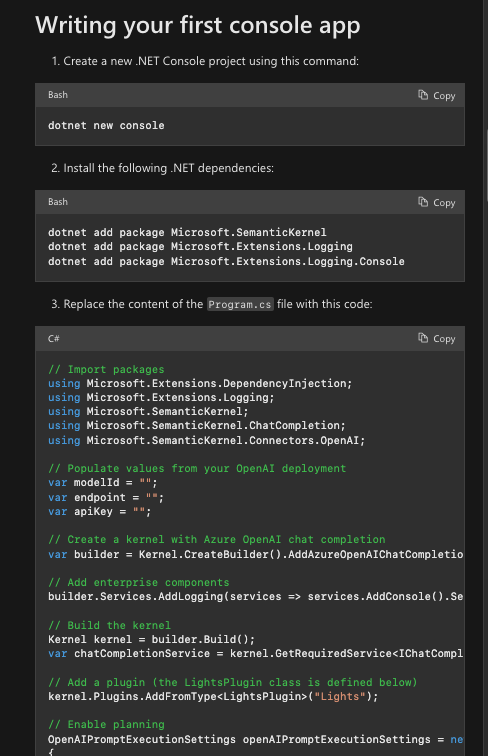 4 Screenshots |
|---|


Add another option to compare side by side
Search by product name to compare pricing, fit, and buyer feedback in one view.Compare similar software options




Related Blogs and Articles for Ai Agent
Disclaimer: This research has been collated from a variety of authoritative sources. We welcome your feedback at [email protected].
Frequently asked questions
- Which is better, Autoblocks or Semantic Kernel by Microsoft?
- The right choice depends on your team size, budget, and specific AI Agent needs.
- Do Autoblocks and Semantic Kernel by Microsoft offer a free trial?
- Neither Autoblocks nor Semantic Kernel by Microsoft currently lists a free trial.
- What is the starting price of Autoblocks vs Semantic Kernel by Microsoft?
- Autoblocks starts at Contact for pricing. Semantic Kernel by Microsoft starts at Contact for pricing.
- What are the top alternatives to Autoblocks?
- Top alternatives to Autoblocks include Amazon Bedrock, Defog, Dynamiq, Promptly AI, illumex.
- What are the top alternatives to Semantic Kernel by Microsoft?
- Top alternatives to Semantic Kernel by Microsoft include Bunch.ai, Lyzr, Hive Data, Wethos AI, eGain Virtual Assistant for Agents.
- What are the common complaints about Autoblocks?
- The case for Autoblocks: advanced security with encryption protocols protecting sensitive data; automation of repetitive tasks to boost productivity. The case against: no publicly available pricing details; limited information on customer ratings and reviews. It also lacks Financial Management and Chat (Messaging).
- What do users say about Semantic Kernel by Microsoft?
- What buyers praise about Semantic Kernel by Microsoft: by acting as middleware, it reduces the complexity involved in connecting AI capabilities to applications. What they raise as reservations: being open-source, support might be limited to community forums or user-generated content, which could pose a challenge for teams needing dedicated or more structured assistance. It does not include Collections and Self Service Portal.
More AI Agent comparisons
Side by side breakdowns of the same products against other options in this category.