
What Is Mental Health Software and How Does It Work?
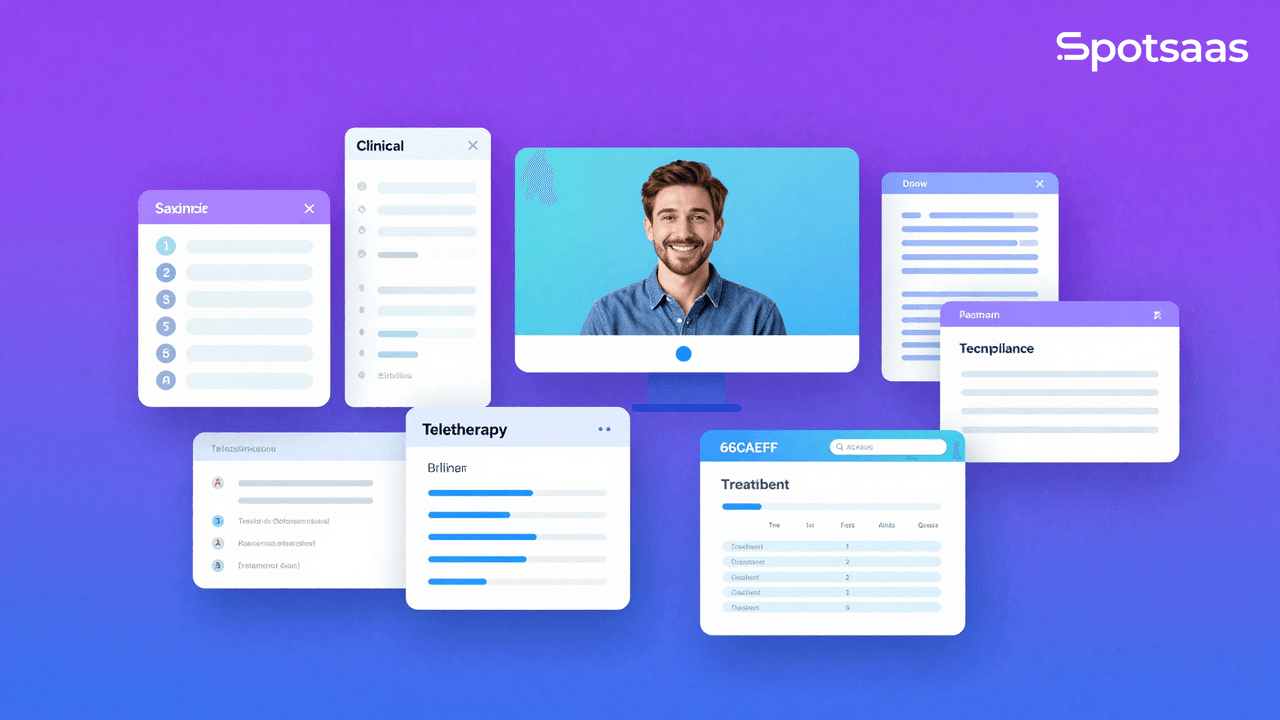
Mental health software is a digital product built to support mental health professionals and healthcare providers with patient care, clinical documentation, scheduling, teletherapy sessions, billing, and compliance. It’s designed for psychiatrists, psychologists, therapists, counseling centers, and behavioral health clinics, giving them tools that improve patient engagement, streamline daily workflows, and support better treatment outcomes overall. In practice, it replaces a patchwork of paper files, spreadsheets, and separate billing tools with one connected system built around how a mental health practice actually runs.
Why Should Mental Health Professionals Use Mental Health Software?
Clinical Documentation Made Easy
Mental health software digitizes therapy notes, assessments, and patient records, cutting down on manual paperwork. Clinicians get organized documentation they can pull up quickly whenever they need it, which supports better patient care. Digital records also help with compliance and accuracy, saving time that would otherwise be lost to administrative work eating into direct therapy hours. That’s time a clinician can put back into seeing patients or simply avoiding burnout from paperwork that used to eat into evenings and weekends.
Appointment Scheduling Made Easy
The software automates appointment scheduling and sends timely reminders to cut down on missed sessions and scheduling conflicts. Therapists can manage their calendars with less manual effort, and patients get the convenience of clear communication about upcoming sessions. Fewer no-shows also means fewer gaps in a therapist’s day that go unpaid and unfilled.
Improved Client Participation
Mental health software provides secure patient portals and apps for easy communication between clients and providers. Patients can access treatment resources, communicate securely, and track their own progress. Engaged patients tend to have a higher probability of treatment success, simply because they’re more involved in their own therapy, rather than treatment being something that only happens for fifty minutes a week.
Teletherapy and Online Counseling
Secure, integrated video conferencing makes remote therapy possible, getting around the geographical barriers that used to limit who a practice could serve. Teletherapy means mental health services stay available to patients who can’t travel or attend in person, and it lets providers extend their practice and take on clients from further away.
Compliance and Data Security
Mental health software keeps patient data management compliant with the Health Insurance Portability and Accountability Act, or HIPAA, along with other applicable regulations. Encryption and secure storage limit unauthorized access to sensitive patient information in the event of a breach attempt, which lowers legal risk for the provider and builds trust with clients. Given how sensitive mental health records are, that trust is often what keeps a patient willing to stay in treatment at all.
Integrated Billing and Insurance Management
This kind of software automates billing, insurance claims submission, and payment tracking, cutting down on administrative overhead. That means fewer billing errors and more timely, accurate reimbursements from insurers. Providers get a clear picture of their financial performance at any given moment, including what’s still outstanding.
Clinical Analytics & Results Tracking
Analytics track patient progress, treatment effectiveness, and clinician productivity in depth. Providers can use real-time outcome tracking to review and adjust treatment approaches with their clients. Detailed reporting supports evidence-based practices and ongoing improvement in patient care, giving a practice hard data to back up decisions that used to rest on instinct alone.
What Are the Key Features of Mental Health Software?
Electronic Health Records (EHR)
Electronic health records securely digitize therapy notes, assessments, histories, and medication details, giving clinicians fast, centralized access to the information they need and cutting down on paperwork and documentation errors. EHRs also improve collaboration across care providers by sharing patient data where appropriate, make compliance with regulatory and reporting requirements easier, and let clinicians deliver accurate, timely, well-coordinated care.
Telehealth and Virtual Counseling
Telehealth and virtual counseling use secure, compliant video conferencing to connect with patients without requiring an in-person visit, extending mental health services to patients wherever they happen to be. It’s convenient enough that patients are less likely to skip a session or travel to attend, it keeps therapy going during emergencies or a move, and it tends to raise patient engagement since treatment fits more easily into someone’s life. It also lets a practice build a patient base that isn’t limited to one geographic area.
Appointment Scheduling and Reminders
Automated appointment management cuts down on no-shows and scheduling conflicts, sending timely reminders by text, email, or app notification. It reduces the provider’s time spent on calendar management, gives patients a clearer, more reliable line of communication, and keeps appointment flow optimized so the practice runs at fuller capacity with less manual scheduling work.
Secure Patient Portal
Patients get online access to their treatment plans and a direct line to communicate with providers, along with the ability to book appointments and make payments in the same place. That ongoing interaction strengthens the patient-provider relationship and gives patients more say in managing their own care, which tends to improve treatment adherence and satisfaction while keeping patients in the loop.
Billing and Insurance Claims Management
Automated handling of invoices, insurance claims, eligibility verification, and reimbursement tracking takes a lot of the administrative load off a practice. It reduces errors, improves claim approval rates, speeds up payments, and cuts down on staff hours spent on billing, all of which improves cash flow and gives a clearer, more accurate picture of revenue.
Customizable Treatment Plans
Built-in tools for building, managing, and monitoring individualized therapy goals let treatment plans update dynamically as a patient’s progress changes. That supports better clinical decision-making with organized patient data, keeps documentation consistent for regulatory purposes, and gives providers the flexibility to meet different patient needs and therapy styles.
Clinical Assessment and Screening Tools
Standardized digital tools for psychological assessment and screening support earlier, more accurate diagnosis and evaluation. They let clinicians track treatment effectiveness objectively, ground clinical workflows in evidence-based data, ease the burden of manual data gathering, and keep compliance intact through accurate clinical records.
Reporting and Analytics
Detailed reporting on patient outcomes and clinical productivity supports evidence-based decisions aimed at improving performance. Automated reporting also makes compliance with regulations easier, surfaces patterns in patient progress and treatment effectiveness, and sharpens financial management through accurate revenue analysis — all of which feeds continuous improvement across clinical and operational workflows.
What Are the Benefits of Mental Health Software?
Better Treatment Efficiency
It cuts down on the manual paperwork and administrative work clinicians would otherwise have to handle, freeing up more time to spend directly with patients and on therapeutic planning. That covers streamlined scheduling, documentation, and billing, with fast access to accurate patient records and histories. Communication between team members gets clearer as a result, which improves overall workflow and lets a practice take on more patients without hurting the quality of care.
Improved Patient Outcomes
Easily accessible online portals and resource materials encourage patients to participate more actively in their own care, aided by ongoing communication and teletherapy options. Clear treatment plans improve patient adherence, and regular progress monitoring supports better clinical outcomes. Removing common barriers to care makes treatment more accessible and easier to stick with, which strengthens the therapeutic alliance and patient satisfaction.
More Revenue and Lower Costs
Streamlined billing work reduces errors and administrative overhead, speeding up insurance reimbursements and improving cash flow. Fewer canceled visits and no-shows mean less lost revenue, and more accurate claims mean fewer rejections and disputes. The result is clearer financial transparency and stronger profitability through leaner practice management workflows.
Better Regulatory Compliance
Patient information stays secured according to HIPAA standards, which strengthens legal protection around data privacy and patient confidentiality. Automated compliance reporting makes audits by regulatory agencies far more manageable, and documentation stays consistent with healthcare industry standards. That reduces the risk of data breaches and unauthorized access, and it builds patient trust through consistent confidentiality practices.
Improved Accessibility to Mental Health Services
Teletherapy outreach helps mental health services get around geographical barriers, opening up access for patients in underserved or remote areas. Flexible scheduling suits patients’ convenience, and the discretion of virtual mental health options helps reduce stigma around seeking care. Practices can extend their services to a broader, more diverse set of patients and keep continuity of care intact even when location would otherwise get in the way.
What Types of Mental Health Software Are Available?
Mental Health EHR Software
These are digital record systems built specifically for mental health professionals, used to manage and securely store therapy notes, clinical histories, and medication tracking. Key strengths include organized, accurate clinical documentation, improved practice efficiency through administrative integration, built-in regulatory compliance support, and easier personalized treatment planning thanks to organized, accessible patient records.
Teletherapy Platforms
These platforms enable secure online counseling and interaction between patients and providers, running remote therapy through HIPAA-compliant video conferencing. They open up mental health care across geographical boundaries, improve patient convenience, engagement, and retention, and keep treatment going despite travel or accessibility issues. Over time, that reach helps a practice grow and sustain a broader patient base than an in-person-only model could support.
Patient Engagement Solutions
These platforms facilitate the conversation between patients and providers to encourage treatment adherence, opening up therapy resources for easy access and letting patients track their own progress. That encourages patients to take a more active role in their mental health, and more frequent touchpoints tend to improve outcome scores. Personalized communication channels help keep patients motivated, which lifts both satisfaction and effectiveness across treatment.
Billing and Practice Management Software
This software automates the core administrative functions, including billing and insurance claims processing, cutting paperwork, errors, and administrative overhead by a wide margin. It streamlines financial workflows and cash flow management, makes tracking and reporting revenue easier, and frees staff to spend more time on clinical work rather than admin — which raises both practice productivity and financial sustainability. For smaller practices without a dedicated billing team, that automation can be the difference between staying profitable and quietly losing revenue to unpaid claims.
Clinical Assessment and Screening Tools
These online solutions provide standardized mental health assessment instruments, enabling more precise screening and earlier identification of mental health disorders. They allow objective tracking of patient progress, ground care in evidence-based outcome measures, and strengthen clinical decisions with actionable data — while reducing the clinician’s workload through automated scoring and documentation.
What Should You Look for When Choosing Mental Health Software?
Selecting the right mental health software matters for providers who want to streamline their practice, improve patient engagement, and strengthen care delivery. A comprehensive system should combine patient record management, scheduling, secure communication tools, and payment processing in one place, rather than forcing staff to jump between several disconnected tools to get a full picture of a patient.
What Goals Should You Define Before Selecting Mental Health Software?
It’s worth clearly defining what you want to achieve before selecting mental health software. Your objectives will dictate the software requirements, whether that’s improving patient outcomes, simplifying administrative tasks, or strengthening patient communication. Tying these goals to measurable outcomes helps make sure the software actually addresses your practice’s specific needs.
Improve patient care and treatment plans
The software should support personalized care by tracking treatment plans, progress, and goals. Tools that monitor patient health metrics and help tailor treatment approaches raise the overall quality of care.
Streamline practice management
Practice management features like automated scheduling, billing, and reporting improve day-to-day efficiency. Simpler workflows cut the time spent on admin, leaving providers more time for patient care.
Enhance patient communication and engagement
The platform should give providers tools for timely updates, appointment reminders, and direct communication with patients. These features improve adherence to treatment plans and help patients feel genuinely supported.
Support compliance and data security
Data security and compliance with regulations like HIPAA are non-negotiable. Mental health software should offer encrypted communication, secure storage of patient data, and customizable access controls to protect sensitive information.
What Mental Health Software Models Are Available?
Understanding the different types of mental health software helps identify the best fit for a given practice. These models vary in functionality, from managing patient records to integrating telehealth features and analytics.
Practice management software
This software focuses on day-to-day practice operations, including appointment scheduling, billing, patient management, and reporting. It’s built to help practitioners organize and optimize their daily workflows.
Telehealth software
Telehealth solutions let providers run virtual therapy sessions, extending care to patients who can’t attend in person. Features typically include video conferencing, secure messaging, and electronic prescriptions.
Electronic Health Record (EHR) systems
EHR systems help mental health professionals keep detailed records of patient information, treatment progress, and medical history. These systems integrate with other healthcare platforms, keeping patient data accessible and current across the board.
Patient engagement platforms
Patient engagement platforms include tools that boost communication and interaction between healthcare providers and patients. They help with appointment booking, medication tracking, and patient education, building a more collaborative relationship between provider and patient.
Why Is Data Integration Critical?
Mental health software has to process sensitive, complex patient data, from treatment plans to billing information, and it needs to integrate smoothly with other systems, like EHRs, practice management software, and analytics tools, to keep operations running without friction.
EHR and medical record integration
The software should integrate with existing EHR systems to give a full view of patient health and treatment history, which is essential for informed decisions and personalized care.
Appointment scheduling and management integration
Integration with scheduling tools keeps appointment booking and automatic reminders running smoothly, improving both efficiency and patient satisfaction.
Billing and payment system integration
Integrating billing and payment systems keeps patient transactions accurate and secure. The system should support multiple payment methods, including insurance billing and digital payments.
Patient communication and feedback tools
The software should include tools for gathering patient feedback, which helps identify where the practice can improve and strengthens the overall patient experience. Secure communication channels should also support timely follow-up care.
What Features and Tools Should You Prioritize?
The software should offer features that improve the operational side of a mental health practice — patient data management, communication, billing, and reporting — along with advanced tools for tracking treatment progress and patient engagement.
Core features
Appointment scheduling and reminders
The software should offer automated scheduling and reminders to cut down on no-shows and make better use of a provider’s time, letting both patients and providers manage and reschedule appointments easily.
Electronic Health Records (EHR)
EHR functionality should make it easy to document and store patient progress, treatment histories, and adjustments to care plans, helping providers maintain a complete record of each patient’s treatment journey.
Secure messaging and communication
Secure messaging keeps communication between therapists and patients confidential and direct, which matters for discussing sensitive topics safely and privately.
Billing and payment integration
Billing features should simplify invoicing, handle insurance claims and payments efficiently, cut administrative work, and keep the numbers accurate.
Advanced features
Telehealth and virtual therapy sessions
Telehealth capabilities built directly into the software let providers offer remote sessions through secure video conferencing, extending access to patients who can’t attend in person.
Customizable treatment plans
The software should offer flexibility in building treatment plans tailored to individual patient needs, helping providers track progress and adjust care strategies as needed.
Data analytics and reporting
Reporting features should let providers track patient outcomes, treatment effectiveness, and financial performance in one view.
Patient portal and self-service features
Patient portals should let patients view their treatment history, book appointments, and communicate with providers, with self-service features that let them take a more active role in their own care.
How Can Reporting and Analytics Support Better Care?
Analytics tools give critical insight into treatment effectiveness, patient behavior, and financial health, letting providers continuously evaluate and improve their services rather than guessing at what’s working. That ongoing feedback loop is what separates a practice that’s improving steadily from one that’s just staying afloat.
Granular reporting
Treatment and progress reports
Reports on patient progress are essential for tracking treatment effectiveness and making sure patients stick to their care plans. These reports also help providers adjust treatment strategies as needed.
Financial reports and revenue tracking
Financial reporting tools help monitor practice revenue, billing accuracy, and profitability, supporting better budgeting and forecasting.
Visualization tools
Custom dashboards
Custom dashboards give an overview of key practice metrics, including patient progress, revenue, and appointment scheduling, letting providers make quick, informed decisions based on real-time data.
Exportable reports
Exportable reports in formats like PDF or Excel make it easy to share insights with stakeholders, so everyone who needs the information has access to it.
What Should You Consider When Comparing Software Pricing?
Mental health software comes with a range of pricing models depending on the features required and the size of a practice. Choosing a structure that fits your budget while still covering the tools you need for efficient practice management matters more than chasing the cheapest option.
Subscription-based pricing
Most platforms use a subscription model, where practices pay a recurring fee based on the number of users, features, or patients. This offers flexibility and scalability as a practice grows.
Pay-per-use pricing
Pay-per-use pricing can suit smaller practices or ones with fluctuating patient loads, since costs are based on specific activities like appointments or patient interactions rather than a flat fee.
Custom pricing plans
Custom pricing suits larger organizations with specific requirements, bundling tailored features and additional support services for more complex needs.
How Can You Ensure Scalability for Future Growth?
Scalability matters for a growing mental health practice — the software needs to handle an increasing number of patients, providers, and locations without performance issues cropping up.
High-volume data handling
The software should be capable of managing large volumes of sensitive patient data while staying efficient as a practice expands.
Multi-location and multi-user support
For practices with multiple locations or providers, the software should support centralized management and let users at different sites access and manage patient records without friction.
Customizable features for growth
The software should offer customizable features that adapt as a practice grows, such as adding new providers, adjusting treatment tracking tools, or expanding patient engagement capabilities.
What Support and Training Options Should the Software Provide?
Strong support and thorough training are essential for smooth implementation and long-term success. Providers should offer clear guidance on using the software and troubleshooting issues, so a practice can get the most out of it instead of leaving half the platform’s features unused simply because nobody on staff was ever shown how they work.
24/7 technical assistance
Round-the-clock support means issues get addressed quickly, minimizing downtime and keeping a practice able to provide care without disruption.
Onboarding and tutorials
Effective onboarding and tutorial resources help a team learn the software quickly, supporting smooth adoption and letting staff make full use of its capabilities.
How Do Leading Mental Health Software Solutions Compare?
This comparison table showcases top mental health software, detailing their pricing, key features, best-fit use case, and notable customers, so mental health providers can quickly compare platforms against their specific practice needs, operational requirements, and budget constraints.
Together, it supports a more informed decision on which software actually enhances clinical efficiency and patient care for your practice.
| Software | Pricing | Key Features | Best For | Customers |
|---|---|---|---|---|
| TherapyNotes | From $49/month per user | EHR, scheduling, billing, telehealth | Small to medium-sized practices | Therapists, psychologists, counselors |
| SimplePractice | From $29/month per user | Telehealth, billing, client portal | Solo providers and small practices | Counselors, psychologists, psychiatrists |
| Valant | Custom Pricing | EHR, integrated billing, outcomes management | Behavioral health agencies | Clinics, mental health organizations |
| TheraNest | From $39/month per user | Telehealth, scheduling, billing, analytics | Medium-sized practices | Therapists, social workers |
| Doxy.me | Free to Enterprise | Simple, secure teletherapy | Individual therapists, telehealth | Solo practitioners, clinics |
| BetterHelp | Custom Pricing | Virtual therapy platform, secure messaging | Online counseling platforms | Therapists, online counseling providers |
| Kareo | Custom Pricing | Practice management, billing, scheduling | Growing mental health practices | Psychiatrists, behavioral clinics |
| Blueprint | Custom Pricing | Digital clinical assessments, patient analytics | Outcomes-focused providers | Mental health clinics, psychologists |
Final Verdict on Choosing Mental Health Software
The right software can meaningfully improve mental health care quality and efficiency, bringing together clinical operations, effective patient communication, and reliable teletherapy and practice management in one well-integrated system, rather than leaving a practice to stitch several disconnected tools together.
The right budget and platform will differ from practice to practice based on a handful of critical factors: compliance requirements, integration capabilities, telehealth functionality, and how easily staff actually adopt it, since even a feature-rich platform doesn’t help much if the team never fully switches over to using it.
Chosen well, mental health software lets professionals focus on what matters — better patient outcomes, more efficient operations, and stronger provider-patient relationships — which ultimately strengthens overall care delivery. It’s worth treating the selection process with the same care a practice puts into its clinical work, since the software ends up touching nearly everything the practice does.

- Independent picks for exactly what you just read about
- Matched to your team size & needs
- Vendors don't pay for placement
Step 1 of 4
How big is your team?
We tailor recommendations to companies your size.















Related Articles
Buyers guide
Twilio Alternatives 2026: 6 Compared and What They Cost
Continue reading →
Buyers guide
How To Choose The Best Auto Dialer Software For 2026
Continue reading →
Buyers guide
How To Choose The Best Freelance Platforms For 2026
Continue reading →
Buyers guide
How To Choose The Best Audience Response Software For 2026
Continue reading →