
Asset management shapes both business performance and personal finance. Whether the assets in question are physical, such as machinery and real estate, or financial, such as stocks and investments, putting them to work deliberately reduces risk, protects their value, and builds income over time. Businesses that treat asset management as an afterthought tend to notice the cost later, in the form of unplanned repairs, idle equipment, or portfolios that drift away from their goals.
The strongest asset management approaches combine tracking, risk reduction, financial planning, and technology. This guide walks through what that looks like in practice, so businesses and individuals can make informed choices that support long-term financial health and sustainable growth.
What is Asset Management?
Asset management is the process of acquiring, operating, and optimizing an asset so it delivers the most value over time. For a business, that means using resources properly, minimizing risk, and meeting financial goals; for an individual, the same principle applies at a smaller scale.
For businesses, enterprise asset management is mainly about the physical assets a company owns — machines, property, and inventory — with the goal of running them efficiently, cutting operational costs, and extending how long each asset stays useful. For an individual, the focus shifts to financial assets: investments, retirement funds, and property that build wealth and long-term security.
Types of Asset Management
Physical Asset Management
Physical asset management is how businesses monitor, maintain, and get the most out of tangible resources — keeping equipment, infrastructure, and inventory in working condition rather than letting them quietly degrade.
- Examples: Equipment, buildings, vehicles, technology, and office supplies.
- Key Objective: Minimize depreciation, prevent downtime, and maximize asset performance.
- Common Tools Used: Asset tracking software, preventive maintenance programs, and lifecycle management strategies.
Financial Asset Management
Financial asset management is about growing and protecting wealth — investing in financial instruments and keeping a portfolio balanced against risk.
- Examples: Stocks, bonds, mutual funds, real estate, and retirement accounts.
- Key Objective: Maximize returns, minimize risks, and achieve long-term financial goals.
- Common Strategies: Diversification, risk assessment, and market trend analysis.
Key Differences Between Physical & Financial Asset Management
| Aspect | Physical Asset Management | Financial Asset Management |
|---|---|---|
| Type of Asset | Tangible assets (equipment, real estate, inventory) | Intangible assets (stocks, bonds, investments) |
| Goal | Maintain asset efficiency and prevent depreciation | Maximize returns and grow wealth |
| Management Approach | Requires maintenance, repairs, and tracking | Focuses on investment strategy and portfolio management |
| Risk Factors | Depreciation, wear and tear, obsolescence | Market volatility, inflation, interest rates |
| Common Tools Used | Asset tracking systems, IoT monitoring, audits | Investment analysis software, risk modeling |
| Ownership Duration | Fixed long-term ownership with lifecycle planning | Can be liquidated or reallocated easily |
Both tangible and financial assets matter to people and businesses, just in different ways. Physical assets need to run efficiently to generate revenue; financial assets need to grow to build wealth. The tools and skills involved differ too — physical asset management leans on maintenance schedules and tracking systems, while financial asset management leans on investment analysis and portfolio strategy. Managing both well is what produces long-term financial stability and organizational growth.
Benefits of Effective Asset Management
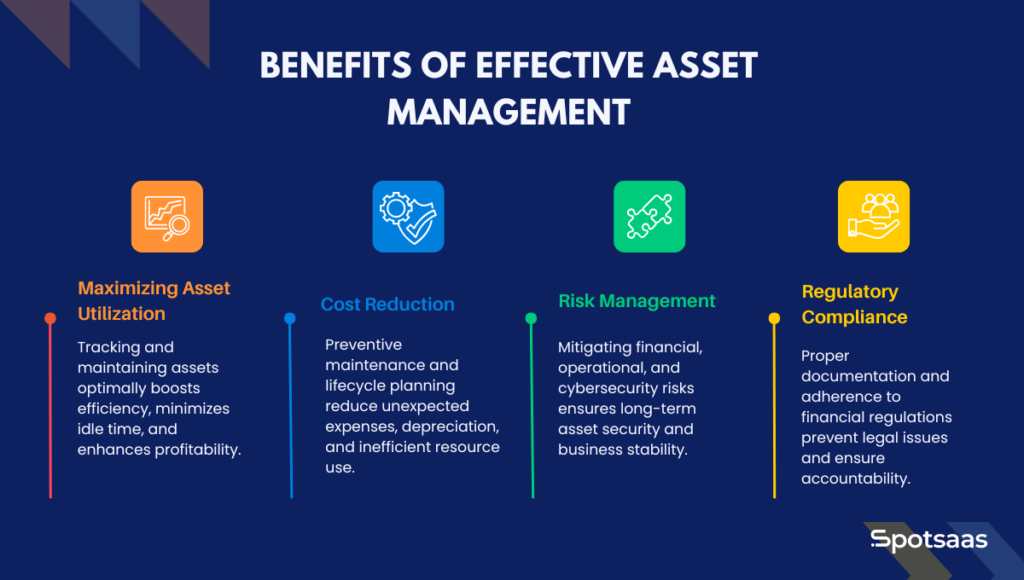
Good asset management makes sure an asset gets used to its full potential, stays properly maintained, and keeps the organization aligned with financial and regulatory requirements.
Maximizing Asset Utilization
Getting the most out of every asset is a central concern of asset management, since underused assets are directly tied to production and profitability. Businesses improve operational efficiency by tracking asset performance in real time, using predictive maintenance, and catching underutilization before it becomes a habit.
On a personal level, keeping good records and staying on top of investments, properties, and financial portfolios pays off in tangible wealth over the long run. When assets are closely monitored and maintained, organizations cut idle time, streamline workflows, and put resources where they’re actually needed — instead of discovering months later that a piece of equipment sat unused or a fund drifted out of line with its target allocation.
Cost Reduction
Good asset management cuts out unwanted costs: depreciation, unplanned repairs, and inefficient resource allocation. Preventive maintenance lowers the odds of surprise equipment failures, and effective lifecycle planning helps businesses and individuals decide when to upgrade or replace an asset before it turns into a liability.
Better decision-making in financial planning and investment optimization means invested capital goes toward projects that maximize returns and minimize risk. Over the years, these choices add up to real reductions in operational and financial cost for asset holders, whether that shows up as fewer emergency repair bills for a business or fewer poorly timed portfolio moves for an individual investor.
Risk Management
Managing risk around assets protects both the financial viability and the operational efficiency of an enterprise. In practice, that means making sure physical assets are properly insured, investment portfolios are diversified to reduce volatility, and digital assets have cybersecurity measures in place.
Companies also need to stay on top of regulatory compliance so their activities don’t trigger legal or financial consequences. Individuals managing financial assets need to keep an eye on market risk, interest rate shifts, and inflation to protect their investments. Staying ahead of risk this way significantly cuts the odds of surprise losses and keeps assets secure over the long term, which matters just as much for a household retirement account as it does for a company’s equipment fleet.
Regulatory Compliance
Asset management also means staying compliant with financial, tax, and operational regulations. Companies need to keep accurate books, declare asset values correctly, and set aside enough cash for tax obligations to avoid penalties. Regular financial audits keep records transparent and accountable, and keep firms aligned with the law and industry standards.
For individuals, keeping proper documentation and tax records for assets like property, stocks, and investments keeps them compliant with government regulations. An organized asset management process makes that compliance easier to maintain alongside day-to-day financial oversight.
How To Implement A Good Asset Management Strategy
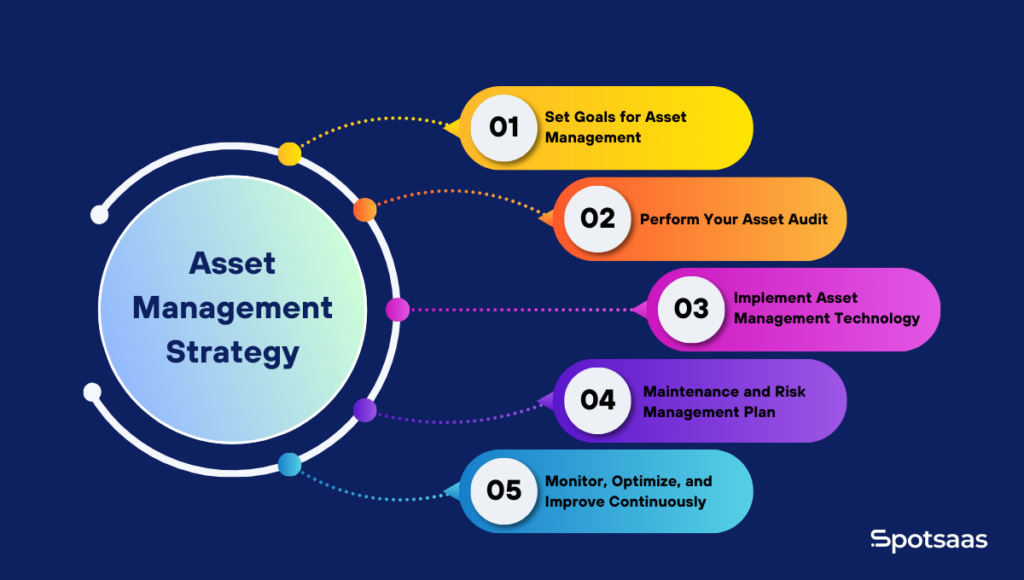
A good asset management strategy drives effective resource use, cost reduction, and sustainable development. Here are five steps to get there.
Step 1: Set Goals for Asset Management
Setting clear objectives is the first and most important step. Identify the primary assets involved — tangible ones like equipment, real estate, and inventory or financial ones like stocks, bonds, or investments — and set performance targets and savings goals so the effort has something concrete to aim at. Without that step, an asset management strategy tends to drift into whatever feels most urgent that week rather than what actually moves the numbers that matter.
Step 2: Perform Your Asset Audit
Asset audits give visibility into the condition, location, and utilization of what a business owns. Build an asset inventory, use tracking software to monitor assets in real time, and flag anything underused or obsolete for reassignment or disposal. Doing this periodically makes resource allocation decisions easier and keeps the organization compliant with regulations — and it’s usually the step that surfaces assets nobody realized were sitting idle in the first place.
Step 3: Implement Asset Management Technology
Digital tools make tracking and maintenance far easier. Choose a system that tracks assets in real time, pairs with IoT sensors for adequate monitoring, and uses AI predictive analytics for maintenance scheduling. Cloud-based systems also improve access and security while cutting down on manual errors, since a shared, always-current record removes the guesswork that comes with spreadsheets updated by hand.
Step 4: Maintenance and Risk Management Plan
Risk management and maintenance work best when they’re proactive rather than reactive — that’s what extends asset life and prevents breakdowns before they happen. Schedule preventive maintenance, run risk assessments to spot vulnerabilities, and stay compliant with financial and safety regulations to keep downtime and operational risk to a minimum. A plan built this way costs less to run than one that only reacts once something has already broken down.
Step 5: Monitor, Optimize, and Improve Continuously
Asset management isn’t a one-time project — it needs ongoing monitoring and optimization. Use data analytics to track utilization and adjust strategy as new insights come in. Keeping an eye on emerging tools like AI and blockchain for security and tracking is worth doing too, since they’re changing how this work gets done. Treating this as a continuous cycle rather than a one-off setup is what separates a strategy that stays useful from one that quietly goes stale within a year.
Major Components of Strategy for Asset Management
An asset management strategy comes down to deploying assets effectively, maintaining them well, and keeping everything aligned with financial or operational goals.
Asset Tracking & Inventory Control
Real-time, intelligent tracking and control keeps operations efficient and cuts down on waste. Digital asset tracking usually combines tools like barcode scanning, RFID, and GPS so companies get an accurate read on where assets actually are, what condition they’re in, and how they’re being used.
Inventory control helps organizations avoid overstocking, cut waste, and get more out of the supply chain. With a clear database of what’s actually in use, equipment, tools, and resources are far less likely to sit idle or go untracked.
Financial Planning & Budgeting
Expense planning and budgeting are part of the strategic side of asset management. Businesses and individuals alike need to direct their available financial capacity toward maintaining existing assets and acquiring new ones, while cutting unnecessary spending.
Budgeting properly for maintenance costs, depreciation, and replacement investments reduces the overall financial burden. Sound financial structuring also helps direct capital investment toward the assets most likely to deliver a strong return.
Risk Assessment & Security
A key part of asset management is identifying and managing the risks that could affect an asset — equipment failure, cybersecurity breaches, theft, and economic downturns among them. Insurance, security protocols, and diversified investments all help mitigate the potential losses.
Regular risk assessments help organizations find their weak points and build contingency plans around them. Staying compliant with legal and regulatory frameworks further strengthens asset security and reduces exposure to financial penalties.
Lifecycle Management
Asset lifecycle management tracks an asset through every stage, from acquisition to disposal. Regular maintenance schedules keep an asset from losing usable life prematurely, while upgrades keep it functioning effectively for as long as it’s in service.
Good lifecycle planning also means knowing the right time to replace or dispose of an asset, before it starts creating inefficiencies elsewhere in operations. Done well, it extends asset longevity, reduces long-run costs, and keeps performance consistent across an organization’s infrastructure.
Integration of Technology
Modern asset management leans heavily on technology to improve both efficiency and decision-making. AI, IoT, and automation let companies monitor assets in real time, anticipate maintenance needs, and allocate resources more precisely.
AI-driven analytics help organizations make investment decisions grounded in data, while IoT sensors surface details on performance, energy use, and wear over time.
Challenges in Asset Management & How to Overcome Them
| Challenge | Explanation | Solution |
|---|---|---|
| Lack of Visibility | Organizations struggle with tracking asset performance and location due to manual processes or outdated systems. | Implement asset tracking systems using IoT, RFID, and GPS to monitor real-time asset usage and reduce loss or misplacement. |
| High Maintenance Costs | Failure to schedule regular maintenance can lead to equipment breakdowns, increasing repair and replacement costs. | Adopt predictive maintenance strategies using AI and automation to schedule repairs before failures occur. |
| Data Management Issues | Handling large volumes of asset-related data manually can lead to errors, inefficiencies, and security risks. | Use cloud-based asset management software to centralize data, automate record-keeping, and ensure data accuracy. |
| Compliance & Regulatory Risks | Companies face difficulties in meeting financial, safety, and environmental regulations due to lack of structured reporting. | Implement compliance management systems that track regulatory requirements and automate reporting processes. |
Best Practices in Asset Management
A well-structured asset management strategy makes better use of resources, cuts costs, and improves organizational efficiency overall.
Adoption of Asset Management Software
Asset management software makes it possible to see the status of assets over time, which leads to better resource allocation and maintenance planning. Automated tracking, predictive maintenance, and cloud-based reporting help a company run more efficiently while cutting down on manual errors.
Regular Audits and Evaluations
Audits keep a business compliant with regulations and legal frameworks, and confirm that asset values are reflected accurately in financial statements and tax filings. Keeping current records also gives businesses better information for repair, upgrade, and investment decisions.
Training and Employee Participation
Training employees to report asset issues quickly cuts down on costly repairs and keeps operations running smoothly instead of grinding to a halt. A workforce that understands the assets they work with tends to waste less, cause less downtime, and take more ownership of the equipment in front of them.
Environment Sustainability and Economic Cost Efficiency
Asset management also has an environmental dimension, since organizations need to cut both waste and their broader environmental impact. That usually means installing energy-efficient equipment, disposing of outdated assets properly, and investing in resources built to last.
Trends in the Future Asset Management
Asset management is changing quickly, with innovation emerging in AI, blockchain, integration of technology, and cloud computing. These advances are giving companies real-time ways to monitor, secure, and optimize their assets for better cost-effectiveness.
AI & Predictive Analytics
AI and predictive analytics are reshaping asset management by applying machine learning to historical data — predicting failures and fine-tuning maintenance schedules before problems show up. The result is more proactive decision-making, less downtime, lower repair costs, and longer asset life.
Blockchain for Asset Security
For asset security, blockchain offers a tamper-proof way to record asset transactions, which helps prevent fraud. It’s particularly useful for tracking ownership of high-value physical and digital assets that need to stay compliant and secure.
IoT & Smart Asset Tracking
IoT-powered smart asset tracking makes it possible to monitor assets in real time through connected sensors and GPS. That lets organizations check the location, use, and condition of an asset remotely, which cuts losses and puts resources to better use.
Cloud-Based Asset Management Systems
Cloud-based asset management systems run on a shared platform that tracks and manages assets at scale. They make accessibility and collaboration easier, provide data security, and get stronger when paired with AI and IoT for smarter control over assets.
Conclusion
Whether it’s a corporation’s physical assets or an individual’s financial assets, keeping them maintained and secured in line with real operational goals comes down to data-driven decisions and the discipline to act on them. Adding the right digital tools to the mix boosts output and profitability, and keeps managers ahead of where the industry is heading.
Organizations that embrace modern asset management solutions and stay proactive about maintenance are the ones that see sustainable growth and lasting operational success. Start optimizing your own asset management approach today — get the right tools in place, plan strategically, and execute with discipline to build long-term value.
Related reading: Best IT Asset Management Software in 2026: 10 ITAM Tools Compared
Frequently Asked Questions
What is asset management, and why is it important?
Asset management is the strategic process of acquiring, maintaining, and optimizing assets to maximize their value and efficiency. It helps businesses and individuals reduce costs, mitigate risks, and ensure long-term financial stability.
How does asset management benefit businesses and individuals?
Effective asset management improves resource utilization, minimizes maintenance costs, enhances risk management, and ensures compliance with financial and operational regulations. It also helps businesses boost profitability and individuals grow their wealth.
What are the key components of a successful asset management strategy?
A well-structured asset management strategy includes asset tracking, financial planning, risk assessment, lifecycle management, and technology integration using AI, IoT, and automation to enhance efficiency.
What are the biggest challenges in asset management, and how can they be overcome?
Common challenges include lack of visibility, high maintenance costs, data management issues, and compliance risks. These can be addressed by adopting real-time tracking solutions, predictive maintenance, cloud-based data management, and regulatory compliance tools.
What are the emerging trends shaping the future of asset management?
The future of asset management is driven by AI-powered predictive analytics, blockchain for asset security, IoT for real-time tracking, and cloud-based asset management platforms, improving scalability, security, and efficiency.

- Independent picks for exactly what you just read about
- Matched to your team size & needs
- Vendors don't pay for placement
Step 1 of 4
How big is your team?
We tailor recommendations to companies your size.















Related Articles
IT Management
Microsoft Intune Pricing 2026: Plan 1, Plan 2, Suite and What Microsoft 365 Includes
Continue reading →
IT Management
Best Remote Access Software 2026: 11 Tools Compared by Price
Continue reading →
IT Management
Splashtop Pricing 2026: Solo, Pro, Performance and SOS Costs
Continue reading →
IT Management
Atera Pricing 2026: Every Plan, Per-Technician Cost and What You’ll Pay
Continue reading →