

Welcome to the future, where robots rule the world and humans are mere pawns in their grand schemes for domination… Okay, okay, maybe that’s a bit of an exaggeration. 📣
But it is true that we’ve come a long way since the early days of customer relationship management (CRM) and marketing automation.
These two technologies are no longer just buzzwords thrown around by techies and marketers, but powerful tools that can transform the way you do business.
So, whether you’re a seasoned pro or just starting out, buckle up and get ready to learn how to combine CRM and marketing automation like a boss. 👇🏼
What Is CRM? 📲
CRM stands for Customer Relationship Management. It refers to a set of strategies, technologies, and practices that businesses use to manage their interactions with customers and potential customers. The goal of CRM is to build and maintain long-term relationships with customers by understanding their needs and preferences, and by providing personalized and timely communication and support.
CRM systems typically include tools for tracking customer interactions, managing sales pipelines, analyzing customer data, and automating marketing campaigns.
By using CRM, businesses can improve customer satisfaction, increase sales and revenue, and gain a competitive advantage in their markets.
What Is Marketing Automation? 🔊
Marketing automation is a technology that allows businesses to automate repetitive marketing tasks and workflows. This can include email campaigns, social media posts, lead nurturing, and other marketing activities.
Marketing automation software uses rules and triggers to automatically send personalized messages to customers and prospects based on their behavior and preferences. For example, a customer who abandons a shopping cart on a website might receive an automated email reminder with a special offer.
Marketing automation can also help businesses track and analyze customer interactions across multiple channels, such as email, social media, and website visits.
By automating these processes, businesses can save time and resources, improve lead generation and conversion rates, and provide more personalized and relevant experiences for their customers.
Want to learn more about Marketing Automation Software? Here is a Guide
CRM V/S Marketing Automation
Here are all the key differences between CRM and Marketing Automation, along with a brief explanation of each point:
| Point Of Difference | CRM | Marketing Automation |
|---|---|---|
| Scope | CRM focuses on managing the overall customer relationship | Marketing Automation focuses specifically on automating marketing tasks and workflows |
| Functionality | CRM software includes tools for customer data management, sales pipeline management, customer service and support, and customer engagement. | Marketing Automation software includes tools for lead generation, lead nurturing, email marketing, social media marketing, and campaign management |
| Data Sources | CRM software gathers and stores customer data from multiple sources, such as customer interactions, website visits, and social media activity | Marketing Automation software primarily relies on data from marketing channels, such as email opens, clicks, and website form submissions. |
| Target Audience | CRM software focuses on managing relationships with existing customers | Marketing Automation software is primarily used for lead generation and nurturing, targeting potential customers who have not yet made a purchase |
| Workflow Automation | CRM software may include workflow automation tools, but its primary focus is on managing the customer relationship. | Marketing Automation software is designed to automate repetitive marketing tasks, such as sending emails to prospects or scheduling social media posts. |
| Marketing Attribution | CRM software may also include these tools, but its primary focus is on the customer relationship, rather than on marketing attribution. | Marketing Automation software includes tools for tracking and analyzing customer interactions across multiple channels, to better target and personalize marketing messages. |
Benefits Of Combining CRM With Marketing Automation 👏🏼
Combining CRM with marketing automation can provide numerous benefits for businesses, including:
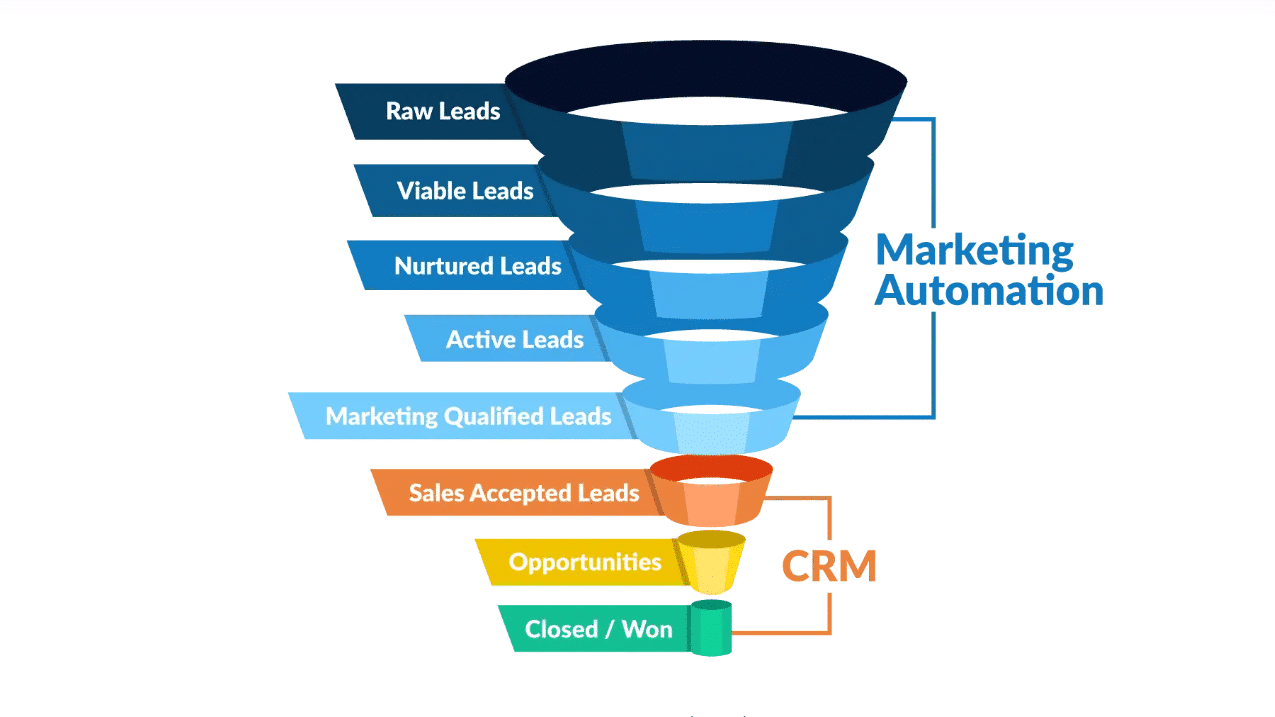
- Improved Lead Generation: By integrating marketing automation with CRM, businesses can use data from multiple channels to identify and nurture potential leads. Best marketing automation tools can help businesses automate lead scoring and segmentation, while CRM tools can help businesses track lead activity and prioritize sales efforts.
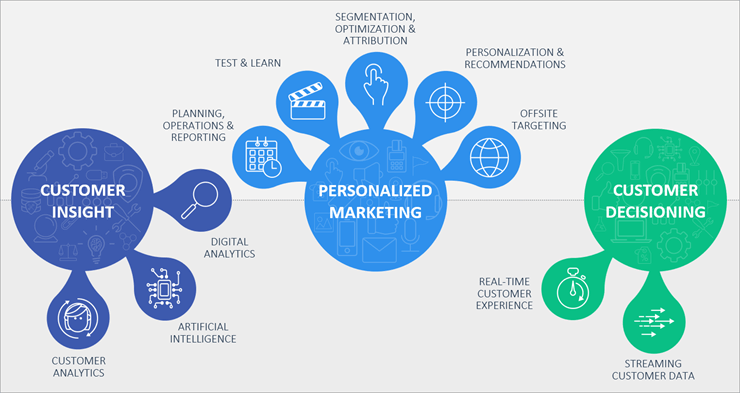
- Personalized Customer Experiences: By combining CRM data with marketing automation, businesses can provide personalized experiences for customers and prospects. Marketing automation tools can use CRM data to create targeted and personalized messaging across multiple channels, while CRM tools can help businesses track and analyze customer interactions to provide more personalized service and support.
- Increased Efficiency: By automating repetitive marketing and sales tasks, businesses can free up valuable time and resources for other business operations. Marketing automation can help businesses automate email campaigns, social media posts, and other marketing activities, while CRM can help businesses automate sales pipeline management, customer service, and support.
- Improved ROI: By using CRM and marketing automation together, businesses can better track and measure the effectiveness of their marketing and sales efforts. Marketing automation tools can provide insights into campaign performance, while CRM can provide insights into customer behavior and sales performance. This data can help businesses make more informed decisions and optimize their marketing and sales strategies for improved ROI.
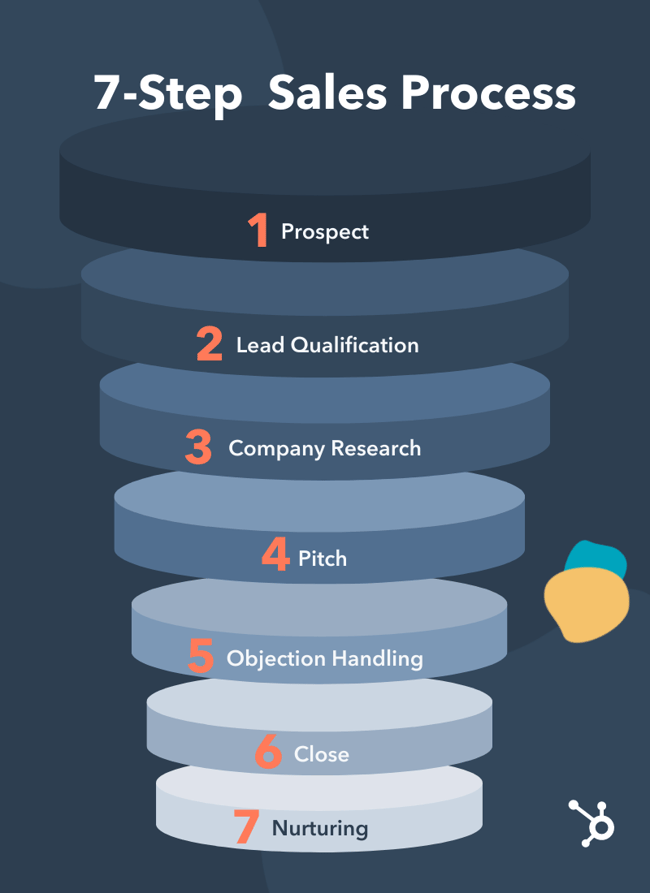
- Simplified Sales Processes: By integrating CRM with marketing automation, businesses can simplify their sales processes and improve collaboration between marketing and sales teams. Marketing automation can help generate and nurture leads, while CRM can help track and manage sales pipelines and customer relationships.
Overall, combining CRM with marketing automation can help businesses improve their marketing and sales processes, provide better customer experiences, and drive more revenue.
How Can CRM & Marketing Automation Be Combined, Explain The Process 👏🏼
Combining CRM and marketing automation involves integrating the two systems to share data and automate processes. Here’s a general process for combining CRM and marketing automation:
- Identify the Key Data Points: The first step is to identify the key data points that will be shared between the CRM and marketing automation systems. This may include customer data, such as contact information and purchase history, as well as marketing data, such as email opens, clicks, and website form submissions.
- Choose the Right Integration Tool: Next, choose an integration tool that can connect the CRM and marketing automation systems. There are many integration tools available, such as Zapier, PieSync, or native integrations offered by the CRM and marketing automation vendors.
- Set up the Integration: Once you’ve chosen an integration tool, set up the integration by configuring the connection between the CRM and marketing automation systems. This may involve mapping data fields and setting up triggers and actions for automating tasks and workflows.
- Automate Workflows: Once the integration is set up, automate workflows between the two systems. For example, use marketing automation to send targeted emails to prospects based on their behavior, and use CRM to automatically create new leads or update lead scores based on that behavior. Integrating rfp automation further enhances this process by simplifying the creation and management of request-for-proposal documents, ensuring faster response times and better alignment between sales and marketing teams
- Monitor and Optimize: Finally, monitor the performance of your combined CRM and marketing automation system and optimize it over time. Use data analytics and reporting tools to track and measure the effectiveness of your marketing and sales efforts, and make adjustments as needed.
In summary, combining CRM and marketing automation involves integrating the two systems to share data and automate processes, ultimately improving lead generation, personalization, efficiency, ROI, and sales processes. The process typically involves identifying key data points, choosing an integration tool, setting up the integration, automating workflows, and monitoring and optimizing over time.
Examples Of CRM & Marketing Automation Combined Together
Here are some examples of how marketing automation and CRM can work together:
- Lead Nurturing: Marketing automation can be used to send targeted and personalized content to leads based on their behavior and interests. The CRM system can then be used to track and manage those leads as they move through the sales funnel, automatically updating lead scores and sending notifications to sales reps when a lead reaches a certain threshold.
- Email Campaigns: Marketing automation can be used to create and send email campaigns to targeted audiences based on their behavior and preferences. The CRM system can then track email opens, clicks, and other engagement metrics. This provides useful detail into the effectiveness of the campaign.
- Automated Workflows: Marketing automation can be used to automate repetitive tasks, such as sending welcome emails, follow-up emails, and reminders. The CRM system can then be used to track these activities, updating lead status and notifying sales reps of any changes.
- Personalized Content: Marketing automation can be used to personalize content based on a lead’s behavior, preferences, and interests. The CRM system can then be used to track this behavior and provide useful detail into which content is most effective for each individual lead.
- Reporting and Analytics: Marketing automation can provide useful detail into the effectiveness of marketing campaigns, while the CRM system can provide insights into sales performance. By combining these insights, businesses can gain a more complete view of their marketing and sales efforts and make data-driven decisions.
In summary, by combining marketing automation and CRM, businesses can automate repetitive tasks, personalize content and messaging, and gain useful detail into the effectiveness of their marketing and sales efforts. This can help businesses generate more leads, close more deals, and drive more revenue.
Top 2 CRM & Marketing Automation Tools
HubSpot
HubSpot is an all-in-one marketing, sales, and service platform that offers CRM and marketing automation functionalities. The CRM system provides a centralized database for customer information, while the marketing automation tools offer email marketing, lead scoring, and workflow automation.
Businesses can use HubSpot integration to smoothly connect their CRM and marketing tools with other applications. This improves overall efficiency and enables smoother workflows. HubSpot’s complete suite gives businesses to simplify operations and improve customer engagement through personalized marketing strategies and efficient sales processes.
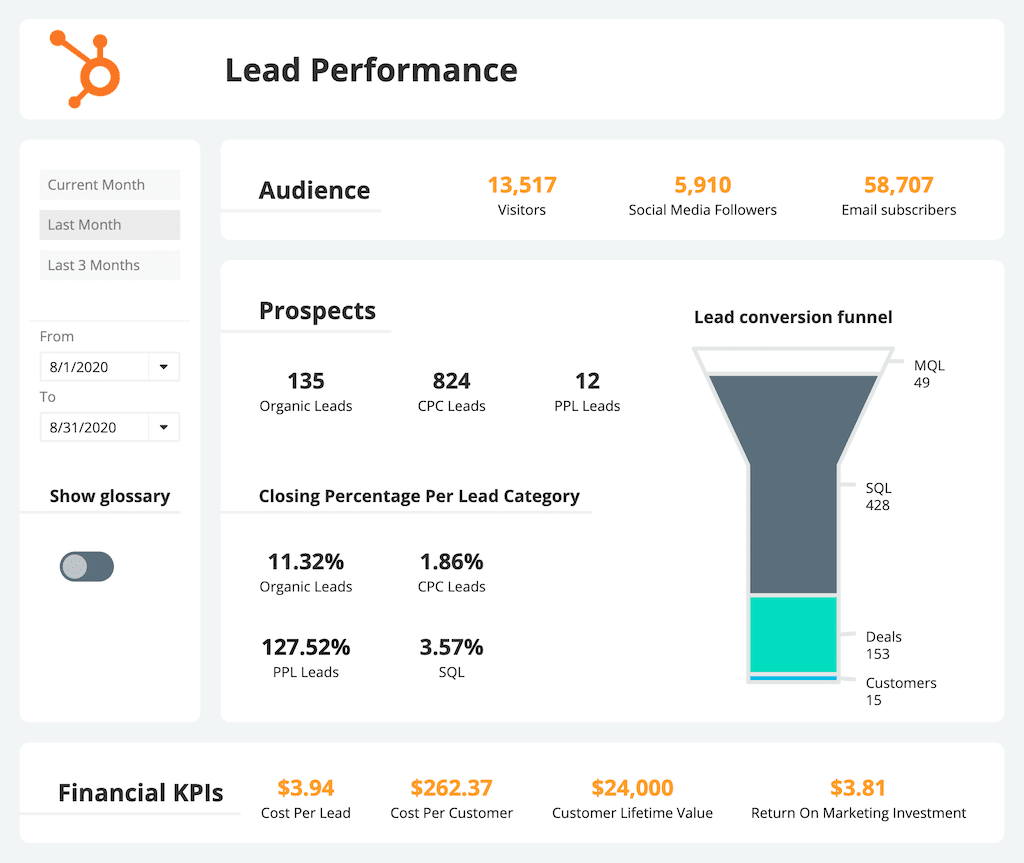
Hubspot Features
- Contact Management
- Product Catalog
- Lead Scoring
- Project Management
- Referral Tracking
- Marketing Automation
- Customer Support
- List Management
- Quotes (Proposals)
Hubspot Pros & Cons
| Pros | Cons |
|---|---|
| Advanced features | Expensive |
| All-in-one solution | Difficult set-up process |
| Advanced automation |
Marketo
Marketo is a marketing automation platform that offers a CRM system as part of its functionality. The platform provides lead scoring, email marketing, and analytics tools, while the CRM system provides a centralized database for customer information.
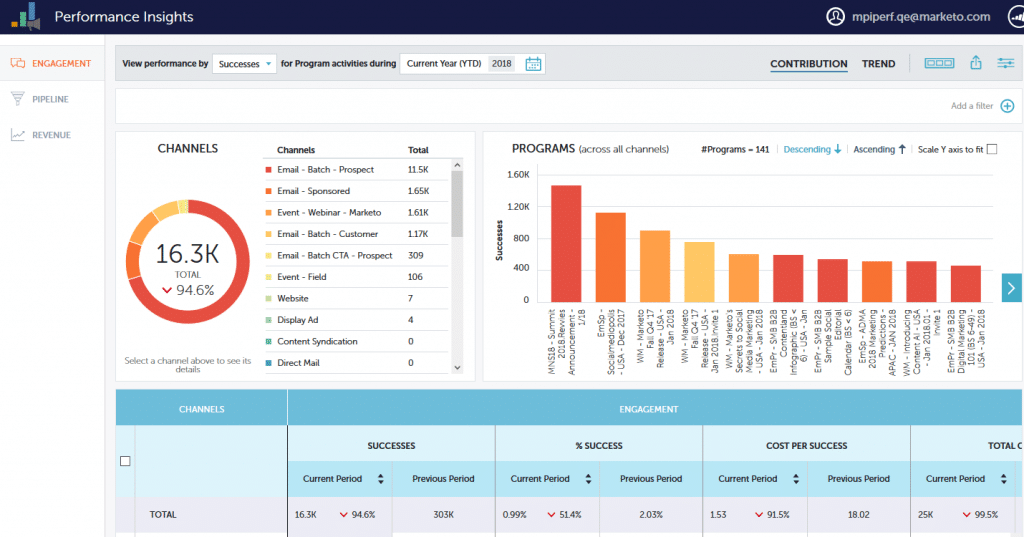
Marketo Features
- Lead Scoring
- Multivariate Testing
- Marketing Analytics (ROI Tracking)
- Campaign Segmentation
- Channel Management
- Email Drip Campaigns
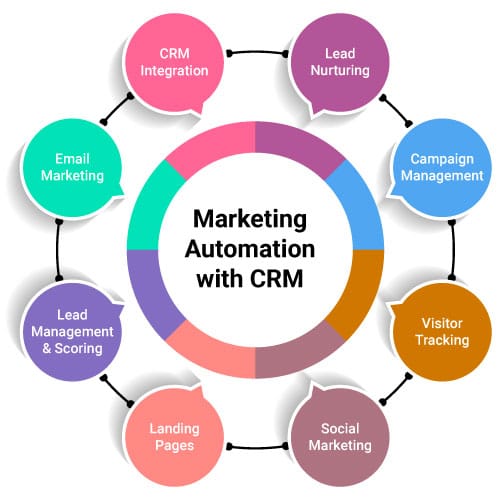
- Landing Pages
- Lead Management
- Lead Nurturing
- Website Visitor Tracking
Marketo Pricing
Marketo offers 4 paid plans. Pricing for each of these plans is quotation based. However, the features include:
1- Growth- Core marketing email, segmentation, automation and measurement.
2- Select- Essential marketing automation and measurement.
3- Prime: Lead- and account-based marketing with journey analytics and AI personalization.
4- Ultimate- The most powerful marketing automation with premium attribution.
For Detailed pricing, visit Marketo pricing page.
Marketo Pros & Cons
| Pros | Cons |
|---|---|
| Enables automation | Lacks data filtration features |
| Advanced & genuine reporting | Lacks AMP script adoption |
| Easy integration with other tools |
Conclusion ✍🏼
CRM and marketing automation together address core business challenges: they eliminate manual data entry and follow-up work, enable personalized messaging at scale, and create visibility across the entire customer lifecycle. Teams gain concrete insight into which campaigns drive conversions and where prospects stall in the sales funnel.
The result is measurable—faster lead progression, higher close rates, and more predictable revenue. Companies that integrate these systems create a feedback loop: sales data informs marketing strategy, and marketing insights refine the sales approach. Without this alignment, teams operate in silos and miss opportunities to act on customer behavior in real time.
The integration itself requires planning—choosing tools that share data cleanly, defining which metrics matter to both teams, and training users to trust the system. Done well, CRM and marketing automation remove friction from growth, letting your business respond faster to market shifts and customer needs.
Read More
Ways To Build Strong Professional Relationship At Workplace- 7 Tips
10 PLG (Product Led Growth) Principles To Follow
Four Strategies For CRM And Marketing Automation To Help Manufacturers Deal With Supply Chain Issues
Frequently Asked Questions (FAQs)
What is CRM and marketing automation integrations?
CRM (Customer Relationship Management) and marketing automation integrations refer to the process of linking together a company’s CRM system and marketing automation platform to create a smooth flow of data between the two systems.
Which type of CRM is used for marketing automation?
The type of CRM that is used for marketing automation is typically a “Marketing CRM” or “Marketing Automation CRM.”
What are the benefits of CRM and marketing automation?
There are many benefits to integrating CRM and marketing automation systems. Here are some of the key benefits:
Improved customer experienceIncreased efficiencyEnhanced lead generationBetter customer insightsIncreased revenue
Why is CRM integration important?
CRM integration is important for a number of reasons:
Centralized customer dataImproved efficiencyEnhanced customer experienceBetter reporting and analyticsScalability:
Compare alternatives to the tools in this post

- Independent picks for exactly what you just read about
- Matched to your team size & needs
- Vendors don't pay for placement
Step 1 of 4
How big is your team?
We tailor recommendations to companies your size.















Related Articles
CRM Software
CRM Software Pricing Guide 2026: What You Should Expect to Pay
Continue reading →
Buyers guide
How To Choose The Best Experience Management software For 2026
Continue reading →

Best Tools
Best Salesforce Alternatives in 2026: Top CRMs When You’re Ready to Switch
Continue reading →
CRM Software
Best CRM Alternatives in 2026: Top Picks for Every Budget and Use Case
Continue reading →