

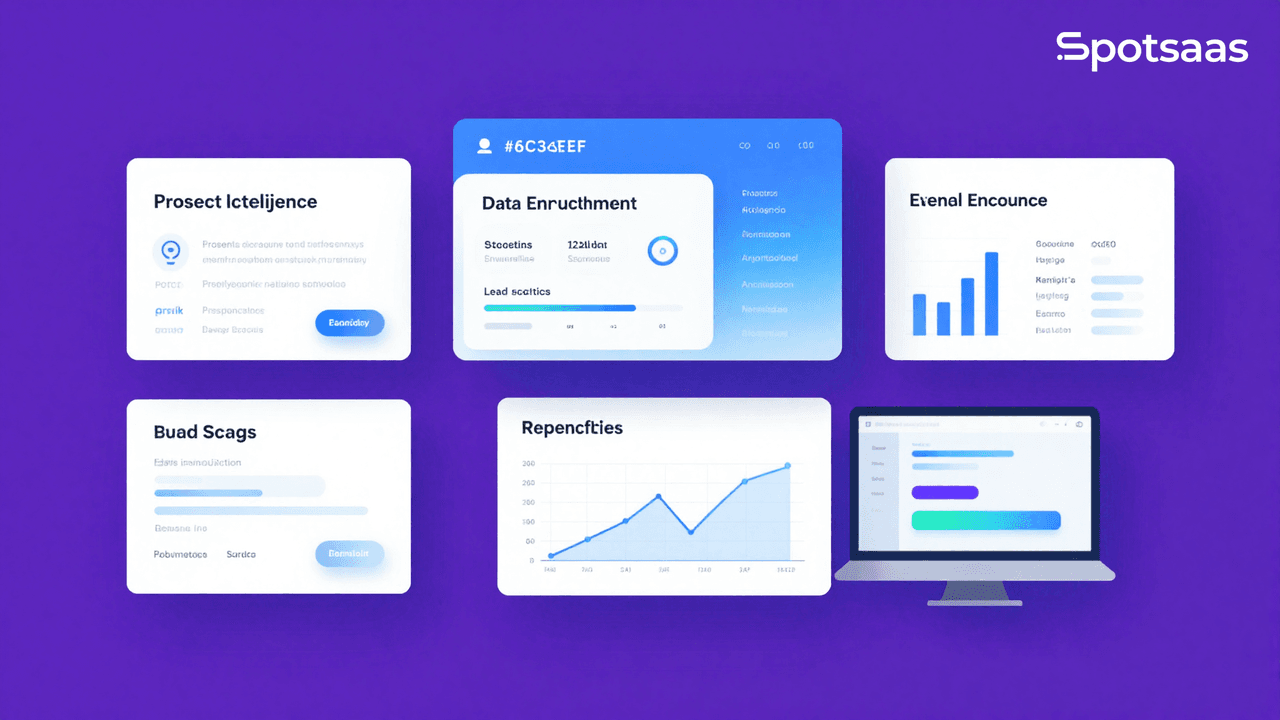
Picking the right sales intelligence software for your business can feel confusing when the market is full of options. With so many products to compare, the best choice depends on what your business actually needs, so it pays to decide with clear criteria in front of you rather than guessing.
What is Sales Intelligence and its Importance for Businesses?
Sales intelligence is the use of data and market research to give businesses insights about their prospects, customers, and competitors. It helps companies make informed decisions and improve their sales strategies with real-time data and analysis.
These solutions enable organizations to gather data from a variety of sources, such as social media platforms, CRM software, and lead generation tools. That data can then be analyzed to identify potential leads, track customer behaviour, and gain a competitive advantage in the market.
This information lets businesses tailor their sales approach to customer preferences and needs. Over time, that tailored approach raises sales efficiency and helps generate more revenue.
Benefits for businesses
Sales intelligence software can help a business in many ways. It gives firms the ability to make better choices, and they can spot trends and patterns using data from the software. With that, they get an edge over others in their market area.
The tools also tell firms more about buyer habits. Teams can do a better job of finding leads that will turn into sales. Tools like Salesforce or HubSpot were top names for 2023.
Firms that use these tools also get to learn about important changes at other companies, such as funding rounds or shifts in their tech stack use over time.
Key Features to Consider When Choosing Sales Intelligence Software
When you choose sales intelligence software, several key features can shape how well and how efficiently your sales efforts work. One important feature is lead generation, which helps you identify and target potential customers.
Another crucial feature is contact data accuracy, which ensures your sales team has access to reliable and up-to-date information about prospects. Account-based targeting is another valuable feature, letting you focus on specific companies or industries that align with your target market.
Integration with CRM systems matters too, because it keeps your workflows and data management connected in one place. Finally, analytics and reporting capabilities give you valuable insight into sales performance and support data-driven decision-making.
Weighing these features carefully will help you choose the best sales intelligence software for your business needs.
Lead generation
Lead generation is a core feature of sales intelligence software. It helps businesses find new customers. The tool scans the internet for data about people who may want to buy your product or service.
This can be a big help in raising and boosting sales. Good lead generation gives you names, addresses, and more details about these potential customers very quickly. With that useful information, your team has a real head start on making those important sales pitches.
Contact data accuracy
Contact data accuracy is a crucial factor to consider when choosing sales intelligence software. Having accurate and up-to-date contact information for your leads and prospects is essential for effective sales prospecting and lead generation.
With accurate contact data, you can reach the right people at the right time, which improves your chances of conversion. Look for tools that offer verified user reviews and product reviews so you can judge the accuracy of their contact data.
This helps you avoid wasting time and resources on outdated or wrong information, so you can focus on building real connections with potential customers.
Account-based targeting
Account-based targeting is a key feature to weigh when choosing sales intelligence software. It lets businesses focus their effort on specific target accounts, which improves the odds of success in sales and marketing campaigns.
With account-based targeting, companies can identify and prioritize high-value accounts against their own criteria and preferences. That helps in personalizing outreach and tailoring messages so they resonate with the target audience.
Using the data and insights from sales intelligence tools, businesses can understand their target accounts’ needs, pain points, and decision-making processes.
This in turn lets them build more targeted strategies that are more likely to yield higher conversion rates and revenue growth.
Sales intelligence software also provides real-time, up-to-date information about target accounts, including company details, contact information for decision-makers and influencers, relevant news articles, social media activity, funding announcements, technology usage trends, competitor analysis, and customer insights.
All this data gives businesses actionable insight that supports informed decision-making throughout the entire sales cycle, from first contact to closing.
Using account-based targeting features from vendors such as Crunchbase, Salesforce, HubSpot, and SimilarWeb, businesses can simplify their operations and work more efficiently. They can also drive revenue growth through better lead generation opportunities, more accurate prospecting, and stronger customer engagement across the sales process.
Integration with CRM
Sales intelligence software that integrates with Customer Relationship Management (CRM) systems is important for businesses. This integration lets data move between the sales intelligence tool and the CRM, which provides a more holistic view of your customer interactions.
With this integration, sales teams can see valuable insights directly inside their CRM platform, which removes manual data entry and improves efficiency. It also allows for better lead management and tracking, since all the relevant information sits consolidated in one place.
CRM integration improves the accuracy of contact data, gives better pipeline visibility, and supports personalized communication with prospects and customers. That means sales teams have current information on hand to make informed decisions and drive revenue growth.
Analytics and Reporting
Sales intelligence software does more than provide data; it also analyzes and reports on that data. With analytics and reporting features, businesses can gain valuable insight into their sales performance, customer behaviour, and market trends.
This information helps them make informed decisions and take proactive steps to improve their sales strategies. By tracking key metrics such as revenue growth, conversion rates, and customer lifetime value, companies can identify areas for improvement and develop targeted action plans.
The ability to generate customizable reports also lets businesses share important findings with stakeholders and monitor progress over time. On the whole, analytics and reporting capabilities are essential for turning raw sales intelligence data into actionable insight.
Factors to Consider Before Purchasing Sales Intelligence Software
Before buying sales intelligence software, there are several factors to weigh. First, take into account your budget and pricing options. Decide how much you are willing to invest in a sales intelligence solution and compare the costs of different vendors.
Next, consider the size and industry of your company, since this may affect the specific features and capabilities you require from the software. Ease of use and training should also be evaluated, so check that your team can easily adopt and use the software effectively.
Lastly, investigate the customer support that each vendor offers to determine whether they provide timely assistance and help when you need it.
Budget and pricing
Budget and pricing play a big role in choosing the best sales intelligence software for your business. Here are some factors to consider:
- Cost-effectiveness: Look for software that balances features and price. Consider the long-term value it can provide to your business.
- Pricing plans: Check whether the software offers flexible plans that suit your budget and needs. Look for options like monthly or annual subscriptions, plus tiered plans based on usage.
- Scalability: Consider whether the pricing scales with your business growth. Make sure you can upgrade or downgrade your plan without major cost implications.
- Hidden costs: Watch for hidden costs such as extra modules, integrations, or support fees that may come with the software. Clarify all costs upfront to avoid surprises.
- Return on investment (ROI): Evaluate how the software’s pricing aligns with the potential ROI it can deliver for you. Look for concrete examples or case studies that show how other businesses have benefited from using the software.
Company size and industry
The size of your company and the industry you are in play a big role in choosing the right sales intelligence software. Here are some factors to consider:
| Key Consideration | Description |
|---|---|
| Scalability | The software should be able to handle increased data volume and user requirements as your company grows. |
| Industry-specific Features | Some tools offer advanced analytics or tailored prospecting methods specific to certain industries. It’s important to choose features that align with your industry needs. |
| Integration Capabilities | The software should integrate with existing systems, such as CRM or marketing automation platforms, to keep data flowing and remove manual data entry. |
| Customization Options | The tool should allow customization of fields, workflows, and reports to meet specific business needs, improving productivity and simplifying processes. |
| Compliance Requirements | Ensure the software complies with industry-specific regulations, such as GDPR or HIPAA, if applicable to your industry. |
| User Training and Adoption | Assess the user-friendliness of the software and the extent of training required. A tool that is intuitive and easy to learn will be adopted more quickly and effectively. |
Ease of use and training
Sales intelligence software should be easy to use and require minimal training. Consider the following factors when you evaluate the ease of use and training aspect of a sales intelligence tool:
- User-friendly interface: Look for software that has an intuitive and easy-to-navigate interface. This reduces the learning curve for your team and makes it easier for them to adopt and use the software effectively.
- Onboarding process: Check whether the software provider offers a smooth onboarding process. This includes providing training materials, tutorials, and ongoing support to help your team understand how to use the software efficiently.
- Customization options: Make sure the software lets you customize it according to your business needs. This can include adjusting settings, adding or removing features, and tailoring reports to match your specific requirements.
- Integration capabilities: Consider whether the software integrates with your existing systems, such as CRM platforms or other sales tools. Integration reduces the need for extra training and allows for a smoother workflow within your organization.
- Support and documentation: Look for a provider that offers comprehensive support services, including regular updates, technical assistance, and a knowledge base of resources. This will help your team troubleshoot any issues they may encounter while using the software.
Customer support
When choosing sales intelligence software, it is important to consider the level of customer support on offer. Good customer support means you have assistance if any issues arise or if you need help with using the software effectively.
Look for a vendor that offers responsive and knowledgeable customer support across various channels such as phone, email, or live chat. It can help to read product reviews and verified user reviews to get a sense of the support quality that different sales intelligence software vendors provide.
Compare alternatives to the tools in this post

- Independent picks for exactly what you just read about
- Matched to your team size & needs
- Vendors don't pay for placement
Step 1 of 4
How big is your team?
We tailor recommendations to companies your size.















Related Articles
Buyers guide
Twilio Alternatives 2026: 6 Compared and What They Cost
Continue reading →
Buyers guide
How To Choose The Best Auto Dialer Software For 2026
Continue reading →
Buyers guide
How To Choose The Best Freelance Platforms For 2026
Continue reading →
Buyers guide
How To Choose The Best Audience Response Software For 2026
Continue reading →