
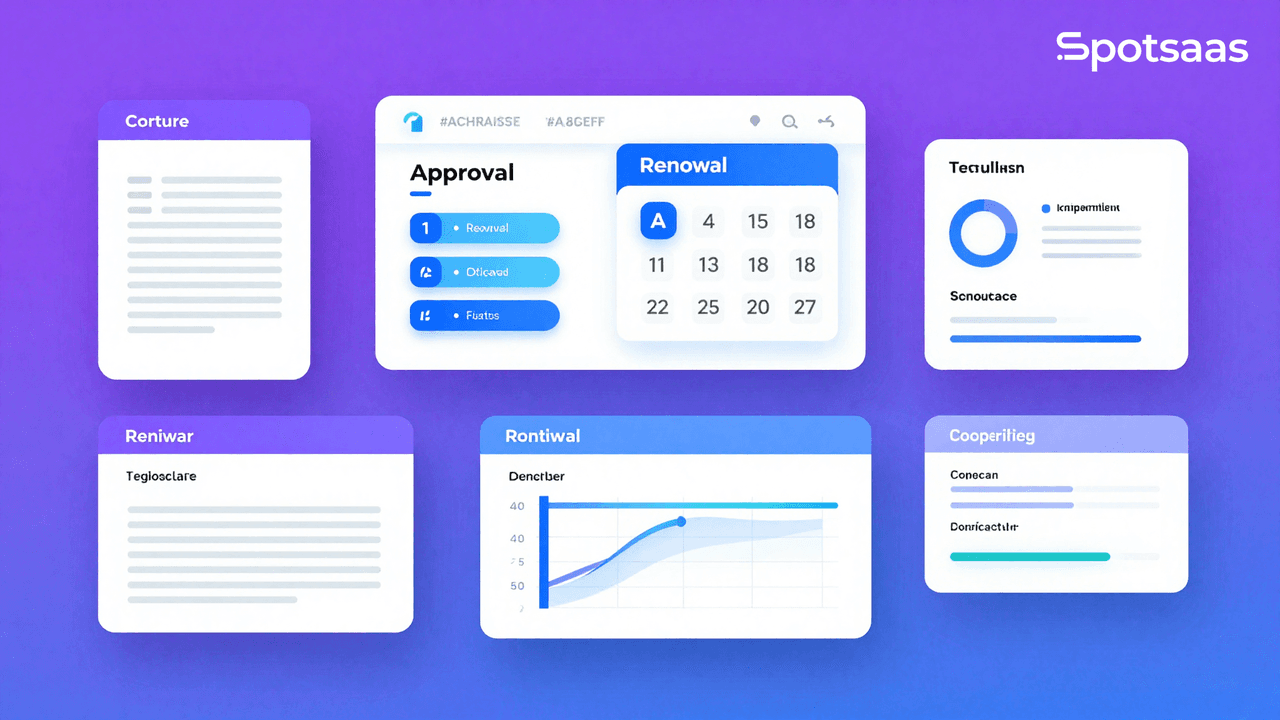
Contract management software has moved from a nice-to-have to core legal and operational infrastructure for any organization that manages a significant volume of agreements. Missed renewal dates, buried obligations, non-standard clauses that expose the company to risk, and contracts stored across email threads and shared drives are not just inconveniences — they create measurable financial and legal liability. The right contract management platform centralizes the entire contract lifecycle, from drafting through execution, obligation tracking, renewal, and archival. This guide covers what to look for and how to evaluate your options in 2026.
What Is Contract Management Software?
Contract management software (CLM — Contract Lifecycle Management) is a platform that manages the end-to-end process of creating, negotiating, executing, and storing contracts. It replaces disconnected workflows — Word documents sent via email, wet signatures, contracts stored in shared folders with no version control — with a structured system that tracks every contract from initial request through expiration or renewal.
Modern CLM platforms go beyond storage. AI-powered contract review tools can automatically identify non-standard clauses, flag missing provisions, and extract key data points like payment terms, governing law, and termination rights without manual review. According to Gartner’s Contract Lifecycle Management research, organizations using mature CLM platforms reduce contract cycle times by 20 to 50 percent and achieve meaningfully better compliance with contractual obligations compared to manual processes.
Key Features of Contract Management Software
How to Choose the Right Contract Management Software
Identify Your Contract Volume and Complexity
The right CLM for a company signing 50 contracts per year looks very different from one handling 5,000 annual agreements across multiple contract types. Low-volume organizations primarily need a searchable repository, renewal alerts, and basic eSignature workflows. High-volume organizations need self-service authoring, parallel approval workflows, counterparty negotiation portals, and obligation tracking at scale. Start by counting your annual contract volume, the number of contract types you manage, and whether contracts originate internally (you draft) or externally (counterparties send their paper).
Evaluate AI and Automated Review Capabilities
AI contract review has become a meaningful differentiator between CLM platforms in 2026. The best implementations can automatically extract party names, governing law, payment terms, indemnification provisions, limitation of liability caps, and termination rights from uploaded contracts — including third-party paper your counterparties send — and populate these fields into your contract record without manual data entry. For legal teams reviewing high volumes of incoming contracts, AI clause comparison against your standard positions can flag deviations automatically. Evaluate how well each platform’s AI performs on your actual contract types during trial, not just on vendor demos.
Check Integration with Your Tech Stack
CLM software does not exist in isolation. Sales contracts need to connect to your CRM (Salesforce, HubSpot) so that contract status is visible in the deal record. Procurement contracts need to connect to your ERP or procure-to-pay system. eSignature needs to work with DocuSign or Adobe Sign if those are your standards. HRIS integration matters for employment agreement workflows. Map your existing software stack and verify that the CLM platform has native, maintained integrations — not just Zapier-based connectors — with the systems your contracts flow through.
Assess Security and Compliance Requirements
Contracts contain commercially sensitive information, pricing, trade secrets, and personally identifiable information in employment agreements. Verify the platform’s security posture: SOC 2 Type II certification, data encryption at rest and in transit, role-based access controls that limit who can view or edit sensitive contracts, and geographic data residency controls for organizations subject to GDPR or other data localization requirements. For regulated industries, verify that the platform supports HIPAA-compliant configurations or FedRAMP authorization if applicable.
Consider Self-Service Adoption Across Business Teams
One of the highest-value use cases for CLM is enabling business users — sales, procurement, HR — to generate standard contracts without legal involvement. This only works if the platform is intuitive enough that non-lawyers will actually use it. Platforms with complex interfaces or lengthy training requirements see low business-user adoption, which means legal teams still process every contract request manually. During evaluation, have representative business users (not just legal or IT) test the contract request and generation workflow to assess real-world usability.
Top Contract Management Software in 2026
Based on peer review data from G2’s contract management software category and adoption patterns across legal, procurement, and sales organizations, these platforms lead the market in 2026.
Ironclad leads for legal operations teams that need sophisticated workflow automation and business-user self-service at scale. DocuSign CLM is the natural extension for organizations already standardized on DocuSign for eSignature. Juro is the most design-forward platform with a browser-native contract editor that significantly improves the negotiation experience for both internal and external parties. Contractbook differentiates with strong contract data extraction and API capabilities. PandaDoc is the best choice for sales teams that need a combined proposal-and-contract tool with direct CRM integration.
Final Verdict
The right contract management software is determined by your contract volume, the complexity of your contract types, whether you need to enable business-user self-service, and your integration requirements. Legal-led implementations should prioritize workflow flexibility and AI review quality. Sales-led implementations should prioritize CRM integration and the speed of the generate-review-sign cycle. Run trials with real contracts from your actual portfolio — not sample templates — to evaluate how well AI extraction and clause recognition performs on the document types you actually manage.
Frequently Asked Questions About Contract Management Software
What is contract management software?
Contract management software (CLM) is a platform that manages the full lifecycle of contracts from creation, negotiation, and execution through obligation tracking, renewal, and archival. It replaces manual processes with structured workflows, centralized storage, automated alerts, and reporting.
What is the best contract management software for small businesses?
For small businesses, PandaDoc and Contractbook offer accessible pricing with strong authoring, eSignature, and storage capabilities. Juro is a strong option for growing companies with in-house legal teams. The right choice depends on whether you need sales-focused document workflows or full CLM for legal operations.
How does contract management software work?
Contract management software typically works through a request-to-signature workflow: a business user requests a contract, legal or an automated system generates it from a template, the contract goes through an approval workflow, gets sent to the counterparty for negotiation and redlining, is executed via eSignature, and then stored with metadata and alerts for key dates and obligations.
What is AI contract review in CLM software?
AI contract review uses machine learning to automatically extract key data from contracts u002du002d parties, governing law, payment terms, termination clauses, indemnification limits u002du002d and identify non-standard or risky clauses against your standard positions. This significantly reduces the time lawyers spend on initial review of incoming third-party paper.
How does CLM software integrate with Salesforce?
Most enterprise CLM platforms offer Salesforce integration that embeds contract request, status tracking, and executed contract storage directly within the Salesforce opportunity record. Sales reps can trigger contract generation from a closed-won deal without leaving Salesforce, and contract data syncs back to the CRM record automatically.
What is the difference between CLM and eSignature software?
eSignature software (DocuSign, Adobe Sign) handles the electronic execution of documents but does not manage the full contract lifecycle. CLM software covers the entire process before and after execution u002du002d authoring, negotiation, approval workflows, obligation tracking, and storage. Many CLM platforms integrate with or include eSignature capability.
How much does contract management software cost?
Contract management software pricing varies widely by platform and organization size. SMB-focused tools like PandaDoc start around $19 per user per month. Mid-market platforms like Juro and Contractbook start in the $400 to $500 per month range. Enterprise CLM platforms like Ironclad and DocuSign CLM use custom pricing typically in the $50,000 to $200,000+ annual range.
What security standards should contract management software meet?
Look for SOC 2 Type II certification, encryption at rest and in transit (AES-256 and TLS 1.2+), role-based access controls, and audit logging of all user actions. For organizations subject to GDPR, verify data residency options. For healthcare, verify HIPAA-compliant configurations. For government, verify FedRAMP authorization if required.
Can contract management software track contract renewal dates?
Yes. Automated renewal and milestone alerts are a core feature of all CLM platforms. You can configure alerts at multiple intervals before key dates u002du002d for example, 180, 90, 60, and 30 days before a contract renewal or notice period deadline u002du002d sent to the contract owner, legal, or other stakeholders to ensure timely action.
What is contract lifecycle management (CLM)?
Contract lifecycle management (CLM) refers to the end-to-end management of a contract from initial request through drafting, negotiation, execution, performance, and renewal or expiration. CLM software automates and tracks each stage of this lifecycle, providing visibility, control, and efficiency across the entire contract portfolio.
Compare alternatives to the tools in this post

- Independent picks for exactly what you just read about
- Matched to your team size & needs
- Vendors don't pay for placement
Step 1 of 4
How big is your team?
We tailor recommendations to companies your size.















Related Articles
Buyers guide
Twilio Alternatives 2026: 6 Compared and What They Cost
Continue reading →
Buyers guide
How To Choose The Best Auto Dialer Software For 2026
Continue reading →
Buyers guide
How To Choose The Best Freelance Platforms For 2026
Continue reading →
Buyers guide
How To Choose The Best Audience Response Software For 2026
Continue reading →