

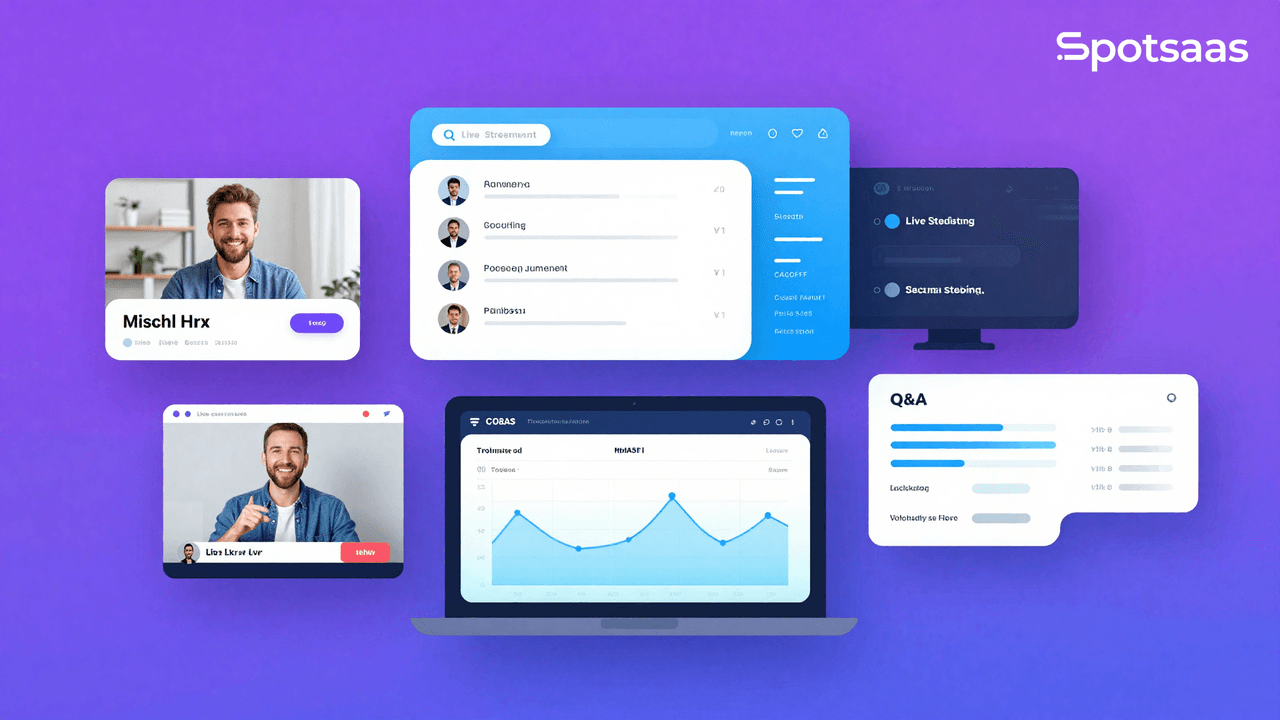
Picking the wrong webinar software costs more than just money — it costs registrations, engagement, and leads you never knew you lost. Whether you’re a marketer running automated demo funnels or an enterprise team hosting 5,000-person virtual events, the right **webinar software** makes the difference between a flat recording and a pipeline-building machine.
> **Best pick:** [Demio](https://www.spotsaas.com/product/demio) — purpose-built for marketing teams who need automated webinars, beautiful landing pages, and conversion tracking without the enterprise price tag.
This guide compares the 10 best webinar software platforms in 2026, breaking down pricing, attendee limits, automation capabilities, and which tool fits each use case.
—
## What Is Webinar Software?
Webinar software is a platform purpose-built for hosting live, automated, or on-demand video presentations to remote audiences — with interactive elements like polls, Q&A, chat, and registration forms built in.
Unlike video conferencing tools (Zoom, Google Meet), webinar platforms are designed for **one-to-many communication**: a presenter or panel broadcasting to hundreds or thousands of attendees who primarily watch and interact through structured channels rather than open two-way video.
The distinction matters more than most buyers realize. A 2023 ON24 study found that interactive webinars generate **3x more qualified leads** than passive content like whitepapers — because the format combines education, engagement, and real-time intent signals in one session.
Modern webinar platforms fall into three broad categories:
– **Live webinar platforms** optimized for large audiences and analytics (GoToWebinar, Zoom Webinars, ON24)
– **Marketing-first automated webinar tools** built for lead gen and conversion (Demio, Livestorm, WebinarNinja)
– **Virtual event platforms** handling multi-track summits and networking (BigMarker, Airmeet)
—
## Who Needs Webinar Software?
Webinar platforms serve several distinct buyer types — each with different priorities:
– **B2B marketers** running demand generation programs, product demos, and lead nurture webinars who need CRM integrations, conversion analytics, and automated follow-up sequences.
– **Customer success and training teams** delivering onboarding sessions, product education, and certifications to customers or employees at scale.
– **Coaches, consultants, and course creators** hosting paid or free workshops and selling courses directly through webinar registration pages.
– **Enterprise communications teams** broadcasting all-hands meetings, analyst briefings, and partner summits to audiences of 1,000 to 10,000+ people.
– **Community managers** running networking events, virtual meetups, and member webinars where two-way interaction matters as much as the content.
—
## Key Features to Look For in Webinar Software
### Registration and Landing Pages
A strong webinar platform handles registration natively — with customizable landing pages, confirmation emails, and reminder sequences — so you’re not duct-taping together three tools before a single attendee registers.
### Attendee Capacity and Scaling
Capacity limits vary dramatically: from 30 attendees on free plans to 50,000 on enterprise tiers. Know your audience size before comparing prices, because upgrading capacity mid-contract gets expensive fast.
### Automated and On-Demand Webinars
The ability to run pre-recorded webinars on a schedule (“automated”) or let attendees watch anytime (“on-demand”) separates marketing-first platforms from basic conferencing add-ons. If evergreen lead generation matters to your team, this feature is non-negotiable.
### Interactive Engagement Tools
Polls, Q&A, chat, hand-raise, and reaction tools keep attendees engaged and generate intent data. Best-in-class platforms let you run polls mid-session and route responses into your CRM.
### Analytics and Reporting
Attendee behavior data — who attended, how long they stayed, which poll they answered, which CTA they clicked — is what separates webinar platforms from broadcast tools. Look for per-attendee engagement scores and funnel attribution.
### CRM and Marketing Automation Integrations
Native integrations with HubSpot, Salesforce, Marketo, and email platforms (Mailchimp, ActiveCampaign) determine how fast webinar leads flow into your pipeline without manual exports.
### Recording and Replay Management
Cloud recording, replay links, and on-demand hosting are table stakes. The best platforms let you gate replays behind registration forms — turning every live webinar into a perpetual lead source.
—
## Best Webinar Software in 2026
### Zoom Webinars
Zoom Webinars extends Zoom’s meeting infrastructure into a broadcast-ready format, supporting up to 50,000 view-only attendees with panelist controls, Q&A, polls, and registration pages. For teams already running Zoom Meetings, the switch is frictionless — same interface, same calendar integrations, same attendee experience. The tradeoff: it’s a bolt-on to a conferencing tool, not a purpose-built marketing platform, so conversion analytics and automated webinar functionality are limited compared to Demio or Livestorm.
**Best for:** Teams already on Zoom wanting to add webinars without switching tools
**Key features:**
– Up to 50,000 view-only attendees on top-tier plans
– Q&A, polls, hand-raise, and breakout rooms for panelists
– Native Zoom Meetings integration with shared recordings and calendar
**Pricing:** From $149/mo for 500 attendees; scales to $3,490/mo for 10,000
**[View Zoom Webinars on Spotsaas](https://www.spotsaas.com/product/zoom)**
—
### Demio
Demio is the strongest purpose-built marketing webinar platform on the market for mid-sized teams. Its live, automated, and on-demand formats sit inside a clean interface designed for conversion: custom registration pages, attendee tagging, CTA overlays, and deep HubSpot and Marketo integrations. Demio’s automated webinar engine lets marketers run evergreen demo funnels that feel live — complete with real-time chat simulation and engagement tracking — without adding headcount to run sessions manually.
**Best for:** Marketing teams wanting automated webinars with built-in lead capture and CRM sync
**Key features:**
– Live, automated, and on-demand webinar formats in one platform
– Customizable registration pages with built-in A/B testing
– CTA overlays, polls, and attendee tagging with HubSpot/Marketo sync
**Pricing:** Starter from $59/mo (50 attendees); Growth from $109/mo (150 attendees); Premium plans available
**[View Demio on Spotsaas](https://www.spotsaas.com/product/demio)**
—
### Livestorm
Livestorm takes a unified approach: one platform for webinars, product demos, virtual events, and internal video meetings. Its browser-based format (no download required) reduces attendee drop-off at registration, and its analytics dashboard surfaces per-attendee engagement data that maps cleanly onto demand gen funnels. Livestorm’s free plan supports up to 30 attendees with no time limit — making it a genuine option for teams piloting webinars before committing budget.
**Best for:** Teams needing webinars and video meetings in one platform with zero-friction attendee access
**Key features:**
– Browser-based: no app download for attendees or hosts
– Unified platform covers webinars, meetings, and virtual events
– Per-attendee engagement data with native HubSpot, Salesforce, and Pipedrive integrations
**Pricing:** Free (30 attendees, unlimited sessions); Business from $79/mo per host; Enterprise custom
**[View Livestorm on Spotsaas](https://www.spotsaas.com/product/livestorm)**
—
### GoToWebinar
GoToWebinar has been the enterprise standard for large-scale webinars since before “webinar” was a household word. Its strength is reliability and depth: customizable registration workflows, pre-session surveys, source tracking, and detailed post-event analytics reports. GoToWebinar’s Simulated Live feature (pre-recorded sessions that run on a schedule) adds automation capability without sacrificing the event format. For legal, financial, and compliance-sensitive industries, GoToWebinar’s audit logs and enterprise security posture carry real weight.
**Best for:** Enterprise teams running large-scale webinars who need compliance-grade reliability and deep analytics
**Key features:**
– Simulated Live for scheduled pre-recorded sessions
– Source tracking and multi-channel registration analytics
– Salesforce and HubSpot integrations with custom field mapping
**Pricing:** Lite from $49/mo (250 attendees); Standard $99/mo (500); Pro $199/mo (1,000); Enterprise custom
**[View GoToWebinar on Spotsaas](https://www.spotsaas.com/product/gotowebinar)**
—
### Webex Webinars
Webex Webinars (part of the Cisco Webex suite) targets organizations already standardized on the Webex stack — particularly in government, financial services, and healthcare where Cisco’s security certifications matter. Sessions scale up to 10,000 attendees with end-to-end encryption, FedRAMP compliance, and deep Webex Meetings integration. If your organization isn’t already in the Cisco ecosystem, the value proposition weakens considerably compared to lighter-weight alternatives.
**Best for:** Enterprise teams already on the Cisco/Webex stack needing compliance-grade webinar capabilities
**Key features:**
– Up to 10,000 attendees with end-to-end encryption
– FedRAMP and HIPAA compliance for regulated industries
– AI-powered post-event summaries and action items
**Pricing:** From $68.75/mo per host (Webex Suite); Enterprise custom pricing
**[View Webex Webinars on Spotsaas](https://www.spotsaas.com/product/webex)**
—
### BigMarker
BigMarker positions itself as the virtual events platform for companies running large, multi-track conferences, summits, and trade shows — not just standalone webinars. Its white-labeling capability is best-in-class: custom domains, full brand control over the attendee experience, and sponsor management features that most webinar tools don’t touch. BigMarker’s native content repurposing tools (auto-generated clips, highlight reels) make it a strong choice for content teams that want to maximize the ROI of each event.
**Best for:** Companies running large virtual events, summits, and branded conferences
**Key features:**
– White-label branding with custom domain support
– Multi-track virtual event and conference formats
– Sponsor management, expo booths, and virtual networking rooms
**Pricing:** From $79/mo for webinars; Virtual event plans from $299/mo; Enterprise custom
**[View BigMarker on Spotsaas](https://www.spotsaas.com/product/bigmarker)**
—
### WebinarNinja
WebinarNinja is built for independent creators, coaches, and course businesses who want to run paid or free webinars without enterprise complexity or pricing. Its standout feature is native paid webinar support — attendees can purchase access directly through the registration page, with Stripe integration handling payments. Live, automated, series, and hybrid formats are all supported, and the platform’s email follow-up sequences are strong enough that many users skip a separate email marketing tool for webinar-specific campaigns.
**Best for:** Coaches, consultants, and course creators running paid webinars and workshop series
**Key features:**
– Native paid webinar support with Stripe-powered registration checkout
– Live, automated, series, and hybrid webinar formats
– Built-in email sequences for pre- and post-webinar follow-up
**Pricing:** Basic from $29/mo (100 attendees); Pro $99/mo (300); Plus $199/mo (500)
**[View WebinarNinja on Spotsaas](https://www.spotsaas.com/product/webinarninja)**
—
### ON24
ON24 is the enterprise B2B platform for organizations treating webinars as a strategic content channel rather than a one-off tactic. Its Engagement Hub lets companies build a branded content library of on-demand webinars gated behind progressive profiling forms — turning every replay into a lead capture asset. ON24’s AI engine generates content recommendations, audience segments, and engagement scores that flow directly into Salesforce and Marketo. The pricing reflects the enterprise positioning: ON24 is for marketing operations teams running 50+ webinars a year with dedicated headcount.
**Best for:** Enterprise B2B marketing teams running content-heavy virtual event programs with full-funnel attribution
**Key features:**
– Engagement Hub for branded on-demand webinar content libraries
– AI-powered engagement scoring and audience segmentation
– Deep Salesforce, Marketo, HubSpot, and Eloqua integrations
**Pricing:** Custom pricing (typically $30,000–$100,000+/year based on usage and seats)
**[View ON24 on Spotsaas](https://www.spotsaas.com/product/on24)**
—
### EasyWebinar
EasyWebinar targets SMBs and solopreneurs who want to build evergreen webinar funnels without the technical lift. Its automated webinar engine lets users schedule pre-recorded sessions at custom intervals — daily, weekly, or on-demand — with real-time chat simulation and engagement tools that make automated sessions feel live to attendees. The platform’s native integration with major email platforms (Mailchimp, ConvertKit, ActiveCampaign) and direct Facebook Ads tracking makes it a practical choice for direct-response marketers running webinar-based product launches.
**Best for:** SMBs and content marketers building evergreen automated webinar funnels for product launches
**Key features:**
– Automated webinars with just-in-time and recurring scheduling
– Real-time chat simulation for automated sessions
– Native integrations with Mailchimp, ConvertKit, and Facebook Ads
**Pricing:** Standard from $78/mo (100 attendees); Pro $129/mo (500); Enterprise custom
**[View EasyWebinar on Spotsaas](https://www.spotsaas.com/product/easywebinar)**
—
### Airmeet
Airmeet is built for community-led organizations — associations, user groups, SaaS companies with active communities — that want webinars to feel like events, not broadcasts. Its Social Lounge feature lets attendees move between virtual tables for side conversations, recreating the networking dynamic of in-person events. Airmeet supports large sessions (up to 100,000 attendees on enterprise plans) while keeping the interface approachable for community managers who aren’t full-time event professionals.
**Best for:** Community-led companies running networking events, user conferences, and member webinars
**Key features:**
– Social Lounge with virtual networking tables for attendee-to-attendee connection
– Up to 100,000 attendees on enterprise plans
– Sponsor booths, event branding, and post-event analytics
**Pricing:** Free plan available; Premium from $167/mo; Enterprise custom
**[View Airmeet on Spotsaas](https://www.spotsaas.com/product/airmeet)**
—
## Webinar Software Pricing Guide
Webinar software pricing follows three main models:
**Per-host pricing** (most common): You pay a monthly or annual fee per host seat, with attendee capacity tied to the plan tier. This works well for small teams with predictable usage.
**Usage-based pricing**: Platforms like ON24 charge based on viewing hours or engagement volume — costs scale directly with program size, which suits enterprise teams but can surprise SMBs with variable webinar schedules.
**Flat-rate platform pricing**: Some tools (Demio, WebinarNinja) charge a flat monthly fee regardless of how many webinars you run, making budgeting straightforward for high-frequency programs.
### Typical Price Ranges by Tier
| Tier | Attendee Capacity | Monthly Cost (billed annually) |
|——|——————-|——————————–|
| Starter / SMB | 50–250 attendees | $29–$79/mo |
| Growth / Mid-market | 250–1,000 attendees | $99–$199/mo |
| Enterprise | 1,000–50,000+ attendees | $299/mo–Custom |
**Hidden costs to watch for:**
– **Overage fees** when attendance exceeds your plan limit mid-session
– **Recording storage fees** on platforms that cap cloud storage at lower tiers
– **Integration fees** — some platforms charge extra for Salesforce or Marketo connectors
– **Annual commitment discounts** of 20–40% — always compare monthly vs. annual pricing before signing
—
## How to Choose the Right Webinar Software
1. **Define your primary use case first.** Marketing lead gen, customer training, paid workshops, and large virtual events have fundamentally different feature requirements. Buying an enterprise platform for coach-style workshops wastes budget; buying a creator tool for B2B demand gen leaves pipeline on the table.
2. **Match attendee capacity to your realistic audience size — with headroom.** If your largest webinar has ever hit 200 attendees, buy a 500-seat plan. Getting locked out of your own event because you hit capacity is an unrecoverable brand moment.
3. **Prioritize automated webinars if evergreen lead gen matters.** Running live sessions exclusively means you’re trading hours for leads. If the same content can work on-demand, find a platform that supports automated scheduling before comparing anything else.
4. **Verify the CRM integration depth, not just the logo.** “Integrates with HubSpot” can mean anything from a Zapier zap to native bi-directional field mapping. Test whether your required fields (UTM source, attendee poll answers, engagement score) actually sync before committing.
5. **Test the attendee experience on mobile.** A significant share of webinar attendees join from phones. Download-required apps, laggy mobile browsers, and broken registration pages kill attendance rates before a session starts.
—
## Webinar Software Comparison Table
| Platform | Best For | Attendee Limit | Automated Webinars | Starting Price | Free Plan |
|———-|———-|—————|——————-|—————|———-|
| [Demio](https://www.spotsaas.com/product/demio) | Marketing automation | 1,000 | Yes | $59/mo | No |
| [Livestorm](https://www.spotsaas.com/product/livestorm) | All-in-one meetings + webinars | 3,000 | Yes | Free | Yes |
| [Zoom Webinars](https://www.spotsaas.com/product/zoom) | Existing Zoom users | 50,000 | Limited | $149/mo | No |
| [GoToWebinar](https://www.spotsaas.com/product/gotowebinar) | Enterprise scale + analytics | 3,000 | Yes (Simulated Live) | $49/mo | No |
| [WebinarNinja](https://www.spotsaas.com/product/webinarninja) | Coaches and course creators | 1,000 | Yes | $29/mo | No |
| [Airmeet](https://www.spotsaas.com/product/airmeet) | Community networking events | 100,000 | No | Free | Yes |
Explore the full [webinar software category on Spotsaas](https://www.spotsaas.com/category/webinar-software) to filter by integration, attendee size, and pricing model.
—
## Frequently Asked Questions
### What is webinar software?
Webinar software is a platform designed for hosting live or pre-recorded video presentations to remote audiences, with tools like registration pages, polls, Q&A, chat, and analytics built in. Unlike general video conferencing, webinar platforms are optimized for one-to-many broadcasts where attendees primarily watch and interact through structured channels rather than open two-way video.
### What is the difference between a webinar and a video conference?
A video conference is a two-way communication session where all participants can speak, share video, and interact freely — designed for meetings and collaboration. A webinar is a broadcast format where one or a few presenters address a larger audience that interacts through polls, Q&A, and chat rather than open video. Webinar platforms add registration, recording, and engagement analytics that conferencing tools don’t prioritize.
### How much does webinar software cost?
Webinar software ranges from free (Livestorm, Airmeet) to over $100,000/year for enterprise platforms like ON24. Most mid-market teams pay between $59–$199/month for a capable platform supporting 100–1,000 attendees. Enterprise tools with advanced analytics, white-labeling, and deep CRM integrations typically require custom quotes. Always compare annual vs. monthly pricing — annual commitments typically save 20–40%.
### What is the best free webinar software?
Livestorm offers the strongest free plan — unlimited sessions, up to 30 attendees, and no time cap. Airmeet also offers a free tier suited for small community events. For teams needing more than 30 attendees consistently, paid entry-level plans from WebinarNinja ($29/mo) or GoToWebinar ($49/mo) are more cost-effective than juggling free-tier workarounds.
### Can I record webinars for on-demand viewing?
Yes — every major webinar platform in this list supports session recording and cloud storage for replays. The best platforms (Demio, Livestorm, GoToWebinar) let you gate replay access behind a registration form, turning each live session into a perpetual lead capture asset. Storage limits vary by plan tier, so check whether your platform charges for storage above a threshold if you run a high-volume program.
### What webinar software is best for large audiences?
For audiences over 1,000, the strongest options are Zoom Webinars (up to 50,000 view-only attendees), Airmeet (up to 100,000 on enterprise plans), GoToWebinar (up to 3,000), and ON24 (enterprise-scale with custom capacity). For audiences between 1,000–10,000 where marketing analytics matter, GoToWebinar and Zoom Webinars hit the best balance of scale and feature depth without requiring a full enterprise contract.
—
## Conclusion
The right webinar software depends on three things: your audience size, whether you need automated/on-demand formats, and how directly the platform needs to connect to your CRM and marketing stack. Teams running live marketing webinars for up to a few hundred attendees will get the best ROI from Demio or Livestorm. Organizations scaling past 1,000 attendees consistently should evaluate GoToWebinar, Zoom Webinars, or BigMarker. Enterprise B2B programs treating webinars as a strategic content channel belong on ON24.
[Compare all webinar software on Spotsaas](https://www.spotsaas.com/category/webinar-software) to filter by attendee capacity, automation support, integrations, and pricing — and find the platform that fits your program, not the other way around.

- Independent picks for exactly what you just read about
- Matched to your team size & needs
- Vendors don't pay for placement
Step 1 of 4
How big is your team?
We tailor recommendations to companies your size.















Related Articles
Buyers guide
Twilio Alternatives 2026: 6 Compared and What They Cost
Continue reading →
Buyers guide
How To Choose The Best Auto Dialer Software For 2026
Continue reading →
Buyers guide
How To Choose The Best Freelance Platforms For 2026
Continue reading →
Buyers guide
How To Choose The Best Audience Response Software For 2026
Continue reading →