
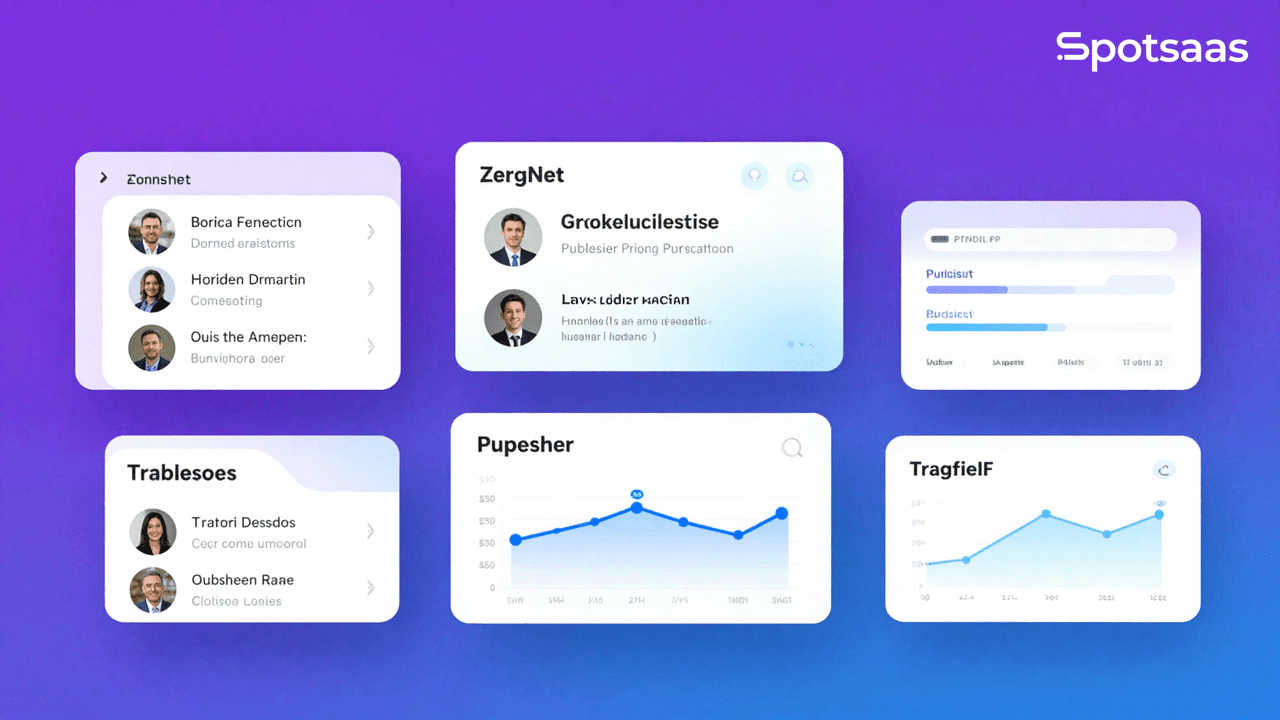
What Is ZergNet?
ZergNet is a curated content recommendation platform that helps publishers drive qualified traffic by sharing editorial articles across a network of trusted media partners.
Why It’s Popular in 2026
- Boosts time-on-site and reader engagement
- Drives organic discovery without paid ads
- Blends natively with site design and avoids intrusive ads
Who Should Use It
Ideal for editorial teams and publishers in entertainment, tech, lifestyle, and media who want to scale traffic without compromising UX or SEO.
ZergNet has been running as a content discovery network since 2012. Unlike traditional ad networks, it showcases real articles from trusted publishers, helping readers explore stories they’re actually interested in rather than chasing whatever generates the most clicks. Whether you’re browsing entertainment news or a tech deep-dive, ZergNet keeps users engaged while bringing valuable, qualified traffic back to participating sites. In this post, we’ll look at what makes ZergNet stand out, how its recommendation engine actually works under the hood, and why publishers and readers alike keep coming back to it.
What Is ZergNet? Content Discovery Platform Explained
ZergNet is a content discovery platform that helps publishers get more traffic through editorial content suggestions. Rather than promoting ads or clickbait, it surfaces real articles from trusted websites, aiming to engage readers with topics they’re already interested in.

ZergNet was founded in 2012 and is owned by Static Media. On its about page it says it recommends over a billion articles a day, producing more than three million daily visitors to sites including AOL, Time Inc, CBS, NBC, Viacom, News Corp and Warner Bros. Those are the company’s own figures, not independently audited ones.
Unlike recommendation engines that optimize purely for volume, ZergNet leans toward quality over sheer quantity. ZergNet describes its feed as “100% pure editorial content”, and the cards are styled to sit inside a publisher’s page rather than to interrupt it. Once the widget is placed, it starts showing relevant links to articles from other participating sites, and in exchange, the publisher’s own content gets promoted across the wider network.
Why ZergNet Still Matters: Benefits for Publishers and Readers
In a digital environment crowded with programmatic ads and algorithm-driven distractions, ZergNet stands apart by keeping the user experience front and center rather than treating it as an afterthought. While many traffic networks chase clicks above everything else, it continues to prioritize quality referral traffic, credibility, and a format that doesn’t get in the reader’s way.

1. Non-Intrusive Content Recommendations
Its recommendation widgets are intentionally understated. They show up at the bottom of editorial articles or along the sidebar, offering suggested stories without pop-ups, autoplay videos, or full-screen interstitials, which keeps the reading experience intact.
Many publishers choose ZergNet for exactly this reason: it lets them monetize their traffic without frustrating their audience in the process. At a time when ad blockers are on the rise and UX gets more scrutiny than ever from both readers and search engines, that restraint helps maintain reader trust over the long run.
2. Editorial-Quality Content That Builds Reader Trust
ZergNet doesn’t pull in random or low-effort blog posts. Every recommendation leads to content from credible media outlets, including entertainment sites, lifestyle blogs, and industry publications.
That editorial control filters out spam, thin content, and deceptive headlines by design, before any of it reaches a reader. The quality-first approach results in more time on-site and stronger reader satisfaction, and for publishers, it means they’re linking out to articles that won’t damage their own credibility or brand reputation.
3. High Clickthrough on Long-Form Content with ZergNet
ZergNet performs best on content-heavy pages, think features, deep guides, or personal essays. These are the pages where readers naturally slow down and are more likely to explore additional stories.
When placed at the end of an article like that, ZergNet acts as a continuation of the reading journey rather than a jarring pivot, which makes it more of an engagement feature than a bolt-on monetization widget.
4. ZergNet’s Publisher-Friendly Revenue Model
ZergNet runs on a traffic exchange model, where sites both promote their own content and gain visibility on other sites in the network at the same time. Its own site markets both audience growth and revenue to publishers, and it publishes no rate card, so ask for the commercial terms in writing.
Smaller publishers benefit by picking up visibility on larger sites, while bigger publishers can backfill their recommendation space with editorial links. ZergNet publishes no pricing, so confirm what, if anything, the arrangement costs before you embed the widget.
5. How ZergNet Improves SEO and Reduces Bounce Rate
Because users are moving from one genuine editorial page to another rather than being funneled toward a sale, ZergNet often leads to longer session durations and lower bounce rates. Unlike ad links that send visitors off to landing pages or product pages, it keeps the reader inside a content ecosystem the whole time.
That improved engagement can indirectly benefit search rankings, since it signals content depth and audience retention, two things search engines pay attention to.
Top Benefits of Using ZergNet for Publishers
ZergNet sits in the content distribution software category, built around user experience and content relevance rather than raw impression volume. Unlike ad networks that lean on clickbait or low-quality redirects to hit their numbers, it’s a fit for publishers who want to grow their audience steadily without sacrificing editorial integrity along the way.
1. Drive Higher-Quality Traffic with ZergNet
Its recommendation algorithm leans on editorial alignment, which means users are more likely to click through to articles that actually match their interests. In practice, that shows up as:
- Longer session durations
- More pages per visit
- Lower bounce rates
For publishers, that quality translates into deeper engagement and more meaningful impressions, rather than just a bigger raw click count.
2. Non-Intrusive Monetization for Publishers
Unlike banner ads or pop-ups, ZergNet integrates visually with your content. Its recommendation widgets are built to feel native to the reading experience, offering a low-key but effective way to generate revenue. That includes:
- Native UI integration
- No disruption to core content
- Higher trust from readers
3. How ZergNet Boosts Traffic Recirculation Across Publishers
ZergNet works as a two-way traffic network. While it drives users to your content, it also puts your own articles in front of other premium sites in the network. That creates an ecosystem where:
- You gain visibility beyond your existing audience
- Quality content performs better organically
- Smaller sites can benefit from larger publishers’ traffic
4. Editorial Control for Better Content Relevance
Unlike platforms that auto-populate suggestions with no input from you, ZergNet gives publishers flexibility over how and where its modules appear. You can:
- Choose specific placements
- Adjust themes to match your site
- Monitor which articles are getting traction
5. ZergNet’s Editorial-Only Content Policy
ZergNet states that it delivers “100% pure editorial content” and no advertising, which means the destinations are publisher articles rather than landing pages. It does not publish a clickbait policy, and its own homepage carries listicle headlines, so judge headline quality by looking at the live widget rather than by the claim.
How ZergNet’s Content Recommendation Engine Works
ZergNet isn’t just another “related articles” plugin. It is an editorial recommendation network, so what appears in the widget is other publishers’ articles rather than paid placements. ZergNet does not document how its ranking works.
| Feature | How It Works | Why It Matters |
|---|---|---|
| Content Analysis & Categorization | Categorises articles by topic so recommendations match the page they sit on. | Ensures recommendations match user interests and article themes. |
| Behavior-Based Matching | Analyzes browsing patterns to suggest content users are likely to engage with. | Increases click-through rate and keeps readers on-site longer. |
| Visual & Native Integration | Displays image-based cards that blend into the site’s design. | Improves trust and user interaction without disrupting the content experience. |
| Cross-Publisher Distribution | Promotes your articles across partner sites through a reciprocal content network. | Drives traffic back to your site without paying for ads or paid discovery. |
Here’s how the engine behind ZergNet operates:
1. Content Analysis and Categorization
Recommendations are drawn from participating publishers and grouped by category. ZergNet’s own site organises content under headings including entertainment, movies, gaming, tech, health, sports, food, home, travel and news, which is the practical shape of its taxonomy:
- Entertainment, movies and gaming
- Tech, news and sports
- Health, food, home and travel
This keeps every article recommendation contextual instead of random.
2. Behavior-Based Matching for Personalized Recommendations
ZergNet does not publish how it selects which articles a given reader sees. Recommendation widgets of this kind generally draw on signals such as:
- Click behavior across the web
- Time spent on specific categories
- Bounce vs. return visit patterns
Whether that lifts click-through rate or time on site on your pages is something to measure in your own analytics rather than to assume.
3. Visual & Native Integration With the Page
Its recommendations show up as image-and-headline cards matched to your website’s layout. They:
- Blend with your UI
- Avoid intrusive ad styles
- Are positioned to feel like part of the article flow (sidebar, below content, etc.)
That’s what makes them more trusted and more clickable, without breaking the reader’s attention mid-article.
4. Cross-Publisher Distribution to Expand Audience Reach
ZergNet runs on a content-sharing model. Host its widgets on your site, and your content also gets promoted across the publisher network in return, giving you exposure without paying for distribution. That means it’s:
- Organic and reciprocal
- Based on performance
- Designed to grow your audience without ad spend
How It Differs From Ad-Based Recommendation Widgets
Taboola and Outbrain both carry paid, sponsored placements alongside editorial links. ZergNet describes its own feed as “100% pure editorial content”, which is the practical difference between them.

No Sponsored Ads: Only Genuine Editorial Articles
Its biggest differentiator is an editorial-first model. Where platforms like Taboola or Outbrain often flood sites with “sponsored” content that’s barely relevant or low quality, ZergNet keeps its feed clean. It only promotes real articles from participating publishers, no fake weight-loss stories, no financial traps, no auto-playing videos.
That means publishers aren’t risking their brand image just to chase more page views. The recommended articles are legitimate, informative, and useful, which builds more trust with readers over time.
User Experience Over Click Volume: Why ZergNet Wins
Where paid widgets optimize for click volume, ZergNet’s feed is editorial, so the only clicks available are to articles. On a well-matched page that tends to show up as:
- Better time-on-site
- Higher pages-per-session
- Lower bounce rates
Publishers benefit not just from more clicks, but from higher-quality traffic overall.
Visual Integration That Matches Your Website
ZergNet’s recommendations are built to blend into your website’s layout. Whether placed in a sidebar, mid-article, or beneath your content, each card’s design adapts to match your site’s typography, color palette, and overall style.
That ensures:
- No intrusive UI interruptions
- Higher CTR from native-feeling placements
- A smooth reading experience that retains attention
Genuine Engagement with ZergNet, Not Clickbait Farms
Because the network carries publisher articles rather than advertising, the destinations are editorial pages. ZergNet does not describe a review process, so the practical test is whether the headlines in the live widget read as relevant to the context and valuable to the reader on your own pages.
Every piece of content shown in the widget:
- Comes from a participating publisher rather than an advertiser
- Links to an article, not a landing page
- Is grouped by topic category
That is what makes ZergNet read as a genuine editorial recommendation engine rather than an ad delivery system.
Long-Term Growth with ZergNet vs. Short-Term Monetization
ZergNet isn’t built for instant ad revenue, it’s built to grow your readership. By sharing your articles across its network of publishers, it drives organic discovery. As more users engage with your content, you pick up:
- Referral traffic from similar publishers
- New audience segments from outside your niche
- Stronger SEO signals through engagement metrics
That long-term, performance-first model means you build quality traffic and keep it, without paying to play.
How ZergNet Helps Publishers Improve SEO Without Slowing Site Speed
For content-heavy websites, keeping load times fast and organic SEO strong is critical, and worth tracking in SEO software alongside any widget you add. Plenty of recommendation widgets clutter pages with ad scripts or create crawl issues that hurt rankings over time. ZergNet takes a different approach, built with a publisher’s technical needs in mind from the start.
- Third-party script: the widget is an embedded script, so measure its effect on your own Core Web Vitals before and after adding it.
- Outbound links: recommendations point at other publishers’ articles, so check how those links are marked up on your pages.
- Ad-free positioning: ZergNet markets itself on editorial content rather than advertising, which was the basis of the press coverage it lists on its own site.
Lightweight Integration That Won’t Slow Your Website
ZergNet does not publish load figures for its widget, so treat page speed as something to verify rather than assume. The things worth measuring are:
- LCP (Largest Contentful Paint) with and without the widget
- Total third-party request weight on the page
- How the cards render on mobile as well as desktop
Those three numbers tell you whether the widget is costing you page experience.
SEO-Safe Linking That Boosts Content Visibility
How recommendation links are marked up matters for SEO, and ZergNet does not document it. What you want to confirm on your own pages is that the links:
- Resolve to the destination article rather than through a chain of redirects
- Are visible in the rendered HTML
- Carry whatever rel attribute your own policy requires
Check those three and the widget sits inside your SEO policy rather than cutting across it.
No Hidden Ads or Tracking Interference with ZergNet
ZergNet positions itself as ad-free rather than as an ad network, which is worth confirming against your own cookie and consent setup:
- Whether the widget sets cookies your consent banner has to cover
- Whether any content categories conflict with your own policy
- How the layout behaves when an ad blocker is active
In short, ZergNet is built to blend in like editorial content, not behave like an ad script.
ZergNet vs. Taboola vs. Outbrain: Key Differences for Publishers
Most publishers exploring content recommendation platforms eventually end up comparing three major players: ZergNet, Taboola, and Outbrain. All three aim to increase user engagement, but how each one operates and the kind of content it serves are fundamentally different, as the table below shows.
| Feature | ZergNet | Taboola | Outbrain |
|---|---|---|---|
| Business Model | Content exchange (organic, no cost) | Paid promotion, CPC-based | Paid promotion, CPC-based |
| Content Type | Editorial articles only | Mix of articles, ads, affiliate content | Mix of articles, ads, affiliate content |
| UI/UX Design | Native, clean, non-intrusive | Includes paid placements labelled as sponsored | Includes paid placements labelled as sponsored |
| SEO Impact | Links point at publisher articles | Links may point at advertiser pages | Links may point at advertiser pages |
| Revenue Model | Traffic exchange; ZergNet also markets revenue to publishers | Monetizes through ad clicks | Monetizes through ad clicks |
Who Should Use ZergNet in 2026? Best Fit Publishers Explained
ZergNet is built for content-focused publishers who want to grow traffic without compromising user experience. It’s especially effective for media brands that prioritize reader engagement over short-term monetization.
1. Best for Niche Publishers with Quality Content
If your site produces deep, well-researched articles, whether in entertainment, health, tech, or lifestyle, ZergNet helps surface those to highly engaged readers. The platform works best when your content matches real user intent rather than clickbait appeal.
It rewards storytelling, unique angles, and a strong editorial voice. If you’re publishing content that deserves more visibility, ZergNet is designed to get it in front of the right audience.
2. Perfect for Sites Avoiding Ad Fatigue and Ad Clutter
ZergNet avoids the clutter typical of performance ad platforms. There are no overly commercial thumbnails or misleading copy, which makes it a strong fit for:
- Premium blogs
- Magazine-style websites
- Long-form editorial brands
Its native design means no popups, auto-playing videos, or interruption-heavy ads, which helps maintain brand integrity while still driving results.
3. Ideal for Publishers Seeking Organic Traffic Growth
Unlike networks that rely on paid bids or affiliate commissions, ZergNet runs on an exchange model. You display their recommendations on your site, and in return, your content gets visibility across their partner network. It’s built for publishers who value steady, organic traffic growth over quick spikes.
There’s no bidding war or ad budget involved, just a reciprocal flow of clicks based on performance. That makes it especially useful for growing traffic without leaning entirely on SEO or social platforms.
4. Best for Media Brands Prioritizing User Experience (UX)
If your goal is to reduce bounce rate, increase time on page, and offer a distraction-free experience, ZergNet’s native integration helps retain attention without compromising the user experience.
Since users see your content promoted on similar high-quality sites, you build brand equity, not just empty clicks. It’s a subtle but effective way to maintain a premium user journey across the board.
How to Join ZergNet: Publisher Eligibility and Setup
ZergNet accepts publisher applications through a sign-up form on its own site, and it describes itself as carrying “100% pure editorial content”, so the review is about editorial fit rather than instant activation. If you want to drive high-quality traffic through editorial content, here is how the process works.

ZergNet Eligibility Requirements for Publishers
ZergNet does not publish eligibility criteria, so treat the following as the profile its network reflects rather than a published rule set. Publishers in the network tend to be:
- Established publishers or media outlets
- Niche or mainstream verticals like entertainment, lifestyle, tech, fitness, gaming, or pop culture
- A consistent publishing schedule (daily or multiple times a week)
- Clean UI and no excessive display ads or popups
- Authentic content (not scraped or spun material)
ZergNet does not say whether smaller independent sites are accepted, so the sign-up form is the only way to find out.
ZergNet Application Process for Publishers
To request access:
- Go to ZergNet’s about page, which carries both a “Sign Up as a Publisher” form and a publisher login.
- Submit the form with your site details.
- ZergNet does not publish a response time or acceptance rate, so there is no documented timeline to plan around.
ZergNet publishes no acceptance criteria, so plan for the possibility of no reply rather than assuming a traffic threshold.
Easy Integration Steps for ZergNet Widget
Once approved, integration is straightforward:
- ZergNet provides a JavaScript widget you can insert into your article pages, usually in the sidebar or below content.
- You simply copy-paste the code into your site’s HTML or CMS block.
- Their team may guide you with best practices for placement and theme matching.
It is a copy-paste embed rather than an API integration or a plugin.
Customize Your ZergNet Widget for Better Engagement
ZergNet’s team helps make sure the widget looks and feels native to your site. You can:
- Adjust the number of article cards displayed
- Match the font and image ratio to your layout
- Choose horizontal or vertical placement styles
- Control content category preferences to align with your site’s niche
That keeps the experience smooth and non-intrusive for your readers.
ZergNet Dashboard & Tracking: Monitor Performance
ZergNet runs a publisher login on its own site. It does not document what the dashboard reports, so confirm the following with ZergNet rather than assuming it:
- Clicks, click-through rate and traffic sources, which you can cross-check in web analytics software
- See which articles perform best across the network
- Monitor how much outbound vs. inbound traffic you’re contributing and receiving
- See how your articles are performing across the network
Whatever the reporting covers, it is what you will use to fine-tune placement and content types over time.
Final Thoughts: Is ZergNet Worth It for Publishers?
ZergNet is more than a content recommendation widget, it is a performance-driven network built to reward quality content with quality traffic instead of the other way around. If you’re a publisher looking to boost engagement, increase time on site, and grow your readership without leaning on clickbait or disruptive ads, ZergNet offers a clean, reader-first option worth testing.
ZergNet says it recommends over a billion articles a day, which gives accepted publishers a large distribution channel. For any content-driven brand focused on long-term traffic growth rather than short-term spikes, ZergNet is worth considering as part of a broader content strategy alongside SEO and social distribution.
ZergNet FAQs: Common Questions Answered
What is ZergNet?
ZergNet is a content recommendation platform that promotes articles across a curated network of high-quality publishers.
Is ZergNet free to use for publishers?
ZergNet does not publish pricing. Publishers apply through a sign-up form on its own site, and the arrangement is a traffic exchange: you run the widget and your articles are promoted across the network.
How does ZergNet recommend articles?
ZergNet does not document how its ranking works. The widget shows editorial articles from publishers in its network, grouped by topic category.
Can I customize how ZergNet appears on my site?
Yes, publishers can customize the widget layout, size, and position to match their site’s design.
Who can join ZergNet?
ZergNet is ideal for publishers with frequent content updates in entertainment, lifestyle, tech, or pop culture niches.

- Independent picks for exactly what you just read about
- Matched to your team size & needs
- Vendors don't pay for placement
Step 1 of 4
How big is your team?
We tailor recommendations to companies your size.













Related Articles
IT Management
TinyMDM: What It Manages, What It Costs, and Who It’s For
Continue reading →
IT Management
How Much Does Microsoft Intune Cost? Plans Compared
Continue reading →
IT Management
Best Remote Access Software 2026: 11 Tools Compared by Price
Continue reading →
IT Management
Splashtop Pricing 2026: Solo, Pro, Performance and SOS Costs
Continue reading →