

Every day, businesses look for more efficient ways to buy the products and services they run on. A growing share of that purchasing now happens online, on B2B marketplaces — platforms built specifically for one business to sell to another.
This guide explains what a B2B marketplace is, the main types, how they make money, the best-known examples, and the trade-offs of buying or selling on one.
Key Takeaways
- A B2B marketplace is a digital platform that connects businesses and lets them buy and sell products or services online.
- Marketplaces are typically vertical or horizontal, local or global, and many-to-many or one-to-many, depending on their industry focus, geographic scope, and transaction structure.
- They earn revenue through subscriptions, commissions, or listing fees, which gives businesses room to pick the model that fits their budget.
- Well-known examples include Amazon Business, Alibaba, and IndiaMART.
Understanding B2B Marketplaces
A B2B marketplace is an online platform that connects businesses so they can buy and sell products or services from each other.
Definition of B2B
B2B, or business-to-business, describes commerce that happens between businesses rather than between a business and an individual consumer. A typical example is a manufacturer selling to a wholesaler, or a wholesaler selling to a retailer.
Compared with business-to-consumer (B2C) sales, B2B deals tend to involve larger order volumes and longer relationships. Buyers and sellers often build ongoing supply arrangements and negotiate bulk pricing rather than making one-off purchases.
Checkout Spotsaas.com – The Best Software marketplace 🙂
Definition of B2B Marketplace
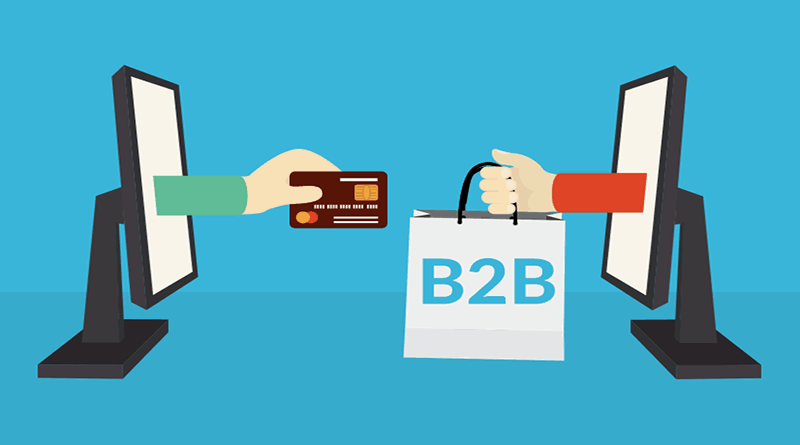
A B2B marketplace is a digital platform where businesses buy and sell goods or services to other businesses. It is a shared online space that connects suppliers and buyers and lets them transact electronically.
These platforms give sellers the tools to list products, negotiate deals, manage orders, and take payment in one place. Because they are built to handle high transaction volumes across many buyers and sellers, they make it easier for a business to reach new customers and sell into markets it could not access on its own.

Types of B2B Marketplaces (Vertical, Horizontal, Local vs Global, Many-to-Many vs One-to-Many)
Vertical marketplaces serve a single industry or niche, bringing suppliers and buyers together within one sector. Because they specialize, they make it easier to find exactly the products a particular industry needs.
Horizontal marketplaces work across many industries and carry a broad range of products. They are more general-purpose and suit businesses looking for a wide set of connections rather than deep sector expertise.
Marketplaces also split by geography. Local platforms connect businesses within one region or country, while global platforms support cross-border trade between companies worldwide.
Finally, they differ by structure. Many-to-many marketplaces let many sellers and many buyers transact in one network, while one-to-many platforms have a single seller supplying many buyers.
Payment Models for B2B Marketplaces (Subscription-based, Commission-based, Listing fee)
B2B marketplaces use a few common ways to make money. The subscription model charges sellers a recurring fee for access to the platform and its features.
The commission model instead takes a percentage of each sale, so the platform earns only when a transaction happens. A third approach charges a listing fee for each product a seller wants to display.
Each model shifts cost and risk differently, which lets a business pick the one that matches its sales volume and budget — a low-volume seller may prefer commissions, while a high-volume seller often does better on a flat subscription.
Examples of B2B Marketplaces
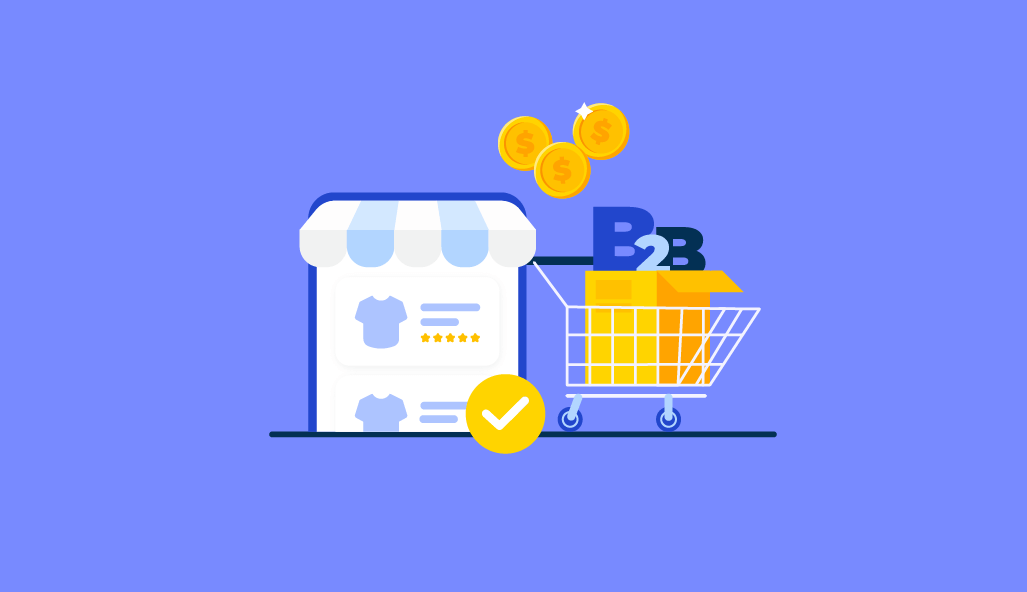
The best-known B2B marketplaces include Amazon Business, Alibaba, and IndiaMART, all of which connect businesses with suppliers and buyers around the world across a wide range of products.
Others worth knowing are eWorldTrade, Global Sources, StarStock, Taiwantrade, Tundra, and UShip. Each connects sellers and buyers for electronic transactions, though they differ in the regions and product categories they focus on.
Whatever the specialty — wholesale trade, industrial procurement, or logistics — these platforms give a business a ready-made way to find counterparties and transact securely without building its own sales channel from scratch.
Advantages and Disadvantages of B2B Marketplaces
B2B marketplaces give a business an online storefront, a wider pool of customers and suppliers, and a low-cost way to test new products. They also carry trade-offs: more direct competition and a dependence on a platform you do not control.
Advantages (Online Presence, Expanding Network, Low Costs, Easy Set-up, Testing New Products, Global Customer Base, Access to Foreign Markets)
The first advantage is reach. Listing on a marketplace puts your products in front of buyers you would struggle to find alone, and it connects you with potential customers well beyond your usual market.
The second is speed and cost. Setting up on an established platform is far cheaper and faster than building your own sales infrastructure, which also makes it a low-risk way to test how a new product sells before investing in production.
The third is access to foreign markets. A global marketplace handles much of the friction of cross-border selling, so a business can reach international buyers without setting up operations in each country.
Disadvantages
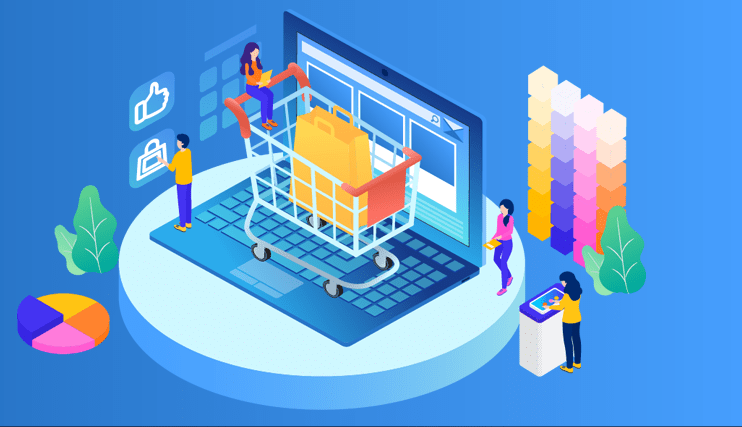
The main drawback is distance from the customer. Selling through a platform means less direct contact, which makes it harder to build the trust and personal relationships that larger B2B deals often depend on.
Competition is the second issue. On a crowded marketplace it can be difficult to stand out from similar sellers, and that pressure can push prices — and margins — down.
Finally, there is platform dependence. You rely on the marketplace’s uptime, payment systems, and rules, which means technical outages, fee changes, or security issues are largely outside your control.
Conclusion
A B2B marketplace is an online platform that connects business buyers and sellers, giving them the tools to transact, reach more suppliers and customers, and simplify procurement.
For most businesses the appeal is straightforward: more reach and lower setup cost than going it alone. The trade-off is competition and platform dependence — which is why the right choice of marketplace, and the right payment model, matters as much as the decision to sell on one at all.
Frequently Asked Questions
What is a B2B marketplace?
A B2B marketplace, also known as a business-to-business platform or an online marketplace, is an eCommerce site where businesses can trade and procure goods from other businesses.
Who are the typical users of a B2B trading platform?
Typically, B2B sellers and B2B buyers use these platforms to conduct electronic commerce (eCommerce).
What happens on a wholesale marketplace or trade portal?
On a wholesale marketplace or trade portal, vendors connect with potential clients to sell their products in larger quantities at more competitive prices.
What benefits does a supplier directory on an eCommerce platform offer?
A supplier directory simplifies procurement by giving buyers easy access to many suppliers in one place within their chosen industrial marketplace.
Is it important for my business to be part of a vendor marketplace?
Being part of a vendor marketplace gives your business exposure, opening up opportunities for growth and helping you reach new customers.
Related Articles
SaaS Insights
The Software Behind Tokenized Assets: How Stocks, Funds and Gold Move On-Chain
Continue reading →
SaaS Insights
Employee Data Broker Removal 2026: Verified Pricing and the Per-Head Math for Teams
Continue reading →
SaaS Insights
Credential Breach Monitoring for Business 2026: Verified Pricing and Cost Per Domain
Continue reading →
SaaS Insights
Employment Background Check Software 2026: Published Prices vs Quote-Based Vendors
Continue reading →