
A thermostat that adjusts the temperature before you get home, or a coffee machine that knows when to brew, are everyday examples of IoT (Internet of Things), where ordinary objects are connected and work together.
This article walks through that unique ecosystem and highlights its potential, while also covering the serious concerns that come with it, such as data privacy. Here is how an interconnected world is redefining our everyday experiences, and what it takes to make that world work safely.
Key Takeaways
- The IoT ecosystem is a network of interconnected devices and sensors that work together to create a smarter world.
- Data collection and analysis are fundamental to the IoT ecosystem, allowing for improved automation, connectivity, and efficiency in various systems.
- Automation and remote control are changing the way we interact with everyday objects, making our lives easier and more convenient.
- Artificial intelligence and machine learning play crucial roles in making the IoT ecosystem smarter and more efficient.
Core Concepts of the IoT Ecosystem
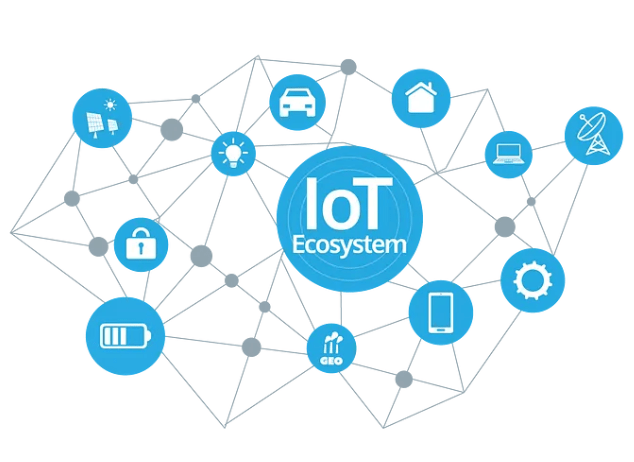
The IoT ecosystem revolves around interconnected devices and sensors, data collection and analysis, automation and remote control, and the integration of artificial intelligence and machine learning.
Interconnected devices and sensors
Interconnected devices and sensors form the backbone of the IoT ecosystem. Daily life already involves ordinary objects, from thermostats to coffee machines, fitness bands, and lighting fixtures, that we control with a tap on our smartphones.
These devices communicate with each other through internet connectivity, gathering data about user habits and their environment as they run. That collected information is then processed so users get better automation and clearer insight into their own lifestyle patterns over time.
The advanced sensors built into these devices let them carry out sophisticated tasks beyond human capacity, such as predicting weather changes or flagging health anomalies at an early stage before they become serious.
This integration widens the range of what is possible and moves us steadily toward a smarter world built on IoT technology, where the objects around us do more of the work on their own.
Data collection and analysis
Data collection and analysis are core parts of the IoT ecosystem. As the number of interconnected devices grows, we can gather and analyze large amounts of data every day.
Ordinary objects such as thermostats, coffee machines, and fitness bands now collect data and provide useful insights. That data supports better automation, connectivity, and efficiency across many systems.
Connected devices and interconnected systems open up many ways to build a smarter world. As the technology continues to advance, tighter integration with smart technology is becoming the norm rather than the exception, and it reaches further into how systems are designed and run.
Artificial intelligence, cloud computing, and big data analytics handle the collected data. Sensor networks provide reliable wireless communication between devices and support automation at every level.
With these technologies in place, businesses can turn the large volumes of data their IoT devices generate into practical, actionable insights. From optimizing day-to-day operations to improving customer experiences, data collection and analysis are transforming industries across healthcare, transportation, manufacturing, and more.
Automation and remote control
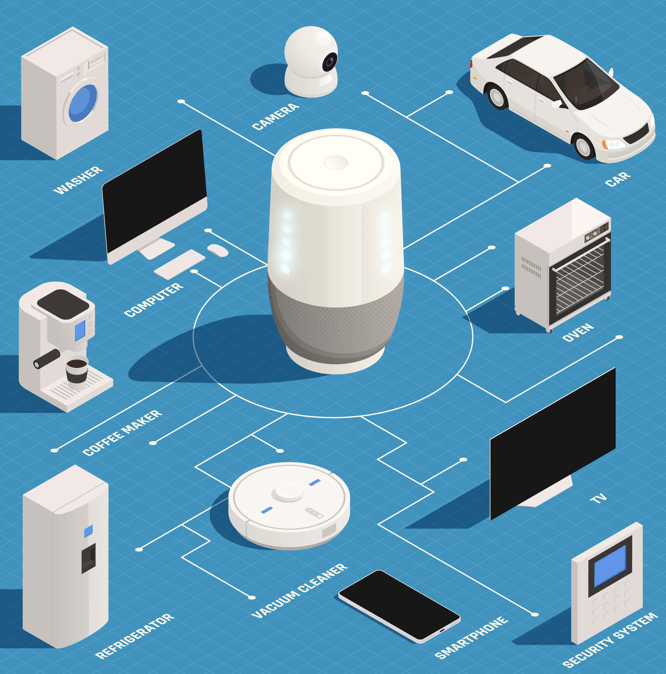
Automation and remote control are central to the IoT ecosystem and are changing how we interact with everyday objects. With better technology and connectivity, ordinary objects like thermostats, coffee machines, and fitness bands can now connect to the internet.
That connection supports automation and remote control, which makes daily life easier and more convenient. You can adjust the thermostat or start a cup of coffee from your smartphone while still lying in bed. As interconnected systems keep getting smarter and more integrated with our daily lives, the range of what they can handle keeps widening.
Artificial intelligence and machine learning
Artificial intelligence (AI) and machine learning make the IoT ecosystem smarter and more efficient. Through AI algorithms, connected devices learn from the data that sensors collect, so they can adapt and make decisions without human input.
This automation improves connectivity between devices and systems and integrates smart technology into our daily lives. As the technology continues to evolve, the future of connectivity will rely heavily on AI and machine learning. Over time, ordinary objects like thermostats, coffee machines, and fitness bands become intelligent tools capable of supporting how we live day to day.
Security and Privacy Concerns in the IoT Ecosystem
Data breaches and cybersecurity risks, the privacy implications of constant data collection, and secure communication between devices are among the main security and privacy concerns in the IoT ecosystem.
Here is a closer look at how each of these challenges can be addressed, so that we can build a safer and more private interconnected world without giving up the convenience these devices provide.
Data breaches and cybersecurity risks
Data breaches and cybersecurity risks are major concerns in the IoT ecosystem. As the number of interconnected devices and systems rises, so does the risk of unauthorized access to sensitive data.
Attackers can exploit weaknesses in these devices to reach personal information, or even take control of the devices remotely for malicious ends. That is why strong security measures matter, such as secure communication protocols and encryption, which safeguard data and help ensure privacy in the connected world of tomorrow.
Manufacturers, developers, and users all need to stay informed about the latest cybersecurity threats and take proactive steps in advance to protect themselves against potential attacks.
Privacy implications of constant data collection
Constant data collection in the IoT ecosystem raises real privacy concerns. As ordinary objects like thermostats, coffee machines, and fitness bands become connected devices, daily life is increasingly tied to technology.
This brings convenience and automation, but it also means personal information is collected and analyzed all the time. Constant monitoring of our activities raises questions about who can access our data and how it is used.
Companies need to prioritize secure communication between devices and put strong privacy measures in place to protect individuals’ sensitive information in this connected world, so that convenience does not come at the cost of control over personal data.
Ensuring secure communication between devices
Secure communication between devices in the IoT ecosystem depends on several measures. Encryption protects data as it moves between interconnected devices.
With encryption algorithms, sensitive information stays unreadable to anyone without authorization. Strong authentication, such as two-factor authentication, verifies the identity of devices and users before granting access to critical systems.
Regular software updates matter too, since they patch any vulnerabilities that could otherwise compromise security. Together, these measures keep the data that moves between devices confidential and protected from unauthorized access or malicious attacks.
The Future of the IoT Ecosystem
The IoT ecosystem holds strong potential for advances in technology and connectivity as it integrates with smart homes, cities, and industries. As it connects and automates ordinary objects every day, its applications will expand into healthcare, transportation, and more.
This interconnected world sets the stage for a smarter and more efficient future, one where connected systems handle more of the routine work on our behalf.
Advancements in technology and connectivity
Advances in technology and connectivity have changed daily life and made the world more interconnected than before. Ordinary objects like thermostats, coffee machines, and fitness bands now have internet connectivity that extends what they can do.
This lets us control these devices remotely and receive real-time data on our smartphones or tablets. Automation is also becoming more common as systems intelligently communicate with each other to simplify everyday tasks and make our lives easier.
Better connectivity has integrated smart technology into many parts of our lives, building a smarter world filled with connected devices and interconnected systems that share information as they operate.
Connectivity holds more possibilities as the technology keeps advancing. The Internet of Things (IoT) promises greater integration between devices and networks through wireless communication.
These advances are fueled by artificial intelligence, cloud computing, big data analytics, and sensor networks that process information efficiently across many devices at the same time, keeping the whole system responsive.
Integration with smart homes, cities, and industries
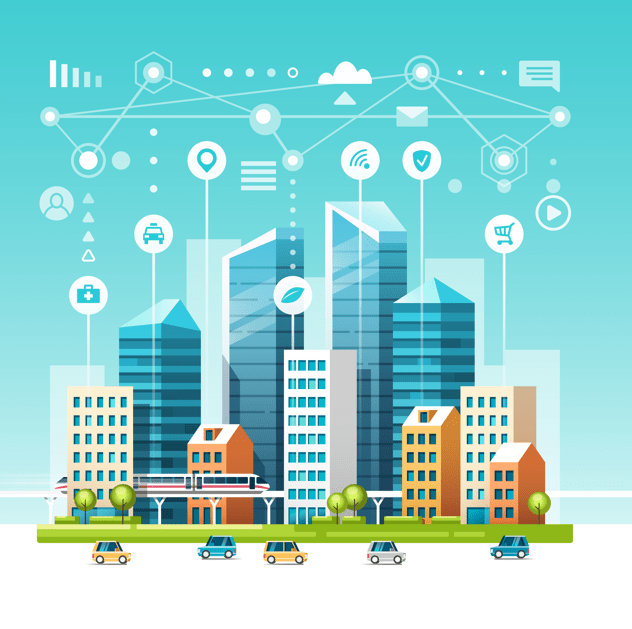
The IoT ecosystem has wide scope for integration with smart homes, cities, and industries. With better technology and connectivity, everyday objects like thermostats, coffee machines, and fitness bands can become interconnected devices that communicate with one another.
That connectivity supports automation and new approaches across industries, making the world smarter and more efficient. In smart homes, for example, you can control lighting, temperature, and security systems through your smartphone or voice commands.
In smart cities, sensors built into infrastructure can monitor traffic flow to improve transportation routes or catch maintenance issues before they turn into major problems. In industries such as healthcare or manufacturing, IoT devices enable real-time data collection for predictive analysis and simpler processes.
Potential applications in healthcare, transportation, and more
The IoT ecosystem has strong potential across many sectors, including healthcare and transportation. In healthcare, connected devices can monitor patients’ vital signs remotely, which supports early detection of medical issues and better patient care.
Wearable fitness bands can also track physical activity levels and offer personalized recommendations for a healthier lifestyle. In transportation, the integration of IoT technology allows real-time monitoring of traffic patterns and predictive maintenance of vehicles, which helps minimize breakdowns before they happen.
Smart city initiatives also use IoT to improve public transportation systems and cut congestion on our roads. With the advances in connectivity and automation the IoT ecosystem brings, everyday objects can become smarter and interconnected, which opens up many options for progress and new ideas across industries.
Conclusion: Embracing the Interconnected World of Tomorrow
The IoT ecosystem is worth embracing. Connected devices, better connectivity, and automation are opening up new options for a smarter world. With advances in technology and closer integration, ordinary objects are taking on new capabilities, and the future of connectivity is steadily taking shape around us.
FAQs
What is the “IoT Ecosystem – The Interconnected World of Tomorrow”?
The IoT Ecosystem is a network of physical devices connected through evolving technology, forming an interconnected world for tomorrow.
How does this IoT Ecosystem work?
Data connectivity lets these devices communicate and exchange information as part of the wider technology they belong to.
Is the ‘IoT ecosystem’ only for future technologies?
No, the term ‘Interconnected World of Tomorrow’ signifies its ongoing influence on present technologies while continuing to shape those we’ll use in the future.
Can anyone benefit from this interconnected world?
Yes. Businesses use data connectivity to improve efficiency and individuals get better user experiences, so everyone stands to gain from the IoT ecosystem.

- Independent picks for exactly what you just read about
- Matched to your team size & needs
- Vendors don't pay for placement
Step 1 of 4
How big is your team?
We tailor recommendations to companies your size.















Related Articles
Buyers guide
Twilio Alternatives 2026: 6 Compared and What They Cost
Continue reading →
IT Management
RMM Software: 25 Tools Ranked by 1,843 Reviews
Continue reading →
Buyers guide
How To Choose The Best Freelance Platforms For 2026
Continue reading →
Best Tools
SaveFrom.net: Norton Clears It, the Ads Are the Risk
Continue reading →