

Protecting your data matters, and public key encryption is one of the methods cryptography uses to do it. This form of encryption plays a central role in securing your information and keeping it out of the wrong hands, whether that information is a private message, a login, or a financial transaction.
This guide explains how public key encryption ensures data integrity, how the encryption and decryption steps fit together, and how it helps keep unauthorized individuals from reading what you send.
Key Takeaways
- Public key encryption uses two keys, a public key and a private key, to ensure data integrity.
- The process uses the recipient’s public key to encrypt a message, which can only be decrypted with their matching private key.
- Digital signatures verify the authenticity and integrity of encrypted data.
- Public key encryption is used in web server security, identity authentication, email encryption, and cryptocurrency.
What is Public Key Encryption?
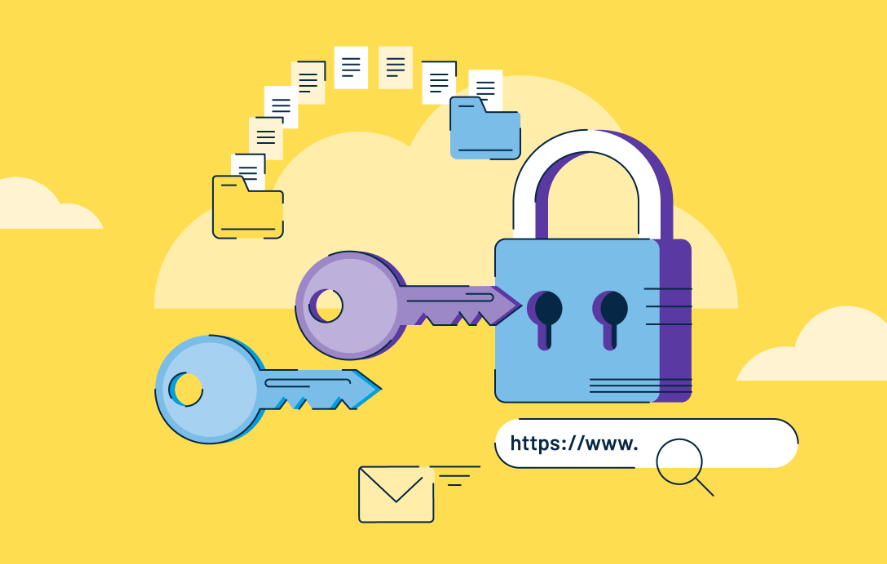
Public key encryption is a form of asymmetric encryption that uses both a public key and a private key to secure data.
A form of asymmetric encryption
Public key encryption is a type of asymmetric encryption, which means it uses two keys instead of one. These are the public and private keys. The public key is the one everyone can see.
Think of it like a mailbox where people drop letters for you, but only you hold the private key that opens it, just as it works in real life. This approach secures data well, because even someone who has your public key cannot read your messages without the matching private key.
Uses two keys: public and private
Public key encryption relies on two keys. One is public and one is private. The public key can be handed to anyone who wants to send you a message, and it locks, or encrypts, the data.
The second key is private, and you should never share it with others. It unlocks, or decrypts, the data sent to you. Only this specific pair of keys works together to lock and unlock, and to encrypt and decrypt.
No other key will do the job. Protection from unauthorized access is strong because of these two keys.
How Public Key Encryption Works
Public key encryption works through the process of key generation, where a pair of keys, a public key and a private key, is created. Encryption then uses the recipient’s public key to encrypt the message, which can then only be decrypted with their corresponding private key.
On top of that, digital signatures verify the authenticity and integrity of the encrypted data.
Key generation
Key generation is the first step in public key encryption. Here is how it goes:
- A pair of keys is created.
- One key stays private, or secret.
- The other key is known to everyone and is called the public key.
- The two keys work together in encryption and decryption.
- The keys use math to protect data.
Encryption process
Public key encryption uses a two-step process to secure data. Here is how it works:
- The sender generates a pair of keys: a public key and a private key.
- The public key is shared with others, while the private key is kept secret.
- To encrypt a message, the sender uses the recipient’s public key to encode it.
- The encrypted message can only be decrypted with the recipient’s private key, so only the intended recipient can read it.
Decryption process
Decryption in public key encryption involves these steps:
- The recipient uses their private key to decrypt the received ciphertext.
- The private key is kept secret and known only to the recipient, which keeps decryption secure.
- During decryption, the recipient’s private key reverses the encryption, converting the ciphertext back into plaintext.
- This step makes sure only the intended recipient can access and read the decrypted message.
- After decryption, the recipient can verify the message by comparing it with a message authentication code (MAC) or digital signature.
- The MAC or digital signature confirms that the message was not altered during transmission, which protects data integrity.
Digital signatures
Digital signatures are a core part of public key encryption. They provide authentication and confirm the integrity of a data transmission. Here is how they work:
- Digital signatures use cryptographic algorithms to create a unique identifier for a digital message.
- The signature is created with the sender’s private key and attached to the message.
- When the message arrives, the recipient can verify the signature with the sender’s public key.
- A valid signature means the message was not tampered with or altered during transmission.
- Digital signatures also provide non-repudiation, so the sender cannot deny sending the message.
Applications of Public Key Encryption

Public key encryption is widely used for web server security, identity authentication, email encryption, and cryptocurrency. Read on to see how it ensures data integrity.
Web server security
Web server security is critical for protecting sensitive information and keeping data intact. Public key encryption plays a central part in it. It lets clients and servers exchange information securely by encrypting data with the server’s public key.
Only authorized parties can then access and decrypt that information, which prevents outsiders from reaching sensitive data. Public key encryption also supports digital signatures, which authenticate the identity of the server and confirm that messages were not tampered with during transmission. With these measures in place, organizations can protect the sensitive information shared online and build a secure setting for user authentication, online transactions, and communication.
By applying public key encryption, web servers give online transactions, user authentication, and confidential information a safe environment, guarded from potential threats or attacks that would otherwise expose that data.
Identity authentication
Identity authentication is an important use of public key encryption. It draws on the unique properties of cryptographic protocols to verify who a user is. With public key cryptography, e-signatures are a common tool for this.
These e-signatures use mathematical methods to protect data integrity and to authenticate the sender’s identity. When a message is encrypted with the receiver’s public key, only the intended recipient can decrypt and read it, which gives a secure way to verify identities in digital transactions.
This guards against unauthorized access and helps keep sensitive information confidential throughout the communication process.
Email encryption
Email encryption is another important use of public key encryption. It protects the security and privacy of email. With it, messages are encrypted using the recipient’s public key before they are sent.
That means only the intended recipient, who holds the matching private key, can decrypt and read the message. These features are useful for getting past spam traps and for keeping communication channels trustworthy over time.
Using public key cryptography in email protects sensitive information from unauthorized access and helps ensure that the data stays confidential and secure in transit.
Cryptocurrency
Cryptocurrency is another use of public key encryption. It relies on cryptographic protocols to secure transactions and protect user data. With cryptocurrencies like Bitcoin, transactions are encrypted using a recipient’s public key, so only they can access and use the funds.
This gives a decentralized and secure way to transfer money without relying on traditional financial institutions to hold or move the funds. Public key encryption plays a central part in keeping cryptocurrency transactions accurate and secure, which makes it a trusted method for those looking to buy Chainlink and other digital assets.
Benefits and Challenges of Public Key Encryption

Public key encryption ensures data integrity by guarding against unauthorized access and keeping sensitive information confidential.
Ensures data integrity
Public key encryption plays a key part in protecting data integrity from end to end. By encrypting messages with the recipient’s public key, it makes sure that only the intended receiver can decrypt and read them.
The process also checks that the received message is valid and matches what was sent. With public key encryption, data stays secure during transmission, protected from unauthorized access and kept intact from sender to receiver.
It is widely used in applications such as secure communication protocols and digital signatures to protect both the privacy and the authenticity of information.
Protects against unauthorized access
Public key encryption is an important safeguard against unauthorized access. Messages are encrypted with the recipient’s public key, which can only be decrypted with the matching private key held by the receiver.
So even if someone intercepts the encrypted message, they cannot decipher its contents without the private key. This means that only those who have been authorized and given the necessary private keys can decrypt and access the sensitive information inside.
By blocking unauthorized access in this way, public key encryption helps keep data secure and confidential, which is what makes it a foundation for secure communication.
Public key encryption also helps maintain data integrity by preventing unauthorized tampering or changes to messages in transit. Through digital signatures, which are part of public key encryption, senders can sign their messages with their private keys.
Quantum computing threat
Quantum computing is a potential threat to public key encryption. Traditional algorithms used in public key cryptography rely on the difficulty of factoring large numbers, which would take conventional computers years.
Quantum computers, though, could solve these problems much faster, which would leave current methods vulnerable.
The power of quantum computing comes from its ability to perform complex calculations at the same time, which reduces the time needed to break encryption keys by a wide margin. This means that sensitive data protected by today’s public key encryption algorithms could one day be decrypted by future quantum computers.
To meet this threat, researchers are actively developing new cryptographic protocols that can withstand attacks from quantum computers. These post-quantum cryptography (PQC) techniques use different mathematical approaches that are suitably resistant to quantum attacks.
Conclusion
Public key encryption plays a key role in protecting data integrity. By using two keys, a public key for encryption and a private key for decryption, it creates a secure communication channel.
This technology not only guards against unauthorized access but also verifies that a received message is authentic, which safeguards the integrity of transmitted data. Given its widespread use and its backing from industry experts, public key encryption remains an essential tool for maintaining data security across the systems people rely on every day.
Frequently Asked Questions
What is public key encryption?
Public key encryption is a method of securing data by using two keys: a public key to encrypt the data and a private key to decrypt it.
How does public key encryption ensure data integrity?
Public key encryption ensures data integrity by verifying that the received data has not been tampered with during transmission. The recipient uses their private key to decrypt and check the digital signature attached to the encrypted message.
Is public key encryption safe?
Yes, public key encryption is considered safe because it uses complex algorithms and a pair of unique keys for secure communication. It is still important to use strong keys and keep them confidential.
Can anyone intercept my encrypted messages?
Someone could intercept your encrypted messages, but they would not be able to read or understand them without the matching private key used for decryption.
Can public key encryption protect against all types of cyber attacks?
Public key encryption provides strong security, but it may not protect against every type of cyber attack, such as phishing or social engineering, which target human vulnerabilities rather than technical weaknesses in cryptography.

- Independent picks for exactly what you just read about
- Matched to your team size & needs
- Vendors don't pay for placement
Step 1 of 4
How big is your team?
We tailor recommendations to companies your size.















Related Articles
Buyers guide
Twilio Alternatives 2026: 6 Compared and What They Cost
Continue reading →
IT Management
RMM Software: 25 Tools Ranked by 1,843 Reviews
Continue reading →

Buyers guide
How To Choose The Best Freelance Platforms For 2026
Continue reading →

Best Tools
SaveFrom.net: Norton Clears It, the Ads Are the Risk
Continue reading →