
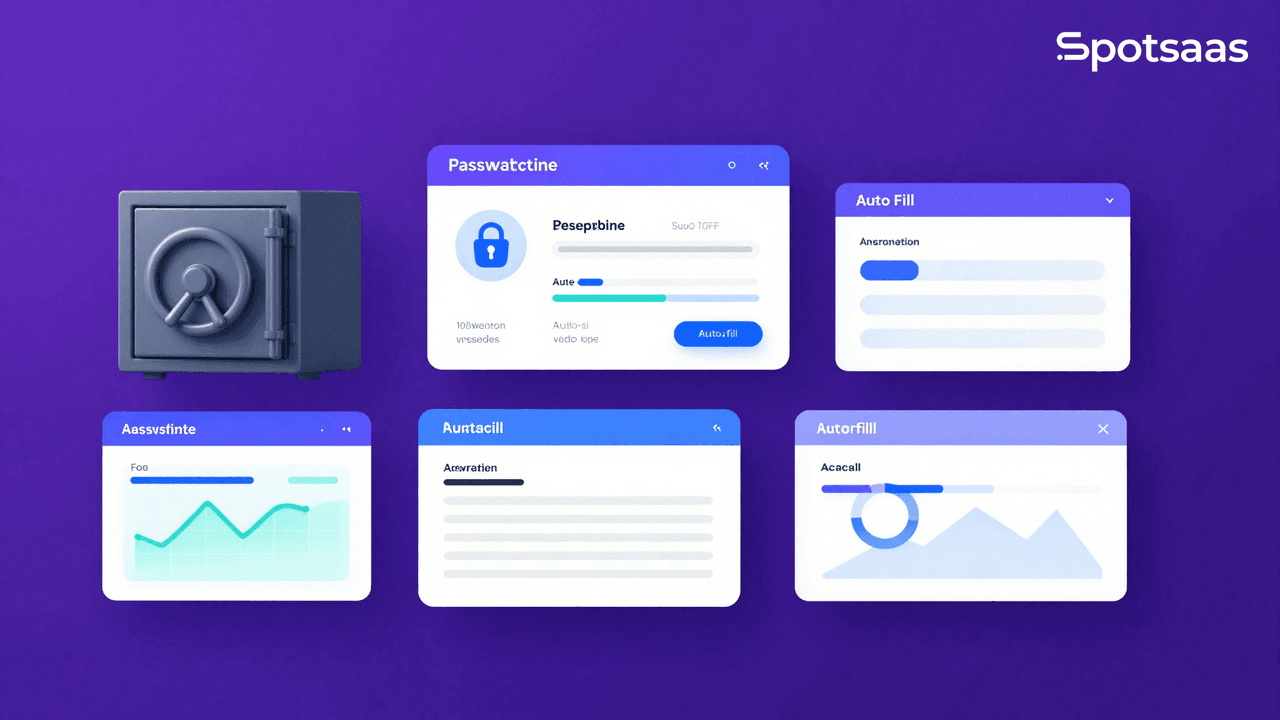
Keeping track of dozens of complicated passwords is a real headache for most people. Password management software exists to fix exactly that, giving you one secure place to store, generate, and retrieve every password you need, and making your digital life easier to manage and harder to break into.
This guide covers what to look for so you can pick a password manager that’s genuinely secure and actually pleasant to use day to day.
What is a Password Manager and Why Do You Need One?
A password manager is a software tool that stores and organizes your passwords securely. It gives you one central place to keep everything, so you can pull up any password the moment you need it.
Password managers matter more than ever now that most people juggle dozens of accounts, each of which is supposed to have its own strong, unique password.
Using one keeps your passwords safer, makes generating strong and complex passwords effortless, lets you reach them from any device you own, and generally raises the security bar across all of your online accounts at once.
Keep your passwords safe and organized
A password manager puts every password you have in one secure place. Instead of writing codes down or trying to memorize them, the software stores and manages them for you across every site you use.
Top-rated tools like NordPass, Dashlane, and LastPass go a step further and alert you if your data turns up somewhere it shouldn’t, which makes staying on top of everything both simpler and safer.
Generate strong, unique passwords
A password manager is what makes genuinely tough passwords realistic to use. The software should hand you a fresh, hard-to-guess password for every account, which keeps intruders out even if one account gets targeted.
People trying to guess passwords often start with the obvious things, a pet’s name, a birthday, so relying on those is a bad habit that’s easy to fall into. The best password managers sidestep that problem entirely by generating complex, random codes for you instead.
They also store all those tricky passwords, so you never have to actually memorize them.
The built-in password generator does the heavy lifting here. There’s no need to sit and dream up something secure yourself; the tool handles it.
Access your passwords on different devices
A password manager lets you use the same credentials across many devices. NordPass, for instance, is a solid example: it puts your passwords within easy reach on phones, tablets, and computers alike. Set it up at home, then log into the same account at work, and everything you saved is already sitting there waiting for you.
That gives you strong security without needing to remember every password yourself, and a tool like this genuinely makes life online easier and safer.
Increase overall security
Password management software raises your overall security by helping you keep strong, unique passwords across every account. With one in place, there’s no need to memorize complicated strings or fall back on reusing the same password everywhere.
Most of these tools also add features like two-factor authentication and encryption, tightening the security around your login credentials further. Centralizing and securing your passwords this way keeps sensitive information away from hackers and unauthorized access.
That cuts down meaningfully on the risk of identity theft and other online security incidents. When you’re choosing password management software, prioritize options with strong security measures built in from the start, since that’s ultimately what protects your accounts day to day.
Important Features to Consider When Choosing a Password Management Software
Picking the right password manager comes down to weighing several factors: security, price, cross-platform compatibility, and secure sharing capabilities all matter, and getting the fit right for your situation is worth the effort.
Here’s a closer look at each of these features.
Security
Security should top your list when choosing password management software. You want confidence that your passwords are genuinely safe from hackers, so look for a password manager built on strong encryption.
Also weigh features like two-factor authentication, which adds an extra layer of protection by requiring a second, separate form of verification before your passwords can ever be accessed.
The best password managers keep strong security measures in place at all times to protect whatever sensitive information you store with them.
Price
Price matters too. Free options exist, but it’s often worth paying for a premium password manager if it gets you meaningfully better security and features.
Top-rated password managers typically offer a range of pricing plans to fit different budgets, so it pays to compare prices and features across a few options before deciding.
Spending a bit more on a secure, easy-to-use password manager tends to pay off over time by protecting your sensitive information and online privacy.
Cross-platform compatibility
Cross-platform compatibility matters because it determines whether the software actually works across the devices and operating systems you use, whether that’s Windows, Mac, iOS, or Android.
That means you can pull up and manage your passwords regardless of which device is in front of you. Whether you’re on an iPhone, an iPad, or a Windows machine, a password manager with solid cross-platform support keeps your passwords securely stored and accessible everywhere without extra hassle.
Secure sharing capabilities
Secure sharing is another feature worth checking for. It lets you share passwords with other people without putting their security at risk.
This works by granting access to specific accounts or sites while keeping the underlying passwords encrypted and protected the whole time. It’s particularly handy for teams or families who need to share login credentials for accounts they use together.
Look for a password manager with secure sharing built in if collaboration is part of how you’ll use it.
Family plan allowance
A family plan is worth factoring in too. It lets you share passwords and account details with family members easily and securely.
That means everyone in the household keeps their own login details for individual accounts while still having access to shared passwords, for things like the home Wi-Fi network or a shared streaming service.
It’s a convenient way to keep the whole family’s passwords organized and protected, so everyone can get to the accounts they need without cutting corners on security.
Password strength checker
A password strength checker is worth looking for too. It tells you plainly whether a password you’ve chosen is actually strong enough to protect an account.
It typically checks things like length, complexity, and how varied the characters are. With that kind of check in place, you get real confidence that your passwords aren’t easy targets for hacking attempts or unauthorized access.
How We Test and Rank Password Management Software
Our evaluation and ranking process runs thorough testing across a few key areas: security, user experience, and value for money. We test each tool’s security measures directly to confirm passwords are actually encrypted and protected.
We also look closely at user experience, weighing ease of use and accessibility across different devices. Finally, we factor in overall value for money by comparing what each tool offers against its pricing.
That process is what lets us give reliable recommendations for finding the password manager that fits your needs.
Security testing
The security testing a password manager has been through is worth checking closely. Here are the key aspects to look for:
| Key Aspect | Description |
|---|---|
| Vulnerability Testing | The software should undergo regular vulnerability testing to identify weaknesses in its code or infrastructure. |
| Penetration Testing | Experienced ethical hackers should conduct penetration tests to assess the software’s resilience against real-world attacks. |
| Encryption Protocol | The password manager should use strong encryption protocols like AES-256 for secure storage and transmission of passwords. |
| Two-Factor Authentication (2FA) | Look for 2FA support to add an extra layer of security with a second verification step, such as fingerprint scans or SMS codes. |
| Password Auditing | The software should include tools for analyzing existing passwords to identify weaknesses or reuse across accounts, improving password security. |
| Privacy Policy | Review the privacy policy to ensure responsible data handling without selling or sharing it with third parties without consent. |
| Regular Updates and Patches | A reliable password manager releases regular updates and patches to address newly discovered security vulnerabilities. |
User experience testing
User experience testing matters just as much when choosing a password manager. It’s what confirms the software is genuinely easy to use rather than just secure on paper. Here are the key factors we weigh:
| Key Factor | Description |
|---|---|
| Interface | The interface should be intuitive and visually appealing for easy navigation. |
| Ease of Use | The software should have a user-friendly design with clear instructions for easy password management. |
| Accessibility | The software should be accessible on various devices and platforms, ensuring users can access passwords from anywhere. |
| Speed and Performance | The software should operate smoothly and quickly, without delays or performance issues. |
| Customization Options | Users should be able to customize settings to match their preferences, such as password strength requirements or two-factor authentication settings. |
| Integration with Other Apps and Browsers | Compatibility with popular web browsers and integration with other apps can enhance the user experience by facilitating password autofill and capture. |
Value for money
Value for money is worth thinking through carefully too, since the priciest option isn’t automatically the best one for your situation. Look for a tool that strikes a good balance between features and price. Some premium options pack in advanced security and extra features, but that usually comes at a noticeably higher cost.
There are also budget-friendly options that still deliver solid password encryption and storage. It’s worth assessing what you actually need and comparing password managers on both pricing and the level of security offered before settling on one.
Some of the popular names in this space include 1Password, LastPass, Bitwarden, Dashlane, Keeper, NordPass, Enpass, Norton Password Manager, LogMeOnce, and N-Able Passportal.
Conclusion: How to Choose the Best Password Manager for Your Needs
Picking the right password manager comes down to weighing the features that matter most: security and cross-platform compatibility near the top of that list. Look for strong encryption and two-factor authentication as the baseline for protecting your passwords.
An easy-to-use interface and built-in password generation help too. Before you commit, check user reviews and compare pricing across a few options to land on the one that actually fits what you need.

- Independent picks for exactly what you just read about
- Matched to your team size & needs
- Vendors don't pay for placement
Step 1 of 4
How big is your team?
We tailor recommendations to companies your size.















Related Articles
Buyers guide
Twilio Alternatives 2026: 6 Compared and What They Cost
Continue reading →
Buyers guide
How To Choose The Best Auto Dialer Software For 2026
Continue reading →
Buyers guide
How To Choose The Best Freelance Platforms For 2026
Continue reading →
Buyers guide
How To Choose The Best Audience Response Software For 2026
Continue reading →