
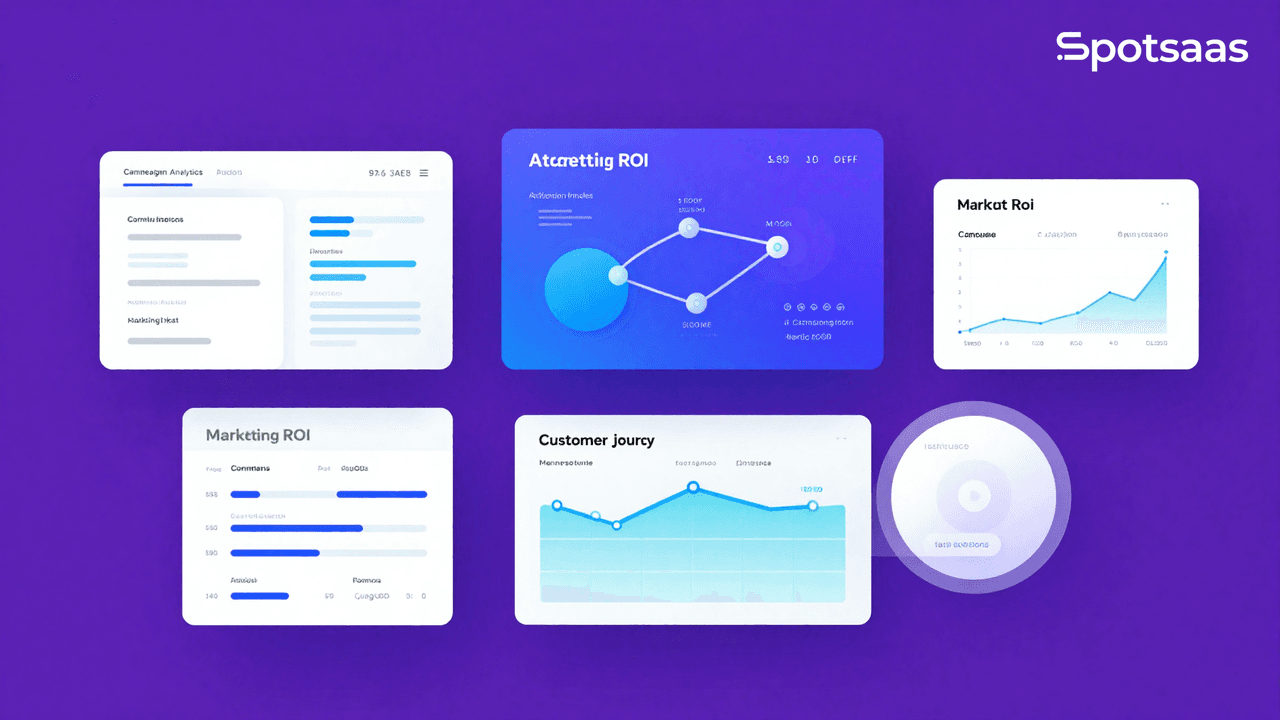
Marketing analytics software all makes the same pitch — see what’s working, cut what isn’t — but the tools vary a lot in how well they actually pull that off in practice. This guide breaks down the features and factors that matter most in choosing the right one for your specific business.
What is Marketing Analytics Software?
Marketing analytics software tracks how your marketing campaigns are actually performing — what’s working, what isn’t, and what that reveals about your customers along the way.
It pulls data from across your marketing channels — social media, email, your website, wherever campaigns are running — and consolidates it into one place instead of leaving it scattered across a dozen separate dashboards.
That consolidation is what makes it useful: instead of piecing together a picture from five different tools and formats, you get one coherent view you can actually act on quickly when something needs adjusting.
Most individual ad platforms ship with their own built-in analytics, but a dedicated marketing analytics tool that pulls all of them together gives a clearer, single view of overall performance. That’s why so many companies treat marketing analytics software as a core part of their marketing strategy year after year, rather than relying on whatever each platform reports in isolation.
Benefits of Integrating Marketing Analytics Platforms
Integrating marketing analytics platforms offers several benefits for businesses. These include a unified marketing performance viewpoint, budget optimization, and improved decision-making.
Unified marketing performance viewpoint
Good marketing analytics software pulls your data together into one unified view, regardless of which channel it originated from — social media, website traffic, email, or anywhere else a campaign runs.
Seeing everything side by side is what makes it possible to tell whether the business is actually hitting its goals, and where specifically it’s falling short. That full picture is what should be steering decisions about where marketing effort goes next, rather than gut feel channel by channel.
Budget optimization
Budget optimization is one of the more direct payoffs of marketing analytics: it shows exactly where ad spend is going and how each channel is actually performing, which makes it possible to shift money toward what’s working and away from what isn’t.
That visibility cuts down on wasted spend, since the software ties each dollar spent to a measurable outcome — sales, leads, whatever the campaign is actually optimizing for. Tools like Google Analytics or Whatagraph make tracking that connection straightforward rather than something you’re reconstructing manually from spreadsheets.
The end result is more value extracted from the same marketing budget, driven by decisions grounded in actual data rather than assumptions about which channel “feels” like it’s working.
Improved decision-making
Marketing analytics software sharpens decision-making for businesses in a direct way. By analyzing data from various marketing channels, these tools surface specifics that can inform strategic decisions instead of leaving them to guesswork.
With the help of marketing analytics software, companies can identify trends, track customer behaviour, and evaluate the performance of their campaigns, turning decisions that used to rest on guesswork into ones grounded in actual evidence.
Real-time data visualized through intuitive dashboards is what makes fast, informed decisions possible in the first place — without it, teams are stuck waiting on a report that’s already out of date by the time it lands. Taken together, integrating marketing analytics into how a business operates tends to sharpen decision-making across the board and drive better outcomes from marketing spend.
Top Features to Consider When Choosing Marketing Analytics Software
Five features tend to determine whether a marketing analytics tool actually delivers: data integration, user-friendliness, customization, real-time analysis, and data visualization.
Here’s what each one actually means in practice, and why it matters.
Data integration capabilities
Strong data integration is what lets a tool pull from social platforms, website analytics, and CRM systems and actually make sense of all of it together, rather than leaving each source as its own isolated silo nobody cross-references.
With that data unified in one place, tracking the real effectiveness of each channel and campaign becomes possible in a way that comparing five separate dashboards never quite allows.
Good integration also directly supports budget optimization, since it’s what surfaces which activities are actually driving the strongest return on investment. Comprehensive, integrated data is ultimately what turns marketing analytics from a reporting exercise into a genuine input for strategy.
User-friendliness
A tool is only as useful as your team’s ability to actually use it, which makes user-friendliness a real evaluation criterion, not a nice-to-have — especially for people who aren’t data analysts by training.
A simple, intuitive interface with clear documentation and tutorials saves real time and frustration once the tool is actually in daily use rather than sitting in a demo.
Drag-and-drop report building and customizable dashboards are common markers of a genuinely user-friendly tool, letting people shape it around how they actually work instead of the other way around.
Get this right and both your most technical analyst and the least data-fluent person on the marketing team can use the software effectively, without either one hitting a wall.
Customization options
Customization is what lets the software bend to your specific business rather than forcing your reporting to fit someone else’s template. Look for the ability to shape reports, dashboards, and tracked metrics around what actually matters to your business.
With that flexibility, attention stays on the data that’s genuinely relevant instead of getting lost in metrics nobody on the team actually acts on.
Customizable alerts and notifications add another layer of value, flagging meaningful shifts or trends in real time instead of requiring someone to notice them manually. Control over customization is ultimately what keeps the software aligned with your specific needs as they evolve, instead of a fixed template you have to work around.
Real-time data analysis
Real-time analysis means insights arrive while a campaign is still running, not days later in a retrospective report — which is what actually lets a team make quick, timely decisions instead of reacting after the fact.
Staying agile in a market that shifts quickly depends on this kind of immediacy. Real-time tracking of website traffic, social engagement, and customer behavior as it happens is what makes that possible.
Understanding what’s happening right now, rather than what happened last week, is what actually lets a team optimize campaigns while there’s still time for the adjustment to matter.
Data visualization
Data visualization turns raw numbers into charts, graphs, and maps that are actually possible to interpret at a glance, instead of a spreadsheet full of figures that take real effort to parse.
With strong visualization, patterns, trends, and insights that would otherwise be buried in the data become obvious, and that clarity is what feeds directly into sharper marketing strategy decisions.
Visualized data also makes it far easier to communicate findings to stakeholders who don’t live in the numbers day to day, letting the team present marketing performance clearly and make the case for data-driven decisions convincingly.
It is important to choose marketing analytics software that offers strong, detailed data visualization capabilities, including customizable dashboards where every relevant metric lives in one place rather than scattered across tabs.
Real-time updates matter here too, given how quickly digital marketing conditions shift. Look for interactive visualizations that let you drill into specific metrics or filter by whatever parameters matter for the question you’re actually trying to answer.
How to Choose the Best Marketing Analytics Software for Your Business
Start by getting clear on your actual goals and objectives, then research and compare software against them, weighing data integration, user-friendliness, customization, real-time analysis, and visualization as you go.
From there, check customer reviews and ratings before committing to anything, and use free trials or demos to confirm the software genuinely fits before you buy.
Identify your business goals and objectives
Get specific about what you’re actually trying to accomplish before comparing tools. More website traffic? Better social engagement? Higher conversion rates? The answer shapes which software is actually the right fit, since different tools are built around different priorities.
Nailing this down before researching options is what narrows a crowded market down to a shortlist that actually matches what your business needs, instead of a list of every tool with a good marketing page.
Research and compare different software options
Comparing options directly is what turns a list of possibilities into an actual decision. Every tool claims to cover the basics, but they differ meaningfully in execution — here’s how some of the more established options stack up:
| Software | Data Integration | User-Friendliness | Customization Options | Real-time Data Analysis | Data Visualization |
|---|---|---|---|---|---|
| Google Analytics | Compatible with multiple platforms | Optimized for easy navigation | Customizable dashboards and reports | Real-time traffic data | Visual data presentations |
| SegmentStream Conversion Modelling Platform | Integration with major ad platforms and web analytics tools | Focused on user experience | Modelling customization | Up-to-the-minute conversion insights | Presentation-level data visuals |
| Supermetrics | Connects with numerous marketing platforms | Designed for usability | Flexible report design | Instant data updates | Comprehensive data visuals |
| ClickUp | Supports integration with a variety of apps | Intuitive user interface | Highly adaptable structure | Live updates of tasks and projects | Dynamic view options |
| Heap Analytics | Offers seamless integrations | User-centric design | Customizable event definition | Real-time customer behaviour data | Interactive data visuals |
Which one is actually best for you depends on your specific goals, budget, and scalability needs — not which one tops a generic ranking. Check customer reviews and ratings, and run a free trial or demo before making it final.
Consider your budget and scalability needs
Budget and scalability deserve equal weight in the decision. Look for software priced within what you can actually spend, while still able to grow alongside the business rather than becoming a bottleneck in a year or two.
Factor in the full cost, not just the sticker price — additional fees and subscription add-ons can shift the real number meaningfully once you’re actually using the tool at scale.
Scalability matters because data volume and complexity only grow as the business does — a tool that can’t keep pace becomes a constraint on marketing itself, not just an IT inconvenience. Weigh your company’s size, growth trajectory, and long-term plans when judging whether a given option will actually hold up.
Check for customer reviews and ratings
Reviews from real customers surface things a features page never will, since vendors have every incentive to only highlight the good parts — check them before committing to any marketing analytics software.
Prioritize recent, verified reviews for the clearest read on how the software performs and holds up in practice, and use them to confirm the tool actually delivers the features and functionality your business needs.
Ratings across usability, integration quality, customization, and overall satisfaction give a fuller picture than any single review, and weighing that feedback collectively is what leads to a more informed final decision.
Take advantage of free trials or demos
Most vendors offer a free trial or demo, and skipping it before committing is a missed opportunity to catch compatibility problems before you’re locked into a long-term contract.
Hands-on time is what actually reveals whether a tool’s user-friendliness, features, and data analysis capabilities hold up under real use, not just in a sales walkthrough.
It’s the most reliable way to confirm the software genuinely aligns with your business goals before you sign anything.
Conclusion
Choosing the right marketing analytics software comes down to a clear sequence: know your business goals, research and compare real options against them, and weight customer reviews heavily before you commit.
Prioritize data integration, user-friendliness, customization, real-time analysis, and strong visualization — and don’t skip your budget and scalability needs in the process.
Work through it methodically, from goals through trial, and the software you land on should genuinely improve how your business makes decisions and optimizes marketing performance, not just add another dashboard nobody opens after the first week.
Related Articles
Buyers guide
Twilio Alternatives 2026: 6 Compared and What They Cost
Continue reading →
Buyers guide
How To Choose The Best Auto Dialer Software For 2026
Continue reading →
Buyers guide
How To Choose The Best Freelance Platforms For 2026
Continue reading →
Buyers guide
How To Choose The Best Audience Response Software For 2026
Continue reading →