
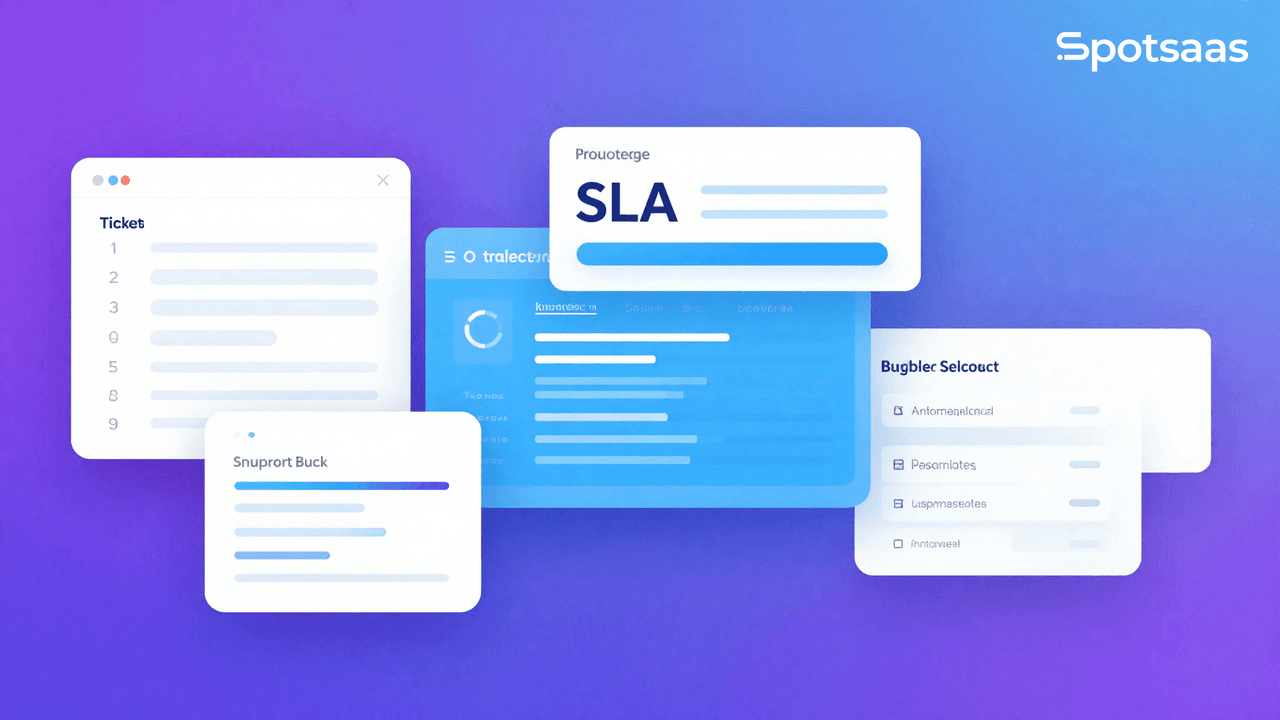
This buyer’s guide walks you through finding the best help desk software for 2024, so you can improve your support operations and raise user satisfaction.
What is Help Desk Software?
Help desk software is a tool that helps businesses manage their customer support and IT service management. It gives teams a central place to handle customer requests, troubleshoot technical issues, and keep communication moving between support agents and the customers or employees they help. Instead of scattering requests across inboxes and chat threads, the software collects them in one system where nothing gets lost.
These tools range from basic ticketing systems to full solutions that add features like AI-powered chatbots and self-service knowledge bases. The right fit depends on the size of your team and how many support requests you handle each day.
Types of Help Desk Software
There are several types of help desk software to choose from.
- Web-based software: A help desk tool you use online. It helps you solve problems quickly.
- On-premise software: This tool runs on your company’s own servers. It suits businesses with strict data rules.
- Open-source software: Free for anyone to use and modify. You need technical skills to set it up, but it can cost very little.
- Enterprise software: Built for large companies. It carries many features and can handle a high volume of support tickets at once.
- IT Service Management Software: Supports the IT team in a company. They use it to fix the technical problems that staff or customers run into.
Key Features to Look for in Help Desk Software
When you evaluate help desk software, weigh the features that shape your customer support workflow. The essentials to look for include a ticketing system, AI and chatbot capabilities, a self-service knowledge base, an omnichannel agent workspace, and strong reporting and analytics tools.
Together these features handle ticket management, automate responses and troubleshooting, give customers self-help options, keep communication consistent across channels, and turn support data into insights that improve satisfaction and efficiency.
Ticketing system
A ticketing system is a core part of help desk software. It tracks and resolves user issues. Each time a customer reports a problem, the system creates a ticket, and the team works on that ticket until the issue is fixed.
It keeps work organized and orderly. Each ticket holds the full history of a request, so any agent who picks it up can see what has already been tried. Leading help desk tools like Zendesk Support use this kind of system to manage support requests. A good ticket system makes staff quicker and more effective at solving problems.
AI and chatbots
AI and chatbots are worth weighing when you choose help desk software. With AI, businesses can automate repetitive tasks and respond to customer questions faster.
Chatbots can handle common questions and issues, which frees support staff to work on more complex requests. That improves efficiency and the overall customer experience.
With AI and chatbot capabilities, businesses can simplify their support processes and resolve customer issues promptly. Help desk software options with strong AI and chatbot features include HappyFox Help Desk, Jira Service Desk, Zendesk Support, Kayako, Intercom, and Freshdesk.
Self-service knowledge base
A self-service knowledge base is an important feature to look for in help desk software. It lets users find answers and troubleshoot issues on their own, without having to contact an agent.
With a knowledge base, businesses can offer a library of helpful articles, FAQs, and tutorials that customers reach at any time. This helps customers solve problems independently and reduces the workload on support teams.
When users can find information themselves, companies improve customer satisfaction and save time and resources on support. A well-maintained knowledge base also cuts the number of repeat tickets, since common questions are answered before they reach an agent. Help desk software options with strong self-service knowledge base features include Zendesk Support and Freshdesk.
Omnichannel agent workspace
An omnichannel agent workspace is another feature to look for in help desk software. It lets support agents handle customer inquiries from multiple channels in one central place.
With omnichannel capabilities, agents can move between email, phone calls, live chat, and social media messages without losing context or missing important information.
This improves efficiency and keeps the customer experience consistent across every channel. A customer who starts a request by email and follows up on live chat does not have to explain the issue twice. By giving agents a unified view of customer interactions, the workspace helps support teams understand and address customer needs.
Reporting and analytics
Reporting and analytics matter when you choose the best help desk software. These functions let businesses track, measure, and analyze their customer support performance.
With reporting, you can generate detailed reports and metrics that show how your support operation is running. That covers ticket volume, response times, resolution rates, customer satisfaction scores, and more.
Analytics tools help you spot trends, find areas to improve, and make data-driven decisions that raise service quality. For example, a rising ticket volume in one product area can point to a bug or a gap in documentation. With full reports and analytics inside your help desk software, you get a clearer view of your team’s performance and can take steady steps toward better customer support.
Benefits of Using Help Desk Software
Help desk software brings several benefits to businesses and support teams. It supports fast customer or IT support, so issues get resolved quickly. Support teams also perform better, because ticketing systems and workflow tools help them manage and prioritize customer requests.
Businesses can also simplify their processes by automating repetitive tasks and improving communication between team members. In the end, help desk software leads to better user satisfaction and stronger problem-solving, which makes it a valuable tool for any organization.
Fast and efficient customer/IT support
Fast, efficient customer and IT support is essential for meeting customer needs and expectations. With the right help desk software, companies can simplify their support processes, respond to requests promptly, and resolve issues quickly.
That improves customer satisfaction while it cuts downtime and lifts productivity. With features like ticketing systems, chatbots, and self-service knowledge bases, businesses give users a smooth support experience where they can troubleshoot on their own or get help from knowledgeable agents.
Reporting and analytics tools also let companies track performance metrics, find areas to improve, and make data-driven decisions that strengthen their support operations.
Success for support teams
Help desk software is essential to the success of support teams. It helps them handle customer requests efficiently and deliver fast technical assistance. With the right software, support teams can simplify their workflows, manage tickets well, and troubleshoot issues faster.
That improves user satisfaction and supports problem-solving and clear communication with customers. With help desk software, support teams raise their productivity and give internal and external users a smooth experience.
Simpler business processes
Simpler business processes are a key benefit of using help desk software. With the right software in place, businesses can automate and refine their workflows, which raises efficiency and productivity.
Help desk software handles ticket management cleanly, so customer requests are prioritized, assigned to the right staff, and tracked until resolution. By keeping all customer support activity in one platform, businesses avoid information silos and improve communication between team members.
Help desk software also provides reporting and analytics that help businesses spot bottlenecks or areas to improve in their support processes. This data-driven approach helps businesses make informed decisions and keep improving their operations.
How to Choose the Best Help Desk Software
When you select the best help desk software, first define your customer service goals and assess your current support needs. Weigh the features you require, such as a ticketing system, AI and chatbot capabilities, a self-service knowledge base, an omnichannel agent workspace, and reporting and analytics.
Also consider integration options and plan for implementation and switching.
Define your customer service goals
To choose the best help desk software, start by defining your customer service goals. Think about what you want from your support team and how you want to improve customer satisfaction.
Do you need a system that can handle a high volume of tickets? Are you looking for software that integrates with other tools you use? Consider the specific needs of your business and which features would help you meet those goals.
Once your customer service goals are clear, you can narrow your options and find the best help desk software for your organization’s needs.
Assess your current support needs
To choose the best help desk software, first assess your current support needs. Look at your customer service goals and evaluate which areas are lacking or need improvement.
Consider the volume of customer requests, the complexity of the technical assistance you provide, and how you currently manage and track support issues. Once you understand your requirements, you can decide which features are essential in a help desk software solution.
This evaluation is key to finding software that fits your business needs and can simplify your support processes. It also helps you avoid paying for features you will not use, or picking a tool that cannot keep up as your support volume grows.
Determine essential features
To choose the best help desk software, decide which features are essential for your business. Here are some key features to consider:
| Feature | Description |
|---|---|
| Ticketing System | Helps track and manage customer requests to ensure no issues are missed. |
| AI and Chatbots | Includes AI and chatbot capabilities for automating responses to common customer inquiries. |
| Self-service Knowledge Base | Provides a knowledge base for customers to find answers without needing direct support. |
| Omnichannel Agent Workspace | Supports handling queries across multiple channels (email, live chat, phone calls, social media) in a unified workspace. |
| Reporting and Analytics | Offers features for measuring metrics like response times, ticket volumes, and customer satisfaction levels. |
Consider integration options
When you choose the best help desk software, weigh the integration options. Here are some factors to keep in mind:
| Feature | Description |
|---|---|
| Compatibility with Existing Systems | Ensures smooth integration with current IT infrastructure for easy data transfer and simpler processes. |
| API Availability | Provides an API for communication with other business applications, supporting necessary integrations. |
| Integration with CRM Software | Offers compatibility with CRM systems to manage customer relationships and ensure information flow. |
| Collaboration Tools Integration | Supports integration with project management platforms and communication apps for better team collaboration. |
| Third-party Integrations | Includes integrations with platforms like email clients, e-commerce systems, social media, and live chat providers. |
Plan for implementation and switching
To make the move to your new help desk software go smoothly, plan for implementation and switching. Here are the key steps to follow:
| Step | Description |
|---|---|
| Assess Your Current System | Evaluate the usage, pain points, and limitations of your current help desk software to understand what new features are needed. |
| Set Clear Goals and Expectations | Define objectives for the new software, such as improved response time, increased customer satisfaction, or simpler workflows. |
| Create an Implementation Timeline | Outline a detailed timeline for each stage of implementation, including data migration, training, and testing. |
| Establish a Project Team | Form a dedicated team with representatives from various departments to oversee the implementation process. |
| Train Your Staff | Provide comprehensive training on the new software, covering both basic and advanced functionalities. |
| Communicate with Stakeholders | Regularly update stakeholders like employees, customers, and management, addressing their concerns and questions. |
| Test Extensively Before Going Live | Conduct thorough testing to identify and fix any issues before fully integrating the new software into operations. |
| Develop a Backup Plan | Prepare for potential risks or challenges by having a contingency plan for issues like data loss or system downtime. |

- Independent picks for exactly what you just read about
- Matched to your team size & needs
- Vendors don't pay for placement
Step 1 of 4
How big is your team?
We tailor recommendations to companies your size.















Related Articles
Buyers guide
Twilio Alternatives 2026: 6 Compared and What They Cost
Continue reading →
Buyers guide
How To Choose The Best Auto Dialer Software For 2026
Continue reading →
Buyers guide
How To Choose The Best Freelance Platforms For 2026
Continue reading →
Buyers guide
How To Choose The Best Audience Response Software For 2026
Continue reading →