
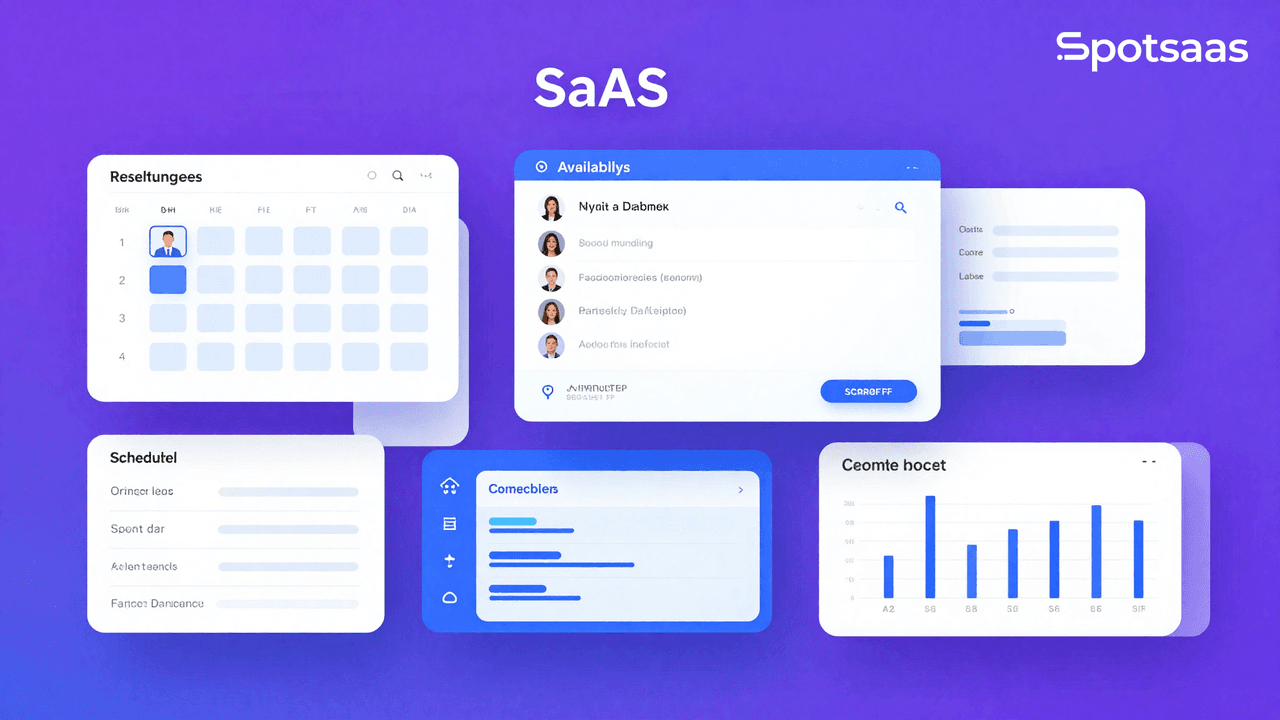
Choosing the right employee scheduling software is hard, especially with so many options on offer and so many features to compare. Zoom Shift, for example, is rated one of the best minimalist apps this year. This article walks you through how to pick a tool that works and one that is tailored to your business needs, not just any tool that happens to be popular.
What is Employee Scheduling Software?
Employee scheduling software is a type of workforce management software that helps businesses create staff schedules and automate the process.
It includes tools and features that simplify shift planning, time tracking, and staff management. Together these features improve productivity and help businesses stay compliant with labor laws.
Definition
Employee scheduling software is a tool to plan and track work times. It sets when and where people need to do their jobs across the business. The software can handle many tasks at once, such as shift swaps, sick days, and vacation time, all in one place.
It can also help enforce rules for working hours, and some tools even let workers pick their own shifts. There are different types for different needs: basic ones that only build schedules; others that track the time each person works; some that combine planning with tracking in a single tool; and advanced ones that also plot out tasks so the right people do them at the right times.
Types of Employee Scheduling Software
There are many types of employee scheduling software, and each type offers features for different needs. Here is a list:
| Types of Workforce Management Software | Description |
|---|---|
| Workforce Management Software | Manages employee schedules, tracks time, and monitors work tasks for comprehensive workforce management. |
| Shift Scheduling Software | Designed for businesses with shifts, it facilitates easy shift swaps and maintains accurate hour tracking. |
| Time Tracking Software | Records the amount of time employees spend on various tasks and activities. |
| Staff Scheduling Solutions | Used to plan staff hours and coordinate their activities efficiently. |
| HR Software | Assists human resources teams with scheduling tasks and can handle other HR functions like payroll and benefits management. |
| Team Scheduling Software | Ideal for project teams, allowing scheduling of tasks, meetings, and deadlines. |
| Employee Scheduling Apps | Mobile tools used on phones or tablets for managing work schedules on the go. |
| Shift Planning Software | Enables setting up shift rotations and ensuring coverage at all times. |
| Employee Time Management Software | Tracks employee clock-in and clock-out times for attendance and time management purposes. |
| Work Schedule Software | Useful for creating weekly or monthly work plans and schedules. |
| Employee Rostering Software | Allows you to create and manage lists of employees and their assigned work shifts. |
Benefits of using Employee Scheduling Software
Employee scheduling software brings several benefits to a business: it simplifies the scheduling process, improves efficiency, saves costs, raises employee satisfaction, and helps you stay compliant with labor laws.
Streamlining scheduling process
Employee scheduling software makes planning work schedules easy. It lets managers set up shifts for their teams in far less time, and it helps make sure that every task has someone available to work on it.
You can also keep track of who is working at what time and confirm that each shift has the right coverage. Using this kind of software means fewer errors and less stress for everyone involved in the process. Best of all, it frees up more time for other important work around the workplace, like helping clients or handling day-to-day tasks.
Improved efficiency
Employee scheduling software can improve efficiency in managing work schedules. With it, employers can create and assign shifts without doing the work by hand.
The software automates tasks such as shift swapping and time-off requests, which reduces errors and conflicts in the schedule. It also sends real-time updates and notifications, so everyone stays informed about changes to their schedule.
This saves time and increases productivity, because employees have clear visibility into their upcoming shifts and know what is expected of them. With these features working together, businesses can manage their workforce better and keep day-to-day operations running smoothly.
Cost savings
One of the key benefits of using employee scheduling software is cost savings. With efficient scheduling and shift management capabilities, businesses can balance their workforce and reduce the overtime costs they pay out each month.
By tracking work hours and attendance accurately through timekeeping features, companies can cut errors in payroll calculations and avoid paying for unworked hours. The software also helps prevent overstaffing and understaffing situations, both of which reduce unnecessary labor expenses.
Overall, by automating the scheduling process and keeping staffing levels right, businesses can save money and allocate their resources more effectively across the organization.
Enhanced employee satisfaction
Employee scheduling software plays a role in raising employee satisfaction. With the help of this software, employees have more control over their work schedules and can easily request time off or swap shifts with their colleagues.
This flexibility leads to a better work-life balance, which reduces stress and improves overall job satisfaction. The software also gives employers clear communication channels to share shift information and updates, so employees stay well-informed and can plan their personal lives around their shifts.
By giving employees more control and keeping the scheduling process transparent, the software improves satisfaction, which in turn leads to higher productivity and better retention rates within the organization.
Compliance with Labor laws
Choosing employee scheduling software that keeps you compliant with labor laws matters. Legal requirements change often, so it is important to stay updated and make sure your scheduling practices match the law.
Employee scheduling software can help you manage work hours, breaks, overtime, and other labor-related factors in line with the relevant laws that apply to your business.
By using compliant software, you can avoid the penalties and lawsuits that come with non-compliance. The software can calculate work hours based on labor laws, so you can monitor and manage schedules and keep them within the rules.
Some employee scheduling tools also include built-in alerts or notifications that warn managers about potential scheduling conflicts or possible violations before they happen.
Compliant software often includes reporting that lets employers track working time accurately. This data can be used for record-keeping and audits when needed.
Key Features to Consider When Choosing Employee Scheduling Software
When choosing employee scheduling software, weigh key features such as scheduling and shift management, timekeeping, reporting and analytics, software integrations, and the user interface.
Scheduling and shift management capabilities
Employee scheduling software gives businesses strong scheduling and shift management capabilities. With it, employers can easily create and manage employee schedules and make sure the right number of staff members are available for each shift.
The software lets users assign shifts based on employee availability and skill sets, and it accounts for factors like time zones and total work hours. Employees can also view their schedules online, which makes it easy to check their assigned shifts, times, dates, locations, and any required forms they need to review or sign before a shift.
This keeps the scheduling process clear and makes sure everyone is on the same page about their shift assignments. Some tools also include built-in communication features, so employers can quickly notify staff about schedule changes or request a shift swap when they need one.
Timekeeping features
Employee scheduling software often includes timekeeping features that help businesses track and manage attendance. These features let employees clock in and out, record work hours accurately, and check their own schedules.
By automating the timekeeping process, businesses reduce errors and stay compliant with labor laws. Managers can also view and analyze employee attendance data, which helps them make informed decisions about staffing needs and how to allocate their resources.
Timekeeping features are convenient for both employers and employees, and they make tracking work hours simpler and more effective within the scheduling software. They also improve payroll accuracy and cut down on the administrative work tied to managing time.
Reporting and analytics
Employee scheduling software with strong reporting and analytics can give useful insight into your workforce. By generating reports on attendance, shift coverage, and labor costs, you can spot patterns and make decisions that improve scheduling efficiency.
These reports help you track productivity levels, measure compliance with labor laws, and find potential areas for improvement. With real-time data at your fingertips, you can quickly assess how well your scheduling strategies are working and make proactive adjustments when needed.
Whether you are analyzing overtime trends or forecasting future staffing needs, the right reporting and analytics tools take the guesswork out of managing your workforce effectively.
Software integrations
Software integrations matter for smooth day-to-day operations. When choosing the best employee scheduling software, it is important to check that it works with the other tools and systems your business already uses.
With integrations, you can connect your scheduling software to other essential applications such as payroll, HR management, and time tracking systems. This lets data move freely between systems and removes the need for manual entry or duplicate work.
By connecting different software solutions, you simplify processes, improve accuracy, and save time. So prioritize employee scheduling software that offers smooth, effective integrations to improve overall efficiency across your organization.
User interface and usability
The user interface and usability of employee scheduling software matter when picking the best option for your business. A user-friendly interface makes it easy for employers and employees to use the system without confusion.
The software should have clear, intuitive features that let users create schedules, manage shifts, and view important information with ease. A mobile-friendly design also lets employees check their schedules on the go using their smartphones or tablets, wherever they happen to be.
The goal is to find employee scheduling software that keeps the scheduling process simple and improves productivity by providing a smooth, efficient user experience for everyone who uses it.
How to Choose the Best Employee Scheduling Software
To find the best employee scheduling software, start by identifying your business needs and setting your budget. Research and compare the options, and look at software reviews and expert analysis.
Do not forget to take advantage of free trials and demos to confirm that the software meets your requirements before you make a final decision.
Identify your business needs
To choose the best employee scheduling software, start by identifying your specific needs. Consider factors such as the size of your workforce, the complexity of your scheduling, and any unique features you may require.
Decide whether you need basic scheduling capabilities or more advanced features like time tracking, reporting, or integration with other software systems. Knowing what your business requires helps narrow down the options and find a solution that meets your specific needs.
Keep in mind that some software options offer additional extras like communication tools or mobile app access, so factor those in as well when deciding what is important for your own business.
Determine budget
Before choosing the best employee scheduling software, set your budget. Consider how much you are willing to spend and which features are essential for your business.
Keep in mind that some tools are available for free, while others charge a monthly or annual subscription fee. By knowing your budget beforehand, you can narrow down your options and focus on finding a solution that fits within your financial parameters.
Research and compare available options
Researching and comparing the various available options is a crucial step in the selection process. It gives you a chance to assess the different features, price points, and user interface designs side by side so you can make an informed decision.
| Software | Features | Pricing |
|---|---|---|
| PriceZoom | Minimalist app, easy to use, with scheduling and shift management capabilities | Pricing available upon request |
| Deputy | Excellent communication tools, time and attendance tracking, and easy access to shift information | Starts at $2.5 per user per month |
| Free Scheduling Software | Basic scheduling features, option to set work hours and schedule, and available for no cost | Free |
Remember to weigh your specific business needs and budget when comparing these options against each other. Take advantage of free trials and demos when available, and read software reviews to gauge user satisfaction and product reliability.
Consider software reviews and expert analysis
One important step in the process is to look at software reviews and expert analysis. These sources give useful insight from professionals who have tested and evaluated many different options themselves.
By reading reviews and analysis, you can learn about the strengths and weaknesses of each tool, along with its ease of use, functionality, and overall performance. This information helps you decide based on the real-world experiences of other users and experts in the field.
So take the time to research your options and read reviews carefully before you make your final choice on a tool.
Take advantage of free trials and demos
To make sure you choose the best employee scheduling software, use the free trials and demos that providers offer. These trial periods let you test the software and see if it meets your needs before you commit.
By testing the software firsthand, you can assess its user interface, features, and functionality and decide whether it is easy to use and navigate. Demos provided by vendors also give you a chance to ask questions and clear up any doubts about what the software can do.
This helps you make an informed decision based on your own specific requirements rather than relying only on marketing materials or the reviews of other people.
Conclusion
In the end, choosing the best employee scheduling software takes careful thought about your business needs and your budget. Researching and comparing the different options, reading software reviews, and using free trials all help you make an informed decision you can stand behind.
By selecting the right software, you can simplify your scheduling process, improve efficiency, save costs, raise employee satisfaction, and stay compliant with labor laws.
With the right tools in hand, you can manage your workforce more effectively and boost overall productivity for your business over the long term.

- Independent picks for exactly what you just read about
- Matched to your team size & needs
- Vendors don't pay for placement
Step 1 of 4
How big is your team?
We tailor recommendations to companies your size.















Related Articles
Buyers guide
Twilio Alternatives 2026: 6 Compared and What They Cost
Continue reading →
Buyers guide
How To Choose The Best Auto Dialer Software For 2026
Continue reading →
Buyers guide
How To Choose The Best Freelance Platforms For 2026
Continue reading →
Buyers guide
How To Choose The Best Audience Response Software For 2026
Continue reading →