
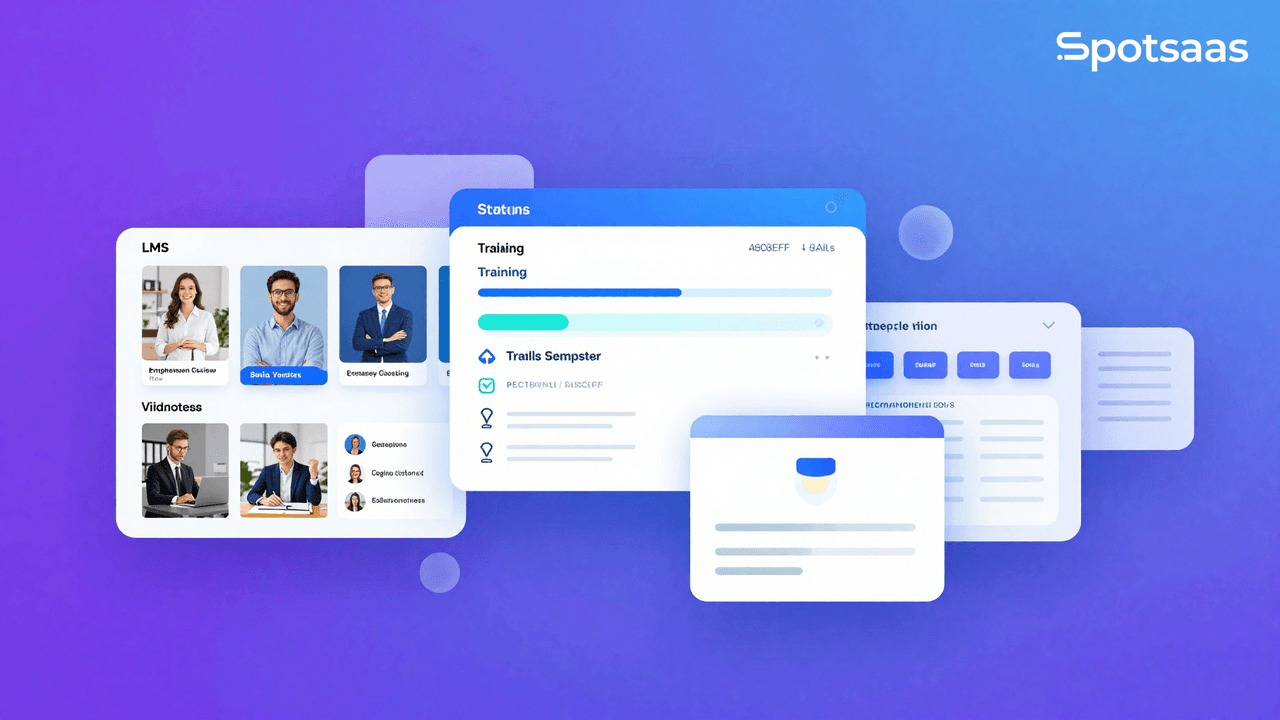
Choosing the right corporate learning management system (LMS) can make or break your employee training program. With hundreds of platforms on the market, ranging from lightweight tools for small teams to enterprise-grade systems with AI-driven personalization, the selection process is genuinely complex. This guide cuts through the noise so you can find the corporate LMS that fits your organization’s goals, budget, and scale in 2026.
What Is a Corporate Learning Management System?
A corporate learning management system is a software platform that centralizes how businesses create, deliver, track, and manage employee training. Instead of scattered spreadsheets, in-person-only sessions, or disconnected tools, an LMS gives your L&D team a single hub for everything from onboarding to compliance training to skills development.
The core idea is simple: employees log in, access their assigned courses, complete assessments, and managers get real-time data on progress and completion rates. In practice, modern corporate LMS platforms go much further, offering AI personalization, social learning, content marketplaces, and integrations with your HRIS and payroll systems.
According to Gartner, corporate learning technologies represent one of the fastest-growing HR tech investment categories, with organizations prioritizing platforms that combine skill-building with measurable business outcomes. You can explore Gartner’s corporate learning technology reviews at gartner.com/reviews/market/corporate-learning-technologies.
Why Your Business Needs a Corporate LMS in 2026
Employee training has shifted from a nice-to-have to a competitive necessity. The global LMS market is projected to exceed $28 billion by 2026, according to multiple industry research reports, driven by the rise of remote work, skills gaps, and regulatory compliance requirements.
Organizations that invest in structured learning programs see measurably better employee retention, faster onboarding, and stronger compliance outcomes. The numbers back this up: according to Forbes, companies with comprehensive training programs see 218% higher income per employee than those without, which is a meaningful gap when you consider how much of that comes down to how well people are onboarded and kept current on their skills.
For HR and L&D leaders, the real question today is which corporate LMS to choose and how to implement it effectively.
Types of Corporate LMS Platforms
Understanding the landscape helps you narrow your options quickly. The main categories are:
- Cloud-based (SaaS) LMS: Hosted and maintained by the vendor, accessible from any browser. Lowest upfront cost, fastest to deploy. Ideal for most mid-size and large organizations.
- On-premise LMS: Installed on your own servers. Offers maximum data control but requires IT resources and higher maintenance overhead.
- Open-source LMS: Free to use with full access to the source code. Examples include Moodle. Highly customizable but requires in-house technical expertise.
- Custom-built LMS: Built from scratch for your organization’s exact needs. Most expensive option, typically justified only for enterprises with unique requirements.
- Extended enterprise LMS: Designed to train external audiences, such as customers, partners, and resellers, in addition to your own employees.
For most companies evaluating a corporate LMS for the first time, a cloud-based SaaS platform delivers the right balance of capability, speed of deployment, and cost.
Key Features to Look for in a Corporate LMS
Not every feature matters equally for every organization. Here are the capabilities that consistently make the biggest difference in corporate training outcomes.
Content Delivery and Multimedia Support
Your LMS needs to support the full range of content formats your team will use: video, SCORM and xAPI packages, PDFs, quizzes, live webinar integrations, and interactive modules. A platform that limits you to one or two formats will constrain your instructional designers and reduce learner engagement over time.
Look for platforms that also offer a built-in content marketplace or library, so you are not starting from scratch. Many top corporate LMS vendors include thousands of pre-built courses on topics like compliance, leadership, and software skills.
Mobile Learning and Accessibility
Your workforce is no longer desk-bound. Frontline workers, field teams, and remote employees all need to complete training on mobile devices. Prioritize platforms with a true native mobile app over one that is only mobile-responsive inside a browser.
Accessibility compliance (WCAG 2.1) is also critical, particularly for organizations operating in regulated industries or government sectors.
Personalized Learning Paths
Modern corporate LMS platforms use AI and rules-based logic to assign learning paths based on role, department, skill level, or previous course completion. This means a new sales hire sees different content than a senior engineer, without manual intervention from the L&D team.
Personalization improves completion rates and learning retention, both of which affect the ROI on your training investment. A learner who is shown relevant content is simply more likely to finish it.
Reporting, Analytics and Progress Tracking
This is where many cheaper LMS platforms fall short. You need more than basic completion tracking. Look for platforms that provide:
- Learner progress dashboards by individual, team, and department
- Assessment scores and pass/fail rates
- Time-on-task data
- Compliance status reports with audit trails
- Learning impact data tied to business outcomes
If reporting is a priority for your organization, narrow your options to platforms with strong analytics, and confirm the reports you actually need can be generated and exported without custom development.
Compliance and Certification Management
For companies in healthcare, finance, manufacturing, or any regulated industry, compliance training is non-negotiable. Your corporate LMS should automatically track certification expiry dates, send renewal reminders, and generate audit-ready reports.
Look for platforms with built-in support for industry standards like SCORM, xAPI (Tin Can), and AICC, as well as integration with compliance content libraries.
How to Choose the Right Corporate LMS: Step-by-Step
Step 1: Define Your Training Goals
Start with outcomes, not features. What specific business problems is your LMS meant to solve? Common goals include reducing time-to-productivity for new hires, improving compliance pass rates, reducing in-person training costs, or scaling skills development without adding headcount to the L&D team.
Writing down two to three measurable goals before you evaluate any vendor keeps the whole process grounded, so you are comparing platforms against what your organization actually needs rather than against whichever one gave the flashiest demo.
Step 2: Audit Your Current Training Setup
Document what you already have: existing course content and formats, the size of your learner population, the devices employees use, integrations you need (HRIS, SSO, Salesforce, Zoom, etc.), and your current IT infrastructure. This audit will surface constraints early and prevent you from falling in love with a platform that cannot connect to your existing stack.
Step 3: Evaluate Features Against Your Needs
Build a simple scoring matrix. List your must-have features (non-negotiables), nice-to-have features, and deal-breakers. Score every vendor you are considering against this matrix to keep emotion and sales pressure out of the decision.
Avoid being swayed by flashy demos of features you will not realistically use. A platform with 200 features you will never touch is not better than a focused tool that nails your top ten requirements.
Step 4: Compare Pricing Models
Corporate LMS pricing varies enormously. Common models include:
- Per-user per-month: You pay for every active learner. Good for organizations with a stable headcount.
- Per-active-user: You only pay for users who log in during a billing period. Better for seasonal or part-time workforces.
- Flat-fee licensing: Fixed annual cost regardless of user volume. Ideal for large enterprises.
- Open-source (free base, paid support): Low cost to start, but factor in hosting, customization, and support expenses.
Always ask vendors about total cost of ownership: implementation fees, content migration costs, ongoing support tiers, and what happens to pricing as you scale.
Step 5: Check Reviews and Run a Free Trial
Peer reviews from verified users are the most reliable signal of real-world performance. G2 maintains one of the most comprehensive LMS review databases, with thousands of verified ratings across all major platforms. Browse the LMS category at g2.com/categories/learning-management-system to compare user sentiment before committing to a demo.
Most reputable vendors offer a free trial or a sandbox environment. Use this to test the admin experience, the learner experience, and at least one full reporting workflow before signing any contract.
Top Corporate LMS Platforms Worth Considering in 2026
The right platform depends entirely on your organization’s size, industry, and use case. That said, several corporate LMS platforms consistently lead in G2 ratings, analyst reports, and enterprise adoption:
- Docebo: Best for large enterprises needing AI-driven personalization and extended enterprise training
- Absorb LMS: Strong fit for mid-market companies with multi-audience training needs (employees, customers, partners)
- Cornerstone OnDemand: Leading choice for compliance-heavy industries and talent management integration
- SAP Litmos: Fast to deploy with an extensive built-in content library; suits organizations wanting rapid time-to-value
- 360Learning: Collaborative LMS focused on peer-generated content and social learning
- Moodle Workplace: Flexible open-source option with enterprise support; popular in education and regulated sectors
- iSpring Learn: Excellent for organizations already creating content with PowerPoint; strong SCORM support
- Talent LMS: Popular with SMBs for its ease of use and affordable pricing tiers
This is not an exhaustive list. The LMS market includes hundreds of viable platforms. Use the evaluation framework above to match your specific requirements to the right tool.
Common Mistakes to Avoid When Choosing a Corporate LMS
Even well-resourced organizations make avoidable mistakes during LMS selection. Watch out for these:
- Buying for today only: Choose a platform that can scale with your user base and content library over three to five years, beyond just your immediate headcount.
- Ignoring the learner experience: Admin teams love platforms that are easy to manage, but if learners find the interface confusing, completion rates will tank. Test with a real learner cohort during your trial.
- Underestimating implementation time: Even cloud-based LMS platforms require meaningful configuration, content migration, and user training. Build a realistic implementation timeline before going live.
- Skipping integrations review: An LMS that cannot connect to your HRIS, SSO provider, or video conferencing tools will create manual data entry overhead that defeats the purpose of automation.
- Choosing the cheapest option without checking support quality: Poor vendor support is one of the top complaints in LMS user reviews. Check what support tier is included in your contract and what SLAs are guaranteed.
FAQ
What is a corporate learning management system?
A corporate learning management system is a software platform that allows organizations to create, deliver, track, and manage employee training programs from one centralized location. It replaces ad-hoc training methods with a structured, scalable, and measurable system.
What LMS do corporations use?
Large enterprises commonly use platforms like Docebo, Cornerstone OnDemand, SAP Litmos, Absorb LMS, and Workday Learning. Mid-market companies often choose Talent LMS, iSpring Learn, or 360Learning based on budget and use case requirements.
What are the top 5 LMS systems for corporate training?
Based on G2 ratings and analyst coverage in 2026, the consistently top-rated corporate LMS platforms are Docebo, Absorb LMS, Cornerstone OnDemand, SAP Litmos, and 360Learning. The best choice depends on your organization’s size, industry, and specific training goals.
What are the main types of learning management systems?
The six main types are: cloud-based (SaaS) LMS, on-premise LMS, open-source LMS, custom-built LMS, extended enterprise LMS, and mobile-first LMS. Cloud-based platforms are the most widely adopted by modern organizations due to lower cost and faster deployment.
How much does a corporate LMS cost?
Corporate LMS pricing ranges from free (open-source platforms like Moodle) to over $100,000 annually for enterprise contracts. Most mid-market SaaS platforms charge between $3 and $10 per active user per month, with volume discounts at higher user counts. Always factor in implementation, content migration, and support costs.
What is the difference between an LMS and an LXP?
A Learning Management System (LMS) is primarily admin-driven: managers assign courses and track completion. A Learning Experience Platform (LXP) is learner-driven: employees discover and curate their own development content. Many modern platforms blend both approaches, offering structured compliance training alongside self-directed learning feeds.
How long does it take to implement a corporate LMS?
Implementation timelines range from a few days for simple SaaS setups to six to twelve months for large enterprise deployments with complex integrations and content migrations. A realistic average for a mid-size organization is four to eight weeks from contract signing to go-live.
What integrations should a corporate LMS have?
At minimum, look for integrations with your HRIS (Workday, BambooHR, SAP SuccessFactors), your SSO provider (Okta, Azure AD), and your video conferencing tool (Zoom, Microsoft Teams). Content format standards like SCORM and xAPI are also essential for importing existing course materials.
Can a small business use a corporate LMS?
Absolutely. Many LMS vendors specifically serve SMBs with affordable pricing tiers and simplified feature sets. Talent LMS, iSpring Learn, and Absorb LMS all offer plans designed for teams of 50 to 500 employees without enterprise-level complexity or cost.
How do I measure ROI from a corporate LMS?
Track both direct and indirect metrics. Direct metrics include training completion rates, compliance pass rates, and assessment scores. Indirect metrics include time-to-productivity for new hires, reduction in in-person training costs, employee retention rates, and performance review outcomes for employees who completed development programs.
Final Thoughts
Choosing a corporate learning management system is a strategic decision that will shape how your organization develops talent for years. The right platform aligns with your training goals, integrates with your existing tech stack, scales with your workforce, and delivers a learning experience your employees will actually engage with.
Use the step-by-step framework in this guide to cut through vendor noise: define your goals, audit your setup, score features methodically, compare pricing models honestly, and validate with real user reviews before committing. None of these steps takes long on its own, but skipping any one of them is usually how organizations end up locked into a contract that does not fit.
If you are ready to compare specific platforms, explore verified user ratings and detailed feature comparisons for the top corporate LMS tools at Spotsaas.

- Independent picks for exactly what you just read about
- Matched to your team size & needs
- Vendors don't pay for placement
Step 1 of 4
How big is your team?
We tailor recommendations to companies your size.















Related Articles
Buyers guide
Twilio Alternatives 2026: 6 Compared and What They Cost
Continue reading →
Buyers guide
How To Choose The Best Auto Dialer Software For 2026
Continue reading →
Buyers guide
How To Choose The Best Freelance Platforms For 2026
Continue reading →
Buyers guide
How To Choose The Best Audience Response Software For 2026
Continue reading →