

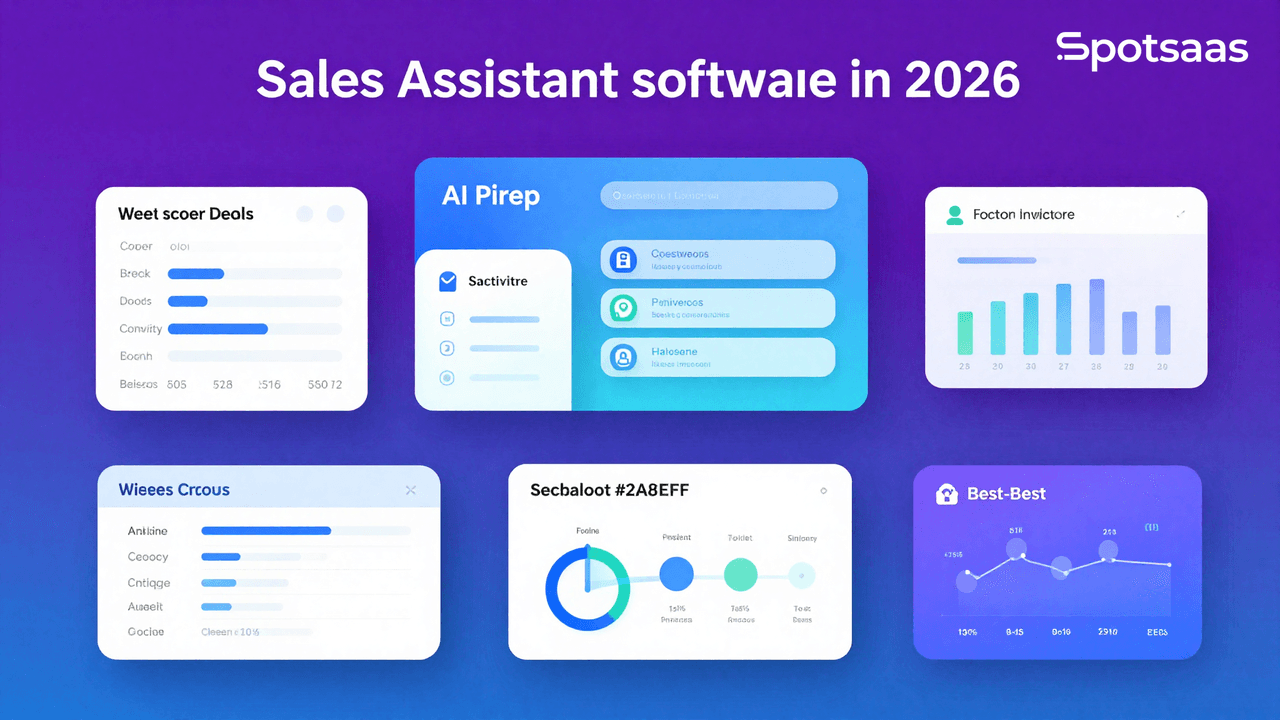
As AI advances, many companies are looking to AI Sales Assistant software to help their sales teams close deals faster, simplify tasks, and gain insights to personalize the sales approach.
This guide will walk you through the essential aspects of AI Sales Assistant Software, covering key features, challenges, benefits, alternatives, cost considerations, and the latest trends shaping the future of these tools.
What Is AI Sales Assistant Software?
AI Sales Assistant Software is a tool that uses artificial intelligence (AI) to assist sales teams in automating tasks, generating insights, and providing recommendations. It helps manage customer interactions, organize leads, track conversations, and improve customer relationships.
AI Sales Assistants don’t just store information; they actively help sales reps by suggesting the best time to follow up, analyzing customer preferences, and identifying high-value prospects.
AI Sales Assistants are particularly helpful for repetitive sales tasks, such as data entry, email follow-ups, scheduling meetings, and nurturing leads, allowing sales teams to spend more time on complex, strategic tasks like closing deals and building customer relationships.
Common Features of AI Sales Assistant Software
When evaluating AI Sales Assistant tools, look for these common features to ensure that the software meets your business needs:
• Lead Scoring and Prioritization: AI-powered scoring ranks leads based on how likely they are to convert. This helps sales teams focus on the most promising prospects.
• Automated Outreach: The software can send follow-up emails, and reminders, and even schedule meetings based on prior interactions. This saves time on repetitive tasks.
• Conversation Analysis: Tracks interactions, analyzes customer sentiment, and provides insights on conversation success. This helps sales reps improve communication skills.
• Predictive Analytics: Uses historical data to predict outcomes, such as which deals are most likely to close. This helps reps prioritize their efforts.
• CRM Integration: Integrates with existing CRM systems, synchronizing data and updating customer profiles for easy access to information.
• Natural Language Processing (NLP): NLP-based tools understand and respond to customer inquiries naturally, assisting with customer interactions and personalizing responses.
• Sales Forecasting: Provides sales predictions based on current trends. This allows sales teams to plan for upcoming months and adjust strategies.
• Workflow Automation: Automates routine tasks such as logging calls, sending reminders, and updating CRM entries. This reduces admin time.
• Personalized Insights and Recommendations: AI suggests personalized content, product recommendations, or selling strategies based on customer preferences and behaviors.
• Data Analytics and Reporting: Offers detailed reports and visualizations to help track performance, analyze sales trends, and measure productivity.
Who Uses AI Sales Assistant Software?
AI Sales Assistant tools benefit many users across different industries and roles:
| User | Description |
|---|---|
| Sales Representatives | AI tools help reps simplify outreach, nurture leads, prioritize tasks, and access insights to make each interaction more effective. |
| Sales Managers | Managers gain useful detail into team performance, deal progression, and predictive forecasting. This helps them allocate resources better. |
| Marketing Teams | Marketing professionals can use these tools to align campaigns with sales, target ideal customer profiles, and track customer preferences for better engagement. |
| Customer Success Teams | AI Sales Assistants help maintain customer relationships by offering insights into customer needs, preferences, and satisfaction levels. |
| Business Owners and Executives | Small business owners or executives in larger organizations gain high-level visibility into sales performance, forecasting, and revenue projections. |
Benefits of AI Sales Assistant Software
AI Sales Assistants bring multiple benefits, making them valuable tools for businesses of all sizes:
Enhanced Productivity
By automating repetitive tasks, sales assistants allow reps to focus on strategic, high-value activities like closing deals and relationship building.
Better Lead Prioritization
AI-driven insights help identify the highest-potential leads. This ensures that sales teams focus on prospects most likely to convert.
Improved Customer Insights
AI analyzes customer data, offering insights into buying behavior, preferences, and engagement. This helps reps personalize their approach.
Increased Conversion Rates
With real-time insights and predictive analytics, reps can engage customers at the optimal time and with the right message, leading to higher conversion rates.
Efficient Sales Processes
Automation reduces the time spent on admin tasks. This ensures a smoother and faster sales process from initial outreach to closing.
Scalability
AI sales assistants can handle large volumes of data and interactions. This makes them ideal for growing businesses with increasing customer bases.
Challenges of AI Sales Assistant Software
Despite the advantages, there are some challenges to be aware of when considering AI Sales Assistant tools:
Data Privacy and Compliance
AI tools process customer data, so it’s essential to ensure compliance with data protection laws, such as GDPR or CCPA, and have strong security measures in place.
Integration with Existing Systems
Not all AI tools integrate smoothly with existing CRM or sales platforms, which can complicate adoption and disrupt workflows.
Accuracy and Dependability
AI insights depend on high-quality data. If the data is incomplete or outdated, predictions and recommendations can be less reliable.
Cost of Implementation
AI Sales Assistants often require a significant investment, especially for smaller companies, and may involve costs for setup, training, and ongoing maintenance.
Resistance to Change
Some sales teams may be hesitant to adopt AI, fearing it might disrupt their workflow or replace aspects of their job.
Alternatives to AI Sales Assistant Software
For those who may not yet be ready for a full AI Sales Assistant, several alternatives can still improve sales efficiency:
| Alternative | Description |
|---|---|
| Traditional CRM Systems | These tools offer fundamental lead and customer management features but lack AI-powered insights. |
| Marketing Automation Tools | Platforms like HubSpot and Marketo can help with lead nurturing, email automation, and reporting without full sales automation. |
| Virtual Assistants | Basic chatbots and virtual assistants can handle simple tasks, like scheduling meetings or answering customer inquiries. This provides limited but useful automation. |
| Outsourced Sales Support | Some companies opt to hire third-party sales support for tasks like cold outreach or customer support rather than implementing full AI solutions. |
How to Buy the Right AI Sales Assistant Software
Choosing the right AI Sales Assistant Software involves several important steps:
1. Define Your Needs
Identify your key pain points. Are you looking to automate repetitive tasks, improve lead quality, or enhance forecasting? Having clear objectives will help narrow down your options.
2. Identify Required Features
Based on your needs, create a list of must-have features. For example, if personalized outreach is essential, ensure the tool offers predictive analytics and automated follow-ups.
3. Evaluate User Experience
Test the software with a free trial or demo to ensure it’s easy-to-use and intuitive. Check for smooth CRM integration and easy navigation.
4. Check Data Security and Compliance
Ensure the tool complies with necessary data protection laws and has security measures to protect customer information.
5. Consider Scalability
Choose a tool that can grow with your business. This allows you to add users and handle larger datasets as your sales needs evolve.
6. Assess Customer Support and Training
Look for vendors that offer complete support, onboarding, and training, so your team can adopt the software easily.
7. Read Reviews and Case Studies
Check real user feedback, vendor case studies, and expert reviews to get an unbiased view of the tool’s effectiveness.
Latest Trends in AI Sales Assistant Software
AI sales assistants keep adding new capabilities. Here’s what’s changing in the category right now:
Enhanced Predictive Analytics
More tools now run advanced predictive models to help teams prioritize leads, time outreach better, and forecast revenue with greater accuracy.
AI-Powered Personalization
Outreach is being tailored based on customer preferences, behavior patterns, and purchase history, letting sales teams engage prospects in a way that fits their history with the brand.
Speech and Sentiment Analysis
AI can now review call recordings and emails to gauge customer sentiment and evaluate sales performance, giving reps a clearer picture of what’s working and what isn’t.
Voice-Activated Assistants
Voice-enabled tools are gaining traction, letting reps pull up information, set reminders, and log activity without typing.
Integration with Video Communication
Some AI sales assistants now connect with video conferencing platforms so reps can capture insights from virtual meetings, review customer reactions, and get follow-up suggestions based on how the call went.
AI in Sales Coaching
AI is also being applied to coaching — reviewing call recordings, tracking patterns tied to successful deals, and flagging areas that need work. This is particularly useful for managers who want to give specific, data-backed feedback rather than general advice.
Real-Time Data Synchronization
As sales processes lean more heavily on data, many AI sales assistants now sync in real time with CRMs and other sales tools. Updates to customer records show up across systems immediately, which keeps information accurate and easy to find.
Mobile and Remote Accessibility
With more sales teams working outside a central office, AI sales assistants are being built with mobile use in mind. Reps can check insights, manage leads, and respond to customers from anywhere, which keeps them productive without being tied to a desk.
Multichannel Outreach
Modern AI sales assistants now cover more communication channels — email, social media, SMS, and chat — so teams can reach prospects wherever they’re most active, which tends to lead to better response rates and more conversions.
Conclusion
Choosing the best AI Sales Assistant Software involves carefully evaluating your needs, understanding the software’s features, and considering costs, integration, and scalability. AI Sales Assistants can transform sales teams by automating routine tasks, enhancing lead prioritization, and providing predictive insights.
Remember to test potential software options, assess customer support, and consider how the tool will integrate with your existing systems. By doing so, you’ll be well-equipped to implement a solution that drives growth and keeps your sales team competitive in a rapidly evolving marketplace.
Compare alternatives to the tools in this post

- Independent picks for exactly what you just read about
- Matched to your team size & needs
- Vendors don't pay for placement
Step 1 of 4
How big is your team?
We tailor recommendations to companies your size.















Related Articles
AI Software
How AI-Powered ATS Tools Boost Diversity in Hiring — Real DEI Use Cases (2026)
Continue reading →
AI Software
5 Powerful AI Features Revolutionizing Hiring Workflows in 2026
Continue reading →
AI Software
How To Choose The Best Image Recognition Software For 2026
Continue reading →
AI Software
Best AI Resume Screening Tools in 2026 to Hire Faster
Continue reading →