
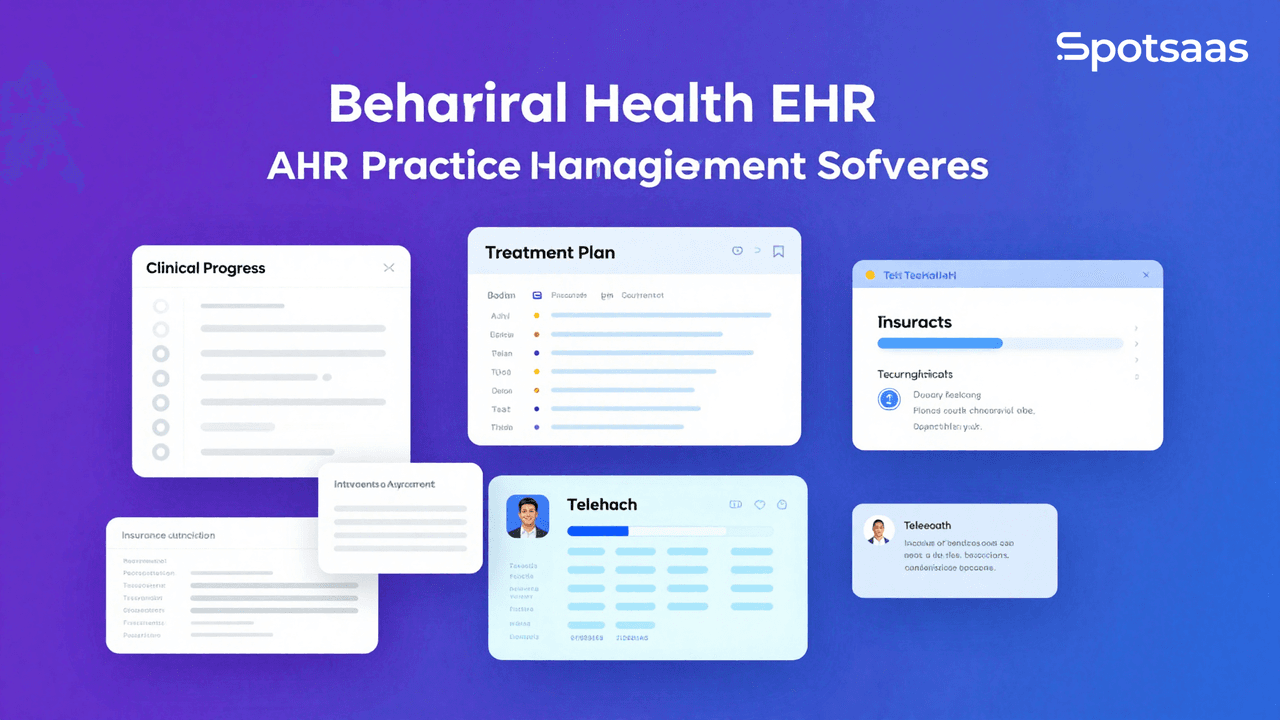
Carelogic by Qualifacts is a purpose-built EHR platform designed specifically for behavioral health and human services organizations. Unlike generic electronic health record systems, Carelogic focuses on the unique needs of mental health providers, offering tools for clinical documentation, compliance, billing, and outcomes tracking in one integrated solution rather than several disconnected ones.
With increasing demands for data-driven care, better patient outcomes, and regulatory compliance, behavioral health agencies need technology that’s both specialized and scalable enough to grow with them. That’s where Carelogic stands out from the crowd.
What Is Carelogic Qualifacts EHR? Core Benefits for Behavioral Health
Carelogic is a cloud-based electronic health record (EHR) platform developed by Qualifacts, built for the specific needs of behavioral health and human services providers. It combines clinical, administrative, and reporting functions into one system, aimed at supporting better care delivery.
Rather than taking a one-size-fits-all approach, Carelogic focuses on workflows unique to behavioral health — from therapy session documentation to treatment planning and regulatory reporting. It lets organizations operate more efficiently, keep accurate records, and track patient progress with reliable data.
As demand grows for more personalized and data-informed behavioral care, platforms like Carelogic offer providers a way to modernize service delivery while staying compliant and organized.

Why Behavioral Health Providers Choose Carelogic 2026
Behavioral and mental health providers face challenges that traditional EHR systems often fail to address. From complex treatment plans to strict compliance requirements, this sector needs a more specialized approach. That’s where Carelogic comes in.
Key Behavioral Health EHR Challenges Carelogic Solves
Behavioral health agencies face documentation, compliance, and coordination challenges that most general EHR systems aren’t built to handle. These gaps lead to inefficiencies, compliance risk, and fragmented care.
Generic EHRs lack behavioral health workflows
Most EHR platforms were built for primary care or hospital settings. As a result, they don’t support essential behavioral health processes like progress note templates for therapy, goal tracking for treatment plans, or psychosocial evaluations. Providers often fall back on workarounds or manual documentation, which wastes time and hurts data consistency.
Compliance and reporting requirements are growing
Behavioral health organizations have to comply with an expanding set of requirements — Medicaid billing rules, SAMHSA reporting, grant-specific metrics. Many lack the IT staff or infrastructure to build and maintain custom reports for all of it. That puts agencies at risk of audits, delays reimbursements, and drains staff time that should go toward care.
Disconnected systems hurt care continuity
When clinical documentation, scheduling, billing, and reporting live in separate systems, workflows break down. Staff have to log in to multiple platforms, re-enter data by hand, and reconcile information between systems. This slows down intake, raises the chance of billing errors, and creates blind spots in a client’s treatment journey.
Low adoption rates in behavioral health
While certified EHR use is standard in general hospitals, adoption in behavioral health is still catching up — largely because of high costs, a lack of specialized tools, and poor fit with clinical workflows. That leaves many agencies operating without the digital infrastructure modern, data-informed care actually needs.
How Carelogic Solves EHR Pain Points
Carelogic is purpose-built for behavioral health. It combines clinical flexibility with operational power, helping agencies meet compliance needs, improve care coordination, and run more efficiently.

Behavioral health-first design
Unlike generic EHRs that force behavioral health to adapt to them, Carelogic was designed specifically for mental health and human services providers. It supports key workflows like individual and group therapy, case management, substance use treatment, and crisis services right out of the box. Clinical forms, assessments, and care plans are built with mental health in mind from the start, not retrofitted later.
Customizable workflows
Every behavioral health agency operates differently. Carelogic lets organizations configure documentation templates, clinical pathways, intake processes, and staff roles to match how they actually deliver care. That means less friction for clinicians and more alignment with real-world practice, whether for outpatient therapy, residential treatment, or mobile crisis units.
Integrated compliance tools
Carelogic helps agencies stay audit-ready with tools that automatically track required fields, monitor user access, and generate real-time compliance reports. Pre-built templates align with Medicaid, state, and federal standards. Agencies can also build custom dashboards to track outcomes and grant deliverables, cutting down the time spent pulling data by hand.
Unified platform
Carelogic brings scheduling, clinical documentation, billing, and analytics into one system. That means no more jumping between apps or reconciling data across platforms. Information flows from intake to discharge, letting staff work faster, cut down on duplication, and keep the whole care team aligned around the client’s progress.
As behavioral health gets more attention in public health strategy, platforms like Carelogic offer a way to modernize service delivery, maintain compliance, and give providers back control of their time.
Core Features of Carelogic EHR Software
Carelogic by Qualifacts is more than a digital filing system — it’s a complete operational platform for behavioral health and human services organizations. Each feature is built to support clinical precision, reduce administrative complexity, and improve the quality of care.

Clinical Documentation: Configurable, Compliant, and Real-Time
Carelogic lets clinicians document assessments, therapy sessions, treatment plans, and progress notes through customizable templates built around behavioral health practice. Each form can be tailored to your organization’s needs, keeping documentation consistent across staff while staying compliant with state and federal requirements. Real-time documentation helps cut down errors and gives providers more face time with clients instead of paperwork. These templates also help standardize documentation and mirror real-world therapy notes examples common in counseling and behavioral health settings.
Scheduling & Appointments: Smarter Calendar Management
The platform includes a fully integrated scheduling system that simplifies daily operations for front-desk staff, clinicians, and program managers. You can schedule individual or group appointments, set up recurring sessions, and coordinate across teams or facilities. Appointment reminders go out by email or SMS to cut down no-shows, and staff calendars are easy to manage with color-coded views and role-based access.
Billing & Revenue Cycle Management: Medicaid, Medicare, Private Payers
Carelogic automates much of the billing process, from coding services to submitting claims and processing payments. It supports complex payer rules, including Medicaid, Medicare, and commercial insurance, and flags errors before submission to cut down denials. The system also tracks the full revenue cycle — from service entry to reimbursement — so finance teams can see cash flow, outstanding claims, and aging balances.
Outcomes Tracking & Progress Dashboards
Providers and administrators can use built-in tools to track treatment outcomes and program performance. Carelogic supports standardized outcome measures like PHQ-9 and GAD-7, and it also lets organizations define their own benchmarks. Dashboards and reports make it easy to see whether clients are progressing, where gaps exist, and how programs are performing over time.
Interoperability & Data Exchange: HL7, FHIR, HIE Integration
Carelogic is built for secure data exchange with external systems and partners. It complies with healthcare IT standards like HL7, FHIR, and CCD, which enables integration with labs, pharmacy systems, referral networks, and health information exchanges (HIEs). That connectivity gives clinicians a fuller view of patient history and supports continuity of care across providers.
Analytics & Reporting: Real-Time Dashboards for Compliance & Insights
For leadership and compliance teams, Carelogic offers strong data analysis tools. Real-time dashboards let users monitor productivity, service delivery, client engagement, and billing metrics. Custom reports can be built for audits, board meetings, or regulatory submissions. Whether you need to track service utilization by location or prove outcomes to funders, Carelogic surfaces the numbers in a few clicks.
Who Uses Carelogic EHR? Clinics, Agencies & Behavioral Health Programs
Carelogic by Qualifacts isn’t a one-size-fits-all system. It’s built for the complexities of behavioral health and human services specifically. From local counseling centers to statewide health agencies, Carelogic supports a wide range of providers with tools that adapt to different clinical, administrative, and compliance needs.
Why Specialized EHRs Matter
Many behavioral health providers struggle with traditional EHR systems designed around primary care or hospital settings. These generic platforms often miss the mark on behavioral workflows, documentation formats, or case-based service models.
Carelogic bridges that gap by offering a system built for how behavioral health professionals actually work — bringing clinical care, program management, and billing under one roof.
Key User Groups That Rely on Carelogic
🏥 Community Mental Health Centers
Coordinate outpatient therapy, crisis intervention, and psychiatric services using integrated care tools.
💊 Substance Use Treatment Programs
Track individualized plans, group sessions, and medication-assisted treatments in one place.
🏛️ State & County Health Agencies
Manage provider networks, standardize documentation, and generate performance reports at scale.
🤝 Nonprofit Behavioral Health Orgs
Maintain compliance, streamline grant reporting, and reduce administrative overhead.
🧩 IDD Service Providers
Support person-centered planning and track developmental services with customizable workflows.
Carelogic Pros & Cons: User Feedback on Usability and Configuration
CareLogic, a popular electronic health record (EHR) system, offers a range of features for behavioral health organizations. Here are some pros and cons worth knowing before you commit.
Pros
- Increased Customization: CareLogic lets organizations adjust workflows and forms to better suit their needs.
- Improved Compliance: It helps organizations meet regulatory requirements such as HIPAA, improving data security along the way.
- Efficient Billing: The integrated billing feature simplifies financial processes and cuts down on administrative work.
- Better Integration: It supports connections with other systems, which improves platform efficiency and communication.
- Remote Access: Being cloud-based, it improves access for users across locations and cuts down the need for on-site hardware.
- Enhanced Reporting: The system provides detailed reporting, which can improve both clinical outcomes and administrative decision-making.
Cons
- Occasional Performance Drops: Users have reported slower system speed, especially when handling large datasets.
- Limited Mobile Optimization: The system could improve its mobile user experience.
- Challenging Customization: While customizable, setting it up can be difficult without technical help, which increases dependence on support.
Carelogic Pricing & Licensing: Subscriptions, Tiers & Cloud Options
Understanding the cost of implementing a behavioral health EHR like Carelogic matters for planning and budgeting well ahead of a rollout. Exact pricing varies by organization, but a few consistent factors shape the total cost of ownership across most agencies.
How is Carelogic priced?
Carelogic by Qualifacts typically follows a subscription-based pricing model, billed either monthly or annually. The cost generally depends on the size of your organization, the number of users, and how much customization you need.
Does Carelogic Offer Different Licensing Tiers?
Carelogic offers flexible licensing options for organizations of different sizes. Most implementations fall into one of three tiers:
Small to Midsize Agencies
Built for clinics, nonprofits, or treatment programs with fewer staff or a limited number of programs. Pricing is more accessible and typically includes essential modules for documentation, billing, and scheduling.
Enterprise-Level Organizations
Suited for large networks, multi-site providers, and government-funded programs. This tier includes advanced analytics, custom workflows, and integration with multiple systems, like labs or HIEs.
Custom Configurations
Some organizations opt for tailored licensing built around their unique needs — additional compliance modules, extra security layers, or specialized reporting capabilities.
Pricing shown is approximate; check vendor websites for current rates.
What factors influence total cost?
Several variables affect the final price of Carelogic:
- Number of Users — more licensed users means higher subscription fees.
- Implementation & Setup Fees — covers data migration, system configuration, and go-live support.
- Training Costs — onboarding programs, webinars, and support services can factor into the initial investment.
- Customization Needs — tailoring workflows, templates, and reports can require additional time and technical resources.
- Hosting Model — Carelogic is primarily cloud-based, which lowers infrastructure costs, though hybrid or on-premises requests may carry higher setup fees.
Key Benefits of Carelogic: Efficiency, Compliance, Care Delivery
With CareLogic, behavioral health organizations can see streamlined processes and improved efficiency. The integrated software offers care management tools, workflow automation, and productivity gains that improve operational performance overall.
Benefit: Streamlined Workflows & Configurability
CareLogic makes it easier for healthcare providers to keep up with the changing demands of the industry. With its mobile-friendly platform, teams can customize workflows and collaborate from anywhere.
The software simplifies everyday tasks, helping healthcare organizations work more efficiently. Front desk tools manage referrals from a central location, cutting out manual handling and lightening the administrative load.

Automated claims generation and the smooth transfer of client data to billing systems mean staff can focus more on delivering quality care instead of getting stuck in paperwork. CareLogic’s customizable interface also helps users improve front-office efficiency, leading to faster turnaround times and smoother operations overall.
Also read: Streamlining Collaboration in Healthcare with RxVantage
Benefit: Efficiency Gains from Automation & Integration
CareLogic Software offers customizable workflows that boost productivity and streamline processes, enabling real-time tracking of key activities like intake, scheduling, treatment planning, ePrescribing, consumer engagement, billing, case management, analytics, and reporting.

This adaptability lets the software keep up with evolving needs. By offering insight into organizational success and outcomes across integrated care in multiple facilities, CareLogic improves how coordinated care actually gets delivered.
The platform’s ongoing support and regular updates improve security measures, giving users peace of mind while keeping the system running smoothly for day-to-day healthcare operations.
Carelogic vs Other EHRs: Behavioral Health Comparison
In behavioral health, not all EHRs are created equal. Many platforms are generalized solutions that were later retrofitted for mental health use. That often means clunky interfaces, limited outcomes tracking, or the need to lean on third-party tools for essential functions like Medicaid billing or treatment planning.
Carelogic by Qualifacts takes a different approach. It was purpose-built for behavioral healthcare from day one, giving providers a platform that fits how they actually work — whether they’re managing outpatient counseling, substance use recovery programs, or statewide community services.
Below is a side-by-side comparison of Carelogic against other popular behavioral EHR systems — Credible, TheraNest, and Welligent — so you can see how it stacks up on certifications, workflows, billing, reporting, and fit for different organization sizes.
| Feature / Platform | Carelogic | Credible | TheraNest | Welligent |
|---|---|---|---|---|
| Behavioral Health-Focused | Purpose-built | Strong in case management | Best for solo/midsize teams | Behavioral health focused |
| ONC-Certified | Fully certified | Certified | Not certified | Certified |
| Workflow Customization | High flexibility | Good flexibility | Limited options | Customizable workflows |
| Rules-Based Automation | Yes (forms, billing, alerts) | Partial automation | Basic logic only | Some automation features |
| Cloud Delivery | 100% cloud-native | Cloud-based | Cloud-based | Cloud-hosted |
| Integrated Billing | Medicaid, Medicare, private pay | Strong billing engine | Basic billing module | Enterprise-grade billing |
| Outcomes Tracking | Built-in dashboards | Custom templates | Minimal tools | Standard tracking |
| Best For | Midsize to large agencies | Public sector, county programs | Small practices & startups | Enterprise & community orgs |
Why Choose Carelogic?
Carelogic is purpose-built for behavioral health organizations — offering the tools, flexibility, and support needed to deliver better care, stay compliant, and scale with confidence. Here’s what sets it apart:
Behavioral Health Comes First
Carelogic doesn’t try to serve every specialty — it focuses on the specific clinical, billing, and regulatory needs of behavioral healthcare, which makes it more precise and efficient at that one job.
Built-In Compliance and Reporting Tools
From Medicaid billing to SAMHSA reporting, the system includes the tools agencies need to stay compliant, without relying on external spreadsheets or manual uploads.
Scalable for Growth
As agencies expand or add programs, Carelogic adapts alongside them. Whether you’re running five clinics today or twenty next year, the platform supports that growth without a system overhaul.
Trusted by Public-Sector and Nonprofit Agencies
Organizations that depend on accountability, outcomes tracking, and state-level reporting trust Carelogic to keep them audit-ready and data-driven.
How to Get Started with Carelogic EHR: 5-Step Onboarding Journey
If you’re considering Carelogic as your EHR solution, the onboarding process is structured to make setup smooth, strategic, and aligned with your organization’s needs. Here’s how it works.

1. Schedule a Discovery Call
Reach out to the Qualifacts team to schedule a free consultation. This initial call helps assess your current workflows, challenges, and goals. It’s also where you’ll get answers on integrations, data migration, and compliance support.
- Book a demo or consultation directly through their website.
- Bring a list of key requirements — billing, scheduling, outcomes tracking, and so on.
2. Request a Customized Demo
Qualifacts offers tailored demos that show how Carelogic would work for your specific services, whether you run an outpatient clinic, residential program, or statewide network. You’ll see actual workflows in action rather than a generic feature slideshow.
3. Evaluate Scope and Pricing
After your demo, you’ll get a customized quote based on:
- Number of users or providers
- Programs and services supported
- Training and support needs
- Required integrations or customizations
This keeps pricing transparent and tied to your actual operational scale.
4. Implementation Planning
If you move forward, Qualifacts assigns a dedicated onboarding team to guide setup. They’ll help with:
- Data migration from your current system
- User role setup and permissions
- Workflow customization
- Initial training and documentation
Timelines vary, but most behavioral health organizations are fully live within 60–120 days depending on complexity.
5. Go Live and Ongoing Support
Once your system is live, you’ll keep access to support resources, product updates, and client success tools aimed at long-term performance and satisfaction.
Best Practices: Carelogic EHR Setup, Training & Launch
Adopting a new EHR like Carelogic is a strategic investment, but implementation is where the real value gets unlocked or lost. Done right, it leads to more efficient workflows, better compliance, and improved care coordination across the whole agency.
Below are practices that help behavioral health organizations launch Carelogic successfully, with minimal disruption and the best possible return.

1. Start with a Needs Assessment
Before diving into configuration or data transfers, take time to assess your organization’s actual needs. Interview clinical staff, billing teams, and program managers to uncover what’s working, what isn’t, and what has to change with the new system. Focus on workflow bottlenecks, data tracking gaps, billing inefficiencies, and compliance pain points.
Why it matters: Aligning Carelogic’s setup with real-world challenges ensures your team gets what they actually need, not just what looks good in a demo.
2. Build Your Internal Implementation Team
EHR rollouts tend to fail when they’re left solely to IT or external vendors. Your internal team should include:
- A project lead to keep timelines on track
- An IT lead for integration and data setup
- Clinical champions to guide form and workflow design
- Billing and admin experts to validate RCM and scheduling features
Why it matters: Cross-functional input helps build a system that works across departments, not just in one silo.
3. Design and Customize Your Workflows
Carelogic is known for its flexibility. Customize forms, dashboards, user roles, and permissions to match your programs and services. This is your chance to cut unnecessary steps and standardize best practices across teams.
Why it matters: Tailored workflows reduce errors, speed up documentation, and help with staff adoption.
4. Plan for Data Migration (Carefully)
Data migration isn’t just a technical task — it’s a strategic one. Audit your current system, clean up outdated or duplicate records, and decide what actually needs to move over. Run a sample migration first to catch formatting issues and confirm records appear correctly in Carelogic.
Why it matters: Clean, reliable data ensures a smooth transition and keeps trust intact across your team.
5. Train in Phases, with Real-Life Scenarios
Break training into role-specific sessions so staff learn what’s relevant to them. Use real client examples and simulate day-to-day workflows, like creating treatment plans or submitting claims.
Why it matters: Hands-on, relevant training boosts retention and confidence on day one.
6. Test Every Critical Workflow
Before going live, test everything — from client intake to billing runs. Confirm user roles are assigned correctly and that compliance tools work as expected.
Why it matters: Pre-launch testing catches bugs before they cause revenue or clinical disruptions.
7. Launch in Stages, Not All at Once
If you’re managing multiple locations or programs, consider a phased rollout. Start with a pilot group, refine your setup based on what you learn, then expand to the rest of the organization.
Why it matters: A staged approach reduces risk, eases the load on your support team, and allows for faster troubleshooting.
8. Review and Refine After Go-Live
Post-launch isn’t the end — it’s the start of continuous improvement. Schedule check-ins at 30, 60, and 90 days to gather feedback, fine-tune forms, and support new user needs.
Why it matters: These checkpoints help maintain momentum, resolve pain points, and improve long-term adoption.
Conclusion: Is Carelogic the Right EHR for Your Agency in 2026?
Carelogic by Qualifacts is more than an EHR — it’s a strategic tool built for the specific demands of behavioral health. With customizable workflows, integrated billing, and strong compliance features, it helps agencies streamline operations and deliver better care to the people who need it most. If you’re ready to move beyond one-size-fits-all systems, Carelogic is built to fit, and grow, with you as your agency changes.
Whether you’re planning a new implementation or replacing outdated tools, taking the first step with a platform like Carelogic can make a measurable difference in efficiency, accountability, and client outcomes over time. Explore your options, schedule a demo, and see what a behavioral health-first EHR can actually do for your agency and the clients it serves.
(Image Source: CareLogic)
FAQ: Top Carelogic EHR Questions on Features, Billing & Support
What makes Carelogic different from other EHR systems?
Carelogic is designed specifically for behavioral health and human services—not adapted from general medical systems.
Is Carelogic cloud-based or on-premises?
Carelogic is a fully cloud-based EHR platform. This allows for secure remote access, automatic updates, lower IT overhead, and better scalability—ideal for agencies with multiple sites or remote teams.
How long does it take to implement Carelogic?
Implementation timelines vary based on organization size and complexity but typically range from 60 to 120 days. Carelogic provides a structured onboarding process that includes configuration, data migration, staff training, and go-live support.
Can Carelogic handle Medicaid and government-funded billing?
Yes. Carelogic supports complex billing workflows, including Medicaid, Medicare, and grant-funded programs.
Who is Carelogic best suited for?
Carelogic is ideal for behavioral health agencies of all sizes—including community mental health centers, substance use treatment programs, IDD services, and multi-site nonprofits.
Compare alternatives to the tools in this post

- Independent picks for exactly what you just read about
- Matched to your team size & needs
- Vendors don't pay for placement
Step 1 of 4
How big is your team?
We tailor recommendations to companies your size.















Related Articles
Buyers guide
How To Choose The Best Mental Health Software For 2026
Continue reading →
Applicant Tracking Software
Best ATS for Retail and Hospitality Hiring in 2026: 5 Tools for High-Volume Recruiting
Continue reading →
Best Tools
Best EHR Software in 2026: Top Electronic Health Record Systems for Clinics and Practices
Continue reading →
Buyers guide
How To Choose The Best Patient Engagement Software For 2026
Continue reading →