
Choosing between Betterment and Guideline is a big decision for small businesses looking to offer 401k retirement benefits to employees. A well-structured plan not only helps employees build long-term financial security but also strengthens a business’s ability to attract and retain talent in a competitive hiring market.
Both providers are known for highly automated, low-cost retirement solutions with user-friendly platforms and payroll integration. However, they differ in key areas, such as pricing, investment options, and employee support. Understanding these differences will help businesses select the right provider based on their financial goals and administrative needs, rather than picking whichever name comes up first in a search.
This Betterment vs Guideline comparison outlines the major differences between them to help businesses determine which best meets their financial goals, administrative needs, and those of their employees in general. It’s worth reading through the full breakdown rather than relying on pricing alone, since the two platforms take genuinely different approaches to plan management.
Betterment vs Guideline 401(k): At-a-Glance Comparison Table
| Aspect | Betterment 401k | Guideline 401k |
|---|---|---|
| Pricing Model | Asset-based fee: 0.25% – 0.50% of assets | Flat-fee: $39/month + $4 per participant |
| Investment Strategy | Automated portfolios with tax-efficient ETFs | Low-cost Vanguard index funds |
| Payroll Integration | Compatible with major payroll providers | Seamless integration with Gusto, QuickBooks, ADP, Paychex |
| Compliance & Administration | Automated compliance, fiduciary support, and ERISA compliance | Built-in compliance management with IRS & ERISA support |
| Best For | Businesses seeking automated investment management and financial advice | Startups and small businesses looking for a cost-effective, hands-off 401k plan |
Pricing shown is approximate; check vendor websites for current rates.
Betterment

Betterment
- Setup Fee: $500
- Security Compliance: SOC 2, ISO 27001
- Best For: Robo-advisor 401k provider
Betterment 401(k) Overview: Features, Fees, and Suitability
Betterment 401k is a retirement solution that provides investment management for businesses and employees, built with technology to keep the process simple. It offers a robo-advisor model for portfolio rebalancing, tax-efficient allocations, and fiduciary investment advising, so employers don’t need an in-house investment team to run the plan well.
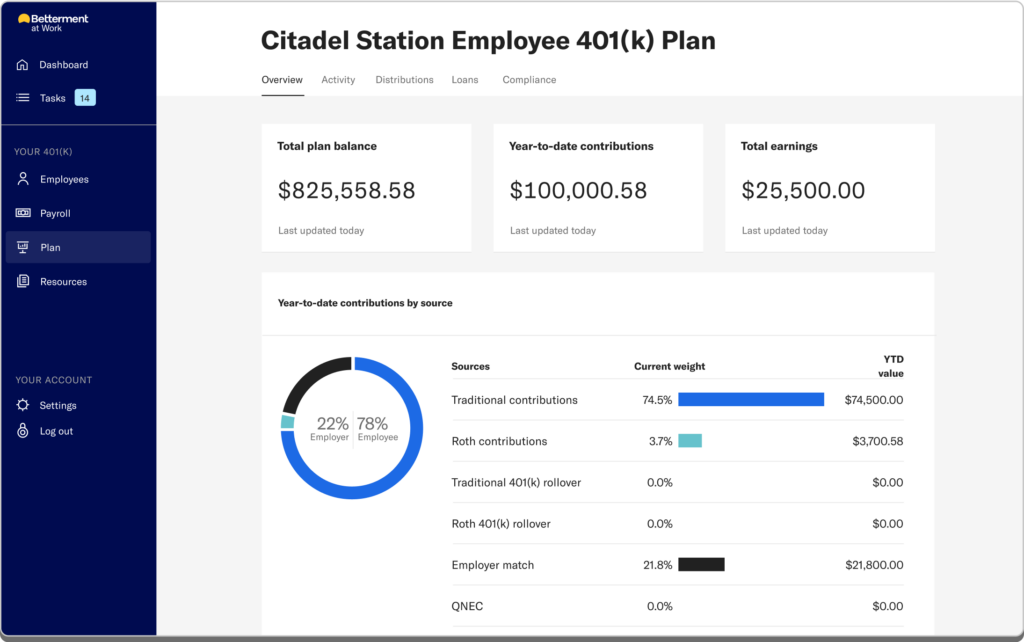
Unlike traditional 401k providers, Betterment focuses on personalized investment strategies, giving employees customized recommendations based on their risk tolerance and retirement goals. That personalization is the throughline across most of Betterment’s feature set, from onboarding through ongoing portfolio management.
How Betterment 401(k) Works for Employers and Employees
Betterment uses automation to manage investments, rebalance portfolios, and optimize tax efficiency. The onboarding process for employees is simple and offers a hands-off investing experience from the very first login.
Easy administration, payroll integration, and built-in fiduciary support reduce the complexities tied to plan management for employers, which matters most for smaller businesses without a dedicated benefits department.
Key Features
Automated Investment Management and Personalized Financial Advice
Betterment uses algorithms to keep asset allocation on track with long-term financial goals. It’s a financial planning platform that assists employees with personal advice and investment mode suggestions in exchange for guaranteed savings options.
Low-Cost ETFs and Tax Optimization with Betterment
The platform offers a range of diversified, low-cost ETFs. It also includes automated tax-loss harvesting and rebalancing, which help employees reduce tax liabilities and optimize returns over the course of the year.
Betterment Payroll Integration with Leading Providers
Betterment integrates with leading payroll systems, streamlining contributions and deductions. This automation improves accuracy and cuts down administrative work for employers.
Betterment 401(k) Pricing: Asset-Based Fee Breakdown
Betterment follows an asset-based pricing model. While exact fees vary, businesses typically pay:
- Base fee: Custom pricing depending on company size and needs
- Employee fee: Ranges from 0.25% to 0.50% of managed assets
- Additional charges: May include financial advisory fees for extra guidance
Pricing shown is approximate; check vendor websites for current rates.
Who Should Choose Betterment 401(k)?
Betterment 401k is well-suited for:
- Businesses that prefer an automated, hands-off investment strategy
- Companies looking to offer personalized financial advising to employees
- Organizations that want a tax-efficient investment approach with automated portfolio adjustments
Betterment provides a modern, technology-driven retirement solution for businesses seeking an efficient, cost-effective way to help employees grow their savings over the long run.
Guideline 401k

Guideline
- Starting Fee: $39
- Security Compliance: IRS Certified, SOC 2
- Best For: Startups and small businesses
Guideline 401k Overview: Pricing, Features, and Ideal Use Cases
Guideline 401k is a fully automated retirement solution built to simplify plan administration for small businesses. It removes the need for third-party intermediaries, offering a cost-effective, flat-fee pricing model with seamless payroll integration that keeps setup and ongoing maintenance light for smaller HR teams.
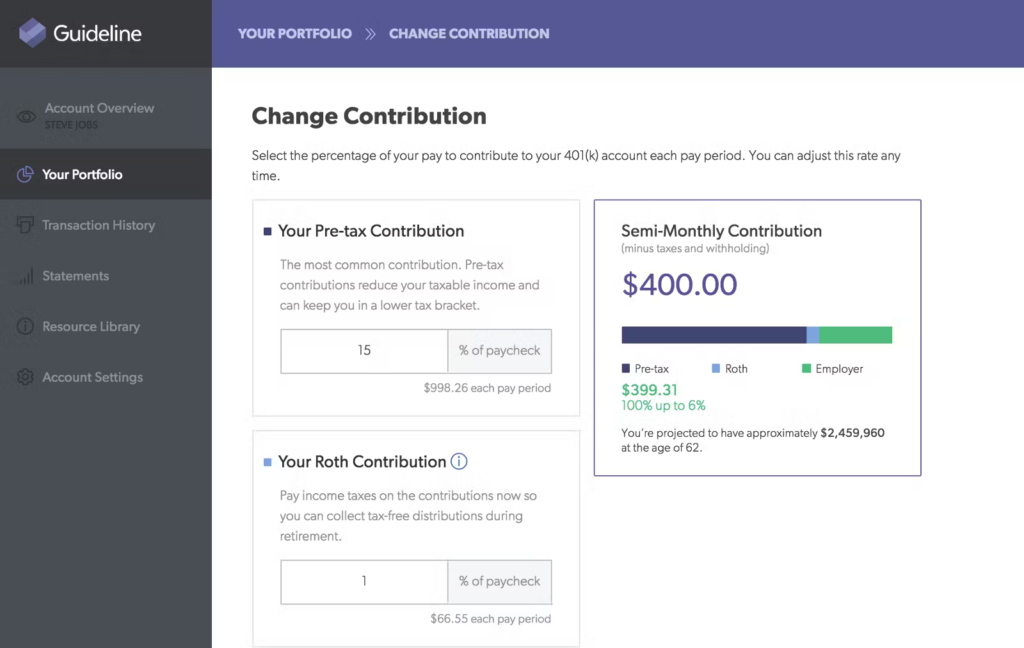
With an emphasis on automation and compliance, Guideline reduces the administrative burden for employers while giving employees easy access to low-cost investment options right from the start.
How Guideline 401(k) Works for Small Businesses
Guideline automates all facets of 401k management, from payroll deductions to compliance reporting. The platform interfaces directly with payroll service providers to make sure the right amount and contributions land at the right time.
Unlike traditional 401k providers, Guideline does not impose transaction fees and stays economically viable for small businesses. Focused mostly on low-cost Vanguard index funds, employees get a diversified, passive choice.
Key Features of Guideline’s 401(k) Platform
Built-in Payroll Integration and 401(k) Compliance Tools
Guideline connects with leading payroll platforms, automating deductions and tax filings. Employers do not need to manage contributions manually, which reduces errors and cuts down administrative effort each pay period.
Vanguard Index Fund Options with Low Fees
The platform offers a range of low-fee Vanguard index funds, letting employees invest in diversified portfolios without high asset management costs.
Flat-Fee Pricing: No Hidden or Transaction Fees
Guideline follows a predictable pricing structure, eliminating per-transaction fees or hidden costs. This makes it an attractive option for businesses looking for affordability and transparency in how their plan costs are calculated month to month.
Guideline 401(k) Pricing Explained
Guideline uses a straightforward pricing model:
- Monthly base fee: Starts at $39 per month
- Per-participant fee: $4 per active employee
- Employee asset-based fee: 0.15% to 0.35% annually, depending on plan tier
Unlike traditional providers, Guideline does not charge for plan transactions, rollovers, or distributions.
Pricing shown is approximate; check vendor websites for current rates.
Who Should Use Guideline 401(k)?
Guideline 401k is an ideal choice for:
- Small businesses seeking an affordable, automated retirement solution
- Companies that prioritize payroll integration to minimize administrative tasks
- Employers looking for a transparent, low-cost plan with no hidden fees
Guideline is a streamlined, budget-friendly 401k provider that simplifies retirement savings for both businesses and employees, without a lot of extra configuration to get a plan live.
Betterment Vs Guideline 401(k) Comparison: Investment Options, Costs, and Features
Investment Strategies: Betterment vs Guideline
Betterment and Guideline both offer investment opportunities through their respective 401k plans, but their approaches to portfolio management are quite different. Understanding these differences will help businesses find the right investment provider for their employees, since the day-to-day experience for a plan participant looks noticeably different depending on which platform their employer chooses.
Betterment
Betterment is a robo-advisor that invests customers’ 401k funds into a personalized portfolio based on their risk tolerance and financial goals. It emphasizes low-cost, diversified exchange-traded funds (ETFs), using automated rebalancing and tax-efficient strategies over time to keep each employee’s allocation on track.
It’s built with the hands-off investor in mind, automating portfolio adjustments and driving them with data so there’s little burden on the investor.
Guideline
The platform allows investment in Vanguard index funds to various extents, and it’s intentionally passive, keeping fees low and letting employees choose from a wide range of diversified funds without needing to research individual holdings.
It works best for businesses that want quick, reasonably priced, easy-to-understand investment options and need little in the way of personal touches or dynamic fund management.
Betterment vs Guideline: Which Offers More Diversified Investment Options?
Betterment suits employees who prefer an individual, data-driven investment strategy where adjustments execute automatically in the portfolio, while Guideline suits low-cost, passive investment options built on proven Vanguard index funds.
Comparing 401(k) Fees: Betterment vs Guideline
Another major factor influencing the long-term growth of a portfolio is the cost of the 401k provider itself. While differences in fees can look slight on paper, they can add up to meaningful differences in retirement savings over time, especially once compounding is factored in across a working career. Betterment and Guideline both offer economical investment options, but their respective fees differ in structure as much as in size.
Betterment
Betterment uses an asset-based pricing model, charging a percentage of managed assets. That charging mechanism means Betterment may earn more than flat-fee providers, but in exchange it provides fully automated management of the client’s financial assets.
Employee fees may range from 0.25% to 0.50% of assets. Advisory fees may apply for individual financial planning.
Guideline
Guideline operates under a flat-fee pricing model, which makes it one of the cheapest 401k providers on the market for small companies. Monthly subscriptions and per-participant fees keep employer costs predictable.
The monthly subscription starts at $39, plus a per-participant fee of $4 for every employee. Employee asset-based fees are charged between 0.15% and 0.35% annually.
Betterment or Guideline: Which 401(k) Is More Affordable for Employers?
Guideline’s flat-fee pricing strategy makes it a strong alternative for cost-sensitive businesses. Betterment’s percentage-linked fee structure leans toward financial advisory and active portfolio management rather than low-cost pricing above all else.
Comparing Employer-Sponsored 401(k) Plans from Betterment and Guideline
Betterment and Guideline both provide employer-sponsored 401k plans, but their offerings cater to different business sizes and administrative needs.
Betterment
Betterment is designed for businesses seeking a full-service investment solution with personalized employee retirement planning. It integrates automated rebalancing, goal-based investing, and financial advising to create a customized experience for employees.
However, it may not be the best choice for businesses that prioritize low costs over financial guidance.
Guideline
Guideline is a budget-friendly, automated solution that integrates directly with payroll providers, making it ideal for small businesses that want a hands-off 401k plan. It lacks personalized financial advising but offers low-cost, streamlined plan administration.
Betterment vs Guideline: Best 401(k) Platform for Business Administrators
Betterment is better suited for companies that want a comprehensive investment management solution for employees.
Guideline is ideal for small businesses looking for an easy-to-manage, cost-efficient 401k plan with automated compliance and payroll integration.
Digital Experience: Betterment vs Guideline Mobile App and Platform Comparison
A user-friendly digital experience matters for managing retirement savings, since it directly affects whether employees actually engage with their accounts. Betterment and Guideline both offer intuitive online platforms, but they cater to different types of users and different levels of hands-on involvement.
Betterment
Betterment’s mobile app and web platform are built for data-driven, hands-on investing. Employees can access goal-based financial planning, investment performance tracking, and automated portfolio rebalancing in real time.
Its platform is a good fit for employees who want interactive financial tools and hands-on control over their overall investment strategy and allocation choices.
Guideline
Guideline provides a simpler digital experience, focused on automation and ease of use. The platform lets employees set contributions, track savings, and adjust investment preferences without requiring extensive financial knowledge.
Its design suits passive investors who want a set-it-and-forget-it approach to retirement savings.
Which 401(k) Platform Has a Better Online and Mobile Experience?
Betterment’s platform is more interactive and feature-rich, which makes it the better choice for employees who want personalized investment insights. Guideline’s platform suits employees who prefer a simpler, automated retirement savings experience.
Pros and Cons of Betterment vs Guideline 401(k) Plans
Weighing Betterment and Guideline as 401k providers side by side helps businesses determine which solution aligns best with their financial and administrative needs. The tables below break out the strengths and trade-offs of each so you can weigh them against your own priorities.
Betterment 401(k): Pros and Cons for Employers
| Pros | Cons |
|---|---|
| Personalized investment strategies | Higher asset-based fees than flat-fee models |
| Automated tax-efficient investing | Limited payroll provider compatibility |
| Built-in financial advisory support | No flat-fee pricing option |
| Diversified ETF portfolios with rebalancing | Plan customization is limited |
| Seamless payroll integration with select providers |
Guideline 401(k): Pros and Cons for Small Businesses
| Pros | Cons |
|---|---|
| Flat, transparent pricing | Limited investment customization |
| Seamless payroll integration | No personalized financial advisory services |
| Automated compliance and tax filings | No Roth 401k option in basic plans |
| No transaction or rollover fees | Employee investment options are limited to Vanguard funds |
| User-friendly platform with simple setup |
Final Verdict: Betterment vs Guideline — Which 401(k) Plan Is Right for Your Business?
Choosing between Betterment and Guideline depends on your business’s budget, administrative preferences, and employee investment needs. Both providers offer automated 401k solutions but cater to different priorities, so the “better” option really comes down to what your business and employees value most.
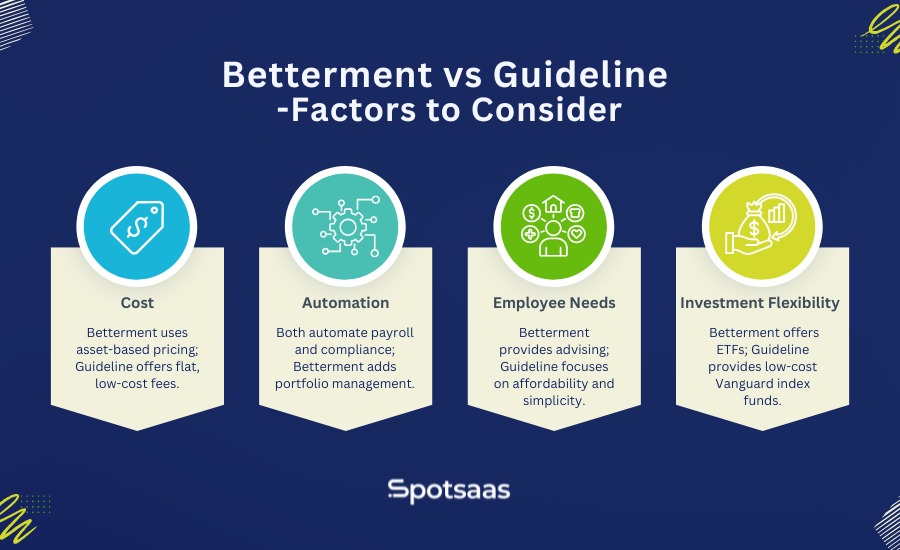
Key Factors When Choosing Between Betterment and Guideline 401(k) Plans
- Cost – Betterment follows an asset-based pricing model, which can become expensive as assets grow, while Guideline offers a flat-fee structure with lower costs for small businesses. Companies with fewer employees may find Guideline more budget-friendly, whereas larger businesses may need to weigh long-term costs.
- Automation – Both providers automate payroll integration and compliance, reducing administrative workload for employers, but Betterment includes automated portfolio management for employees. This feature helps employees maintain optimized investment allocations without manual adjustments, making it beneficial for hands-off investors.
- Employee Needs – Businesses that want personalized financial advising for employees may prefer Betterment, since it provides human advisors along with automated tools. In contrast, Guideline is better for companies that prioritize cost efficiency and simplicity, offering a no-frills approach that keeps expenses low while ensuring compliance.
- Investment Flexibility – Betterment offers diversified ETF portfolios with tax-efficient investing, making it ideal for businesses that want hands-off portfolio optimization. Guideline provides low-cost Vanguard index funds with limited customization, making it a strong choice for cost-conscious employers who want straightforward investment options.
Choosing the Best 401(k) Based on Your Business’s Size, Budget, and Needs
- Betterment is best for businesses seeking an automated investment strategy with financial guidance for employees. It suits companies willing to pay higher fees for personalized investment advice.
- Guideline is best for small businesses looking for a low-cost, fully automated 401k plan with transparent pricing and easy payroll integration. It’s ideal for companies that want a simple, hands-off retirement solution.
Understanding your company’s retirement plan goals, employee expectations, and administrative capacity will help determine the best provider for your needs. Involving both finance and HR stakeholders in that decision tends to produce a plan that actually gets used rather than just offered on paper.
Betterment vs Guideline 401(k): Final Thoughts on Choosing the Right Plan
Selecting the right 401k provider depends on your business’s financial priorities, administrative capacity, and employee investment needs. Betterment is well-suited for companies that value personalized financial advice and automated portfolio management, while Guideline offers a cost-effective, fully automated solution with seamless payroll integration for businesses that want to keep plan administration as light as possible.
Both providers simplify 401k administration, but the best choice depends on whether you prioritize investment flexibility and advisory support or affordability and automation. Weighing pricing, features, and long-term benefits carefully will help you make an informed decision that supports both your business and your employees’ financial well-being over the years ahead.
Conclusion: Which 401(k) Provider Is Better for Your Business?
In conclusion, both Betterment and Guideline offer robust 401k solutions tailored to small and medium-sized businesses, each with distinct advantages. Guideline stands out for its cost-effectiveness, featuring lower monthly base fees starting at $39 plus $4 per participant and minimal employee fees around 0.08% of assets, which adds up over a full plan year.
This makes it particularly appealing for companies seeking an affordable, straightforward retirement plan with seamless payroll integrations and comprehensive fiduciary support. Betterment, on the other hand, provides a more personalized experience with dedicated onboarding specialists and flexible plan designs, albeit at a higher starting cost of $100 per month plus $5 per participant, along with a 0.25% annual advisory fee.
This option may be preferable for businesses wanting enhanced employee engagement tools and a broader range of investment options. Ultimately, the optimal choice depends on your company’s specific needs, budget constraints, and the level of service desired, rather than on either provider being objectively “better.”
Carefully weighing these factors will guide you toward a 401k provider that aligns with your business objectives and supports your employees’ retirement goals for years to come.
Pricing shown is approximate; check vendor websites for current rates.
FAQs: Betterment vs Guideline 401(k) Comparison
What is the main difference between Betterment and Guideline 401k?
Betterment offers a robo-advisor approach with automated portfolio management and personalized investment strategies, while Guideline focuses on low-cost Vanguard index funds with a flat-fee pricing model.
Which provider is more cost-effective for small businesses?
Guideline is generally more affordable due to its flat-fee pricing model, starting at $39 per month plus $4 per participant. Betterment charges an asset-based fee ranging from 0.25 to 0.50 percent, making it a better choice for businesses that prioritize financial advising over lower costs.
Does Betterment or Guideline offer more investment options?
Betterment provides diversified ETF portfolios with automated rebalancing, while Guideline offers a selection of low-cost Vanguard index funds.
Which provider is better for payroll integration?
Guideline integrates seamlessly with major payroll providers like Gusto , QuickBooks, ADP, and Paychex, making it easier for businesses to automate 401k contributions. Betterment also supports payroll integration, but its compatibility may be more limited depending on the provider.
How do I decide which 401k provider is right for my business?
Choosing between Betterment and Guideline depends on factors like budget, investment strategy, and administrative needs. Betterment is ideal for businesses seeking a hands-off, goal-based investment approach with financial advising, while Guideline is better suited for those looking for a simple, cost-efficient 401k solution with automated compliance and payroll integration.

- Independent picks for exactly what you just read about
- Matched to your team size & needs
- Vendors don't pay for placement
Step 1 of 4
How big is your team?
We tailor recommendations to companies your size.















Related Articles
401K Providers
IRS Free File 2026: Who Qualifies and How to File Federal Taxes for Free
Continue reading →
401K Providers
Tax Filing Deadlines 2026: Full IRS Calendar for Individuals & Businesses
Continue reading →

401K Providers
SECURE 2.0 Act Tax Implications for 2026: Key Changes That Affect Retirement & Tax Filing
Continue reading →
401K Providers
IRS Tax Code Changes for 2026: Key Updates That Could Save or Cost You Thousands
Continue reading →