
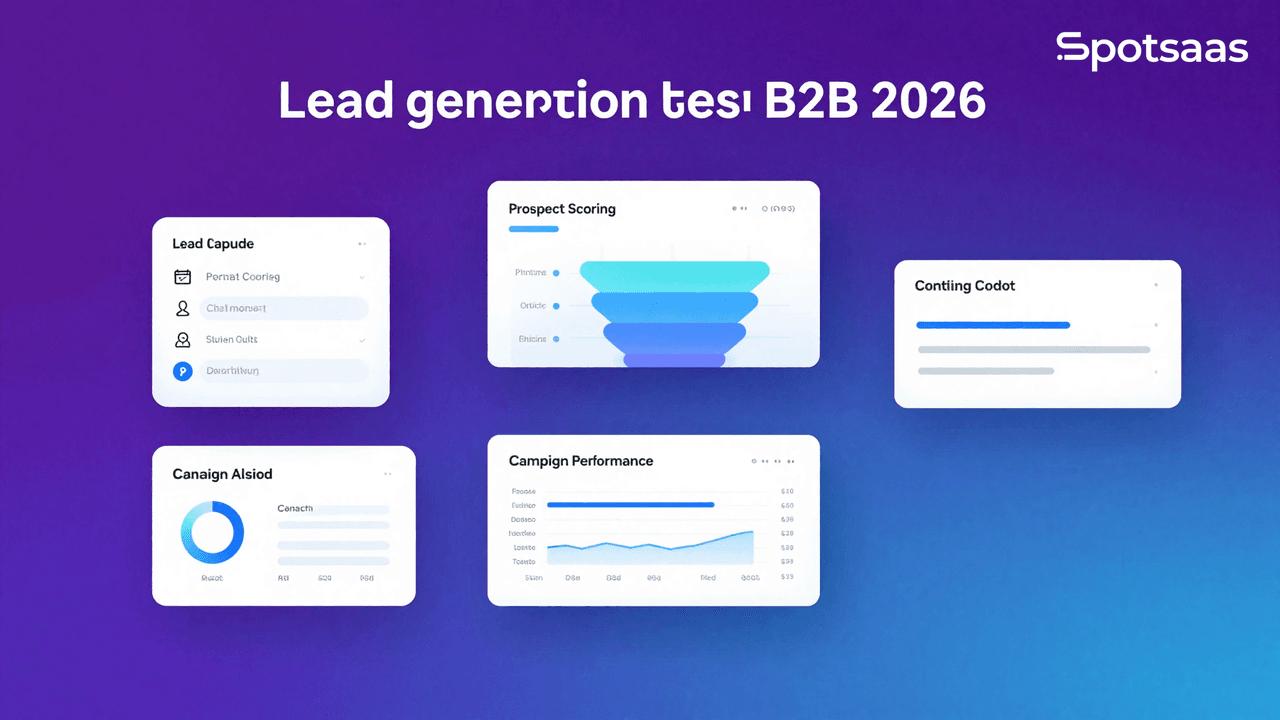
What Is Lead Generation Software and How Does It Work?
Lead generation software allows businesses to acquire and capture potential leads by automating and optimizing the lead generation process, cutting down on the manual work that used to eat up a sales team’s day.
These tools make it easy to find prospects, communicate with them, and nurture them until they’re ready to purchase or move to the next step of the sales funnel. Integrating marketing, data analysis, communication, and lead generation tools helps businesses target the right audience at the right time, instead of running each function as a separate, disconnected effort.
Why Should You Use Lead Generation Software Tools in 2026?
Lead generation software handles tasks such as getting contact information, scoring leads, and managing follow-ups, freeing teams to concentrate on converting prospects rather than chasing administrative work. It also enables multi-channel outreach, so the organization stays consistent across platforms like email and social media.
Scoring and CRM integration help prioritize leads, and the software’s features support personalized outreach and nurturing to improve lead quality. Built-in analytics help refine marketing and sales strategy and improve understanding of the market, which drives higher ROI over time as teams learn what’s actually working.
What Are the Benefits of Using Lead Generation Tools in 2026?
Some benefits of using lead generation tools can help with lead generation strategies.
Improving efficiency in lead management
Lead generation software automates repeated, time-consuming tasks such as capturing lead details, sending follow-up emails, and managing outreach workflows. Reducing manual effort lets the team focus on high-value work like personalizing communication and closing deals, and it cuts the chances of errors so no lead gets missed, even as volume grows.
Boosting conversion rates
The software engages generated leads with customized content and timely follow-ups, building trust and maintaining the connection rather than letting a lead go cold after the first contact. Lead scoring helps teams identify high-potential leads, increasing the chances of conversion and improving sales results.
Scaling lead generation with business growth
Lead generation software can grow with your business and handle a growing number of leads as demand increases, without requiring a complete platform switch down the line. Its flexibility and automation make it suitable for businesses of different sizes, from small startups to large enterprises, without hurting performance.
Reporting and insights that improve decisions
Built-in analytics surface issues with a campaign and show how leads are behaving. This data helps companies refine their campaigns and sharpen their outreach, and it can free up budget to invest elsewhere — with the overall goal of boosting ROI.
What Are the Key Features of the Best Lead Generation Software?
Choosing lead generation software with the most valuable features — lead acquisition, automation, and analytics — should be at the heart of your decision. A coordinated ecosystem of client, resource, and communication tools keeps data management in one place instead of scattered across separate spreadsheets and inboxes, and multi-channel campaigns plus lead scoring help reach better-targeted audiences and increase conversion rates.
Lead capture tools that simplify data collection
Lead generation software includes technologies like forms, pop-ups, and landing pages where visitors can enter their information directly, without needing a developer to build each one from scratch. Platforms like LinkedIn, Facebook, and Instagram let businesses create pop-up opt-in forms to collect contact details. Features like pre-filled forms and mobile responsiveness make it easier for visitors to leave their information, which increases lead conversion rates.
Lead scoring for better prioritization
Lead scoring assigns a numeric value to visitor actions, such as viewing a website, engaging with emails, or downloading content. This helps businesses focus their effort on leads that are more likely to convert, so salespeople work the leads that scored best, using resources and time more effectively. Dynamic scoring also gives users up-to-date data on which leads are hot.
Email marketing integration for nurturing leads
This feature creates and distributes personalized emails that move leads through each step of the sales funnel, from first contact to a closed deal.
It also surfaces key stats like open rate, click-through rate, and response time, so businesses can improve their messaging. Drip campaigns and follow-up reminders keep communication consistent and keep the audience engaged. Segmenting audiences to make emails more relevant is also easier, which improves conversion rate.
CRM integration for seamless workflows
Integrated CRM systems flow all lead data into one centralized platform, so everything is handled from a single place. This cuts down on data silos and helps sales and marketing tools work together more effectively — lead generation software for both teams can interact with each other easily. It also lets even a newcomer measure lead activity and follow the customer journey through the data, keeping information consistent and cutting manual work.
Analytics and reporting for performance tracking
Analytics tools track campaign performance and give the company insight into the most productive channels and strategies, helping businesses spot room for improvement and get more out of lead generation. Metrics such as CPL (cost per lead), conversion rates, and engagement levels are the leading indicators of return on investment. Real-time dashboards let teams monitor performance and adjust campaigns right away if needed.
Multi-channel campaign management
This feature lets managers run leads through several channels at once — SEO, email, social media, paid ads, and more. It gives an overview of every campaign in one place, making it easier to measure performance and allocate resources. Covering multiple channels helps businesses reach potential clients wherever they’re most engaged.
Automation that drives conversions
Automation cuts the time employees spend on repetitive tasks such as data entry, lead assignment, and follow-ups, helping sales and marketing teams move faster.
It handles things like sending reminders to leads who haven’t responded or updating CRM records automatically. This automation reduces the chance of mistakes and keeps communication consistent, which matters for teams managing a growing volume of leads.
What Are the Different Types of Lead Generation Tools in 2026?
Lead generation software comes in different forms to meet different requirements, from all-in-one solutions to CRM-integrated tools to industry-specific options built around a particular sector’s buying process. Each fits different workflows and business goals.
All-in-one lead generation platforms
These platforms combine all the necessary functions in a single tool, including lead capture, scoring, nurturing, and analytics. They give companies a full-fledged option for simplifying lead generation without juggling multiple applications, which makes them useful for enterprises that need one system to handle leads properly rather than stitching several point tools together. These platforms also frequently support multi-channel campaigns, ensuring interaction across diverse outlets.
Specialized lead generation tools
Specialized lead generation tools are designed primarily for specific functions like email marketing, social media campaigns, or landing page optimization. They suit businesses with specific requirements or those looking to improve one aspect of their lead generation strategy, rather than overhaul the whole stack at once. Because they focus on a niche, these tools tend to offer more advanced features and more detailed information for their particular use case.
CRM-based lead generation tools
These tools connect the CRM system and lead generation functionality directly, making lead processing and management more efficient. They benefit businesses already using a CRM platform by extending the system’s reach to include lead capturing, scoring, and nurturing, rather than bolting on a separate unconnected tool, and they help centralize data while improving cooperation between marketing and sales.
Industry-specific lead generation tools
These tools are built for industry-specific needs, making them a fit for real estate, healthcare, or e-commerce, often with built-in templates that reflect how those industries actually sell. Templates, workflows, and ready-to-go implementations suit regulation-heavy or audience-specific sectors, and companies in more specialized markets tend to benefit more from these tools than from general-purpose ones.
Which Are the Best Lead Generation Tools in 2026?
The table below presents a side-by-side comparison of top lead generation software, covering main features, pricing, business-size fit, and free trial availability, so you can compare options at a glance before digging into any one tool in detail.
| Software | Key Features | Pricing | Best For | Free Trial Availability |
|---|---|---|---|---|
| HubSpot | All-in-one CRM, landing pages, email automation, lead scoring | Free for basic; Paid plans start at $50/month | Small to medium businesses | Yes |
| Marketo | Advanced lead scoring, email marketing, analytics | Custom pricing | Enterprise-level marketing | Yes |
| ActiveCampaign | Email marketing, CRM integration, automation workflows | Starts at $15/month | Small businesses and startups | Yes |
| Pipedrive | Sales CRM, web forms, email templates | Starts at $14.90/month | Sales-focused lead generation | Yes |
| Salesforce Pardot | Lead nurturing, email campaigns, ROI reporting | Custom pricing | Enterprise businesses | Yes |
How Do You Choose the Right Lead Generation Software Tool?
Selecting lead generation software takes real consideration of your company’s needs and goals, rather than picking whatever tool has the most features on paper. Here are some concrete steps to follow to find the best fit for your business.
Define Your Goals Before Selecting Lead Gen Software
Before choosing lead generation software, it’s important to identify your primary business objectives, whether that’s more leads, better-qualified leads, or a faster sales cycle. This ensures the platform you pick aligns with your marketing, sales, and growth strategy while getting the most out of your investment.
Key Objectives Should You Focus On
Generate High-Quality Leads with the Right Tools — Attract leads that are more likely to convert into paying customers. High-quality leads improve sales conversion rates, cut wasted marketing effort, and maximize revenue.
Streamline Lead Capture with Efficient Tools — Use tools like forms, landing pages, and chatbots to collect potential customer details such as name, email, and contact information. A streamlined capture process reduces drop-offs and increases funnel efficiency.
Automate Lead Nurturing to Improve Results — Engage leads with personalized email sequences, follow-ups, and reminders automatically. Keeping leads engaged increases conversion chances while reducing the burden on sales teams.
Improve Sales-Marketing Alignment with Lead Software — Align sales and marketing teams by tracking lead activity and engagement history, so marketing generates quality leads and sales prioritizes the most promising prospects.
Increase Conversion Rates Using Smart Tools — Track lead generation campaigns to optimize landing pages, CTAs, and outreach strategies. Tools with A/B testing capabilities are particularly effective at boosting conversion rates.
What Are the Main Lead Generation Models?
Inbound lead generation for organic growth
Generate leads organically using blogs, SEO, social media, and content marketing. Offering valuable content builds brand credibility while attracting potential customers passively, without the ongoing spend that paid channels require.
Outbound lead generation for direct outreach
Reach out to potential leads directly through email campaigns, cold calls, and LinkedIn prospecting. Outbound strategies work well for targeting specific prospects and building direct connections, especially when a business already has a clear picture of who it wants to reach.
Using paid channels for fast lead generation
Run paid ads on platforms like Google, Facebook, and LinkedIn to generate leads quickly. This model suits businesses that want immediate visibility and results rather than waiting for organic traffic to build up.
Choosing the Best Lead Generation Model for Your Business
Why inbound works well for small businesses
Inbound lead generation is cost-effective for small businesses focused on long-term strategies like content marketing and SEO, since the same content keeps attracting leads well after it’s published.
Why enterprises benefit from a hybrid model
A hybrid approach that combines inbound, outbound, and paid lead generation gives enterprises scalability and predictability when targeting diverse audiences across different regions, industries, and buyer types.
Why Is Data Integration Crucial in Lead Generation Tools?
Enhancing lead tracking with CRM integration
Sync tools with CRMs like Salesforce or HubSpot to track leads through the sales funnel, giving full visibility into the buyer’s journey from first visit to closed deal.
Leveraging email tools to generate and nurture leads
Integrate email tools such as Mailchimp or ActiveCampaign to nurture leads and automate follow-ups, so no prospect falls through the cracks between touchpoints.
Using landing page builders to increase conversions
Connect with tools like Unbounce to build optimized, high-converting landing pages tailored to specific campaigns, rather than sending every visitor to the same generic page.
Managing ad platforms to support lead capture
Track paid campaign performance on Google Ads, Facebook Ads, or LinkedIn Campaign Manager, and consolidate metrics into a single dashboard for transparency across every channel a team is running.
Can Your Lead Generation Software Handle Complex Data?
Can the system handle large lead volumes coming in from multiple campaigns at once?
Does the software store and analyze datasets that include demographics and behavioral data over time?
Can it segment that data for personalized outreach across different lead groups?
What Core Features Should You Look for in Lead Generation Software?
Customizable forms to collect qualified leads
Customizable forms collect lead details like name, email, and job title, and can be embedded on websites or used as pop-ups depending on where a visitor is in their journey.
Build responsive landing pages easily
Create responsive, high-converting landing pages with features like drag-and-drop editors and A/B testing, so teams can test what actually converts instead of guessing.
Engage visitors with chat and automation
Interact with visitors in real time to boost engagement and conversions. Chatbots automate responses, which keeps things efficient even outside regular business hours.
Prioritize prospects using lead scoring
Assign scores to leads based on engagement and intent, helping teams prioritize the most valuable prospects instead of spreading effort evenly across every lead.
Automate email nurturing across the funnel
Send targeted email sequences automatically to nurture leads across the sales funnel and keep engagement consistent, even when the sales team is focused elsewhere.
What Advanced Features Should You Consider in Lead Generation Tools?
Use AI to prioritize high-value leads
Use AI to identify high-potential leads based on behavioral data, enabling smarter prioritization than manual scoring alone can offer.
Segment leads for precise targeting
Segment leads by location, behavior, or job title for more targeted follow-ups that speak to what each group actually cares about.
Capture leads across multiple platforms
Capture leads from diverse channels, including email, social media, and PPC campaigns, to keep the lead pipeline full and reduce dependence on any single source.
How Do You Measure the Success of Your Lead Generation Strategy?
Measure performance through detailed reporting
Track lead sources to identify the most effective campaigns, monitor landing page and email performance to improve conversions, and use ROI reports to measure lead generation success against the budget spent.
Visual dashboards and exportable reports
Export reports in PDF or CSV format for stakeholder presentations. Interactive dashboards display metrics like conversion rates and lead counts so teams can spot trends without digging through raw data.
How Do Lead Generation Software Pricing Models Work?
Pay-per-lead for campaign-specific targeting
Pay based on the number of leads generated. This model suits businesses focused on specific campaigns rather than an ongoing, always-on lead generation program.
Consistent features with monthly subscriptions
Pay a fixed monthly fee for access to features and analytics, which works well for consistent, ongoing lead generation rather than one-off campaigns.
Tailored pricing for large-scale businesses
Large enterprises with complex needs, such as API access or multi-department usage, can opt for tailored plans built around how their teams actually work.
Factors that influence total pricing
Additional costs can come from advanced features like AI-powered scoring, as well as setup fees for onboarding and API integration, so it’s worth checking the full price before committing.
What Support and Training Should You Expect from Lead Gen Tools?
Available support channels and access
→ 24/7 support via email, chat, and phone.
→ Dedicated account managers for enterprise plans.
Learning tools and onboarding materials
→ Access to onboarding guides, video tutorials, and a searchable FAQ library.
→ Live training sessions for smoother adoption.
What Are the Latest Trends in Lead Generation Tools for 2026?
AI-Powered Lead Scoring in 2026
AI-based lead scoring uses machine learning to detect patterns in lead behavior and the likelihood of conversion. This gives sales and marketing teams a stronger way to target high-value leads, improving efficiency, prioritization accuracy, and sales, instead of relying on static rules that go stale. It also updates scoring models continuously based on changing buyer preferences and behavior.
Real-time personalization through behavioral data
Modern lead gen software lets businesses build and deliver customized content and campaigns by examining user behavior, preferences, and demographics. Personalization improves engagement by matching the message to what individuals need and offering deals that prompt conversion, rather than sending the same generic pitch to everyone. Dynamic personalization shifts in real time and stays relevant across the customer’s lifecycle.
Sync social activity with CRM for better targeting
Combining CRM software with social media tools like LinkedIn, Instagram, and Facebook lets businesses capture people who engage directly through social channels. These tools track user activity, including who has clicked on ads and who has filled out forms, and feed that data into the CRM automatically. This helps companies use social media to increase lead generation and direct their sales efforts more effectively.
Engage users in real-time for better conversions
Instant messaging, chatbots, and live chat respond to potential customers in real time, answering questions and guiding them through the buying process rather than making them wait on an email reply. These tools give individualized, quick answers that keep the user experience frictionless. Companies can drive faster conversions by building relationships through communication and stronger engagement.
Ensure Data Privacy Compliance
Stricter regulations like GDPR and CCPA push companies to use lead generation software that protects personal data and avoids breaches. This includes consent management, secure storage for different types of user information, and letting users adjust their own privacy settings. Following these rules helps businesses avoid legal trouble and keeps trust with the prospects whose data they’re collecting.
Final Thoughts on Why Lead Generation Software Is Essential in 2026
Lead generation software is a significant tool for businesses that want to attract, manage, and convert leads without relying on guesswork.
By automating repetitive tasks, sharpening targeting, and providing detailed analytics, these tools free up teams to focus on building genuine customer relationships instead of chasing administrative busywork.
Whether you’re a small business looking to streamline your process or an enterprise handling a large volume of leads across multiple regions, the right software can change how your marketing and sales teams work day to day.
Do a self-assessment, highlight the elements that matter most to your business, and take advantage of trends like AI-based tools and personalization to stay ahead of the competition. Whatever software becomes the center of your marketing strategy, it can drive more ambitious results and better outcomes for your team over the long run.

- Independent picks for exactly what you just read about
- Matched to your team size & needs
- Vendors don't pay for placement
Step 1 of 4
How big is your team?
We tailor recommendations to companies your size.















Related Articles
Buyers guide
Twilio Alternatives 2026: 6 Compared and What They Cost
Continue reading →
Buyers guide
How To Choose The Best Auto Dialer Software For 2026
Continue reading →
Buyers guide
How To Choose The Best Freelance Platforms For 2026
Continue reading →
Buyers guide
How To Choose The Best Audience Response Software For 2026
Continue reading →