
Quickbooks vs Quicken Comparison
Quickbooks
Starting at $3.80 /month
- Free Trial
- Individuals
- Freelancers / Consultants
QuickBooks is a user-friendly financial management platform designed to help small businesses, freelancers, and growing teams handle accounting, invoicing, payroll, and reporting all in one place. Built for business owne…

Quicken
Starting at $2.99 /month
- Free Trial
- Large Enterprises
- Medium Business
Quicken is the personal finance software that makes it easy to set and manage personal finances. Its a mobile apps give users the ability to access their finances everywhere, anytime – whether they're at home or on-the-g…
Quicken leads on user satisfaction with a 5.0-star rating across 9,973 reviews.
Quickbooks vs Quicken — at a glance
| Feature | Quickbooks | Quicken |
|---|---|---|
| Rating | 4.8 / 5 | 5.0 / 5 |
| Reviews | 8,154 | 9,973 |
| Starting price | $3.80 /month | $2.99 /month |
| Free trial | Yes | Yes |
| Free version | No | No |
| Best for | Individuals, Freelancers / Consultants, Medium Business | Large Enterprises, Medium Business, Small Business |
| Category | Accounting Software | Personal Finance Software |
| Integrations | — | 4+ apps |
| Platforms | SaaS/Web/Cloud, Mobile - Android, Mobile - iOS, Installed - Windows, Installed - Mac | SaaS/Web/Cloud, Mobile - Android, Mobile - iOS, Installed - Windows, Installed - Mac |
| API | Available | Available |
| Support modes | 24/7 (Live rep), Online | Online |
| Certifications | SOC 2, GDPR | — |
| Data residency | US | US |
Key differences between Quickbooks and Quicken
- Pricing: Quickbooks starts at $3.80 /month, while Quicken starts at $2.99 /month.
- Target audience: Quickbooks is built for Individuals and Freelancers / Consultants, while Quicken targets Large Enterprises and Medium Business.
- User satisfaction: Quicken scores higher with a 5.0-star average.
- Deployment: Quickbooks supports SaaS/Web/Cloud, Mobile - Android, Mobile - iOS, Installed - Windows, Installed - Mac; Quicken supports SaaS/Web/Cloud, Mobile - Android, Mobile - iOS, Installed - Windows, Installed - Mac.
Quickbooks vs Quicken — find the better fit before you commit.
Which tool fits your team best
Which is actually cheaper for your team size
Where each product wins, per real buyers
Most Accounting Software tools look identical on paper. This comparison cuts to the differences that matter — pricing structure, team fit, and what real buyers found after signing up.
Biggest differences
Features
Pricing
Buying details
Security
Buyer feedback
Integrations
Product tour
Other options
Talk to an expert Talk to an expert |
Free PDF comparison
Download this Quickbooks vs Quicken comparison
Get the full side-by-side as a PDF — these picks plus the top Accounting Software tools, with verified ratings, pricing and features.
- Side-by-side on pricing, features & ratings
- Plus the category top 10, scored & ranked
- Emailed to you — no on-screen download
No file downloads on screen — we email it to you. One-click unsubscribe anytime.
Biggest differences
Start here before you go deeper into features.
Best for small businesses needing simple, automated accounting and invoicing.
- You are a small business or freelancer seeking easy bookkeeping and invoicing.
- You want strong, responsive customer support to help resolve issues quickly.
- You value automation features like AI-powered invoicing and bank feed integration.
- You are a large enterprise with complex accounting and payroll requirements.
- You need specialized payroll or tax features such as maternity pay or VAT handling.
Best for simple personal and small business finance tracking with tax focus.
- You need straightforward expense tracking and personal income tax management.
- You want a user-friendly interface with reliable customer support.
- You manage finances for a household, small business, or freelance work.
- You require advanced multi-user collaboration and role-based security controls.
- You need sophisticated automation, real-time analytics, or comprehensive bill payment features.
Quickbooks: Best for small businesses needing simple, automated accounting and invoicing. Quicken: Best for simple personal and small business finance tracking with tax focus.
Description | QuickBooks is a user-friendly financial management platform designed to help small businesses, freelancers, and growing teams handle accounting, invoicing, payroll, and reporting all in one ... Read More about Quickbooks | Quicken is the personal finance software that makes it easy to set and manage personal finances. Its a mobile apps give users the ability to access their finances everywhere, anytime – ... Read More about Quicken |
|---|---|---|
Entry Level Pricing |
|
|
Free Trial Availability | ||
SpotScoreWhat's this? ↗ | 9.8/10 | 9.8/10 |
User RatingsBased on verified Spotsaas reviews | ||
Best Company Size | 1-50 employees51-100 employees | 1-50 employees51-200 employees |
Get pricing help | Get pricing help |
Where each option fits best
See where each product is strongest, which teams it fits, and what causes buyers to keep looking — before you commit.
Based on buyer reviews and verified product data collected by Spotsaas.
Key strengths
- Streamlined Financial Management: With QuickBooks, we can easily track income and expenses, keeping our financial records up to date and accurate. This helps us make informed decisions.
- Time-Saving Automation: Many repetitive tasks, such as invoicing and payroll processing, can be automated. This means we spend less time on administrative work and more time focusing on growing our business.
- User-Friendly Interface: QuickBooks is designed with the user in mind. Its intuitive layout lets us—regardless of our tech-savviness—work through features easily, reducing the learning curve for our teams.
- Pricing models aligned with usage and scale: Many alternatives offer flexible pricing tiers based on features, users, or transaction volume. This lets individuals start small and upgrade as their needs grow. Some tools include free plans or lower-cost entry tiers for budget-conscious users. Users often get better value compared to fixed annual subscriptions that may include unused features.
- More advanced automation and reporting: Modern finance tools often provide automated categorization, recurring transaction rules, cash-flow forecasts, and customizable reports. These features reduce repetitive manual work and give users clearer insights into spending patterns and financial trends. Compared to traditional desktop tools, alternatives tend to focus more on real-time dashboards and forward-looking analytics, helping users make faster and more informed financial decisions.
- Better support for business and multi-user needs: Many alternatives are designed with freelancers, startups, and small businesses in mind. They offer features like role-based access, approvals, audit logs, and multi-entity tracking. This allows multiple people—such as founders, finance managers, or external accountants—to work in the same system without sharing credentials. These controls improve security and accountability as financial operations grow beyond personal use.
Best fit
- 1-100 employees
- Accounting, Retail, Construction, Nonprofits, E-commerce
- Accountants, Small Business Owners, Bookkeepers, Financial Managers, Office Administrators
- 50–200
- Personal Finance, Accounting & Bookkeeping, Financial Services, Small Business, Freelancers & Self-Employed, Nonprofits, Real Estate, Consulting
- Small Business Owner, Finance Manager, Accountant, Bookkeeper, Operations Manager, Founder, Self-Employed Professional, Household Finance Manager
Reasons buyers look elsewhere
- Pricing starts at $15/month and scales to $180+/month for advanced plans — freelancers and teams under 10 employees often switch to Wave (free) or Zoho Books ($99/year) to reduce accounting costs
- QuickBooks' desktop interface requires navigation through multiple menus to complete basic tasks — users switching to Xero or FreshBooks cite faster workflows for invoice creation and expense categorization
- Construction, nonprofits, and legal firms need compliance features (lien waivers, grant tracking, trust accounting) that QuickBooks doesn't include — these buyers move to specialized platforms like Procore or Aplos
- Quicken is primarily built around a desktop model. While it offers mobile and cloud sync, the experience isn’t fully browser-based or real-time. Users who expect instant access from any device, easy sharing with family members or accountants, and seamless collaboration often find modern cloud finance tools more convenient.
- Quicken does not provide an open API for developers. This limits how well it connects with payroll systems, CRMs, invoicing tools, and analytics platforms. Users running multiple software tools often prefer alternatives that fit more easily into a connected SaaS stack.
- Quicken is designed mainly for personal and household finance. Freelancers and small teams may outgrow it as they need features like role-based access, multi-entity tracking, approval workflows, and detailed audit history—areas where business-focused finance software performs better.
Software Demo
Demo |
|---|
Need a second opinion?
Get shortlist help from a software advisor
Share your priorities, budget, and team needs, and we’ll help you narrow the options and understand the tradeoffs before you talk to vendors.

- Independent advice — matched to your business
- Understand the tradeoffs before you talk to vendors
- Free 15-min call with a software advisor.
Step 1 of 4
How big is your team?
We tailor recommendations to companies your size.















How do Quickbooks and Quicken Compare on Features?
Total Features | 17 Features | 14 Features |
|---|---|---|
Unique Features | No unique features | No unique features |
Get Quote | Get Quote |
Compare Quickbooks and Quicken on pricing
Review starting price, plan structure, and free-trial access side by side so you can see which option fits your budget and buying process.
Pricing Option | ||
|---|---|---|
Starting From |
|
|
Pricing Plans |
|
|
Pricing Page | 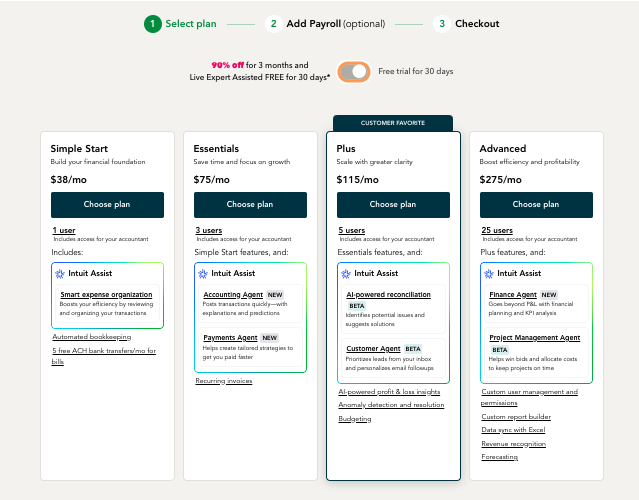 | 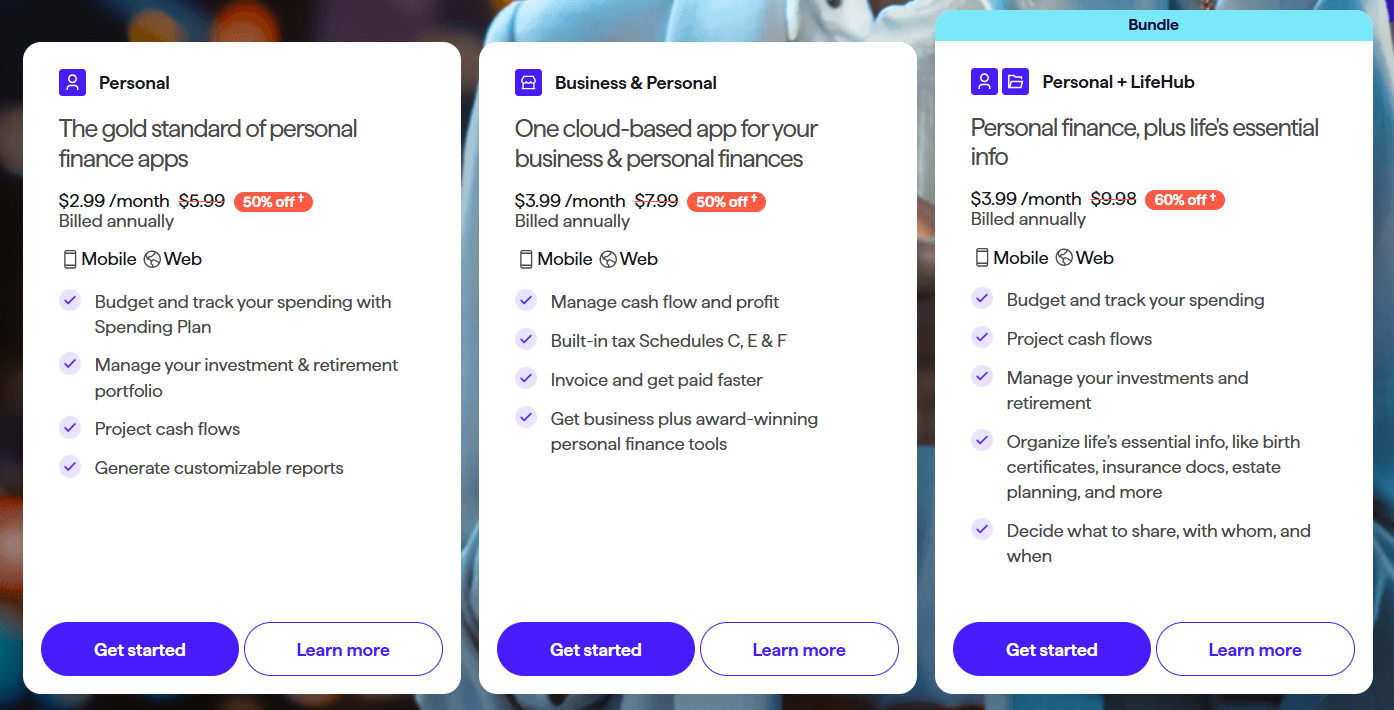 |
Other Details
Organization Types supported |
|
|
|---|---|---|
Platforms Supported |
|
|
Modes of support |
|
|
API Support |
|
|
Get help choosing | Get help choosing |
Security & Compliance
Certifications, data handling, and security controls for IT and compliance evaluators.
SOC 2 | ✓ Yes | — |
|---|---|---|
HIPAA | ✗ No | ✗ No |
GDPR | ✓ Yes | — |
Single Sign-On (SSO) | ✓ Yes | ✗ No |
Multi-Factor Auth (MFA) | ✓ Yes | ✓ Yes |
Data Encryption | ✓ Yes | ✓ Yes |
Audit Logs | ✓ Yes | ✗ No |
Data Residency | 🇺🇸 US | 🇺🇸 US |
Quickbooks User Reviews & Rating Comparison
User Ratings | ||
|---|---|---|
Rating Distribution | ||
Spotsaas Editor’s POV generated by AI | Buyer sentiment Overall, buyers appreciate QuickBooks for its excellent customer support and ease of use, though some express frustration with technical issues and complex feature areas. What buyers like
Common complaints
| Buyer sentiment Users generally appreciate Quicken's ease of use and comprehensive financial tracking but note limitations in advanced features and file management. What buyers like
Common complaints
|
Pros and Cons |
|
|
Positive Reviews | No reviews available for the product | No reviews available for the product |
Integrations
Integration with other apps | No Integration information available. |
|---|


List of Customers
Customers | No Customers information available. |  Wells Fargo  Fidelity  Citi |
|---|
Media and Screenshots
Screenshots |  4 Screenshots | 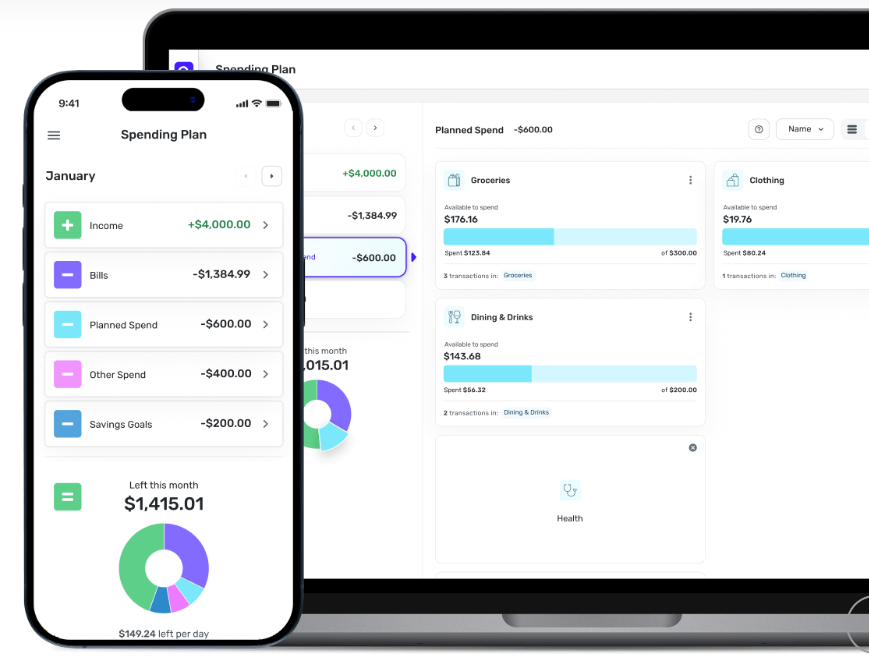 2 Screenshots |
|---|---|---|
Videos |  2 Videos |  2 Videos |
Top Alternatives to Quickbooks and Quicken in 2026
Alternatives |
|---|


Add another option to compare side by side
Search by product name to compare pricing, fit, and buyer feedback in one view.Compare similar software options


Related Blogs and Articles for Personal Finance Software


Disclaimer: This research has been collated from a variety of authoritative sources. We welcome your feedback at [email protected].
Frequently asked questions
- Which is better, Quickbooks or Quicken?
- Quicken edges out the other on user ratings (5.0 vs 4.8). That said, the best pick depends on your use case — use the comparison tables above to evaluate each dimension.
- Do Quickbooks and Quicken offer a free trial?
- Yes, both Quickbooks and Quicken offer a free trial.
- What is the starting price of Quickbooks vs Quicken?
- Quickbooks starts at $3.80 /month. Quicken starts at $2.99 /month.
- What are the top alternatives to Quickbooks?
- Top alternatives to Quickbooks include Xero, Zoho Books, Freshbooks, Sage Accounting (Sage One), easybook.io.
- What are the top alternatives to Quicken?
- Top alternatives to Quicken include Mint, You Need A Budget, Money Dashboard, Lunch Money, Pockett.