
Diving into the world of technology, it can be challenging to keep up with emerging trends like mixed reality. This paradigm-shifting tech marries our physical environment with digital elements, creating a unique, interactive experience.
Our blog will untangle the complexities of mixed reality for you – explaining how it works, its applications across various industries, and its potential future advancements.
Key Takeaways
- Mixed reality combines elements of virtual reality and augmented reality to create interactive experiences.
- It works by blending the real world with digital elements, using cameras, sensors, and AI technology.
- Mixed reality has applications in marketing, education, entertainment, healthcare, construction/engineering, and manufacturing.
- It offers improved user experiences, enhanced learning/training opportunities, and the potential for medical breakthroughs.
Understanding Mixed Reality
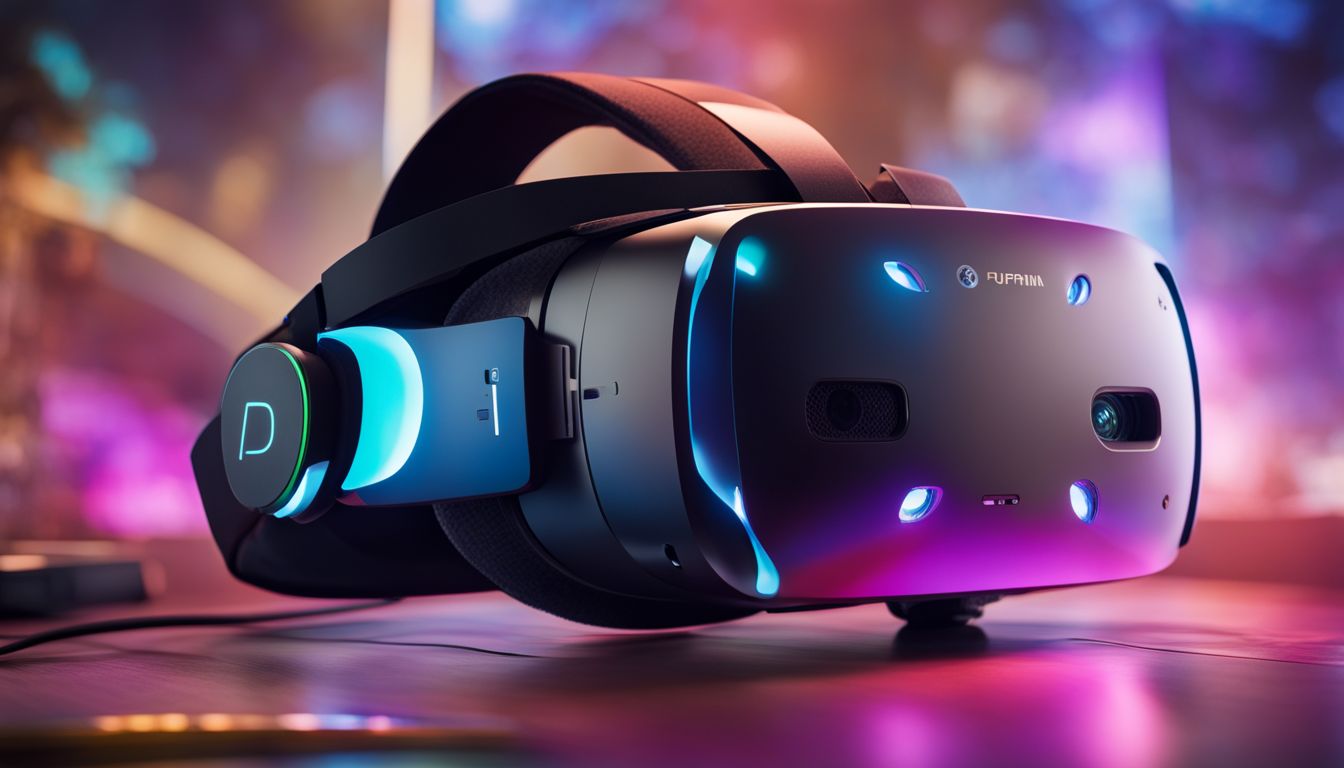
Mixed reality is a technology that combines elements of virtual reality and augmented reality to create an interactive and immersive experience for users.
Definition
Mixed reality is a mix of our real world and an online one. It uses things like cameras, sensors, and special technology. This helps it make sense of space around us. It makes use of parts from both virtual reality (VR) and augmented reality (AR).
Real world actions change what happens to the digital items in this mixed setting. Mixed reality lets users play with computer-made objects as if they were part of the real world around them.
How it works
Mixed reality works in smart ways. Firstly, it uses a mix of real and digital worlds. Physical objects and fake ones exist together. Cameras and sensors help the process. They take in data about space. AI tech makes the space feel real to the user.
The mixed reality spectrum
Mixed reality falls on a scale. This is the mixed reality spectrum. On one end of this scale, you have the real world we live in. On the other end, there’s full digital reality.
This scale also includes augmented and virtual reality. Augmented reality adds digital items to our real world. Virtual reality puts us in a completely made-up place created by computers.
Mixed Reality mixes both ends of this spectrum together. It places digital things in our physical space that can act like real ones would do.
For example, companies like Microsoft are making new tools for mixed reality. They use cameras and sensors that pick up info about a room’s size and shape or your hand movements in it! AI technology then uses this data to make interactive 3D experiences where you can touch or move these objects as if they were really there!
This blend of digital and actual space opens up doors for amazing new ideas and ways of working together! You can design, work on projects with others from afar, learn new skills through hands-on training, play games that feel more real than ever before – all possible thanks to mixed reality.
Uses of Mixed Reality
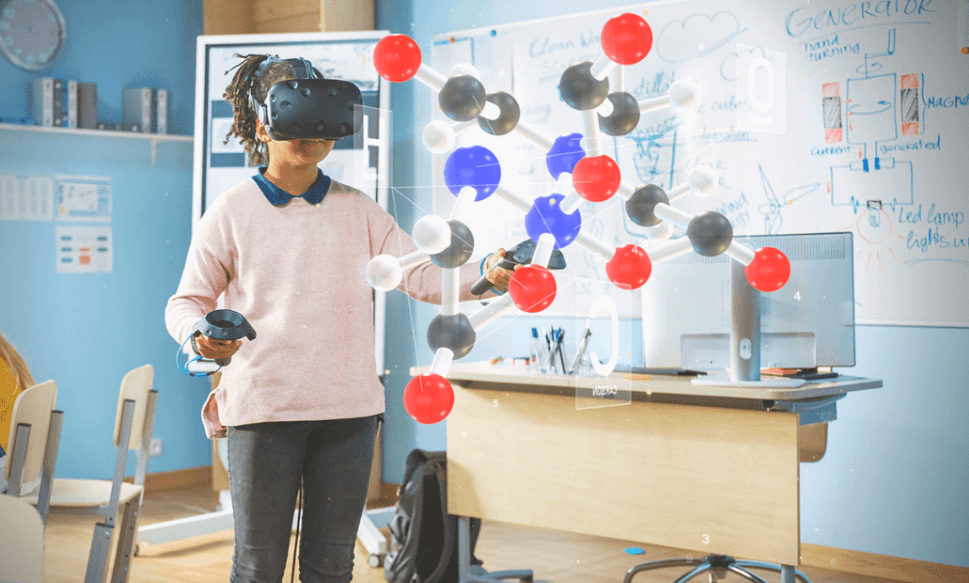
Mixed reality applications span marketing, education and training, entertainment, healthcare, construction and engineering, and manufacturing. Each field uses the technology differently, but the common thread is blending digital objects with the physical space around the user.
In marketing
Marketers use mixed reality to build interactive experiences instead of static ads. Brands can place a product in a virtual space so a shopper can view it from every angle before buying, which is harder to do with a photo or a video alone.
Because mixed reality tracks how a person interacts with an object, it also supports more personalized campaigns – the same virtual product display can be adjusted for different customers based on their preferences. This gives brands a way to hold a shopper’s attention longer than a traditional ad would, and to connect with an audience in a more direct, hands-on way.
In education and training
In classrooms and training programs, mixed reality lets students work with digital objects placed inside a real-world setting rather than on a flat screen. A biology class can examine a 3D model of a cell from any angle, or a technician-in-training can practice on a virtual machine that behaves like the real one.
This spatial approach to learning helps with understanding and retention of concepts that are hard to grasp from text or diagrams alone. It also supports group work: several students can view and manipulate the same virtual object together, which is useful for team projects and hands-on training that would otherwise require physical equipment or lab space.
In entertainment
Entertainment was one of the earliest testing grounds for mixed reality. Games and interactive experiences let players engage with digital characters and objects placed in their own room, rather than confined to a flat screen.
The same approach carries over to live performances and virtual tours, where audiences can move around a mixed-reality scene as if they were physically present at the venue. Studios and event organizers are experimenting with mixed reality to make performances and exhibits more interactive than a standard broadcast or a static display would allow.
In healthcare
Hospitals and medical schools use mixed reality for training and planning. Surgeons can rehearse a procedure on a 3D model before operating, and students can work through a simulated medical scenario without needing a real patient or cadaver.
Doctors also use mixed reality to view a patient’s scan data as a 3D image overlaid on the real world, which can make it easier to plan a procedure than reading a flat scan on a monitor. It supports remote collaboration too – specialists in different locations can look at the same 3D data at the same time, which is useful for clinical training and second opinions on a case.
In construction and engineering
Construction and engineering teams use mixed reality for planning and design review. Engineers can now use mixed reality technology to build 3D models of buildings and structures, which makes it easier to spot design conflicts before construction even starts.
Catching these issues early can reduce rework and keep a project closer to its budget and timeline. On-site workers benefit too: mixed reality can overlay instructions or safety information directly onto equipment or a work area, instead of requiring a worker to stop and check a separate manual or screen.
In manufacturing
Manufacturers use mixed reality to test products and processes before committing to physical production. Designers can build a 3D model of a product, test how it functions, and flag issues while changes are still cheap and easy to make.
Mixed reality also supports collaboration between engineers and designers working in different locations, letting them view and adjust the same virtual model together inside a shared environment. Across these use cases, the goal is largely the same: catch design and process problems in a virtual model before they turn into costly errors in a physical product.
Benefits and Challenges of Mixed Reality
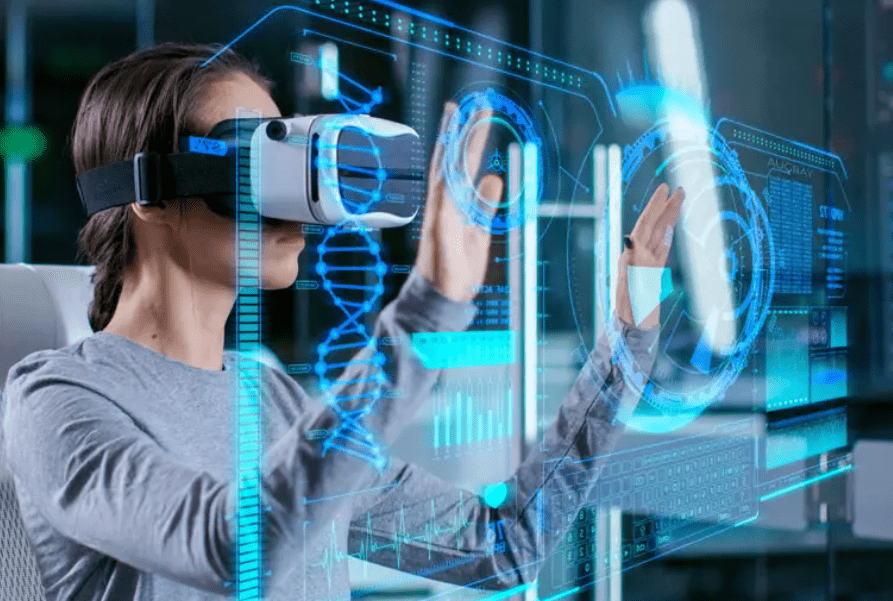
Mixed reality offers improved user experiences, enhanced learning and training opportunities, and the potential for medical breakthroughs. However, it also faces technical limitations and cost challenges.
Improved user experience
Mixed reality technology offers an improved user experience by providing a more immersive and interactive environment. Users can interact with virtual objects in real-world spaces. This makes the experience feel natural and intuitive.
This means that people can have engaging and realistic interactions with digital content. This improves their overall satisfaction. Mixed reality expands on augmented reality by incorporating virtual elements into the physical environment, opening up new possibilities for creativity, productivity, and collaboration.
As companies continue to develop mixed reality technologies, we can expect even more advancements that will further enhance the user experience.
Enhanced learning and training
In the realm of education and training, mixed reality offers exciting possibilities for enhanced learning experiences. By integrating virtual elements into real-world environments, students can engage in hands-on activities and simulations that make complex concepts easier to grasp.
For example, medical students can practice surgeries in a realistic virtual environment before operating on actual patients. This immersive approach allows for more effective skill development and knowledge retention.
Additionally, mixed reality enables interactive collaboration among learners, building teamwork and critical thinking skills. With the potential to change traditional teaching methods, mixed reality could reshape the way we learn and train.
Potential for medical breakthroughs
Mixed reality has the potential to bring about significant breakthroughs in the field of medicine. With its immersive and interactive capabilities, mixed reality technology can change how medical professionals learn, train, and perform procedures.
Imagine being able to visualize and interact with complex anatomical structures in a three-dimensional virtual space. This would greatly enhance medical education by providing more realistic and hands-on learning experiences for students.
Moreover, mixed reality can enable surgeons to practice intricate surgical procedures in a safe and controlled environment before performing them on actual patients. This improves surgical precision and reduces the risk of complications during real surgeries.
Additionally, mixed reality can assist doctors in diagnosing illnesses by allowing them to overlay digital information onto a patient’s physical body during examinations.
Furthermore, mixed reality technology can facilitate remote collaboration between healthcare professionals from different locations. Through holographic communication systems, doctors can virtually collaborate on diagnoses and treatment plans without physically being present in the same location.
This is especially valuable in situations where specialists are needed but may not be readily available at every hospital or clinic.
Technical limitations
Mixed reality technology, while promising, does have some technical limitations. One limitation is the cost of the hardware required to run mixed reality applications. The cameras, sensors, and AI-enhanced technology needed can be expensive for both individuals and organizations.
Another limitation is the need for a high-performance computer or device to handle the processing power required for immersive experiences. Additionally, there may be challenges in accurately tracking movements and interactions in real-time, which can affect the overall user experience.
Despite these limitations, companies like Microsoft are actively working on advancements in mixed reality technology to overcome these barriers and make it more accessible to a wider audience.
Cost
Mixed reality technology has shown great potential in various industries, but one important factor to consider is the cost. Developing and implementing mixed reality solutions can be expensive.
Companies need to invest in advanced hardware like cameras, sensors, and AI-enhanced technology. Additionally, there are costs associated with software development and customization for specific industry needs.
Training employees to use mixed reality systems also requires time and resources. However, it’s important to note that as the technology advances and becomes more widely adopted, we can expect the cost of implementation to decrease over time.
The Future of Mixed Reality
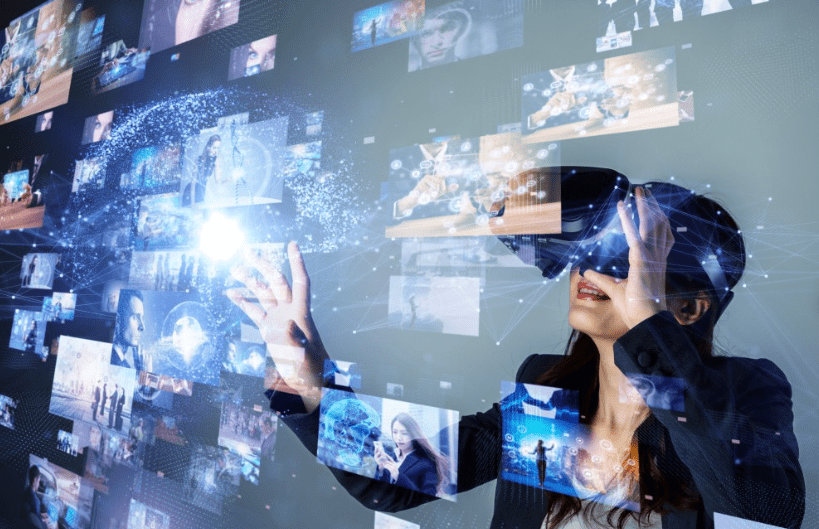
Mixed reality is constantly evolving, with advancements in technology and the potential for widespread use across various industries. Discover how this immersive technology is changing our world.
Advancements in technology
Advancements in technology are propelling the development of mixed reality at an unprecedented pace. Companies like Microsoft and other technology providers are actively working on creating more sophisticated and immersive mixed reality experiences.
These advancements include improvements in camera and sensor technologies, as well as AI-enhanced algorithms that enhance the processing of data about physical space. As a result, users can expect even more realistic and smooth interactions with digital objects in real-world environments.
With these technological advancements, mixed reality is set to become a mainstream technology that will have a profound impact across various industries such as gaming, education, healthcare, architecture, and more.
Potential for widespread use
Mixed reality has the potential for widespread use in various industries. With its ability to combine virtual and physical space, it can change fields such as gaming, education, healthcare, architecture, and more.
This technology expands on augmented reality by incorporating virtual elements into the real world. This provides users with a more immersive experience. Companies like Microsoft are actively developing mixed reality technologies. This ensures that this next-generation technology continues to advance.
As the capabilities of mixed reality expand and improve over time, we can expect it to have a significant impact across different sectors and become increasingly prevalent in our everyday lives.
Impact on various industries
Mixed reality has the potential to greatly impact many industries. In gaming, it can provide more immersive and realistic experiences for players. In education, students can learn through interactive and visual simulations.
Healthcare professionals can use mixed reality for training, diagnosis, and treatment purposes. Architects and engineers can visualize designs in 3D before construction begins. Manufacturers can improve efficiency and accuracy in production processes.
Mixed reality opens up new possibilities in these industries, changing the way things are done and adding to productivity across the board.
Conclusion
Mixed reality is an exciting blend of the physical and digital worlds that offers a better side of technology. With its immersive experiences and natural interactions, it has the potential to change various industries like gaming, education, healthcare, and more.
As advancements continue in mixed reality, we can expect to see even greater integration of the real world with virtual elements, opening up new possibilities for creativity and collaboration.
Frequently Asked Questions
What is mixed reality?
Mixed reality is a technology that combines elements of both virtual reality and augmented reality. This allows users to interact with digital content in the real world.
How does mixed reality differ from virtual reality?
Unlike virtual reality, which creates immersive simulated environments, mixed reality overlays virtual objects onto the real world, enhancing and interacting with the useru0026#8217;s surroundings.
What are some examples of mixed reality devices?
Examples of mixed reality devices include Microsoft HoloLens, Magic Leap One, and Oculus Quest 2 with Passthrough+ mode enabled.
How can mixed reality be used in various industries?
Mixed reality has applications in industries such as gaming, education, healthcare, architecture, design, and remote collaboration by providing immersive experiences and enhancing visualization.
Is it safe to use mixed reality for long periods of time?
When used responsibly and according to manufacturer guidelines, using mixed reality for extended periods should not pose any significant health risks. However, taking occasional breaks is recommended to rest your eyes and avoid discomfort.

- Independent picks for exactly what you just read about
- Matched to your team size & needs
- Vendors don't pay for placement
Step 1 of 4
How big is your team?
We tailor recommendations to companies your size.















Related Articles
Buyers guide
Twilio Alternatives 2026: 6 Compared and What They Cost
Continue reading →
IT Management
RMM Software: 25 Tools Ranked by 1,843 Reviews
Continue reading →
Buyers guide
How To Choose The Best Freelance Platforms For 2026
Continue reading →

Best Tools
SaveFrom.net: Norton Clears It, the Ads Are the Risk
Continue reading →