
WebAssign Software – Pricing, Homework Review, and Mathematics Assistance in 2026

Teachers and students both need an efficient, cost-effective way to manage online learning, and the choice of platform affects both daily workflow and course budgets. Webassign works in this space, supplying tools built for mathematics education and other subjects, and it has continued to add features aimed at instructors and learners.
This article covers Webassign’s 2024 offerings, from updated features and pricing to the alternatives worth weighing for your own courses. It looks at how the platform handles assignments, grade syncing, and digital content, and where other platforms may fit specific teaching needs.
Key Takeaways
- Webassign now includes an updated Assignment Editor and automatic grade syncing with various LMS, so instructors can manage assignments and grades in fewer steps.
- Pricing depends on the length of subscription, the number of courses, and digital textbook access, with savings available through bulk purchases or long-term commitments.
- Alternative platforms such as Khan Academy, Coursera, Moodle, Google Classroom, and Blackboard Learn offer different features that may suit various e-learning needs.
- Recent content updates focus on interactive features and richer mathematics education through improved digital textbooks.
- Webassign weighs user feedback heavily in its development process to keep pace with the changing needs of educators and students.
Webassign Features
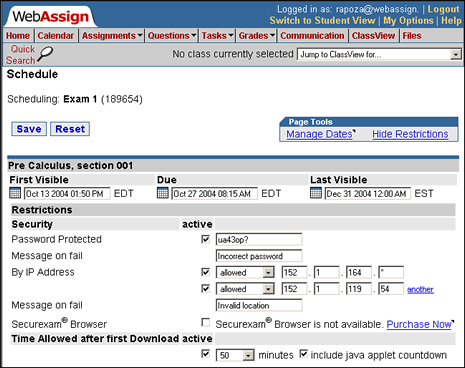
Webassign added a new Assignment Editor to help instructors create and manage assignments. It also added automatic grade syncing with Learning Management Systems (LMS), which cuts manual work out of grading.
Instructor Experience: New Assignment Editor
The new assignment editor in Webassign makes the instructor experience smoother and quicker. Teachers can build assignments through a clear interface that handles various question types, multimedia elements, and adaptive learning functions.
With these tools, instructors can set up dynamic online lessons that fit a range of educational needs, whether the course leans on written problems, visual material, or activities that adjust to each student.
The upgrade centers on the educator’s workflow. It offers real-time previews so instructors can see an assignment as students will, easier navigation through question banks, and simpler grading. As a result, instructors spend less time on technical steps and more on giving students personalized feedback on their work.
This attention to instructor usability reflects how Webassign approaches e-learning, working on both educator workflows and student engagement.
LMS Integration: Automatic Grade Syncing
Another notable feature is Webassign’s LMS integration with automatic grade syncing. This tool moves student scores from Webassign directly into their learning management system, so the grade a student earns on an assignment shows up in the system the institution already uses.
With this integration, teachers skip manual grade entry. That reduces the errors that creep in when scores are copied by hand and saves time that can go back into teaching.
Automatic grade syncing keeps scores current, so students see their performance quickly. It supports a range of common LMS platforms, in line with Webassign’s focus on cutting administrative tasks and spending more time on teaching and student communication.
Connecting Webassign to your institution’s preferred virtual classroom tightens the workflow and gets more out of the digital learning tools already in place.
Webassign Pricing & Cost Factors
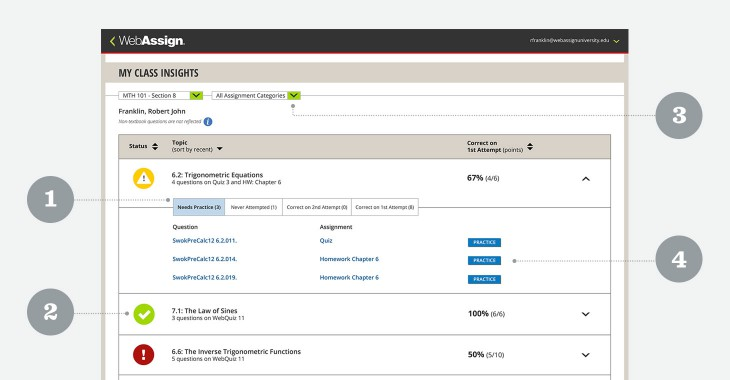
Webassign sets its pricing to fit the varied needs of learners and educators. Users weigh several cost factors, including subscription length, number of courses, and access to digital textbooks.
Many find that bulk purchasing or long-term commitments produce meaningful savings compared with shorter single-course plans. Knowing these options helps institutions and individual users plan their budgets and pick the arrangement that fits how long a course runs.
The platform’s value comes not only from upfront costs but also from how much it adds to mathematics education and other subjects. Its built-in tools for student communication and assessment tracking factor into that value, since they cover work that would otherwise need separate systems or manual effort.
Institutions often size their spending on such educational technology to improve learning outcomes while balancing budgets against the benefits Webassign offers across online learning platforms.
Review of Digital Content Updates in WebAssign
The latest digital content updates in Webassign improve the experience for both instructors and students. The platform added better interactive features, so instructors can build more engaging assignments with less effort.
These updates include a new assignment editor with a cleaner interface for creating dynamic, customized learning materials. Students also get better digital textbook access and communication tools that make interaction inside the virtual classroom easier.
Recent content updates also target mathematics education through richer digital textbooks. These improvements aim to supply fuller educational materials while keeping an eye on the access costs students face when a course requires a specific textbook.
Exploring Alternative Platforms to Webassign
If you are weighing alternatives to Webassign, it helps to look at options with comparable features. Below are some web-based learning platforms to consider:
- Khan Academy: covers many subjects and is a popular choice for students seeking free, high-quality educational content.
- Coursera: carries a large catalog of courses from leading universities and institutions, with diverse subject offerings.
- Moodle: an open-source platform with customizable features and the flexibility to build online courses.
- Google Classroom: integrated with G Suite for Education, it simplifies creating, distributing, and grading assignments in a shared online space.
- Blackboard Learn: a full learning management system that supports interactive course materials and communication tools.
The Impact of User Feedback on Webassign’s Development
User feedback shapes the development of Webassign. The platform pays attention to user suggestions and comments and works those insights into its updates and new features.
By acting on user feedback, Webassign keeps its product close to what educators and students actually need rather than to assumptions about how a course should run.
This approach builds a sense of community among users and gives them a hand in the platform’s growth. It also lets Webassign spot and fix pain points or weak areas that users flag, so recurring problems get addressed instead of lingering across terms.
Over time, this exchange between the platform and its users leads to a more tailored, effective learning experience for everyone involved.
Steady use of user feedback has kept Webassign an adaptive, responsive web-based learning platform, one focused on improving the experience for both instructors and students.
Conclusion: The Future of Webassign in 2024
Looking ahead to 2024, Webassign’s outlook is solid given its latest features. Instructors gain from the new Assignment Editor, which trims their workload.
The automatic grade syncing feature also makes LMS integration quick and reliable. These updates show steady work on user experience and functionality within the platform.
As digital learning keeps changing, Webassign’s ability to adapt will matter for holding its place among web-based learning platforms. Institutions and instructors will keep comparing it against the alternatives above, so continued work on features and pricing is what will keep it competitive over the coming terms.
(Image credit: Webassign)
Frequently Asked Questions
1. What are the latest pricing options for Webassign in 2024?
Pricing for Webassign in 2024 varies based on factors such as subscription plans, user capacity, and additional features.
2. What are some key features offered by Webassign in 2024?
Key features in 2024 include interactive learning tools, customizable assessments, student performance analytics, and integration with various learning management systems.
3. Are there any alternatives to Webassign for web-based learning platforms in 2024?
Yes. Several alternatives are available in 2024, including platforms with similar functions such as Blackboard Learn, Canvas LMS, and Moodle.
4. How do I determine which web-based learning platform is best suited for my needs?
Yes, you can customize assessments on Webassign to match your teaching requirements through options like question banks, randomization settings, and time-bound tests or assignments.

- Independent picks for exactly what you just read about
- Matched to your team size & needs
- Vendors don't pay for placement
Step 1 of 4
How big is your team?
We tailor recommendations to companies your size.















Related Articles
Buyers guide
How To Choose The Best Online Learning Platform For 2026
Continue reading →
Buyers guide
How To Choose The Best Restaurant Takeout and Delivery Software For 2026
Continue reading →
Applicant Tracking Software
Best ATS for Retail and Hospitality Hiring in 2026: 5 Tools for High-Volume Recruiting
Continue reading →

Buyers guide
How To Choose The Best Alumni Management Software For 2026
Continue reading →