
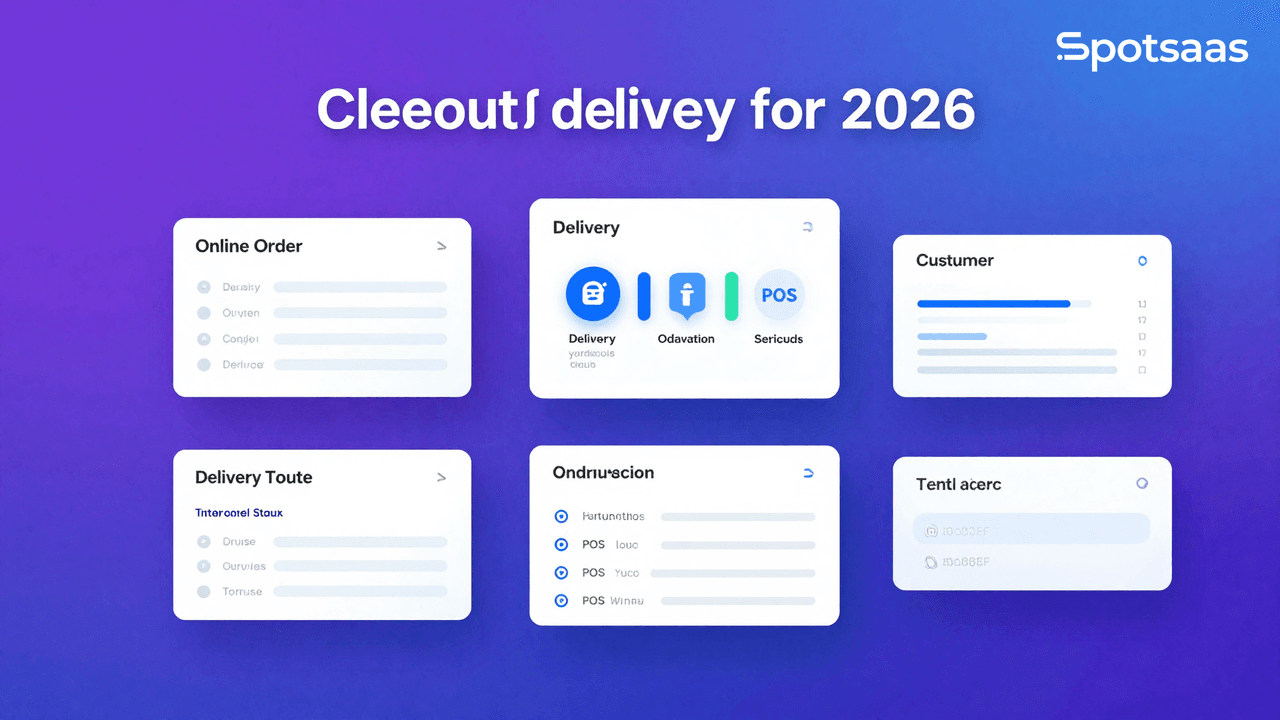
What Is Restaurant Takeout and Delivery Software and How Does It Work?
Restaurant takeout and delivery software is a program that helps restaurants manage online orders, delivery logistics, and customer interactions. It plugs into a restaurant’s point-of-sale system, automates order processing, and optimizes how deliveries get routed.
Most systems also fold in marketing tools, customer loyalty programs, and analytics to help restaurants run more efficiently, along with third-party delivery integrations that widen reach while keeping more control in-house.
Why Should Restaurants Use Takeout And Delivery Software?
Restaurant takeout and delivery software improves operational effectiveness, customer satisfaction, and profitability all at once. It processes orders automatically, keeps delivery operations running smoothly, and integrates cleanly with existing restaurant systems, while also offering marketing features, inventory management, and customer rewards. By cutting reliance on third-party services, restaurants keep more control over both orders and profits.
Seamless Online Ordering
Customers can order through a website, a mobile app, or a third-party site, whichever is most convenient for them, which helps a restaurant generate more sales and reach a wider customer base. A simple interface keeps the ordering process smooth, and fast, easy ordering builds both customer satisfaction and loyalty.
Effective Order And Delivery Management
Automating order processing cuts down on errors and improves accuracy, freeing employees from manual busywork so they can focus on food preparation and service instead. Simplifying the process from order-taking through fulfillment keeps deliveries on time and restaurant operations running with fewer delays and less confusion.
Improved Customer Experience
Real-time tracking and accurate delivery estimates keep customers in the loop, while contactless and digital payments make the transaction itself smoother. Fast, dependable deliveries build overall satisfaction and brand loyalty, and personalized updates throughout the order keep customers more engaged with the process.
Integration With POS And Payment Systems
Syncing orders with a restaurant’s POS system keeps order and sales data current, cutting out human error and speeding up the whole workflow. Support for multiple payment gateways gives customers more secure ways to pay, and better financial management comes from having precise, unified sales and transaction records.
Improved Delivery Route Optimization
AI and GPS work together to find the fastest, most efficient delivery routes, cutting travel time and fuel costs while improving overall operational effectiveness. Guiding drivers around traffic and delays gets food to customers faster, which keeps it fresh and in better condition on arrival.
Loyalty Programs And Marketing Tools
Real-time inventory tracking prevents overstocking or running out of core ingredients, and menu availability updates automatically so customers aren’t disappointed by items that no longer exist. Solid inventory management cuts food waste and helps control costs, and keeping staff aware of ingredient levels keeps the kitchen running smoothly.
Less Dependence On Third-Party Apps
Taking direct online orders means restaurants don’t have to rely on expensive third-party platforms, which cuts commission fees and boosts margins and overall revenue. It also puts restaurants back in full control of customer relationships, branding, and the service experience, building loyalty through a more direct, personal ordering process.
What Are The Key Features Of Restaurant Takeout And Delivery Software?
Multi-Channel Ordering
Letting customers order through a website, mobile app, phone call, or third-party platform reaches a much larger audience and improves sales, especially when everything funnels back into the POS system for centralized order collection. Fewer manual order entries means fewer errors, and giving customers multiple ways to order makes the whole experience more convenient. Spreading orders across different channels also helps restaurants manage peak hours better and capture more business by meeting customers however they prefer to order.
Real-Time Order Tracking
Live updates for customers, restaurant staff, and delivery drivers keep everyone informed about where an order stands, including delivery time estimates and status at every stage — no guesswork involved.
That visibility lets a customer check on their order at any moment, which cuts down on complaints about late delivery, and it also reduces the load on support staff since fewer customers need to call in and ask where their order is.
Automated Dispatch And Route Planning
AI and GPS route each delivery to the nearest available driver in real time, and live traffic data feeds into route optimization to cut delivery time and fuel costs. That results in faster service overall, since the most efficient delivery assignments get prioritized, and automating dispatch and scheduling removes a chunk of manual work in the process.
Spreading the workload across drivers helps restaurants handle peak-hour deliveries more smoothly. Timely deliveries also keep food fresher, and fewer delays and inefficient routes translate into lower operational costs.
Contactless Payment And Digital Receipts
Digital payments cover credit cards, mobile wallets, and other online payment methods, with encryption that improves security and limits fraud. That gives customers real flexibility in how they pay, which makes the transaction itself far more convenient.
It also speeds up order processing by cutting down on time spent waiting in checkout queues, and it helps restaurants stay current with today’s payment regulations and security standards.
Powerful Menu Management System
Being able to update menu items, prices, and availability in real time cuts down on order problems, since unavailable items get pulled from the menu automatically instead of leading to canceled orders. It also makes it easy to roll out seasonal promotions or limited-time additions to draw customers in, while keeping the menu consistent across every platform to avoid confusion or complaints.
Customers can customize meal options like portion size and ingredients, which keeps the menu feeling current and improves their overall experience. Dynamic pricing, adjusted based on demand and inventory levels, is often supported as well.
Customer Profiles And Order History
Customer profiles tie together personal details, order history, and payment history to make service more personal. That data can drive automated marketing based on past purchases and helps build a loyal base of returning customers.
It also makes reordering simple, since customers can repeat a past order in a couple of clicks, and it improves customer service by giving staff access to order history when resolving an issue. Personalized offers and recommendations built on this data raise engagement further, and discounts, coupons, and referral rewards give customers a real reason to come back — retention built through genuine incentives rather than guesswork.
Loyalty Rewards And Discount Management
This lets restaurants set up and manage promotional campaigns quickly, while reinforcing customer loyalty through rewards for continued use.
It also gives insight into what customers actually like, which sharpens marketing strategy, and it can drive larger order values through targeted discounts. Different reward structures are typically supported, whether point-based or percentage-based.
POS And Third-Party Integration
Syncing order processing and sales data with a restaurant’s POS system, and integrating with third-party delivery platforms like Uber Eats and DoorDash, keeps order handling accountable while cutting down on manual data-entry errors. It also gives a clearer financial picture by keeping transaction records from every sales channel in one place.
Accepting a full range of payment methods adds convenience for customers, and linking sales data to stock levels in real time keeps inventory tracking accurate — turning what would otherwise be scattered processes into one coordinated system.
What Are The Benefits Of Restaurant Takeout And Delivery Software?
Significant Improvements In Revenue Generation And Sales
Letting customers order online across several platforms widens a restaurant’s reach and pulls in customers who prefer delivery or takeout over dining in. That gives restaurants a revenue stream beyond the traditional dine-in model, and since it doesn’t require maintaining physical dining space for every order, it supports a higher volume of orders overall.
Suggesting additional menu items at checkout encourages upselling, and targeted promotions and loyalty programs push customers to order more often. The data these systems collect also shows restaurants sales trends they can use to refine pricing and menu offerings.
Faster Order Fulfillment
Streamlined order processing and logistics cut down both preparation and delivery time, keeping the kitchen, service staff, and delivery personnel in constant communication. Removing workflow bottlenecks through better resource optimization means customers get their food faster, which leaves them more satisfied with the service overall.
Automatic order assignment and dispatch also lighten the load on staff, and smarter scheduling helps restaurants handle high demand during peak hours. Faster service, in turn, drives stronger customer retention.
Reduced Errors And Miscommunication
Automating order processing removes manual data-entry mistakes and cuts down on miscommunication between customers, kitchen staff, and delivery drivers, since integration with POS systems keeps order details accurate from the start.
Tracking orders digitally reduces mix-ups and wrong deliveries, which means restaurants can deliver consistent service with far less human error. Standardizing how orders get taken strengthens operational efficiency and helps prevent the revenue loss that comes from incorrect or missing items.
High Retention Rate For Customers
Loyalty programs, rewards, and discounts give customers a reason to keep coming back, and real-time order tracking with timely deliveries builds on that satisfaction. Recommending products based on a customer’s preferences and past orders, combined with well-timed promotions, gives a restaurant a real competitive edge. The more consistent the incentives for frequent ordering, the stronger the brand loyalty that follows — and personalized service is what turns a one-time order into a long-term relationship and a higher lifetime customer value.
Cost Savings On Third-Party Listing Fees
Relying less on third-party platforms means more of the profit stays with the restaurant. Managing orders directly, without steep commission fees, and handling delivery logistics in-house at a lower cost both add up over time.
Cutting unnecessary charges from external apps increases profit margins, and managing transactions directly gives restaurants real financial control — along with the freedom to market themselves without being boxed in by a third-party platform’s rules.
Improved Operational Efficiency
Automating order management, kitchen workflow, and driver tracking keeps operations running smoothly and takes routine tasks like dispatching and invoicing off staff’s plates.
Better coordination between front-of-house and kitchen staff cuts down on delays, and optimizing order processing and delivery schedules improves time management across the board. Tracking sales, inventory, and customer preferences in real time keeps service consistent with less room for human error, and the data collected along the way helps refine operations further.
What Are The Different Types Of Restaurant Takeout And Delivery Software?
Standalone Online Ordering Systems
Independent platforms let restaurants manage online orders and payments without paying commission to a third party. They give full control over branding, pricing, and promotions, which helps smaller or mid-sized restaurants build up their own online presence. These platforms typically integrate cleanly with a restaurant’s website and social media pages, improve retention through direct ordering and loyalty programs, and being commission-free keeps them affordable.
ChowNow and GloriaFood are two examples of standalone ordering systems.
Restaurant POS With Delivery Features
These integrated solutions combine in-house order management, payment processing, and delivery logistics in a single system. They streamline operations by syncing dine-in, takeout, and delivery orders directly with the kitchen and inventory, letting restaurants manage online orders without relying on third-party aggregators and their commission fees. They also support automated dispatching, driver tracking, and customer communication for delivery management that stays entirely in-house.
Popular examples include Square for Restaurants and Toast POS, which offer all-in-one solutions for order processing, payments, and delivery tracking.
Third-Party Delivery Aggregators
These platforms connect restaurants with independent delivery drivers and customers, handling the logistics on the restaurant’s behalf. That’s a convenient way to offer delivery without hiring drivers directly, and aggregators widen a restaurant’s reach by listing it on popular food delivery marketplaces. The tradeoff is that while they bring exposure and convenience, they typically charge a commission per order, which eats into the profit margin.
Uber Eats, DoorDash, and Grubhub are industry giants that help restaurants reach new customers, but at a cost.
Cloud-Based Delivery Management Platforms
These platforms are built to help businesses manage their own delivery logistics, with tools like intelligent route planning and fleet management. They’re designed for restaurants running their own delivery fleet, offering features like driver scheduling, automated dispatching, and real-time performance analytics, along with dashboards for tracking deliveries, monitoring customer satisfaction, and analyzing operational efficiency.
Onfleet and Tookan are examples of platforms that let restaurants run high-efficiency delivery management while cutting operational costs.
AI-Based Customer Engagement Solutions
These platforms use artificial intelligence to personalize customer engagement and sharpen a restaurant’s marketing strategy. They analyze customer data, like past order patterns and preferences, to serve up targeted promotions, loyalty rewards, and personalized menu recommendations. They also let restaurants automate email, push notification, and SMS marketing campaigns to keep customers engaged, and they lean into cross-selling and upselling by surfacing the most relevant menu items during the ordering process.
Upserve and Flipdish are AI-enabled applications that help drive customer retention, increase repeat orders, and build brand loyalty using data insights.
How to Choose the Best Restaurant Delivery & Takeout Software
Choosing the right software comes down to making sure it fits your restaurant’s needs, goals, and delivery model. It should give you comprehensive control over orders, deliveries, and customer interaction, so everything runs smoothly from the moment an order is placed to the moment it’s delivered.
What Does Define Restaurant Delivery & Takeout Software Goals Include?
Before picking software, get clear on what you actually want to achieve — faster deliveries, better customer satisfaction, or the ability to handle larger order volumes. A clear goal makes it much easier to choose a tool that actually delivers on operational efficiency and customer satisfaction.
Streamline Ordering & Delivery
The software should simplify order-taking, delivery scheduling, and communication so the process feels seamless, freeing your team to focus on customer service while the system handles the backend work.
Enhance Customer Experience
The platform should make the customer journey easier, with features like quick reordering, transparent tracking, and personalized recommendations. A better experience is what actually drives loyalty and repeat business.
Improve Order Accuracy & Efficiency
Automating order entry and integrating with inventory management cuts down on manual errors, which leads to faster processing and more accurate deliveries — and that directly affects both customer satisfaction and operational costs.
Optimize Delivery Management
Managing deliveries well is central to a restaurant’s success. The software should offer real-time tracking and intelligent scheduling so your delivery team can work more efficiently and cut delivery times.
What Are the Preferred Restaurant Delivery & Takeout Software Models?
Which software model makes sense depends on how your restaurant operates and the scale of your delivery service.
All-in-One Restaurant Management Platforms
These platforms cover everything end to end, from ordering to payment to delivery, which makes them a good fit for restaurants that want a single, unified system for the whole operation.
Delivery-Only Platforms
These focus purely on delivery management, optimizing routes and handling logistics. They suit businesses whose delivery model doesn’t need broader operational features tacked on.
POS-Integrated Delivery & Takeout Software
This model plugs directly into your POS system, keeping orders, payments, and inventory management flowing together seamlessly. It reduces complexity and keeps operations consistent across the business.
Third-Party Delivery Integrations
This model works for restaurants already using services like DoorDash or UberEats, connecting those platforms with your internal systems so order processing stays streamlined and needs less manual intervention.
What Does Understand Data Requirements Include?
Restaurant delivery and takeout software needs to handle a range of data types and integrate with the other systems that matter, making it easier to track orders, manage inventory, and monitor customer preferences.
POS System Integration
Integrating with your POS system makes sure every order is captured correctly, cutting out duplication and errors, and it enables real-time stock updates that help prevent running out of items.
Payment Gateway Integration
Reliable payment gateway integration keeps transactions smooth and secure across every order type, which reduces friction at checkout and builds customer trust.
Customer Relationship Management (CRM) Systems
CRM integration lets you collect order history, preferences, and feedback in one place, which makes it possible to offer personalized promotions, targeted marketing, and stronger customer retention.
Delivery and Routing Software
Integrating delivery routing software optimizes driver scheduling and routes, which leads to faster, more accurate deliveries and a better customer experience.
What Are the Key Features to Evaluate in Restaurant Delivery & Takeout Software?
The software should be feature-rich, with tools that directly support ordering, delivery, payment, and customer communication.
Core Features
Online Ordering System
The ordering system should offer a smooth, intuitive interface that makes it easy for customers to place an order, customize it, and pay — all of which adds up to real convenience.
Real-Time Order Tracking
Real-time tracking lets customers follow their order from placement to delivery, cutting down on uncertainty and improving satisfaction, while also helping your team keep tabs on delivery progress.
Automated Delivery Scheduling & Routing
Automated scheduling reduces errors in assigning deliveries and makes sure the most efficient routes get used, improving delivery times while cutting fuel and labor costs.
Payment Processing Integration
Clean integration with payment gateways keeps transactions smooth whether a customer pays by credit card, digital wallet, or cash, making the payment step quick and secure.
Advanced Features
Driver Tracking & Management
Tracking drivers in real time helps make sure orders arrive on schedule and flags issues before they reach the customer, while also giving a clearer overview of driver performance.
Menu Management & Customization
You should be able to update the menu easily with new items, promotions, and seasonal offers, so it stays fresh and appealing to customers instead of going stale.
Customer Feedback & Rating System
Collecting customer feedback helps surface where things need to improve and builds stronger relationships by showing customers their concerns are actually addressed.
Marketing & Loyalty Program Integration
Look for software that supports loyalty programs and marketing campaigns, encouraging repeat business through rewards, discounts, and personalized promotions.
What Should You Assess in Reporting and Analytics?
Solid analytics and reporting help you keep an eye on key metrics, catch bottlenecks, and make decisions based on data rather than guesswork.
Granular Reporting
Sales & Revenue Reports
These reports show total sales, average order value, and performance broken down by region or delivery channel, which supports both decision-making and financial planning.
Delivery Time Analytics
Looking at delivery times helps identify exactly where delays happen, so you can fix the process and speed up delivery overall.
Visualization Tools
Dashboard with Key Metrics
Dashboards give managers a snapshot of order volume, revenue, and customer feedback, making it easy to spot trends and act on them quickly.
Customizable Reports
Customizable reports let managers zero in on what matters most, whether that’s top-performing menu items, popular delivery times, or customer satisfaction trends.
What Pricing Models and Cost Considerations Matter?
Pricing depends on the features, the scale of service, and any extra services you need. Understanding the model you’re paying for is what makes sure you’re getting real value for your money.
Subscription-Based Pricing
Subscription pricing usually means a monthly or annual fee tied to the features and services included — a good fit for restaurants that want predictable, recurring costs.
Pay-Per-Order Pricing
This model charges based on order volume, which suits restaurants whose order numbers fluctuate seasonally or from week to week.
Custom Pricing Plans
Larger restaurants or chains often go with custom pricing, which can include specialized features, premium support, and more capacity to support growing operations.
What Should You Check for Scalability in Restaurant Delivery & Takeout Software?
Scalability matters as a restaurant grows. The software needs to handle more demand, more delivery drivers, or additional locations without performance falling off.
High-Volume Order Management
The software should handle high order volumes during peak periods without a drop in performance, so customers still get timely deliveries even when things are busy.
Multi-Location Support
The software should offer centralized management for restaurants running multiple locations, so operators can monitor and manage orders across every site efficiently from one place.
Customizable Features for Growth
As the business evolves, you’ll likely need more features or integrations. Pick software that lets you scale by adding users, features, or locations as you grow, rather than one you’ll outgrow quickly.
What Support and Training Should You Expect?
Solid support and thorough training make sure your team can actually get the most out of the software and resolve issues fast, keeping operations running without interruption.
Customer Support
24/7 customer support means technical problems get resolved quickly, which keeps downtime to a minimum and the delivery process on track.
Onboarding & Tutorials
Make sure the software provider offers thorough onboarding and tutorials, so your team can get up to speed and start using the platform effectively without unnecessary delays.
What Are the Top Restaurant Delivery & Takeout Software Options?
Each restaurant delivery and takeout software solution offers a different balance of cost and capability for different business needs.
Some are built around POS integration for smooth order processing, while others focus on last-mile delivery logistics, customer engagement, or AI-driven personalization. Comparing them directly makes it easier to land on the right fit based on automation, tracking, or cost-effectiveness.
| Software | Pricing | Key Features | Best For |
|---|---|---|---|
| ChowNow | Starting at $99/month | Commission-free online ordering, POS integration | Small to mid-size restaurants |
| GloriaFood | Free to premium | Online ordering, delivery dispatching | Budget-conscious businesses |
| Square for Restaurants | Custom Pricing | POS integration, real-time menu updates | Multi-location businesses |
| Toast POS | Starting at $69/month | POS with built-in delivery features | Full-service restaurants |
| Uber Eats | Commission-based | Third-party delivery, large customer base | Restaurants with external drivers |
| DoorDash | Commission-based | Integrated delivery and driver tracking | Expanding takeout businesses |
| Onfleet | Custom Pricing | Route optimization, driver tracking | Large-scale delivery fleets |
| Flipdish | Custom Pricing | AI-powered ordering and marketing | Customer retention focus |
Final Verdict On Choosing Restaurant Takeout and Delivery Software
Restaurant delivery and takeout software has become central to how modern food service businesses streamline operations, grow revenue, and improve the customer experience.
Which system makes sense will come down to cost, functionality, and integration needs, whether that’s a standalone ordering solution, a platform built around your POS, or a third-party delivery service.
With the right software in place, restaurants can improve efficiency, cut down on errors, and deliver a consistently strong experience for takeout and delivery customers.

- Independent picks for exactly what you just read about
- Matched to your team size & needs
- Vendors don't pay for placement
Step 1 of 4
How big is your team?
We tailor recommendations to companies your size.














Related Articles
Best Tools
SaveFrom.Net Review (2026): Is It Safe, Legal & Worth Using?
Continue reading →
Buyers guide
How to Choose Healthcare Software: A Complete Buyer’s Guide (2026)
Continue reading →
Buyers guide
How to Automate HR Processes: A Practical Guide for 2026
Continue reading →
Applicant Tracking Software
How to Set Up an ATS: Step-by-Step Implementation Guide (2026)
Continue reading →