
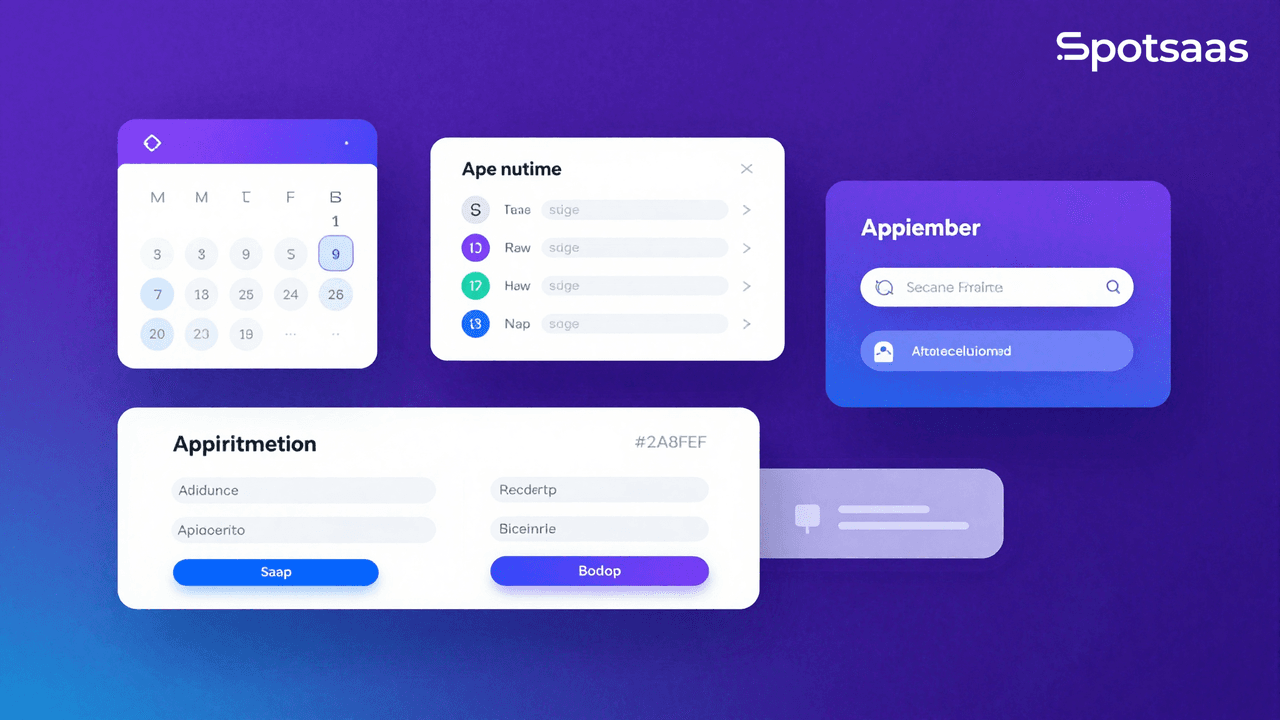
Traditional booking apps have handled scheduling for years, but as customer expectations change, the tools built to manage that scheduling need to change too. Businesses now want smarter, more flexible options that move past static time slots and generic interfaces, and that can adjust to how people actually show up, whether that’s a scheduled visit or a walk-in.
From service-based industries to government offices, more organizations want systems that give real-time updates, manage customer flow better, and offer more control over the service experience.
That shift has opened the door to a new generation of booking alternatives, tools built with more features and a better experience for both staff and customers.
This article covers six alternatives to traditional booking apps and compares them on flexibility, scalability, and customer satisfaction.
Quick Comparison of the Best Traditional Booking App Alternatives
Here’s a comparison of the six alternatives to traditional booking apps, covering features, ideal use cases, and pricing:
| Tool | Best For | Key Features | Ideal For | Pricing |
|---|---|---|---|---|
| Qminder | Streamlined customer service & queue management |
|
Government, healthcare, retail |
|
| WaitWhile | Multi-industry waitlist + appointment management |
|
Healthcare, retail, restaurants |
|
| Setmore | Small teams & budget-conscious organizations |
|
Small gov offices, nonprofits |
|
| DaySchedule | Personalized client scheduling |
|
Finance, coaching, healthcare |
|
| VirtuaQ | High-volume visitor environments |
|
Banking, public services, retail |
|
| JRNI | Appointment-first, service-driven industries |
|
Retail, beauty, healthcare, finance |
|
Pricing shown is approximate; check vendor websites for current rates.
6 Leading Alternatives to Traditional Booking Apps (Detailed Review)
If standard booking software isn’t keeping up, these six tools offer different ways to manage appointments, walk-ins, and customer flow, and each one takes a slightly different approach depending on the size of the organization and the industry it serves. Here’s a closer look at each one:
1. Qminder: Queue Management and Smart Appointment Scheduling

Qminder isn’t a typical booking app – it’s a complete customer flow and SaaS queue booking solution built for both public-facing services and busy commercial environments. Instead of just offering appointment slots, it lets users check in remotely, join virtual queues, and get real-time updates on their status without waiting in line.
It supports walk-ins, scheduled visits, and multi-location operations, which makes it a solid choice for government offices, healthcare providers, and large retail operations. Customizable workflows and detailed analytics help teams make better staffing decisions and run a smoother service.
Key Highlights of Qminder
- Self check-in via kiosk, mobile, or web for quick visitor intake
- SMS/email reminders to reduce no-shows and boost communication
- Real-time updates for staff and visitors
- Workflow customization for complex service types
- Multi-branch support and centralized dashboard
- Detailed analytics on visitor behavior and staff performance
- Easy integration with CRM and scheduling tools
- GDPR-compliant and secure data handling
Pros
- Intuitive for both customers and staff
- Reduces wait times and manual check-ins
- Powerful analytics to inform service strategy
- Scalable for various industries
Cons
- Might be overkill for very small teams
- Premium features may not be necessary for low-volume use
Qminder Pricing
Free 14-day trial. Paid plans start at $429/month with enterprise options available.
2. WaitWhile: Virtual Waitlist and Appointment Scheduling Tool

WaitWhile goes beyond traditional booking apps by combining appointment scheduling with virtual waitlist capabilities. Built to serve a wide range of industries, from healthcare clinics to retail stores and even restaurants, it lets customers join a waitlist or book appointments remotely, eliminating the need to physically queue up.
The platform offers automated updates, two-way communication, and even post-visit feedback collection, making it a good fit for businesses that want to stay connected throughout the customer journey. Integrations with tools like Slack and Salesforce make it adaptable to existing workflows.
Key Highlights of WaitWhile
- Remote waitlist access so customers can queue from anywhere
- Automated and two-way messaging to keep visitors informed
- Feedback collection tools for ongoing service improvement
- Appointment and waitlist support across industries
- Integrates with platforms like Mailchimp, Salesforce, and Slack
WaitWhile Pros
- Works well across multiple industries: healthcare, retail, hospitality, and more
- Offers flexibility for both scheduled and walk-in visits
- Improves the guest experience through communication and feedback
WaitWhile Cons
- Lacks deeper tools for restaurant-specific workflows like table management
- Not ideal if you need a full-service operational platform
WaitWhile Pricing
Free plan available. Paid plans range from $23 to $156/month depending on features and support level.
3. Setmore: Affordable Scheduling App for Small Teams

Setmore is a straightforward scheduling tool that’s especially well-suited for small government offices or organizations just getting started with digital bookings. Known for its generous free plan, it supports unlimited appointments and up to four users, ideal for small teams that want to simplify visitor scheduling without a big budget.
The platform comes with customizable booking pages, basic payment processing, and key integrations with tools like Facebook, Instagram, and website builders. While it doesn’t include more advanced functions like intake forms, it provides a practical starting point.
Key Highlights of Setmore
- Free plan includes unlimited bookings and up to four team members
- Booking pages can be branded with logos and banners
- Integrates with Facebook, Instagram, and website platforms
- Zapier support allows connections to apps like Google Contacts and Mailchimp
- Accepts payments via Square, Stripe, and PayPal
Setmore Pros
- Easy to set up and use for small teams
- Offers solid integrations and customization in the free version
Setmore Cons
- Lacks advanced features like intake forms or customer promotions
- Two-way calendar sync is only available with paid plans
Setmore Pricing
Free for up to four users; paid plans start at $5/month for additional features and team management.
4. DaySchedule: Personalized Client Scheduling with Branding Support

DaySchedule is a flexible cloud-based appointment platform designed for businesses and service providers who need a personalized approach to scheduling. It works well across industries like healthcare, finance, coaching, and wellness by offering branded booking pages, custom forms, and integration with key tools.
The platform supports group appointments, payment gateway connections, and video conferencing integrations, making it especially useful for client-facing organizations looking to create a smooth booking experience. A centralized dashboard and real-time analytics help teams manage appointments and performance with clarity.
Key Highlights of DaySchedule
- Customizable booking pages with support for branded visuals and intake forms
- Group booking capabilities and permission controls for team access
- Integrates with Stripe, PayPal, and popular video call platforms
- Real-time analytics to monitor appointment flow and team performance
DaySchedule Pros
- Great fit for small and mid-sized organizations needing personalization
- Supports strong integrations with payment and meeting tools
DaySchedule Cons
- Free plan limits the number of bookings
- Interface may feel limiting for users who want deeper customization
DaySchedule Pricing
Free plan available; paid plans begin at $8/month.
5. VirtuaQ: Virtual Queuing Solution for High-Volume Businesses

VirtuaQ is a modern alternative to traditional booking apps, built specifically for businesses that handle large visitor volumes. Instead of standard appointment scheduling, VirtuaQ focuses on virtual queue management, letting customers check in remotely through mobile devices or web browsers to help reduce in-person congestion.
This mobile-first solution is a fit for industries like banking, healthcare, retail, and public services. With real-time updates, smart notifications, and detailed analytics, VirtuaQ helps businesses manage customer flow while making data-informed decisions on staffing and service planning.
Key Highlights of VirtuaQ
- Mobile and web-based remote check-ins to reduce on-site wait times
- Live queue tracking and status alerts through SMS and app notifications
- Multi-location support for complex service environments
- Advanced analytics to understand visitor trends and optimize resources
VirtuaQ Pros
- Reduces physical crowding with efficient virtual queuing
- Simple interface for staff and visitors to manage check-ins
VirtuaQ Cons
- Pre-booking communication is limited mostly to SMS
- Could offer more flexible options for customer updates
VirtuaQ Pricing
Custom quotes based on organizational needs and scale.
6. JRNI: Omnichannel Appointment Booking and Customer Engagement

JRNI is a customer engagement platform that combines appointment booking with virtual queuing, making it a strong alternative to standard booking apps, especially for service-heavy businesses. It lets organizations manage all aspects of customer flow, from scheduling and check-in to real-time communication and analytics, through one system.
This tool is well-suited for industries like retail, healthcare, beauty, and finance, where appointments are essential and efficient queuing is critical. With support for mobile, kiosk, and web check-ins, JRNI helps businesses create a smooth, omnichannel experience.
Key Highlights of JRNI
- Centralized platform for appointment management and virtual queuing
- CRM and scheduling tool integrations for better workflow
- Real-time notifications and live status tracking for customers and staff
- Multi-channel check-in options (mobile, web, kiosks)
- Analytics to monitor wait times, performance, and service quality
JRNI Pros
- Ideal for appointment-first service industries
- Provides detailed insights for optimizing customer service
JRNI Cons
- Some settings require vendor support to configure
- Booking widget can be less responsive on certain devices
Pricing
Custom pricing based on business needs and scale.
Why Modern Scheduling Tools Outperform Traditional Booking Apps
Traditional booking apps no longer meet the evolving needs of service-driven businesses. Today’s alternatives offer more than just time slots: they help manage customer flow, reduce no-shows, and personalize the service experience.
Whether you’re in government, retail, healthcare, or finance, the right tool can meaningfully improve operational efficiency and satisfaction. From full-featured platforms like Qminder to flexible options like DaySchedule and WaitWhile, each solution brings something different to the table, so it’s worth weighing your industry, team size, and budget before picking one.
FAQs About Alternatives to Traditional Booking Apps
How do modern booking solutions differ from traditional ones?
Modern solutions go beyond time-slot reservations. They include features like virtual queuing, real-time updates, self-check-in, and analytics, which reduce wait times and improve customer flow.
What should I consider when choosing a booking app alternative?
Look for ease of use, multi-channel access, integration with existing tools, customization options, and support quality. Choose a solution that fits your industry’s specific needs.
Related Articles

Guest Post
Talent Is Available – But Hard to Find: What Recent Research Told Us About Skills Mismatches in the IT Labor Market
Continue reading →
Guest Post
How Can SaaS Startups Scale Infrastructure Using Affordable Website Hosting?
Continue reading →
Finance & Billing Software
How Can Businesses Automate Overheads to Save Time and Reduce Admin Work?
Continue reading →
Guest Post
Solving IT Problems When Teams Work From Multiple Locations
Continue reading →