
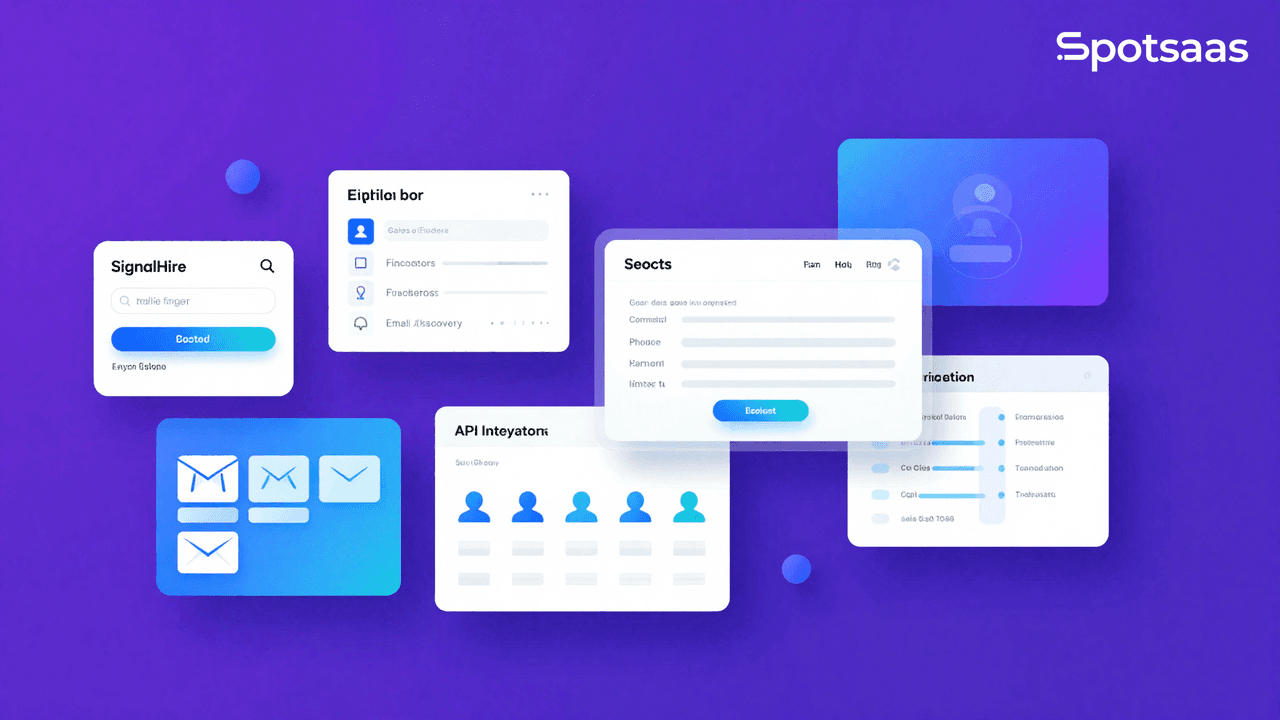
SignalHire is an online tool built for recruiting and sales professionals. It works as a single database of more than 650 million profiles, giving users contact details for the people they need to reach. For teams that spend hours hunting down an email address or a direct line, having that information in one place removes a common bottleneck in outreach.
The tool covers email and phone number lookups and connects to other systems through an API, so contact data can move directly into the software a team already uses. That range makes it a practical choice for both day-to-day communication and larger outreach campaigns that need steady access to accurate details.
SignalHire also runs inside applications many teams already work in, including Microsoft Outlook, Zoho Recruit, and LinkedIn for Business. That flexibility suits individual freelancers as well as small, mid-size, and large businesses, since the same tool fits a solo workflow and a full recruiting department without forcing users to switch between tabs.
Because the platform supports recruitment and sales enablement, it tends to earn strong satisfaction ratings from the people who rely on it daily. Users point to the time saved on sourcing and the ability to reach verified contacts as the reasons the tool holds a place in their process.
Cost matters in any buying decision, so it helps to understand how SignalHire prices its plans. The lineup runs from a free trial and a limited plan that starts at $39 per month when billed annually, up to broader premium options that add more credits and features for teams with heavier usage.
SignalHire is not the only option in this space. Alternatives such as Swordfish AI, Lusha, Hunter, and ZoomInfo compete with similar offerings. Even so, SignalHire stays competitive with flexible subscription terms, including the ability to cancel based on the original subscription date rather than being locked into a fixed renewal.
The sections below break down SignalHire’s features, pricing, and main competitors so you can decide whether it fits your recruiting or sales work, or whether one of its rivals is a better match for how you connect with candidates and prospects.
Key Takeaways
- SignalHire holds a database of over 350 million profiles, which helps recruiters and sales professionals find quality candidates and leads without piecing together data from several sources.
- Users can start with a free plan that covers basic contact searches, then move to premium plans starting at $39/month for extras such as email and phone credits.
- The platform includes ATS capabilities, business intelligence tools, and real-time verified contact information, which keeps the recruitment process moving from sourcing to outreach.
- Alternatives to SignalHire include Swordfish AI for up-to-date social media information, Lusha for detailed profiles and lead generation tools, Hunter for finding verified emails, and ZoomInfo for extensive B2B data services.
- Managing a SignalHire subscription is simple, with options to cancel or renew on your own terms, and a no-obligation trial lets you test the tool before you pay.
Understanding SignalHire’s Platform
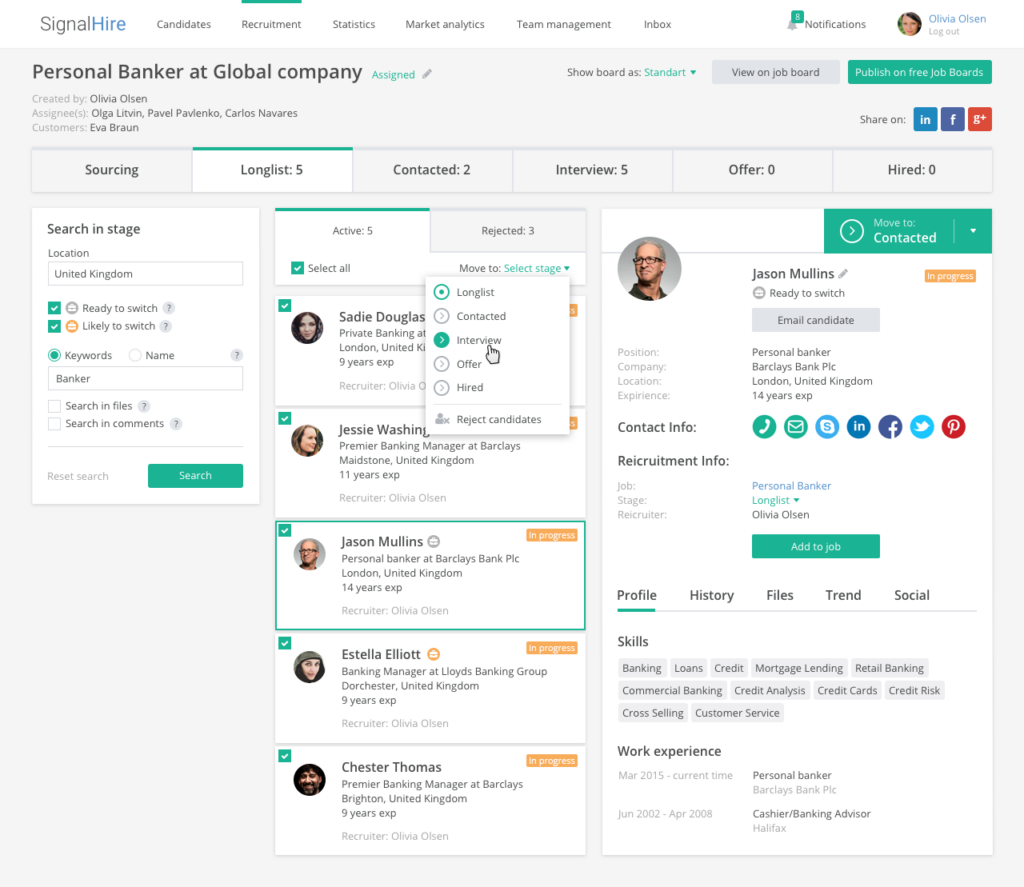
SignalHire’s platform brings together the pieces most recruiting and sales teams juggle separately. Sourcing tools, an applicant tracking system, and business intelligence sit in one place, so users can move from finding a candidate to tracking their progress to reviewing hiring data without leaving the tool.
Talent Sourcing Features
SignalHire’s sourcing starts with access to over 350 million profiles. Recruiters can search that pool of potential candidates and pull emails and phone numbers to reach the professionals they want quickly, instead of chasing contact details across separate sites.
Having that volume of information in one search shortens the recruitment process. Candidate sourcing and networking happen in the same view, which cuts the back-and-forth that usually slows down the early stages of hiring.
The platform supports staffing specialists and HR teams by generating leads from real-time verified contact information. With that database behind them, users can prospect for strong candidates faster and hold an advantage in how they build their talent pipelines.
Applicant Tracking System (ATS) Capabilities
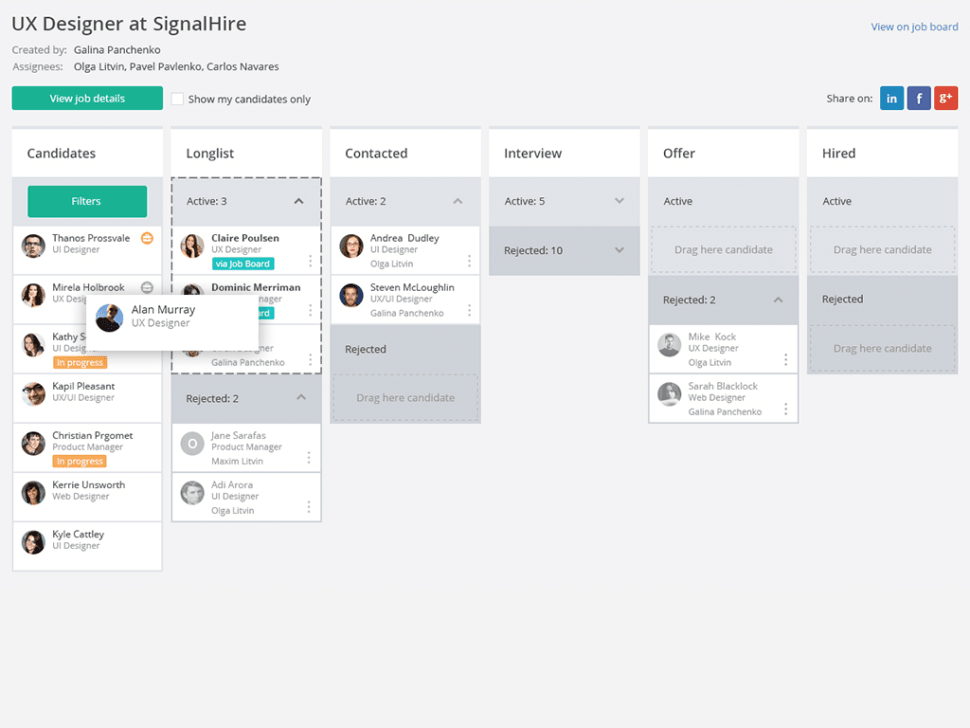
Alongside its sourcing features, SignalHire includes an applicant tracking system. The ATS handles job applicant management by automating steps in the hiring process and keeping candidate progress organized in one place.
Through its API, SignalHire connects to the HR technology a team already runs, so the tracking system fits into an existing stack rather than replacing it. Recruiters can use it to speed up resume screening and stay on top of large applicant volumes without losing track of individual candidates.
With an ATS in place, hiring teams spend less time on administrative work and more time talking to strong candidates. SignalHire’s recruitment analytics turn applicant data into clear reports, which gives HR managers the numbers they need to make staffing decisions.
Together, these features help organizations keep pace in a competitive hiring market while holding a steady, efficient workflow from application to offer.
Business Intelligence Tools
On top of its ATS, SignalHire adds business intelligence tools that support planning in talent acquisition. Recruitment metrics that are usually hard to read get turned into charts and reports, so teams can act on the data rather than sort through raw numbers.
Users can connect SignalHire’s API to other applications and move data between systems, which lets teams shape their own workflows and adjust how they recruit. The result is a setup that reflects how a specific team already works instead of forcing one fixed process.
These tools cover candidate sourcing and give a broader picture of hiring trends through dashboards that are straightforward to read. With a strong user review score behind the platform, recruiters can interpret large amounts of data quickly and turn it into decisions.
Using these analytics, teams can build recruiting strategies that match their company goals. Having the reporting sit next to the sourcing and tracking features makes it easier to act on what the data shows across the whole HR effort.
SignalHire Pricing Breakdown
SignalHire’s pricing is built around recruitment and sales needs, with lower-cost entry options and premium tiers that add more features. The structure lets teams pick a plan that matches how heavily they source and how many contacts they need each month.
The pricing is clear enough that businesses of any size can see how the tool fits their talent acquisition and lead generation budgets before committing. That transparency makes it easier to compare SignalHire against the free plan and the paid tiers described below.
Free Plan and Its Limitations
SignalHire offers a free plan so users can try the tool before paying for it. This option comes with limited credits for basic email and phone number searches, which suits anyone who wants to see how the platform works without spending money up front.
The free plan acts as an introductory trial and gives access to five professional contacts. That is enough to show what the tool can do while keeping the free tier small enough that heavier users will want to upgrade.
The trial has no obligation, but it does come with limits meant to point users toward a paid subscription. You may run into reduced search functionality or caps on how much candidate data you can pull in a session.
Those limits mark the line between the free plan and the paid tiers. The full set of tools that active recruiters and sales professionals need sits behind the premium subscriptions, which remove the free plan’s caps and open up broader access.
Premium Plan Options and Benefits
SignalHire’s premium plans give recruiting teams the full tool and come in options built for different needs. An annual subscription runs $39 per month and unlocks advanced features that the free version does not include, which makes it the cheaper choice for teams that plan to use SignalHire long term.
If you would rather stay flexible, a monthly plan is available at $49, so you can scale up or drop the tool as business needs change without committing to a full year.
Credits vary by package. The email-focused package includes 350 email credits each month, while the voice communication package comes with 100 phone credits for teams that reach out by phone.
Premium subscriptions also add user support and ATS/CRM integration so team members can work from the same contact data. The no-obligation trial gives you five professional contacts to test these features first, which is a low-risk way to see how SignalHire fits your recruiting process before you buy.
The Value of SignalHire for Recruiters and Sales Professionals
SignalHire gives recruiters and sales professionals a set of tools that cover both talent acquisition and lead generation. Rather than treating sourcing and selling as separate jobs, the platform keeps them in one workflow.
That connection matters because the same contact data that helps a recruiter reach a candidate also helps a salesperson reach a prospect. Having sourcing and outreach in the same place turns a list of profiles into real business conversations.
Comprehensive Candidate Database
A large candidate database changes how a recruitment process runs. SignalHire holds over 650 million profiles, which gives recruiters and sales professionals a wide range of candidates and leads to work from.
Because the database spans many industries, users can find a match for most roles or sales opportunities without switching to another source. The breadth means fewer dead ends when searching for a specific skill set or region.
That range lets companies run a targeted search and get results faster. Having the profiles on hand shortens the hiring journey, saves time and resources, and connects users with quality candidates sooner than manual searching would.
The tool scales to the user, so it works for a small start-up and a large corporation alike. That flexibility makes it a steady option for teams operating in a competitive market where speed to contact often decides the outcome.
Real-time Verified Contact Information
Real-time verified contact information changes how teams reach candidates and clients. SignalHire provides over 350 million profiles that come with checked email addresses and phone numbers, so the details users act on are current rather than stale.
That accuracy has a direct payoff: reaching the right person quickly can be the difference between closing a sales deal or landing a hire and missing the moment. Verified data lets users act with confidence instead of second-guessing whether a number still works.
With this database, recruiters and sales professionals can drop outdated lists and stop wasting time on contacts that no longer connect. Each call or email is more likely to reach its target, which raises the return on every outreach effort.
Support runs across web platforms as well as Android and iPhone apps, so users can pull up contact information wherever they are working. That access keeps the tool useful for professionals who source and sell away from their desks.
Comparing SignalHire to Competitors
SignalHire competes in a crowded market of recruitment and lead generation tools, so it helps to see how it stacks up against its rivals. This section walks through the differences to help you pick the tool that best fits your business goals.
Swordfish AI vs. SignalHire
Swordfish AI is a strong competitor to SignalHire in AI-powered recruitment. Its main strength is pulling current, accurate professional details from social media platforms, which keeps its contact data fresh.
That freshness matters for users who need the latest information on a candidate or sales lead. By focusing on real-time details, Swordfish AI helps recruiters make decisions on up-to-date data rather than records that may have gone stale.
SignalHire counters with scale. As a cloud-based platform, it offers over 650 million profiles across a range of industries and regions, and its collaboration tools let recruiting teams work together on the same candidates instead of duplicating effort.
A browser extension adds to that by letting users gather candidate information while they work, without breaking their flow to switch tools. For busy recruiters, that small convenience adds up over a day of sourcing.
SignalHire’s package system also delivers email and phone credits that support direct contact with prospects. Those credits keep personal touchpoints in the sourcing process, which is important when a message from a real person outperforms a generic blast.
Each tool suits a different priority. If you value depth and up-to-the-minute accuracy, Swordfish AI has the edge; if you want breadth and team collaboration, SignalHire is the stronger pick. Your choice comes down to which of those matters more for your recruiting.
Next are three more alternatives worth weighing: Lusha, Hunter, and ZoomInfo, each with its own approach to sourcing and outreach.
Other Notable Alternatives: Lusha, Hunter, and ZoomInfo
Lusha focuses on sales intelligence, giving professionals tools for prospecting and lead generation. It finds contact information with high accuracy, which makes it easier for users to connect with the prospects they want to reach.
With Lusha, a contact database becomes more useful as you add detailed profiles and email verification, so the records you build stay reliable over time.
Hunter is an all-in-one platform for cold email outreach, covering the full path from prospecting to sending campaigns. It helps you find businesses that match your ICP, uncover verified email addresses, and add useful data to your leads.
With a built-in B2B database, lead management tools, and CRM integrations, Hunter keeps the outreach process in one place, which makes it simpler to reach the right people and get better results.
ZoomInfo rounds out the group with broad B2B lead generation and data enrichment. Those capabilities help teams build and maintain a strong sales pipeline by keeping their contact records complete and current.
FAQs About SignalHire
For readers with remaining questions, this section clears up the common ones about SignalHire’s service, including how subscription cancellation and renewal work, so you can decide with a full picture of what to expect.
Subscription Cancellation and Renewal Queries
Knowing how to manage a SignalHire subscription keeps you in control of both usage and cost. Cancelling is simple: open your account settings and choose the cancel option before the next billing cycle starts.
Cancelling before that date means you will not be charged for a renewal you no longer want, so there is no need to time it precisely as long as you act before the cycle turns over.
If you plan to keep using SignalHire, track your renewal date. Renewal runs automatically on the anniversary of your original subscription start date unless you change it, so the timing depends on when you first signed up.
Update your payment information ahead of that date to avoid a break in service. You keep full control over your subscription, including extending or changing a plan before it expires, which leaves flexible options open for whatever your situation calls for.
Conclusion
SignalHire is a versatile tool for modern recruitment and sales work. Its feature set covers a range of corporate needs, and its pricing tiers keep it accessible to teams of different sizes and budgets.
For teams focused on hiring management, lead generation, and data extraction, SignalHire can be a practical addition to the workflow. It pairs market analytics with contact information verification, so users can both plan and act from the same tool.
Taken together, those features make SignalHire worth a look for anyone trying to run a leaner, faster business process around sourcing and outreach.
Corporate recruiters and sales professionals can tap into SignalHire’s database for talent acquisition and contact lookups, which makes finding quality candidates and useful business connections more efficient. Instead of stitching together several tools, they get sourcing and contact data in one place.
With real-time verified emails and phone numbers available on demand, users are less likely to miss a chance to reach top talent or close a deal because a contact detail was out of date.
The free trial lets you explore the platform and see the premium plan advantages before paying. Language support keeps the tool usable across teams, and API integration connects it to the systems you already run.
Whether you are part of a small startup or managing recruitment at a large enterprise, this subscription-based tool fits a range of customer bases. Its data mining capabilities support both sales work and recruiting, which is where much of its value shows up in a competitive market.
(Image credit: Signalhire)
Frequently Asked Questions
1. What does SignalHire do?
SignalHire is a tool that helps people find contact information and recruit talents online.
2. How much does SignalHire cost?
The price of SignalHire varies depending on the plan you choose, with different pricing for individual users and teams.
3. Can I try SignalHire before I buy it?
Yes, you can usually start with a free trial to test SignalHire’s features before purchasing a subscription.
4. What are some main features of SignalHire?
Some main features include finding email addresses and phone numbers, sourcing candidates, and managing your recruitment process.
5. Are there any good alternatives to SignalHire?
Yes, there are several alternatives to SignalHire such as LinkedIn Recruiter, ContactOut, and ZoomInfo which provide similar services.
Compare alternatives to the tools in this post
Related Articles
Applicant Tracking Software
ATS Tools for Small Teams: Hire Faster and Smarter with Less Effort
Continue reading →
Applicant Tracking Software
How Collaborative ATS Tools Improve Internal Hiring Communication
Continue reading →
Applicant Tracking Software
How To Choose The Best Job Board Software For 2026
Continue reading →
Applicant Tracking Software
Best Tools for Cross-Functional Hiring Across Teams and Departments
Continue reading →