

Academic research often means working through a large volume of papers and reports. Scholarcy AI helps by summarizing dense material quickly.
This post walks through how to put AI to work on your reading, and how Scholarcy can speed up your studies or research.
Key Takeaways
- Scholarcy AI turns dense academic texts into clear summaries, helping researchers save over 70% of the time they would normally spend reading.
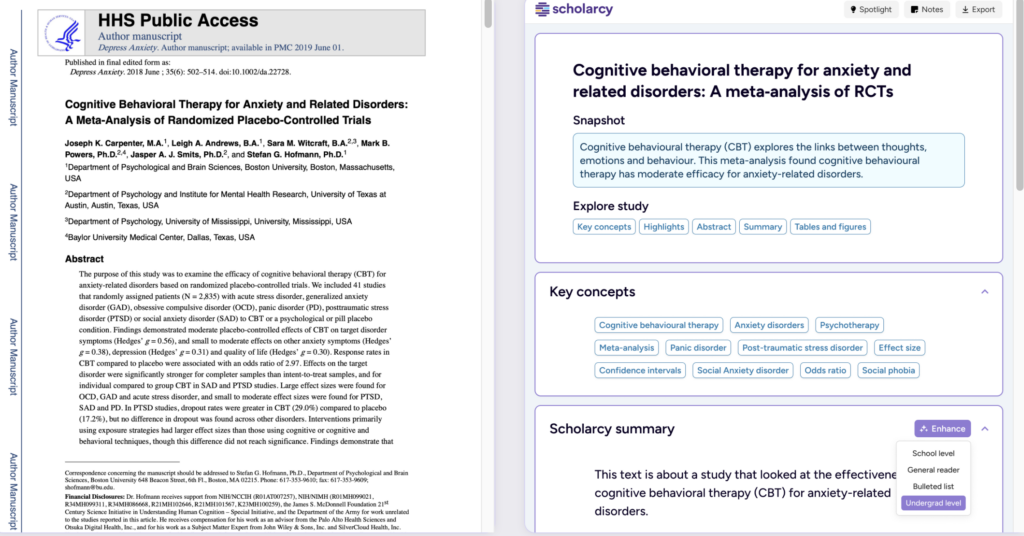
- The tool extracts critical content such as study objectives, methods, and results, along with figures and tables for easy review.
- Scholarcy’s flashcard summaries link to open access resources and are storable in a personal library accessible from any device.
- Students, journalists, librarians, and professionals can all use Scholarcy to process and analyze lengthy documents without sacrificing depth or quality of information.
- By connecting with repositories like arXiv and biorXiv, Scholarcy provides an expanded network of resources for research analysis.
Overview of Scholarcy: The AI-Powered Article Summarizer
In the fast-paced world of academic research, Scholarcy applies artificial intelligence to the demanding task of literature review, which is one of the slower and more effort-heavy parts of academic work.
The tool is designed to read scholarly articles, reports, and book chapters at speed. At its core is an AI-powered article summarizer that takes complex texts and turns them into short, readable summaries in a matter of seconds.
Beyond saving time, Scholarcy adds clarity to dense academic material. It reads through the text and pinpoints the essential elements such as study participants, methodologies, key findings, and noted limitations so you do not have to hunt for them yourself.
It processes documents in Word or PDF formats while retaining valuable data like figures, tables, and images inside the summary flashcards it creates. If you manage large PDF documents, a PDF tool such as the pdf resizer can reduce the size of large files so they open on different devices without losing quality. Smaller files also load faster and are easier to share with colleagues or upload for processing.
The next section, How Does Scholarcy Work?, covers how the system operates under the hood and what makes it useful for researchers across different disciplines.
How Does Scholarcy Work?
Scholarcy uses artificial intelligence to turn complex academic articles into concise summaries. This tool shortens the research process, saves time, and makes it easier to understand what a paper actually says.
- Scholarcy scans the full text of an article, recognizes its structure, and isolates distinct sections such as the introduction, methods, results, and discussion.
- The system uses information extraction techniques to identify crucial elements like study objectives, participant details, data analysis methods, and key findings.
- Through data analysis algorithms, Scholarcy evaluates research limitations and points out potential gaps in studies for readers to consider.
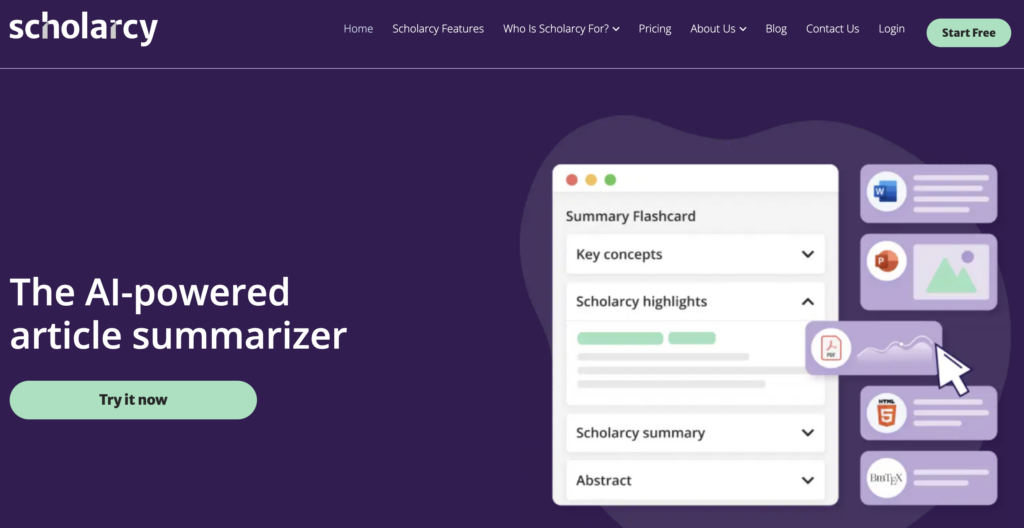
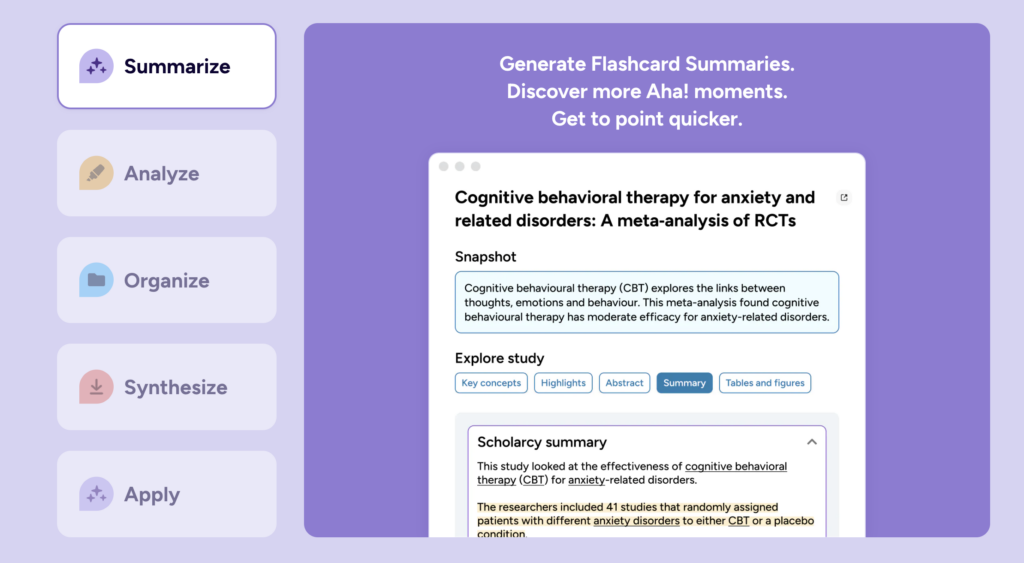
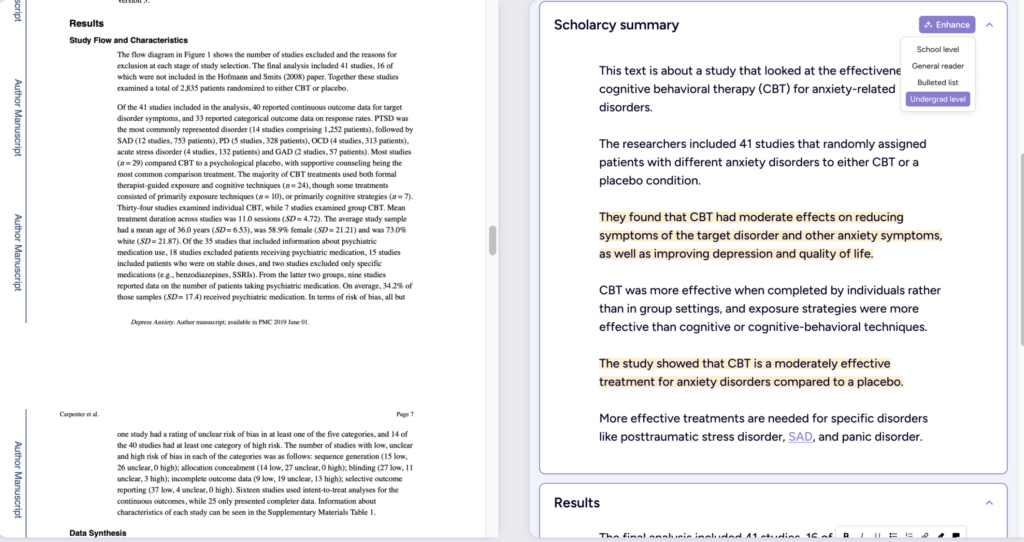
- After processing the document, Scholarcy outputs a flashcard summary that highlights essential information in a clear and organized way.
- These summaries include automatically extracted figures, tables, and images to visually support the text’s main points.
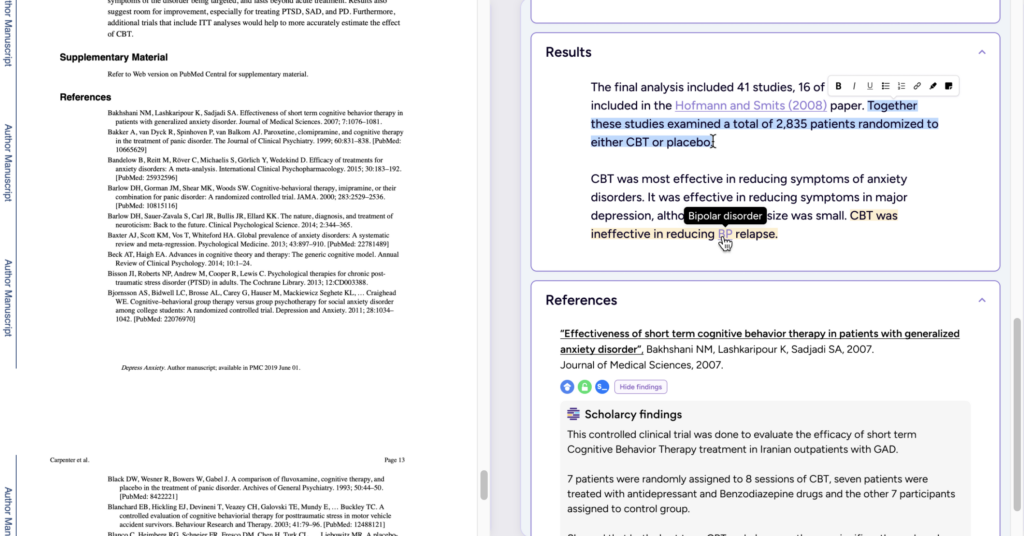
- It also creates hyperlinks to open-access versions of cited sources within the article for easy reference checking.
- Scholarcy connects with integrated repositories including arXiv and biorXiv to pull in relevant additional resources related to the summarized content.
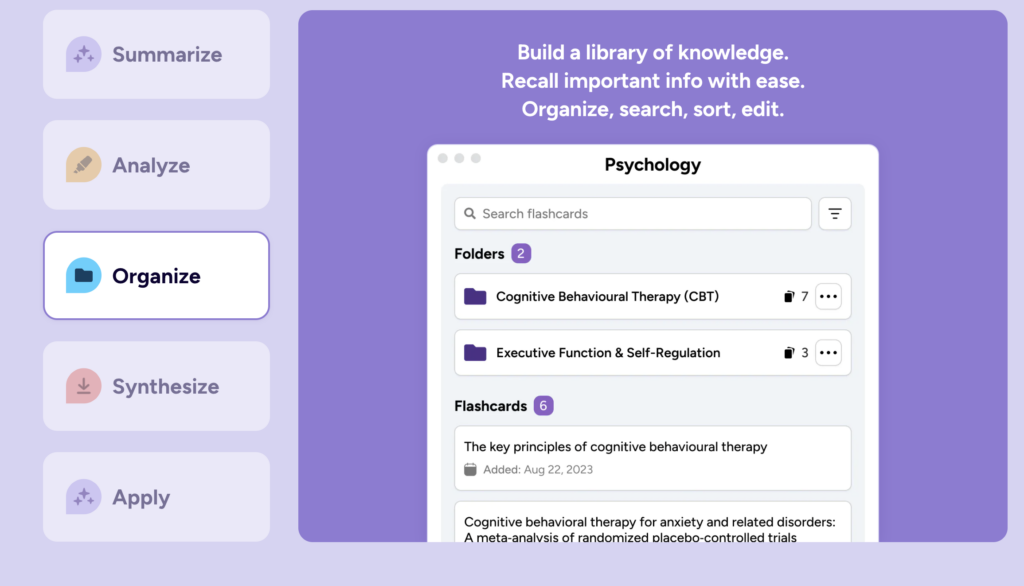
- Users can store their generated summary flashcards in the Scholarcy Library for quick retrieval from various devices through a subscription service.
Benefits and Use Cases of Scholarcy
Scholarcy helps in several ways. Researchers can summarize and analyze research articles more efficiently, and students can build flashcards from those summaries to study from.
It also helps journalists, librarians, and anyone who needs to pull key information from lengthy documents. The sections below cover each use case in more detail.
For Researchers
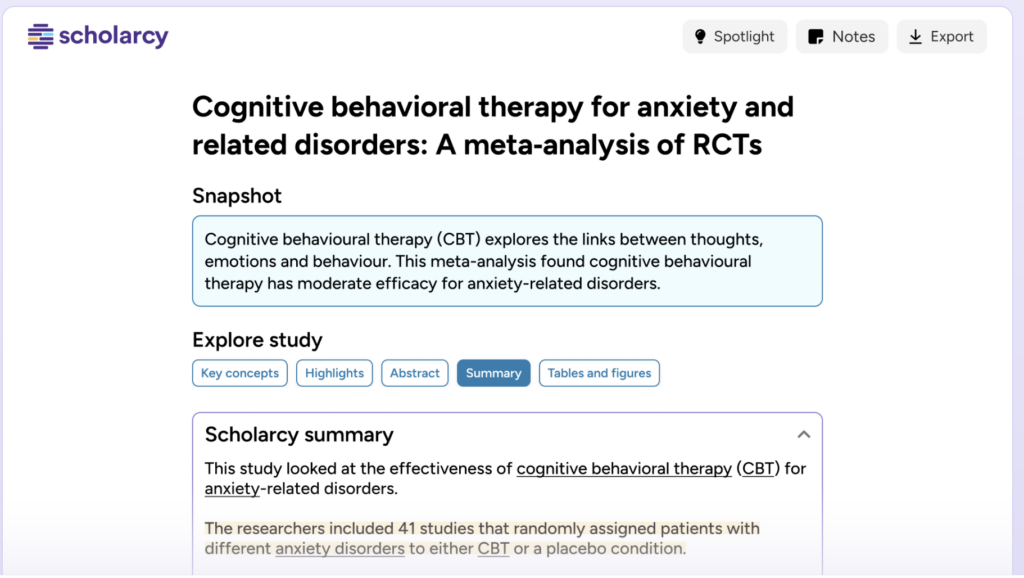
Scholarcy works as a research assistant that is available at any time of day. Instead of reading through countless articles, reports, and book chapters yourself, you can reclaim over 70% of that time by letting Scholarcy condense the essential information from each source into concise, structured flashcards you can scan in moments.
It extracts the figures, images, and tables you need directly, so you do not have to go through page after page to find them.
The tool also points you to open-access versions of references that matter for advancing your work, so you can check sources without hitting a paywall. Because it connects with repositories like arXiv and biorXiv, a large body of research knowledge stays within reach as you read.
With Scholarcy Library’s subscription service, you can build a personal database of summaries you can reach from anywhere, which changes how you gather insights and shape discoveries in your field.
Discover Exploring the Features and Benefits of Noodle Tools for Research and Writing
For Students
Scholarcy gives students a way to extract key information from academic articles and research papers. With Scholarcy’s AI technology, students can generate concise summaries of lengthy documents and save time during the literature review.
The tool also lets students pull important figures, tables, and images out of a paper to support their understanding of scholarly work. For data extraction and document summarization, Scholarcy is a useful resource for efficient and effective study appraisal, whether you are preparing for exams or writing up a review.
Discover Revolutionize Essay Writing with Charley AI: The Ultimate Essay Generation Tool
For Journalists
Scholarcy also serves journalists with document summarization and information extraction. Using its AI features, journalists can review research literature, reach open-access repositories, and link citations.
The tool simplifies the analysis of academic papers, which helps journalists find accurate data and insights when they are working against a deadline.
For Librarians
Librarians gain from Scholarcy’s document summarization, which saves them time and effort in the appraisal of academic research. The AI tool lets librarians generate concise summaries of research articles, reports, and book chapters within seconds.
Scholarcy also cuts the time spent on study assessment by over 70%, giving information professionals more room to focus on content curation and reference management.
The subscription-based Scholarcy Library holds a searchable collection of summary cards available from any device, giving librarians an efficient information retrieval system for their literature review needs.
This time-saving tool simplifies research appraisal and supports librarians in research summary compilation and reference extraction, two tasks that would otherwise take up a large part of the working day.
Conclusion
Scholarcy’s AI tool changes how academic research is summarized. It gives you key information from research articles, reports, and book chapters, and summarizes the essential details in seconds.
It improves efficiency and helps you work through complex biomedical literature without getting lost in the detail. For researchers, students, journalists, and librarians alike, Scholarcy can make academic work faster.
See how another AI tool is changing creative work with EBSynth AI, which brings new options to video and image processing.
Frequently Asked Questions
What is Scholarcy AI?
Scholarcy AI is a tool that uses artificial intelligence to summarize and extract key information from academic research papers.
How does Scholarcy AI revolutionize academic research summarization?
Scholarcy AI generates concise summaries quickly, saving time for researchers and students.
Can Scholarcy AI be used for any type of academic research paper?
Yes, Scholarcy AI can be used to summarize various types of academic research papers across different fields of study.
What are the benefits of using Scholarcy AI for academic research summarization?
Using Scholarcy AI can help researchers and students extract the main points from lengthy academic papers, aiding comprehension and analysis.
Is there a cost associated with using Scholarcy AI for academic research summarization?
Yes, there may be costs associated with certain features or usage levels within the platform; however, basic functionality may also be available at no cost.
Related Articles

AI Software
How AI-Powered ATS Tools Boost Diversity in Hiring — Real DEI Use Cases (2026)
Continue reading →

AI Software
5 Powerful AI Features Revolutionizing Hiring Workflows in 2026
Continue reading →
AI Software
How To Choose The Best Image Recognition Software For 2026
Continue reading →

AI Software
Best AI Resume Screening Tools in 2026 to Hire Faster
Continue reading →