
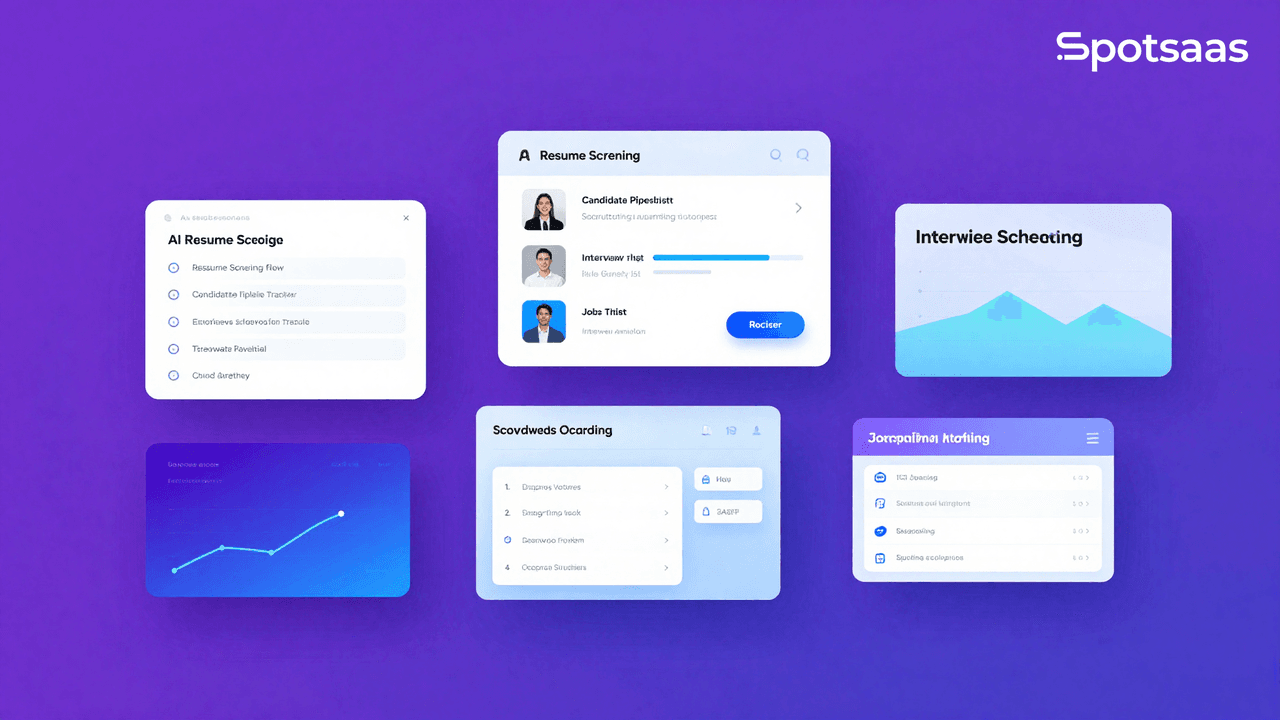
What Is Recruiting Automation Software and How Does It Work?
Recruiting automation software is a category of tools built to automate posting jobs, finding candidates, and reviewing resumes. By applying AI and machine learning to these tasks, it helps recruiters work faster, shorten time-to-hire, and make better-informed decisions throughout the hiring process.
These platforms typically extend into interview scheduling, candidate engagement, and onboarding too, covering more of the hiring cycle than just the sourcing stage. Cutting down on manual work is really the point: it frees HR to spend more time on strategic hiring, talent acquisition, and workforce planning, rather than data entry and calendar juggling.
Why Should You Use Recruiting Automation Software?
Streamlining the hiring process with smart automation
Tasks like resume screening, job posting, and interview scheduling are the ones automation handles most directly. AI-driven candidate matching takes a chunk of the manual work off HR’s plate, which leaves more time for the strategic side of the job, from candidate outreach to workforce planning.
Faster and more efficient hiring
Automated resume screening, interview scheduling, and follow-ups cut down the time recruiters spend on administrative work, leaving more of it for actually engaging with strong candidates rather than chasing paperwork. The net effect is a faster, more efficient path from application to hire.
Smarter sourcing and better candidate matches
By comparing job descriptions against candidate profiles, AI sourcing tools surface people who are actually qualified for the role, pulling from databases, social networks, and job boards in the process. That widens the pool of strong candidates and cuts down on qualified people getting missed.
Reducing bias in hiring decisions
Employers increasingly lean on AI to evaluate skills, experience, and qualifications before making a hiring decision, on the logic that reducing human bias in that first pass supports more inclusive, more equitable hiring outcomes across the whole pipeline.
Improving the candidate journey
Automated status updates, chatbots, and self-scheduling keep candidates in the loop instead of left wondering where things stand, which shapes how they experience the process and how they talk about the company afterward. Faster responses tend to mean more satisfied candidates, whether or not they get the job.
Seamless integration with HR systems
Connecting to applicant tracking systems, HR platforms, and job boards keeps candidate data in one place instead of scattered across tools, which cuts down on duplicate work and keeps HR teams coordinated throughout the hiring cycle, from first application to final offer.
Making smarter hiring decisions with data
Analytics and reporting track recruitment trends, candidate engagement, and hiring outcomes as they happen, giving companies numbers like time-to-hire, cost-per-hire, and candidate quality to work from when refining their hiring approach.
What Are the Key Features of Recruiting Automation Software?
AI-powered resume screening
AI-powered resume screening checks resumes against criteria like skills, experience, and role fit, which speeds up the first pass, reduces bias, and points recruiters toward the candidates worth a closer look instead of a stack of applications to sift through by hand. Matching resumes directly against job descriptions is what makes that automation possible.
Automated job posting across channels
Automated job posting tools push open roles out across job boards and social platforms at once instead of one at a time, which keeps visibility consistent and frees recruiters to spend that saved time on more strategic parts of the job.
Chatbots for 24/7 candidate support
AI-powered chatbots handle common questions, walk candidates through the process, and keep them engaged without recruiters having to respond to every message manually. Since they can also send real-time updates and schedule interviews, they cut down on manual communication while improving the candidate’s experience.
Scheduling interviews and conducting virtual assessments
Linking calendars and scheduling tools lets interviews book automatically for both sides, cutting out the usual back-and-forth. Add video interviewing on top, and remote interviews become the default rather than the exception, often with AI-driven evaluation tools built in to help recruiters assess candidates. Together, that combination avoids scheduling conflicts and speeds up hiring without sacrificing the candidate experience.
Managing candidate pipelines with CRM
Candidate Relationship Management (CRM) software tracks and coordinates every interaction with a candidate, which helps HR teams build up a bench of strong candidates for future roles, not just the one currently open. Detailed candidate profiles stored in the CRM make it easier to send targeted follow-up messages, keeping good candidates warm for whenever the right opening comes along.
Pre-employment testing and skill assessments
Skill assessment tools test technical ability, personality fit, and general job readiness before a candidate ever reaches an interview, through things like coding challenges, personality assessments, and situational judgment tests. Since candidates are confirmed against the essential qualifications up front, fewer interviews get spent on people who were never going to be a fit, and the data collected supports a more informed final decision.
Tracking diversity and inclusion efforts
Some platforms also track diversity and inclusion metrics throughout hiring, which gives companies a data-backed way to spot bias and keep recruitment practices fair rather than relying on impressions alone. That includes demographic information HR managers can use to understand who’s applying and where outreach to underrepresented groups might be falling short.
What Are the Main Benefits of Recruiting Automation Software?
Boosting productivity for HR teams
Automating the tedious parts, resume sorting, interview scheduling, and the like, frees HR staff to spend that time on strategic work instead: building relationships with promising candidates, refining recruitment strategy, and generally moving faster through the hiring process with more meaningful interactions along the way.
Improving the quality of hires
Matching applicants against job requirements on skills, experience, and cultural fit improves the odds of landing the right hire, and doing it while strong candidates are still available and engaged matters as much as the matching itself. Better hires, in turn, tend to mean less turnover, stronger teams, and better organizational performance overall.
Reducing the cost of hiring
Less time and fewer resources spent on manual recruitment translates directly into lower hiring costs, and filling roles faster avoids the costs that come with long, drawn-out hiring periods. Since automation reduces administrative work, it can also mean not needing to add extra HR headcount just to keep pace, which shows up as lower cost-per-hire and time-to-fill.
Ensuring compliance and accurate records
Automating recruitment also helps keep the process aligned with labor laws, company policy, and industry regulations, since candidate data gets stored and processed consistently rather than handled ad hoc. That lowers the odds of legal exposure and keeps decisions more transparent, and the audit trail automation leaves behind is what HR can point to later to demonstrate compliance.
Strengthening employer branding
A smoother, more responsive application process shapes how candidates perceive an employer, whether or not they end up getting hired, and tailored communication throughout tends to leave a better impression than generic, one-size-fits-all form emails. That reputation compounds: candidates who had a good experience talk about it, which makes the next round of hiring a little easier too.
What Are the Different Types of Recruiting Automation Software?
AI-powered applicant tracking systems (ATS)
AI-powered applicant tracking systems automate multiple stages of recruitment at once: posting jobs across platforms in a single action, screening resumes against role requirements, and tracking candidates through the pipeline from application to offer. The result is faster, more consistent recruitment that leaves more room for high-value work like candidate engagement. Greenhouse and Lever are two well-known examples of this category.
Sourcing tools and talent intelligence platforms
Sourcing and talent intelligence tools go after both active job seekers and passive candidates who aren’t actively looking for a new role, searching across LinkedIn, job boards, and other digital channels using AI and data analytics. That lets recruiters reach out to strong talent before a competitor does, backed by data-driven insight into who’s actually worth contacting first.
Examples include HireEZ and SeekOut.
Interview automation solutions
Interview automation platforms handle scheduling, video interviews, and AI-assisted assessment all in one place, which cuts down on the administrative overhead of running interviews and keeps the process consistent from one candidate to the next. Features like automated reminders and built-in video conferencing help HR teams move faster toward a final decision, and the process tends to feel smoother for candidates on the other end too.
Examples of this are HireVue and Spark Hire.
Recruitment marketing software
Recruitment marketing software treats hiring like a marketing problem: promoting open roles and employer branding through targeted campaigns rather than relying on a single static job listing. HR teams use it to build stronger job postings, run recruitment campaigns, and showcase company culture across social media, job boards, and their own careers site, with analytics on engagement and ad performance to tell them what’s actually working.
Examples include SmashFly and Beamery.
Pre-employment testing and assessment tools
Pre-employment testing tools assess skills, cognitive ability, and personality before an offer ever comes up, through coding challenges, technical evaluations, and personality tests aimed at gauging fit for both the role and the wider organization. Automating that step lets HR departments filter out candidates who aren’t a fit early on, while accurate, consistent assessments help keep the process less prone to bias.
Examples include Codility and HackerRank.
How to Choose the Best Recruiting Automation Software
Picking the right recruiting automation software matters for any company trying to streamline hiring, work more efficiently, and land strong candidates before a competitor gets to them first, whether that company is a startup or a large enterprise.
The right tool automates the core recruitment tasks, job posting, candidate screening, interview scheduling, and offer management, which frees recruitment teams to focus on strategic decisions, cuts down on human error, and speeds up hiring overall from the first application to the signed offer.
What Does Define Recruiting Automation Software Goals Include?
Before picking a tool, it’s worth getting specific about what you actually want it to do, whether that’s cutting time-to-hire, improving candidate experience, or getting hiring teams working together better.
Streamline Recruitment Processes
Look for software that automates the repetitive tasks, resume screening, interview scheduling, candidate outreach, so recruiters can put their time toward the strategic work that actually moves hiring forward, rather than getting stuck doing what a system could handle instead.
Improve Candidate Experience
A good candidate experience means the process feels smooth rather than confusing, so look for software that supports personalized communication, a simple application process, and feedback that doesn’t take weeks to arrive. Candidates remember how they were treated, even when they don’t get the job.
Enhance Collaboration and Communication
A centralized platform makes it easier for hiring teams to actually work together, keeping candidate management, feedback, and scheduling in one place instead of scattered across emails and spreadsheets that are easy to lose track of.
Support Data-Driven Decisions
Solid analytics and reporting are what let recruiters base decisions on actual data, whether that’s candidate quality, time to hire, or which recruitment channels are worth the investment, instead of relying on gut feel about what’s working.
What Are the Preferred Recruiting Automation Software Models?
Recruiting automation software comes in a handful of different models, each with its own trade-offs on functionality and scalability worth understanding before you choose.
Cloud-Based Recruiting Automation
Cloud-based software offers the most flexibility: your team can reach recruitment data from anywhere, and the platform scales up fairly easily as hiring needs grow, without a major infrastructure change on your end.
On-Premise Recruiting Automation
On-premise software trades some of that convenience for full control over data and systems, which matters most for businesses under strict data security or compliance requirements that make outside hosting a harder sell.
All-in-One Recruiting Platforms
All-in-one platforms fold job posting, candidate tracking, and analytics into a single tool, which suits businesses that would rather centralize recruitment in one place than stitch several tools together.
Niche Recruiting Automation Software
Niche tools are built around a specific recruiting need, like a particular industry or role type, which makes them worth a look for companies whose hiring process doesn’t fit neatly into what a generic, all-purpose platform offers.
What Does Understand Data Requirements Include?
Recruiting automation software lives or dies on how well it integrates and handles candidate data, so it’s worth mapping out your data needs before committing to a platform.
Applicant Tracking Systems (ATS)
The software should plug directly into your ATS to track candidates through the pipeline, which keeps data flowing smoothly and cuts out the duplicate entry that tends to creep in when tools don’t talk to each other.
HR Information Systems (HRIS)
HRIS integration carries a hired candidate’s data straight into onboarding and payroll automatically, which cuts down on administrative work and reduces the chance of data errors along the way.
Job Boards & Social Media Platforms
Integration with major job boards and social platforms like LinkedIn, Indeed, and Glassdoor is what makes job posting, sourcing, and candidate engagement work from one place instead of several.
Communication & Scheduling Tools
A solid connection to email, chat, and calendar tools is what allows candidate outreach, interview scheduling, and follow-ups to actually run on autopilot, which keeps communication and efficiency consistent through the whole process rather than depending on whoever remembers to send the next message.
What Are the Key Features to Evaluate in Recruiting Automation Software?
A few features come up repeatedly as the ones that actually matter for automating workflows, working more efficiently, and making better hiring calls.
Core Features
Resume Parsing & Screening
The software should parse resumes automatically to pull out key skills, qualifications, and experience, with screening criteria you can customize to prioritize the candidates who actually fit.
Interview Scheduling Automation
Automated scheduling cuts the back-and-forth of coordinating interview times between recruiters, hiring managers, and candidates, which speeds up the whole process.
Candidate Relationship Management
CRM tools give recruiters a way to nurture candidate relationships over time, keeping people engaged through the hiring process and staying in touch even after it ends.
Job Posting & Distribution
Automated posting and distribution push open roles out to multiple job boards, social platforms, and the company careers page at once, without recruiters having to post to each individually.
Advanced Features
AI-Powered Candidate Matching
AI and machine learning match candidates against job descriptions using skills, experience, and other relevant signals, rather than relying on keyword matching alone.
Chatbots for Candidate Engagement
Chatbots keep candidates engaged through live chat or automated responses, handling common questions, collecting application details, and giving status updates without a recruiter needing to respond to each one.
Video Interviewing & Assessment Tools
Built-in video interviewing lets hiring teams run interviews remotely, which saves travel time and gives both candidates and recruiters more flexibility on scheduling.
Predictive Analytics
Predictive analytics looks at historical hiring data to forecast what’s coming next, which helps with building a talent pipeline ahead of need rather than scrambling once a role opens.
What Should You Assess in Reporting and Analytics?
Strong reporting and analytics are what let you actually measure whether your recruitment process is working, track the metrics that matter, and adjust strategy based on real numbers.
Granular Reporting
Time-to-Hire & Cost-per-Hire
Time-to-hire and cost-per-hire are the two baseline metrics for judging how efficient your recruitment process actually is, and they’re usually the first numbers worth tracking before anything more advanced.
Candidate Source Analytics
Knowing which channels, job boards, referrals, social media, are actually producing your best candidates lets you put budget and effort where it’s working instead of spreading it evenly across everything.
Visualization Tools
Custom Dashboards
Customizable dashboards give hiring teams a quick read on recruitment metrics, candidate status, and upcoming interviews in one glance, which makes it easier to prioritize what needs attention next.
Exportable Reports
Being able to export recruitment data into shareable reports matters for keeping stakeholders informed, so check that the platform supports multiple export formats like CSV and PDF rather than locking data inside its own dashboard.
What Pricing Models and Cost Considerations Matter?
Pricing model matters as much as feature list when picking recruiting automation software, so weigh both the upfront cost and any ongoing maintenance or subscription fees against your budget.
Subscription-Based Pricing
Subscription pricing, based on users, job postings, or feature tier, is the most common model, and it makes budgeting easier since the cost is predictable month to month.
Pay-Per-Use Pricing
Pay-per-use pricing charges for specific actions, like candidates processed or job postings made, which suits businesses whose hiring volume swings up and down rather than staying steady.
Custom Pricing Plans
Larger enterprises or companies with specific requirements can often negotiate custom pricing, which tends to come with extra features, dedicated support, and more room to scale as hiring volume grows across multiple departments.
What Should You Check for Scalability in Recruiting Automation Software?
A platform that works well today should still work once your hiring volume and workflow complexity grow, which is worth checking for before you’re locked into a contract.
High-Volume Hiring Support
If you’re regularly hiring across multiple roles or departments, confirm the software can handle a large volume of applicants without slowing down or creating new bottlenecks.
Multi-Team & Multi-Location Support
Software built to scale should support multiple teams and locations at once, with separate job posting management and applicant tracking for each region rather than one shared, undifferentiated pool that gets confusing fast.
Customizable Features for Growth
As hiring needs change, the software should let you add features, connect new tools, or adjust workflows rather than forcing a switch to a different platform entirely once you outgrow the original setup.
What Support and Training Should You Expect?
Support quality and training resources determine how well your team actually ends up using the software, resolving issues, and improving the recruitment process over time rather than getting stuck at a basic level.
Customer Support
Responsive customer support keeps technical issues from turning into real disruptions to your hiring pipeline, rather than stalling out interviews or offers while you wait on a fix.
Onboarding & Tutorials
Onboarding materials, video tutorials, and a help center all shorten the time it takes your team to get comfortable with the software and actually use what it offers.
What Are the Top Recruiting Automation Software Options?
Here’s a side-by-side comparison of well-known options to help narrow down which recruiting automation tool actually fits your organization’s needs and budget.
Every platform on this list has its own mix of functionality, scalability, and pricing, with different strengths across sourcing, interview management, and recruitment marketing.
| Software | Pricing | Key Features | Best For |
|---|---|---|---|
| Greenhouse | Custom Pricing | AI-driven ATS, structured hiring workflows | Enterprises, large businesses |
| Lever | Custom Pricing | Collaborative hiring, AI resume screening | Mid-size companies, startups |
| HireEZ | Custom Pricing | AI talent sourcing, passive candidate search | Headhunters, recruiters |
| SeekOut | Custom Pricing | AI-powered diversity hiring and sourcing | Diversity-focused hiring |
| HireVue | Custom Pricing | Video interviewing, AI candidate assessment | High-volume hiring, enterprises |
| Spark Hire | Starting at $119/month | One-way video interviews, team collaboration | Remote hiring, small businesses |
| SmashFly | Custom Pricing | Recruitment marketing, employer branding | Large enterprises, marketing-focused hiring |
| Codility | Starting at $25/month | Coding assessments, skill testing | Tech hiring, software developers |
Final Thoughts On Choosing Recruiting automation software
Recruiting automation software has reshaped how hiring works in a fairly short span of time, giving companies a faster, more consistent way to attract, screen, and onboard strong candidates than manual processes ever allowed.
AI-powered ATS platforms, candidate sourcing tools, video interviewing, and skill assessments are just a few of the categories vendors now offer to support recruitment end to end and push hiring outcomes in the right direction.
Automating the essential but repetitive tasks frees businesses to spend more time on candidate relationships and recruitment strategy instead of paperwork. The payoff is faster hiring, a better candidate experience, and a real edge in competing for talent in a market where strong candidates rarely stay available for long.
Compare alternatives to the tools in this post
Related Articles
Applicant Tracking Software
ATS Tools for Small Teams: Hire Faster and Smarter with Less Effort
Continue reading →
Applicant Tracking Software
How Collaborative ATS Tools Improve Internal Hiring Communication
Continue reading →
Applicant Tracking Software
How To Choose The Best Job Board Software For 2026
Continue reading →
Applicant Tracking Software
Best Tools for Cross-Functional Hiring Across Teams and Departments
Continue reading →