

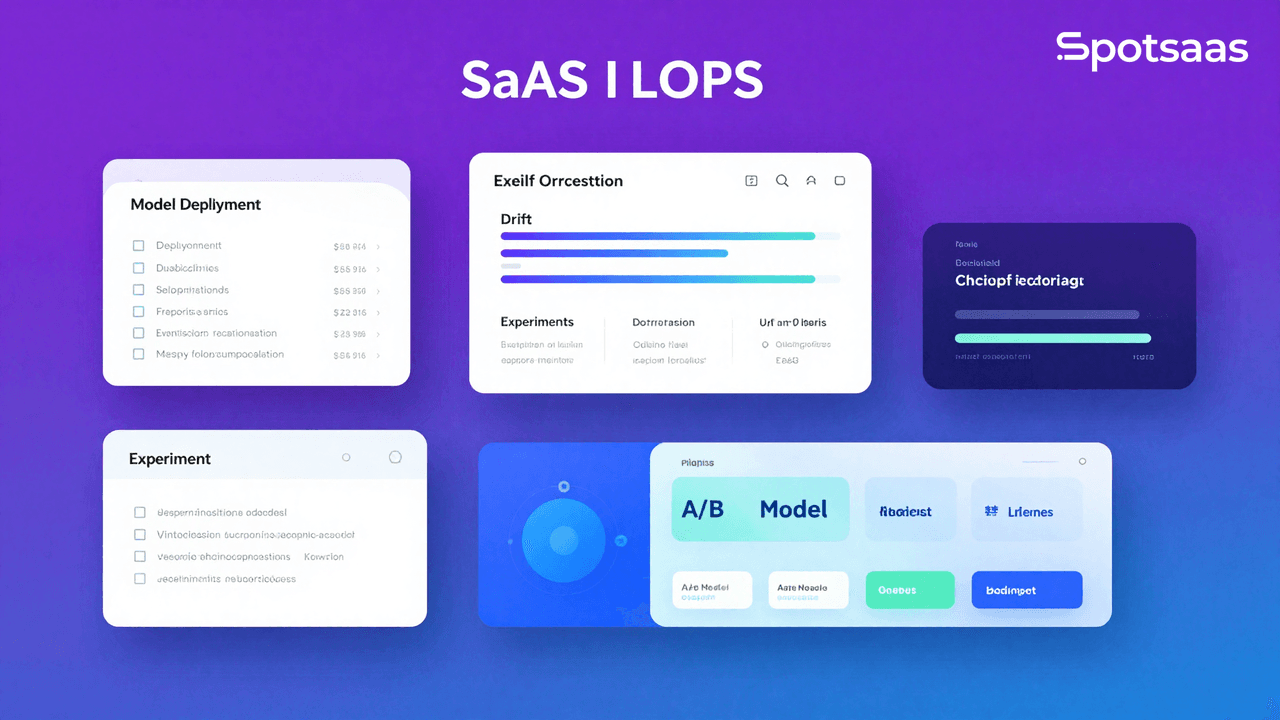
AI and machine learning are driving more of the innovation businesses ship today, and that’s pushed reliable MLOps (Machine Learning Operations) platforms from nice-to-have to necessary. MLOps bridges development and operations teams, taking the friction out of deploying, scaling, and managing ML models. Rather than juggling separate tools for each stage, these platforms handle data prep, training, deployment, and ongoing performance monitoring under one roof.
In 2026, picking the right MLOps platform is essential for businesses that want to successfully integrate AI into their workflows. With so many options on the market, knowing which features to prioritize and how to evaluate different platforms matters.
This guide walks through the key factors to weigh when choosing an MLOps platform for your machine learning projects.
What Is an MLOps Platform?
An MLOps platform is a suite of tools and frameworks built to manage the lifecycle of machine learning models, covering everything from data preparation and model development through deployment, monitoring, and scaling.
The goal of an MLOps platform is to automate the process of deploying machine learning models into production and keeping them operational once they’re there.
Key functions of MLOps:
| Component | Description |
|---|---|
| Data Management | Handling and preparing the data that will be used to train and test models. |
| Model Development | Training, validating, and fine-tuning machine learning models. |
| Deployment | Packaging the model for deployment into production environments. |
| Monitoring | Continuously tracking model performance to ensure it meets business objectives. |
| Retraining | Updating models as new data becomes available to maintain their accuracy and relevance. |
MLOps matters for businesses looking to scale their machine learning initiatives because it’s what keeps operations efficient and models reliable over time.
Why MLOps Platforms Matter in 2026
Managing ML models in production gets more complicated as adoption grows. A single machine learning project might pull in data scientists, engineers, and operations staff, each with their own preferred tools and way of working. Left uncoordinated, that fragmentation shows up as inefficiency, slower deployments, and models that underperform once they’re live.
MLOps platforms fix that by standardizing how models get deployed, monitored, and maintained. Handling these tasks by hand simply doesn’t scale anymore in 2026, particularly as AI systems take on a bigger role in day-to-day operations and decision-making.
The right MLOps platform helps businesses:
- Automate workflows: Reduce the manual effort needed to develop, deploy, and maintain models.
- Improve collaboration: Bridge the gap between data science, engineering, and operations teams.
- Enhance scalability: Scale machine learning models to handle growing data and increased user demand.
- Ensure reliability: Monitor models in real time to catch and address performance issues as they come up.
- Streamline governance: Meet regulatory requirements by standardizing model development and deployment processes.
Key Features to Look for in MLOps Platforms
When evaluating MLOps platforms, it matters to assess which features align with your business needs and technical requirements. Here are the features that matter most when selecting an MLOps platform:
End-to-End Workflow Automation
One of the main benefits of MLOps platforms is automating the entire machine learning lifecycle. Look for platforms that offer automation at every stage: data preparation, model development, deployment, monitoring, and retraining. Automation cuts down on manual tasks, which makes workflows faster and more reliable.
The platform should also support pipelines that can handle large-scale batch processing and real-time streaming data. That lets businesses keep operations running smoothly, regardless of the type of data they’re working with.
Model Versioning and Experiment Tracking
Managing multiple iterations of models is critical in machine learning projects. An MLOps platform should offer comprehensive model versioning that lets teams track the history of model updates, configurations, and performance metrics.
Experiment tracking lets data scientists compare different model versions, hyperparameters, and training datasets easily. It gives visibility into which versions are in production, which are under review, and which should be retired.
Data and Feature Management
Data is the backbone of machine learning models, and managing it well is key to successful deployment. Look for MLOps platforms with data management features, including data lineage, data validation, and versioning. The platform should also support feature stores, centralized repositories for storing and managing reusable features across models.
That keeps data consistent and reusable across different machine learning projects, so teams don’t have to recreate the same features for every new model.
CI/CD Integration
Model deployment stays smooth and reliable when the platform plugs into Continuous Integration/Continuous Deployment (CI/CD) systems. A CI/CD pipeline handles the testing, packaging, and rollout of models automatically, which keeps changes moving out fast without sacrificing safety.
Integrating with CI/CD lets businesses iterate faster and cuts the risk of human error during deployment. That matters most for large-scale enterprises that update models frequently to stay competitive.
Monitoring and Model Drift Detection
Deployment isn’t the finish line: models need ongoing performance monitoring, because they can degrade as the underlying data shifts over time (known as model drift). Look for platforms that alert you in real time to changes in model performance, accuracy, and data drift.
Drift detection features let teams catch when a model is no longer performing as expected and may need retraining. The platform should offer automated retraining workflows so the system can respond to drift and keep models current with minimal manual intervention.
Scalability and Resource Management
As machine learning models grow in size and complexity, the MLOps platform needs to scale to meet rising demand. Look for platforms with elastic scalability, where resources like computing, storage, and memory adjust automatically based on model usage and workload.
Effective resource management lets businesses scale models without over-provisioning, which drives up costs. The platform should also support distributed training and inference, so businesses can train large models on clusters of GPUs or TPUs without a hit to performance.
Security, Compliance, and Governance
Industries like healthcare and finance put sensitive data through their AI models, which makes security and compliance non-negotiable. Look for strong access control, encryption, and auditing capabilities that help models meet regulatory standards such as GDPR, HIPAA, or SOC 2.
Model governance features, such as audit trails, also let teams track the lifecycle of models and confirm they’re built, tested, and deployed according to standardized policies and procedures.
Integration with Existing Tools
Most organizations already run a mix of tools across data science, DevOps, and IT. Whatever MLOps platform you pick should connect cleanly with what’s already in place, be that cloud services, DevOps frameworks, or data management systems, so you’re not forced into ripping out and replacing your current tech stack just to adopt it.
Platforms that integrate with popular tools like Kubernetes, Apache Spark, and Git are more versatile, letting teams keep using the technologies they already know.
Considerations When Choosing an MLOps Platform
Beyond evaluating features, a few broader considerations can help guide your decision when choosing the right MLOps platform.
Define Your Business and Technical Requirements
No two businesses need the same thing from an MLOps platform: the scale of a company’s machine learning work, its team’s technical depth, and the use cases it’s solving for all shape what “right fit” looks like. Nail down your business goals and technical requirements before you start comparing platform options.
For instance, if your focus is real-time AI applications, you’ll need a platform that supports low-latency deployments and rapid inference.
Likewise, assess whether your team has the technical skills to work with complex MLOps platforms, or whether you need a more user-friendly interface with no-code or low-code options.
Evaluate Your Team’s Workflow
A good MLOps platform makes it easier for data scientists, machine learning engineers, and operations staff to work together, so weigh how well a given option slots into how your team already operates.
Does it provide the right collaboration tools? Can it automate the tasks your team finds most time-consuming?
For businesses with complex workflows, platforms with customizable pipelines, automated notifications, and collaboration dashboards can meaningfully improve productivity.
Consider Vendor Lock-In
If you choose a platform tied to a specific cloud provider or vendor, weigh the risks of vendor lock-in. A proprietary platform may offer deep integration with specific tools, but it can limit your flexibility to move models and data across different environments.
Some MLOps platforms are cloud-agnostic, letting you deploy and manage models across multiple cloud services or on-premises infrastructure, which gives you more control over your operations.
Cost and Budget Constraints
MLOps platforms vary widely on cost, with pricing models ranging from pay-as-you-go to subscription-based plans. Consider both the upfront costs and the long-term expenses of running your models on the platform, including data storage, compute resources, and the number of models deployed.
Balancing cost against the platform’s features and scalability is what makes an MLOps strategy cost-effective over time.
Conclusion: Making the Right Choice for MLOps
Choosing the right MLOps platform in 2026 matters for businesses that want to run machine learning models in their operations at scale. The right platform simplifies workflows, improves teamwork, and provides the tools needed to deploy and manage reliable models in production.
To make the best choice, businesses should focus on:
| Factor | Description |
|---|---|
| End-to-End Automation | A platform that automates the full ML lifecycle, from data preparation to monitoring, saves time and reduces errors. |
| Scalability | Ensure the platform can grow with your data, models, and business needs. |
| Security and Compliance | Choose platforms with strong governance, especially if you’re working with sensitive data. |
| Integration | Ensure it fits cleanly with your existing tools and workflows. |
| Cost | Weigh the costs of infrastructure, compute resources, and maintenance against the benefits the platform provides. |
The best MLOps platform is the one that fits your organization’s specific needs, whether that’s real-time AI applications, large model deployments, or meeting strict industry standards. By evaluating each platform’s features, functionality, and scalability, you can make sure your machine learning operations run smoothly and effectively in 2026 and beyond.
Related Articles
AI Software
How AI-Powered ATS Tools Boost Diversity in Hiring — Real DEI Use Cases (2026)
Continue reading →
AI Software
5 Powerful AI Features Revolutionizing Hiring Workflows in 2026
Continue reading →
AI Software
How To Choose The Best Image Recognition Software For 2026
Continue reading →
AI Software
Best AI Resume Screening Tools in 2026 to Hire Faster
Continue reading →