
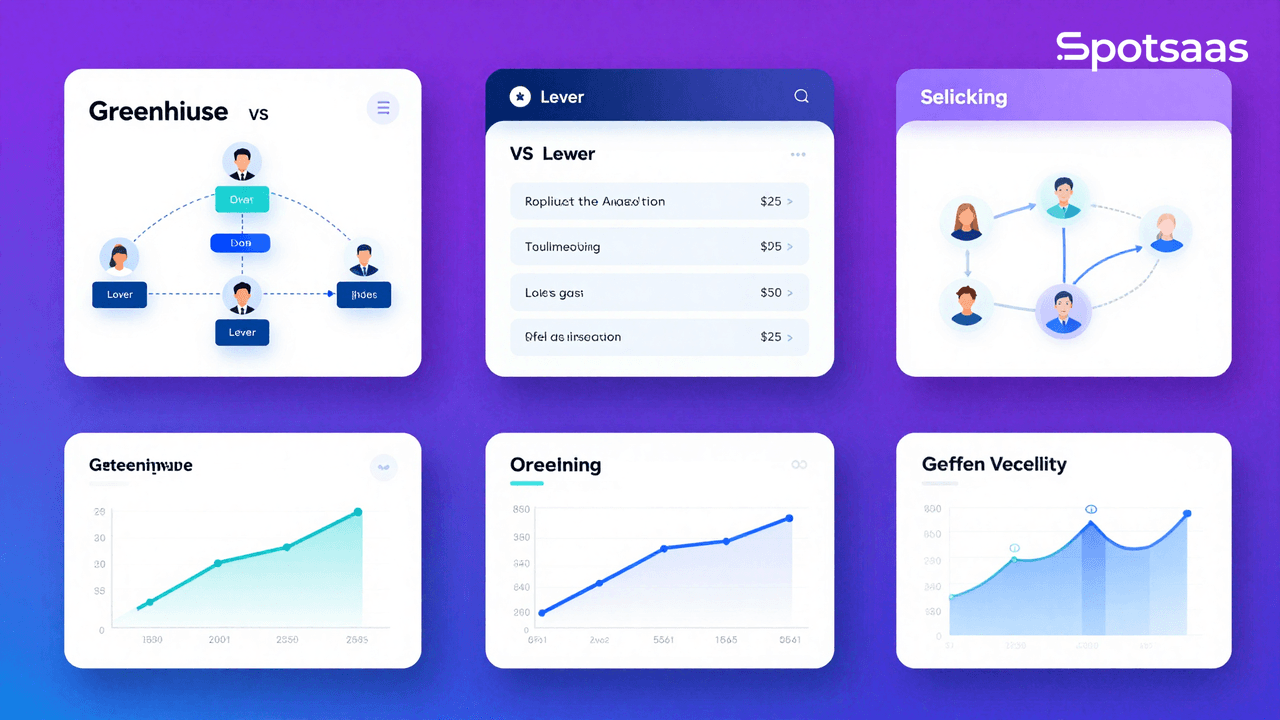
Choosing between Greenhouse vs Lever is one of the most important decisions a recruiting team can make in 2026. Both platforms rank among the top applicant tracking systems on the market, yet they are built around fundamentally different hiring philosophies. This in-depth comparison breaks down features, pricing, integrations, and real-world use cases so you can confidently choose the right ATS for your team.
What Is an Applicant Tracking System and Why Does It Matter?
Quick Answer: An Applicant Tracking System (ATS) is software that automates and organizes the full recruitment lifecycle — from job posting and application collection to interview scheduling and offer management. The right ATS reduces time-to-hire, improves candidate experience, and gives hiring teams data-driven insight into their pipeline.
Modern recruiting teams cannot afford to manage hiring through spreadsheets or email threads. An ATS centralizes every touchpoint, keeps stakeholders aligned, and ensures no qualified candidate falls through the cracks.
According to SHRM (2026), over 98% of Fortune 500 companies rely on an ATS to manage their hiring process. But enterprise-grade complexity is not always what a 30-person startup needs. That gap in requirements is exactly why the Greenhouse vs Lever debate matters so much.
Both tools promise faster hiring, better collaboration, and stronger candidate pipelines. How they deliver on those promises — and for whom — is where the real differences emerge.
Greenhouse Overview: Built for Structured, Scalable Hiring
Greenhouse is a comprehensive ATS engineered around the philosophy of structured hiring. Before a role is even opened, Greenhouse pushes teams to define evaluation criteria, standardize interview questions, and establish scorecards for every stage of the process.
This approach reduces unconscious bias, improves hiring consistency, and makes it easier to onboard new hiring managers into an existing process. Greenhouse is particularly popular with mid-market and enterprise companies that run high-volume, multi-department hiring.
As of 2026, Greenhouse serves over 7,500 companies worldwide and is recognized for its deep configurability, robust reporting suite, and one of the largest integration ecosystems in the ATS space — with over 500 pre-built integrations.
Key Greenhouse Features
- Structured interview kits with standardized scorecards
- Custom hiring pipelines per role and department
- Advanced DEI reporting and anonymized screening tools
- Offer management and approval workflows
- Onboarding module to bridge hiring and HR
- 500+ integrations including HRIS, background check, and assessment tools
- Real-time hiring analytics and custom dashboards
Lever Overview: Built for Relationship-Driven Recruiting
Lever combines a full ATS with a built-in Candidate Relationship Management (CRM) system, creating what the company calls a Talent Acquisition Suite. Where Greenhouse emphasizes process structure, Lever emphasizes nurturing candidate relationships over time.
Lever is designed for recruiting teams that prioritize proactive sourcing, long-term talent pipelines, and personalized outreach. Its unified ATS and CRM architecture means recruiters can move candidates seamlessly from a sourced lead to an active applicant without switching tools.
According to Lever’s 2026 platform documentation, the system is used by over 5,000 companies globally, with particular adoption among growth-stage startups and mid-market technology firms that run lean recruiting teams with high sourcing demands.
Key Lever Features
- Native ATS + CRM in a single platform (LeverTRM)
- Visual pipeline with drag-and-drop candidate management
- Automated nurture campaigns for passive candidates
- Two-way email sync and communication tracking
- Interview scheduling with calendar integration
- Diversity reporting and sourcing analytics
- 300+ integrations including LinkedIn, Slack, and Zoom
Greenhouse vs Lever: Head-to-Head Feature Comparison
The table below provides a direct comparison of both platforms across the dimensions that matter most to recruiting teams in 2026.
| Feature | Greenhouse | Lever |
|---|---|---|
| Core Product Type | ATS with structured hiring framework | ATS + CRM (Talent Relationship Management) |
| Best For | Mid-market to enterprise, high-volume hiring | Growth-stage startups, proactive sourcing teams |
| Interview Scorecards | Advanced, fully customizable | Available, less granular |
| Candidate CRM | Limited (add-on via integrations) | Native, fully integrated |
| Pipeline Visualization | Stage-based list view | Visual kanban-style board |
| DEI Tools | Strong — anonymized screening, DEI dashboards | Moderate — sourcing diversity reports |
| Reporting and Analytics | Extensive custom reporting | Strong sourcing and pipeline analytics |
| Onboarding Module | Yes — native onboarding included | No — requires HRIS integration |
| Integrations | 500+ | 300+ |
| Ease of Setup | Moderate — requires configuration time | Faster initial setup |
| Mobile App | Yes | Yes |
| Pricing Model | Custom (per employee or per seat) | Custom (tiered by company size) |
| Free Trial | Demo only | Demo only |
How Does Greenhouse Handle Structured Hiring?
Greenhouse’s structured hiring methodology is its defining competitive advantage. According to Dr. John Sullivan, HR thought leader and Professor at San Francisco State University, structured hiring — where every interviewer uses the same criteria to evaluate candidates — reduces hiring bias by up to 50% compared to unstructured interview processes.
Greenhouse operationalizes this by requiring hiring teams to build scorecards before a job opens. Each scorecard defines the attributes being evaluated, the weight of each attribute, and the specific questions tied to it. Interviewers submit independent scores before seeing colleague feedback, reducing groupthink.
This makes Greenhouse especially powerful for companies that want repeatable, auditable hiring decisions — a critical requirement for regulated industries, public companies, and organizations with active DEI commitments.
How Does Lever’s CRM Capability Change the Recruiting Process?
Lever’s native CRM capability fundamentally changes how recruiting teams build talent pipelines. Rather than treating candidates as one-time applicants, Lever allows recruiters to cultivate relationships with passive candidates over weeks or months before a role opens.
Recruiters can tag candidates by skill set, add them to automated nurture sequences, and track every interaction — emails, calls, LinkedIn messages — within a single record. When a relevant role opens, those relationships are already warm.
According to LinkedIn’s Global Talent Trends Report (2026), 73% of candidates are passive job seekers who are not actively applying but are open to the right opportunity. Lever’s CRM is specifically built to convert this audience, giving it a meaningful edge over Greenhouse for sourcing-heavy teams.
Greenhouse vs Lever Pricing: What Should You Expect to Pay?
Neither Greenhouse nor Lever publishes transparent pricing on their websites. Both platforms operate on custom pricing models based on company size, number of users, and required features. However, based on widely reported market data as of 2026, here is what teams typically encounter.
| Platform | Typical Starting Price | Pricing Model | Enterprise Tier |
|---|---|---|---|
| Greenhouse | ~$6,000–$10,000/year for SMBs | Per employee or per seat | Custom — scales with headcount |
| Lever | ~$3,500–$7,500/year for SMBs | Tiered by company size | Custom — includes LeverTRM suite |
Pricing shown is approximate; check vendor websites for current rates.
Greenhouse tends to carry a higher base cost, reflecting its deeper feature set and enterprise configurability. Lever is generally more accessible for smaller teams, particularly those on the LeverTRM entry tier.
Both platforms require annual contracts and do not offer self-serve sign-up. Teams should budget for implementation time and potential onboarding fees in addition to the software license.
Which Platform Has Better Integrations?
Integration depth is a decisive factor when choosing an ATS, since most recruiting stacks include background check providers, HRIS platforms, assessment tools, video interviewing software, and job boards.
Greenhouse leads with over 500 native integrations, covering nearly every tool in the modern HR tech stack. Its partner marketplace includes HRIS platforms like Workday, BambooHR, and ADP, as well as assessment vendors, payroll providers, and e-signature tools.
Lever offers over 300 integrations, which covers most common use cases but may require custom API work for less common tools. Lever’s open API is well-documented, and its developer community is active, making custom builds manageable for technical teams.
For enterprise organizations with complex HR technology ecosystems, Greenhouse’s integration breadth gives it a clear advantage. For startups running lean stacks, Lever’s 300 integrations will cover virtually every scenario they encounter.
Greenhouse vs Lever: Analytics and Reporting Compared
Both platforms offer reporting capabilities, but their focus areas differ significantly based on their core philosophies.
Greenhouse provides one of the most comprehensive reporting suites in the ATS category. Teams can track time-to-hire, source effectiveness, interviewer performance, offer acceptance rates, pipeline health by department, and DEI metrics at every stage of the funnel. Custom report builder allows non-technical users to build dashboards without SQL knowledge.
Lever’s analytics emphasize sourcing performance and pipeline velocity. Its visual reports make it easy to understand where candidates are coming from, how long they spend at each stage, and which nurture campaigns are converting. For sourcing-focused teams, Lever’s analytics are highly intuitive and actionable.
For teams that need board-level reporting on hiring health, Greenhouse is the stronger choice. For teams optimizing outbound sourcing strategies, Lever’s analytics align more naturally with their workflows.
Greenhouse vs Lever vs Ashby: How Does a Third Option Change the Decision?
Ashby has emerged as a significant third competitor in the ATS space as of 2026, particularly for high-growth technology companies. Unlike Greenhouse and Lever, Ashby was built natively with advanced analytics and automation at its core — features that older platforms have had to bolt on over time.
Ashby combines ATS, CRM, scheduling automation, and analytics in a single platform, positioning itself as a modern alternative to both Greenhouse and Lever. It is gaining traction among Series A to Series C startups that want enterprise-grade reporting without enterprise-grade complexity.
However, Ashby is a newer platform with a smaller integration ecosystem and a less established track record at large enterprise scale. Teams above 1,000 employees tend to still favor Greenhouse for its proven reliability and compliance depth.
Candidate Experience: How Each Platform Treats Applicants
Candidate experience has become a critical ATS evaluation criterion. A poor application process directly impacts employer brand and offer acceptance rates.
Greenhouse offers highly customizable application forms and career pages that can be branded to match company identity. Its interview scheduling tools include self-scheduling links, reducing friction for candidates and coordinators alike. Automated status update emails keep candidates informed at each stage.
Lever’s candidate experience strength lies in its communication tools. Two-way email sync means candidates receive personalized, timely responses that feel human rather than automated. The platform’s nurture sequences allow recruiting teams to maintain warm relationships with candidates even before they formally apply.
According to CareerPlug’s Candidate Experience Report (2026), 60% of job seekers have abandoned an application mid-process due to length or complexity. Both platforms address this with streamlined apply flows, but Lever’s communication-first design tends to generate stronger candidate satisfaction scores among relationship-driven recruiting teams.
How to Choose Between Greenhouse and Lever: A Step-by-Step Decision Framework
- Define your hiring volume: If you are making 50+ hires per year across multiple departments, Greenhouse’s structured workflows and reporting depth will serve you better. For teams making fewer than 30 hires per year with heavy sourcing needs, Lever is likely a stronger fit.
- Assess your CRM requirements: If proactive sourcing and passive candidate nurturing are central to your recruiting strategy, Lever’s native CRM eliminates the need for a separate tool. If CRM is secondary, Greenhouse’s core ATS strength may be sufficient.
- Evaluate your DEI commitments: For organizations with formal DEI programs requiring anonymized screening, structured scoring, and executive-level reporting, Greenhouse is the stronger platform.
- Review your existing tech stack: Map your current HRIS, background check, assessment, and payroll tools against each platform’s integration marketplace. If critical tools are only available on one platform, that may be decisive.
- Consider your team’s technical capacity: Greenhouse requires more upfront configuration but rewards investment with powerful customization. Lever is faster to deploy and easier for non-technical recruiting teams to operate day-to-day.
- Request demos with real hiring scenarios: Both platforms offer tailored demos. Bring actual job descriptions, pipeline scenarios, and reporting questions to evaluate how each tool handles your specific workflows.
- Negotiate contract terms carefully: Both platforms require annual contracts. Negotiate for implementation support, training hours, and integration assistance before signing. Ask about price locks for headcount growth.
Three Unique Factors Competitors Don’t Cover
Interviewer Experience and Training Tools
Greenhouse includes built-in interviewer training resources that help hiring managers understand how to use scorecards, avoid bias triggers, and conduct legally defensible interviews. This is a feature most ATS comparison articles overlook entirely, but it has significant downstream impact on hiring quality and legal compliance.
Lever does not offer equivalent in-platform interviewer training, which means companies using Lever must source this capability externally.
Data Ownership and Export Portability
When evaluating long-term ATS partnerships, data portability is a critical but rarely discussed consideration. Greenhouse provides comprehensive data export tools that allow teams to extract full candidate histories, notes, and evaluation data in structured formats. This matters enormously when migrating platforms or conducting compliance audits.
Lever also offers data export functionality, but users have reported more friction in extracting historical CRM interaction data compared to standard applicant records. Teams with long-term data retention requirements should test export workflows during the trial phase.
Compliance and Legal Hiring Safeguards
For companies operating across multiple jurisdictions, compliance features inside the ATS are non-negotiable. Greenhouse offers GDPR compliance tools, configurable data retention policies, EEO/OFCCP reporting for US federal contractors, and audit trail functionality for every hiring decision.
Lever provides GDPR and CCPA compliance features, but its compliance toolkit is less comprehensive for organizations with US federal contractor obligations. Teams in regulated industries or government contracting should prioritize Greenhouse’s compliance architecture.
Pros and Cons Summary
| Platform | Pros | Cons |
|---|---|---|
| Greenhouse | Deep structured hiring framework; best-in-class DEI tools; 500+ integrations; onboarding module; strong compliance features | Higher cost; longer setup time; CRM requires integrations; steeper learning curve |
| Lever | Native ATS + CRM; faster deployment; strong passive candidate nurturing; intuitive UI; better for sourcing teams | Fewer integrations; lighter DEI toolkit; no native onboarding; less granular scorecards |
Frequently Asked Questions
What is the main difference between Greenhouse and Lever?
Greenhouse is a structured hiring-focused ATS best suited for mid-market and enterprise teams running high-volume, process-driven recruitment. Lever combines ATS and CRM functionality into a single platform, making it ideal for sourcing-heavy teams that prioritize building long-term candidate relationships before roles open.
Which ATS is better for startups in 2026?
Lever is generally better for early-stage and growth-stage startups because it deploys faster, requires less configuration, and includes native CRM tools that help small recruiting teams build proactive pipelines. Greenhouse becomes more valuable as companies scale beyond 200 employees and need more structured, auditable hiring processes.
Does Greenhouse have a CRM?
Greenhouse does not include a native CRM in its core platform. CRM functionality can be added through third-party integrations from Greenhouse’s partner marketplace. Teams that need robust CRM capabilities natively built into their ATS should consider Lever or a dedicated CRM tool alongside Greenhouse.
Is Lever or Greenhouse easier to use?
Lever is generally considered easier to use out of the box, with a more intuitive visual interface and faster onboarding for new users. Greenhouse has a steeper initial learning curve due to its deeper configurability, but experienced recruiting operations teams often prefer its granular control once fully implemented.
How much does Greenhouse cost in 2026?
Greenhouse does not publish public pricing. Based on reported market data, small and mid-market companies typically pay between $6,000 and $10,000 per year at entry tiers, with enterprise pricing scaling significantly based on headcount and feature requirements. Custom quotes are available through their sales team.
How much does Lever cost in 2026?
Lever’s pricing is also custom and not publicly listed. Entry-level plans for smaller teams typically start between $3,500 and $7,500 per year. Pricing scales with company size and the scope of LeverTRM features required. Both annual and multi-year contracts are available with negotiated terms.
Which platform has better DEI features?
Greenhouse has stronger DEI tools overall, including anonymized application screening, structured scorecards that reduce evaluator bias, and detailed DEI funnel reporting for executive teams. Lever offers sourcing diversity analytics but does not match Greenhouse’s depth in bias reduction tooling or compliance-grade DEI reporting.
Can Greenhouse and Lever integrate with Workday or BambooHR?
Yes, both platforms integrate with major HRIS systems including Workday, BambooHR, ADP, and SAP SuccessFactors. Greenhouse offers more pre-built HRIS integrations overall due to its larger partner marketplace. Lever supports the most common HRIS integrations and provides API access for custom connections to less common systems.
Which ATS is better for high-volume hiring?
Greenhouse is the stronger choice for high-volume hiring environments. Its structured workflows, customizable pipelines per department, advanced interview scheduling, and comprehensive analytics are purpose-built for teams managing hundreds of open roles simultaneously across multiple business units and geographies.
How does Lever’s CRM compare to standalone recruiting CRM tools?
Lever’s CRM is robust enough for most recruiting teams and eliminates the need for a separate tool. It supports automated nurture campaigns, interaction tracking, and pipeline segmentation. Dedicated CRM platforms like Beamery or Avature offer more advanced marketing-style automation, but for most teams Lever’s native CRM provides sufficient functionality without added cost or complexity.
Final Verdict: Greenhouse vs Lever — Which Should You Choose?
If your organization prioritizes structured, bias-reduced hiring with deep analytics and compliance capabilities, Greenhouse is the stronger investment. It is purpose-built for teams that want repeatable, auditable hiring processes and are willing to invest in proper configuration to achieve them.
If your recruiting strategy is built around proactive sourcing, passive candidate nurturing, and relationship-driven pipelines, Lever gives you a more unified and intuitive toolkit. Its native CRM eliminates tool sprawl and makes it easier for lean teams to punch above their weight in talent acquisition.
The right choice depends entirely on your team size, hiring philosophy, and technical requirements. Both platforms are excellent — the question is which one aligns with how your team actually recruits.
Ready to compare Greenhouse, Lever, and dozens of other ATS platforms side by side? Explore verified reviews, feature breakdowns, and user ratings on SpotSaaS to find the applicant tracking system that fits your exact hiring needs in 2026.
Related Articles
Applicant Tracking Software
Hidden ATS Costs in 2026: What Every HR Team Must Know Before Buying
Continue reading →
Applicant Tracking Software
How to Measure the Real ROI of Your ATS in 2026
Continue reading →
Applicant Tracking Software
ATS Tools for Small Teams: Hire Faster and Smarter with Less Effort
Continue reading →
AI Software
AI Matching in ATS: What It Is, How It Works and Why It Matters for Hiring
Continue reading →