

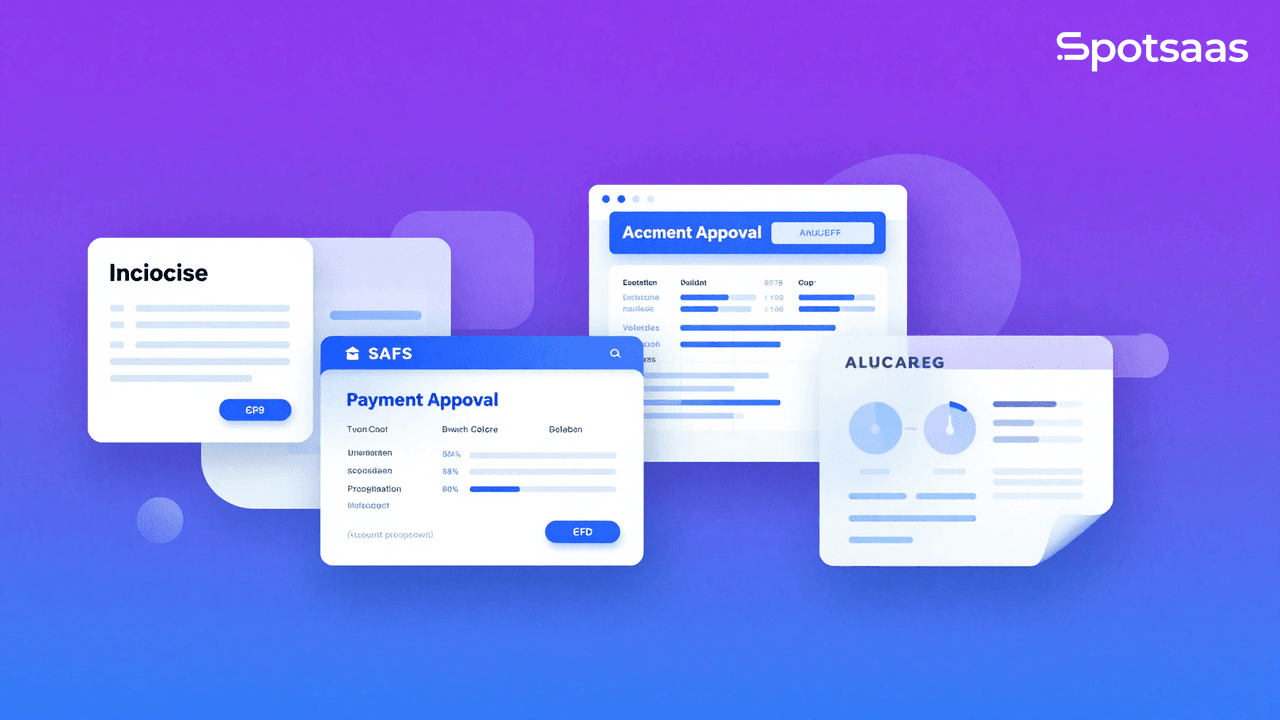
What is Accounts Payable Software
Accounts payable (AP) software automates the way a business handles invoices and payments to vendors and suppliers. Instead of routing paper invoices for manual approval and keying payment data by hand, an accounting or finance team uses the software to track every invoice from receipt through payment, cutting down on errors and freeing up staff time.
A good AP system also gives finance leaders a real-time picture of the business: cash flow, what’s still owed, and how reliably each vendor gets paid. That visibility supports better decisions, stronger negotiating positions with suppliers, and a clearer read on overall financial health.
This guide walks through what to look for in AP software, the factors that should shape your decision, the different types of AP systems on the market, and best practices for rolling one out.
Key Features to Consider Accounts Payable Automation Software
A handful of features separate a genuinely useful AP platform from one that just digitizes the same manual work. These are the ones worth checking for before you buy:
| Feature | Description | Benefits | Compliance/Security |
|---|---|---|---|
| Invoice Processing | Automate workflow from receiving to posting invoices. | Efficiency in data extraction, invoice matching, exception handling. | N/A |
| Automated Approvals and Workflows | Creation of automated approval workflows based on rules. | Reduce manual effort and error risk. | N/A |
| Payment Processing | Range of payment options and automated processing. | Simplified scheduling and reconciliation of payments. | N/A |
| Reporting and Analytics | Real-time financial visibility with various tools. | Insightful decision-making via dashboards and reports. | N/A |
| Integration Capabilities | Integration with various software systems. | Seamless data transfer, eliminates manual entry. | N/A |
| Security and Compliance | Compliance with standards like PCI-DSS, SOC 2. | Secure data, customizable access controls. | PCI-DSS, SOC 2 |
Between them, these features cover the full lifecycle of an invoice: capturing it, routing it for approval, paying it, and reporting on it afterward. Invoice processing and automated approval workflows cut down the manual effort and error risk that come with routing paper or PDFs by hand. Payment processing tools simplify scheduling and reconciliation, while reporting and analytics give finance teams real-time visibility through dashboards instead of static spreadsheets. Integration capabilities keep data moving between systems without manual re-entry, and built-in security and compliance, including standards like PCI-DSS and SOC 2, protect sensitive vendor and payment data with customizable access controls. Together, this is what actually moves the needle on efficiency and accuracy in the AP department.
Factors to Consider when Choosing Accounts Payable Automation Software
Beyond the feature list, a handful of practical factors determine whether a given AP platform will actually fit your business, both functionally and financially:
| Consideration | Description | Importance | Details |
|---|---|---|---|
| Business Needs and Requirements | Evaluate AP processes, identify improvement areas. | Crucial for targeted efficiency and error minimization. | Focus on manual data entry, error rates, processing times. |
| Scalability | Choose software that grows with your business. | Essential for handling increased volumes and functionality. | Applicable for both small and large enterprises. |
| User-Friendliness and Ease of Use | Simple, intuitive interface for all users. | Facilitates quick adaptation and optimal use of software. | Important for non-technical users. |
| Implementation and Training | Ensure straightforward implementation and training. | Key for effective software deployment and usage. | Software provider should offer comprehensive support. |
| Customer Support and Service | Reliable support system from the software provider. | Important for timely problem resolution and assistance. | Multiple support channels and dedicated support team. |
| Total Cost of Ownership | Consider all costs associated with the software. | Essential for budgeting and value assessment. | Includes purchase, maintenance, upgrades, and support costs. |
Types of Accounts Payable Software
AP automation software comes in a few distinct deployment models, and each carries its own trade-offs in control, cost, and flexibility. Knowing the differences helps you narrow the field faster:
| Type of Software | Description | Advantages | Considerations |
|---|---|---|---|
| On-premise Software | Installed locally on business servers; network access only. | Greater control and security. | Higher upfront investment in hardware and IT infrastructure. |
| Cloud-based Software | Hosted on remote servers; internet access. | Flexibility, scalability, cost-effective, remote access. | Dependent on internet connectivity. |
| Hybrid Software | Combines on-premise and cloud-based features. | Local control with cloud-based benefits. | Can require complex setup and maintenance. |
| ERP-based Software | Integrated with Enterprise Resource Planning system. | Comprehensive financial data overview, automated data transfer. | Potentially complex and expensive. |
| Standalone Software | Specific to AP processes; not integrated with other systems. | Affordable, user-friendly. | Limited functionality compared to ERP-integrated software. |
Best Practices for Implementing Accounts Payable Software
Rolling out AP software touches finance, IT, and every vendor relationship you have, so it pays to plan the transition rather than flip a switch. A few practices consistently make implementation smoother:
| Step | Activity | Key Points |
|---|---|---|
| Develop a Plan and Timeline | Outline the implementation process and timeline. | Include milestones like data migration, testing, and training. |
| Assign a Project Team | Set up a team from IT, finance, and other departments. | Ensure understanding of goals, timeline, and budget. |
| Train Users and Stakeholders | Conduct training on software features and best practices. | Focus on user adoption with ongoing support. |
| Communicate with Vendors and Suppliers | Inform about changes in invoice submission and payment processes. | Ensure clarity to minimize transition disruptions. |
| Monitor and Measure Success | Evaluate the software’s performance post-implementation. | Track metrics and adjust for efficiency and accuracy. |
Businesses that follow a structured rollout like this tend to see the payoff faster: less manual data entry, fewer errors, and quicker payment cycles.
Conclusion
AP software earns its keep by taking the manual work out of invoice and payment handling, but only if you pick a platform that actually matches how your business operates. The wrong choice can add complexity instead of removing it.
Throughout this guide, we covered the factors worth weighing, including cost, scalability, integration options, ease of use, security, ongoing support, and how customizable the platform is. We also walked through the practical side of a rollout: building a plan and timeline, assigning a project team, training the people who will actually use the system, keeping vendors informed, and tracking results after go-live.
It’s worth taking the time to properly evaluate a few options before committing. The right AP software pays off through real cost savings, better accuracy, and clearer visibility into your financial data, and none of that happens automatically just because you bought software.
Start by mapping your current AP process and pinpointing exactly where it breaks down before you shop for a replacement. Give equal weight to the rollout plan and user adoption, not just the feature list, since that’s what determines whether the software actually gets used. Done right, the switch to AP software should make your accounts payable process measurably faster and more reliable.

- Independent picks for exactly what you just read about
- Matched to your team size & needs
- Vendors don't pay for placement
Step 1 of 4
How big is your team?
We tailor recommendations to companies your size.















Related Articles
Accounting Software
How To Choose The Best Procure-to-Pay Software For 2026
Continue reading →
Accounting Software
Best QuickBooks Alternatives in 2026: Top Accounting Software Options
Continue reading →

Accounting Software
How To Choose The Best Interior Design Software For 2026
Continue reading →
Accounting Software
Free Design Tools: Say Goodbye to Boring Invitations in 2026
Continue reading →