
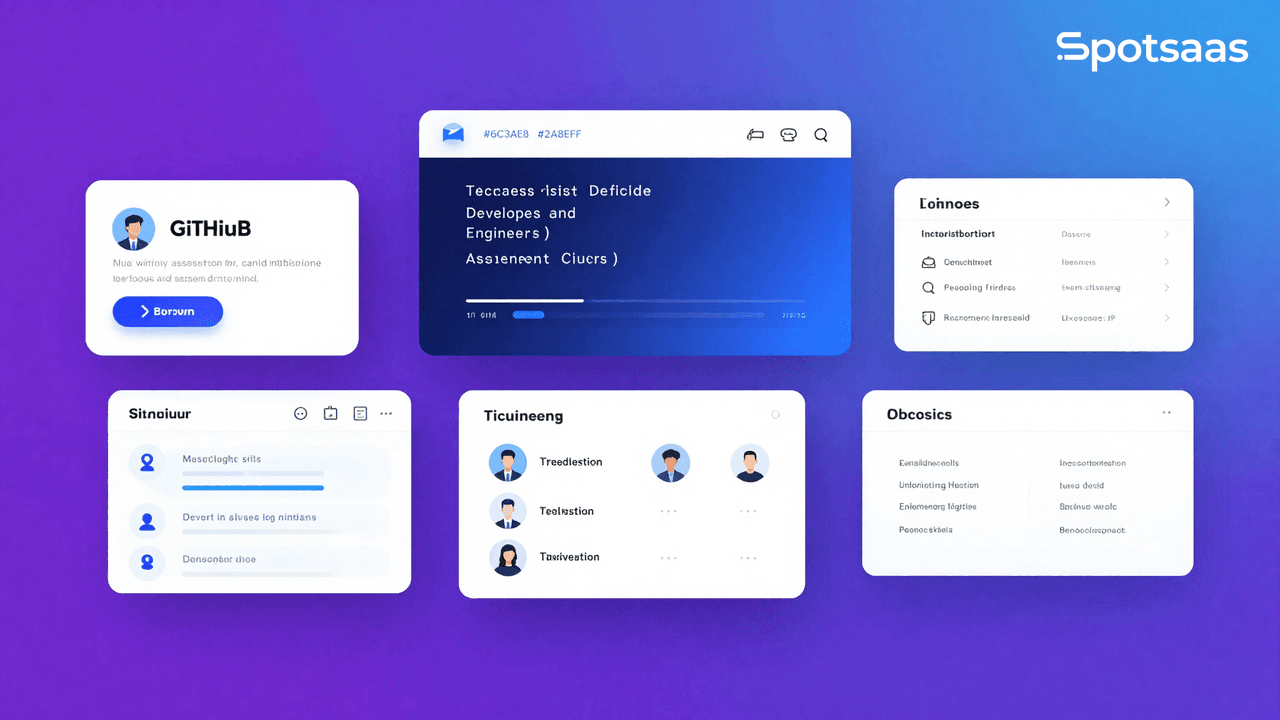
Hiring developers in 2026 is one of the most technically demanding recruiting challenges any engineering manager or talent team will face. The best ATS tools for hiring developers go far beyond basic resume tracking — they integrate with GitHub, connect to coding assessment platforms, and give every hiring stakeholder full visibility into a candidate’s technical depth.
If your current ATS was built for general HR workflows, it is almost certainly costing you top engineering talent to faster-moving competitors.
What Makes an ATS Good for Hiring Developers?
Quick Answer: A developer-focused ATS is purpose-built for technical hiring workflows. It integrates natively with coding assessment tools like HackerRank or Codility, supports GitHub profile sourcing, enables structured technical interview scorecards, and gives engineering managers real-time collaboration access — dramatically reducing time-to-hire for software engineering roles.
Generic applicant tracking systems were designed for high-volume, relatively uniform hiring. Developer recruitment is neither. The skills are nuanced, the assessment methods are highly specialized, and the key stakeholders — engineering leads, CTOs, and technical interviewers — need direct access to candidate data without navigating layers of HR-specific terminology.
According to LinkedIn Talent Solutions (2026), 70% of companies identify finding qualified software engineers as their single greatest hiring challenge. Without a system purpose-built for technical hiring, recruiting teams waste significant time manually transferring candidate data between disconnected tools and losing top candidates to competitors who move faster.
The right ATS consolidates sourcing, assessment, scheduling, feedback collection, and offer management into one coherent workflow — one built specifically around how developer hiring actually works in practice.
Why Does Developer Hiring Demand a Specialized ATS?
Standard ATS platforms optimize for volume. Developer hiring optimizes for precision. These are fundamentally different problems that require fundamentally different tooling, and conflating them is one of the most costly mistakes a technical recruiting team can make.
According to Dr. John Sullivan, Professor of Management at San Francisco State University and widely cited HR thought leader, “Technical recruiting fails most often not because of sourcing, but because of poor collaboration between HR systems and engineering teams.” A developer-ready ATS closes that gap by making engineering managers first-class users of the platform.
According to the Society for Human Resource Management (SHRM, 2026), the average cost-per-hire for a software engineer exceeds $28,000 when factoring in recruiter time, assessment tools, and productivity loss during vacancy. A purpose-built ATS reduces that figure significantly by compressing the hiring timeline and eliminating manual handoffs between tools.
Developer candidates also behave differently from general applicants. They expect fast responses, technically literate outreach, and a hiring process that respects their time. An ATS that cannot automate technical screening or coordinate async interview scheduling will create friction that drives top engineers away.
Key Features to Look for in a Developer-Focused ATS
Not all ATS platforms are created equal when it comes to technical hiring. Before evaluating any tool, engineering managers and recruiters should align on a core feature checklist that reflects how developer hiring actually operates.
- Native coding assessment integrations: Direct connections to platforms like HackerRank, Codility, or CoderPad eliminate manual score transfers and keep all candidate data centralized.
- GitHub and portfolio sourcing: The ability to source and evaluate candidates based on public code repositories, not just resumes, is a critical differentiator for engineering roles.
- Structured technical interview scorecards: Customizable evaluation frameworks that align with engineering competencies ensure consistent, bias-reduced decision-making across hiring panels.
- Engineering manager access and collaboration: Technical hiring stakeholders need real-time visibility into pipeline status, candidate notes, and assessment results without being dependent on HR intermediaries.
- Async video and interview scheduling automation: Developer candidates are often employed and time-constrained. Automated scheduling and async options reduce drop-off rates substantially.
- Pipeline analytics and time-to-hire reporting: Granular reporting by role, department, or hiring stage helps teams identify bottlenecks specific to engineering pipelines.
- Offer management and e-signature integration: A streamlined offer workflow reduces the gap between verbal acceptance and signed offer — a critical window where candidates can be poached.
Top ATS Tools for Hiring Developers in 2026: Comparison Table
The table below compares the leading ATS platforms evaluated specifically for developer hiring workflows, including integration depth, pricing transparency, and best-fit use case as of 2026.
Pricing shown is approximate; check vendor websites for current rates.
Best ATS Tools for Hiring Developers: In-Depth Reviews
1. Greenhouse — Best Overall ATS for Technical Hiring Teams
Greenhouse has become the benchmark ATS for engineering-intensive companies. Its structured hiring framework is uniquely well-suited to developer recruiting because it enforces consistency across every interview stage — something that ad hoc hiring processes consistently fail to do.
The platform integrates directly with HackerRank, Codility, and CodeSignal, allowing assessment scores to flow back into candidate profiles automatically. Engineering managers receive real-time notifications and can submit scorecard feedback directly from Slack or email without logging into a separate system.
Greenhouse also offers one of the most comprehensive analytics suites in the market, including funnel conversion rates by role, source effectiveness, and interviewer calibration data. For organizations serious about improving technical hiring outcomes over time, this level of insight is invaluable. Learn more at greenhouse.com.
2. Lever — Best ATS for High-Growth Tech Startups
Lever combines ATS functionality with a native CRM, making it exceptionally strong for companies that need to build long-term talent pipelines for hard-to-fill engineering roles. Rather than treating every hiring cycle as isolated, Lever lets teams nurture passive developer candidates over months before roles open.
The platform’s two-way email sync, LinkedIn Recruiter integration, and customizable nurture sequences make it a standout choice for technical sourcing teams. Lever’s visual pipeline view is also notably intuitive for engineering managers who are not regular users of HR systems.
3. Workable — Best ATS for SMBs Scaling Developer Hiring
Workable is one of the few mid-market ATS platforms that has invested meaningfully in developer-specific features without requiring an enterprise contract. Its GitHub profile import feature allows recruiters to pull public repository data directly into candidate profiles, giving technical interviewers an immediate view of coding style and project history.
Workable also offers one-click job posting to over 200 boards, AI-powered candidate suggestions, and a mobile app that keeps hiring managers engaged even when they are between meetings. For SMBs competing against larger employers for developer talent, Workable offers a competitive edge at an accessible price point. Explore the platform at workable.com.
4. Ashby — Best ATS for Lean Technical Teams That Value Data
Ashby has rapidly gained traction among data-driven recruiting teams at technology companies. Its analytics engine is arguably the most sophisticated in its price tier, offering cohort analysis, offer acceptance rate tracking, and interviewer performance benchmarking that rivals enterprise tools.
The platform’s structured interview feature ensures that every engineering candidate goes through a consistent evaluation process, reducing the unconscious bias that plagues unstructured technical interviews. Ashby also integrates with Karat and CodeSignal for automated technical screening at the top of the funnel.
5. Pinpoint — Best ATS for In-House Technical Recruiting Teams
Pinpoint is purpose-built for in-house talent acquisition teams, not agency recruiters, which makes its workflow design particularly well-suited to companies with dedicated engineering recruiting functions. The platform offers deep customization of hiring stages, automated candidate communication, and a clean careers site builder that reflects employer brand authentically.
Its TestGorilla integration enables skills-based screening at the application stage, which is especially valuable for filtering high-volume developer applicant pools without manual resume review. Pinpoint’s support team is also consistently rated highly by technical HR professionals for responsiveness and onboarding quality. See the full feature set at pinpointhq.com.
How to Evaluate and Choose the Right ATS for Developer Hiring
Selecting the right ATS for technical hiring is a process that requires input from both HR and engineering leadership. A tool selected by HR alone will almost certainly fail to gain adoption from engineering managers — and without their participation, no ATS delivers its full value.
- Map your current technical hiring workflow: Document every step from sourcing to offer, identifying where candidate data is currently lost, delayed, or manually transferred between tools.
- Identify your primary integration requirements: List the coding assessment platforms, HRIS systems, communication tools, and job boards your team currently uses. Any ATS you evaluate must integrate natively with your most critical tools.
- Involve engineering managers in demos: Require that at least two engineering managers participate in product demonstrations. Their adoption is non-negotiable for a developer-focused ATS to function effectively.
- Evaluate structured interview capabilities: Test whether the platform supports customizable technical scorecards, interviewer calibration, and async feedback submission — the features most likely to improve consistency in developer evaluation.
- Request a technical hiring-specific pilot: Before committing to an annual contract, run a 30-60 day pilot on one active developer role. Use real candidates and measure time-to-hire, candidate drop-off rate, and interviewer participation.
- Assess reporting and analytics depth: Confirm the platform provides funnel analytics by role type. Generic pipeline reports do not reveal where developer-specific hiring is breaking down.
- Review data privacy and compliance features: Developer hiring often spans multiple geographies. Ensure the ATS supports GDPR, CCPA, and any relevant regional data protection standards your organization must comply with.
3 Unique Factors Most ATS Buyers Overlook When Hiring Developers
Candidate Experience for Technical Professionals
Developer candidates evaluate employers throughout the hiring process. A slow, disorganized, or overly bureaucratic application experience signals organizational dysfunction to highly sought-after engineers. According to a 2026 Stack Overflow Developer Survey, 62% of developers have abandoned a job application mid-process due to a poor candidate experience.
The ATS your team uses directly shapes that experience. Platforms that offer mobile-optimized applications, transparent timeline communication, and minimal form friction perform measurably better at retaining developer candidates through the funnel.
Interviewer Calibration and Unconscious Bias Reduction
Unstructured technical interviews are one of the leading sources of inconsistency and bias in developer hiring. Different interviewers apply different standards, ask different questions, and weight competencies differently — resulting in hiring decisions that reflect interviewer preference, not candidate ability.
A developer-focused ATS with structured scorecard enforcement and interviewer calibration reporting directly addresses this problem. Over time, this capability improves both the quality of hires and the defensibility of hiring decisions from a compliance perspective.
ATS Data Portability and Long-Term Talent Pool Value
Developer talent pools have long shelf lives. An engineer who was not the right fit for a backend role in early 2026 may be a perfect match for a senior full-stack position six months later. ATS platforms that allow robust tagging, reengagement automation, and data export give organizations a compounding return on every candidate relationship they build.
Before signing any ATS contract, confirm what happens to your candidate data if you switch platforms. Data portability is a frequently overlooked contract term that can create significant switching costs later.
ATS Integration Ecosystem: What Developer Hiring Teams Actually Need
An ATS does not operate in isolation. For developer hiring teams, the integration ecosystem surrounding the core platform is often as important as the platform itself. The most valuable integrations for technical recruiting workflows include the following.
- Coding assessment platforms: HackerRank, Codility, CodeSignal, CoderPad, and Karat are the most widely adopted. Native integrations — not Zapier workarounds — are essential for reliable data flow.
- HRIS and payroll systems: Workday, BambooHR, and Rippling integrations ensure that accepted candidates move seamlessly into onboarding without duplicate data entry.
- Calendar and scheduling tools: Google Calendar, Outlook, and Calendly integrations eliminate the back-and-forth scheduling that causes developer candidates to disengage.
- Communication platforms: Slack and Microsoft Teams integrations allow hiring managers to receive pipeline updates and submit interview feedback without leaving the tools they already use daily.
- Job distribution networks: Integrations with LinkedIn, Indeed, Dice, and Stack Overflow Jobs maximize reach to active and passive developer candidates simultaneously.
ATS Pricing Models: What to Expect in 2026
ATS pricing has evolved considerably and now reflects the complexity and specialization of the platform. Understanding the common pricing structures helps technical hiring teams budget accurately and avoid unexpected costs.
Pricing shown is approximate; check vendor websites for current rates.
What is an ATS and how does it work for developer hiring?
An Applicant Tracking System (ATS) is software that manages the end-to-end recruitment workflow, from job posting to offer acceptance. For developer hiring, it centralizes candidate data, integrates with coding assessment tools, coordinates structured technical interviews, and gives engineering managers real-time visibility into pipeline status without requiring HR intermediaries.
Which ATS is best for hiring software engineers in 2026?
Greenhouse is widely considered the best ATS for hiring software engineers in 2026, particularly for mid-market and enterprise teams. Lever is the top choice for high-growth startups, while Workable offers the best value for small and mid-sized businesses. The right choice depends on team size, hiring volume, and integration requirements.
Do I need a specialized ATS to hire developers or will a general one work?
A general ATS can technically manage developer hiring, but it will create significant workflow friction. Without native coding assessment integrations, GitHub sourcing, and engineering-specific scorecards, recruiting teams lose time to manual workarounds and lose candidates to competitors using purpose-built tools. For sustained technical hiring, a specialized ATS delivers measurably better outcomes.
How do ATS platforms integrate with coding assessment tools like HackerRank?
Leading ATS platforms integrate with coding assessment tools through native API connections. When a candidate reaches the assessment stage, the ATS automatically triggers an invitation via the connected platform. Scores and completion status flow back into the candidate profile automatically, eliminating manual data entry and ensuring assessment results are visible to all hiring stakeholders in one place.
What is the average cost of an ATS for a tech company in 2026?
ATS costs in 2026 range from $75 per month for basic small business platforms to over $100,000 per year for enterprise solutions with custom SLAs. Mid-market platforms purpose-built for technical hiring typically fall between $300 and $1,000 per month. Most enterprise-tier ATS vendors require direct negotiation for accurate pricing based on headcount and hiring volume.
How does an ATS reduce time-to-hire for engineering roles?
An ATS reduces time-to-hire by automating the most time-consuming manual steps in developer hiring: assessment invitations, interview scheduling, scorecard reminders, and offer generation. By eliminating inter-tool data transfers and enabling async feedback submission from engineering managers, the best platforms cut technical hiring timelines by 30 to 50 percent compared to disconnected manual processes.
Can an ATS help reduce bias in technical interviews?
Yes. ATS platforms with structured interview scorecards enforce consistent evaluation criteria across all candidates, significantly reducing the influence of unconscious bias. When every interviewer rates the same competencies using the same rubric, hiring decisions reflect candidate ability, not interviewer preference. Platforms like Greenhouse and Ashby are particularly strong in this area.
What ATS features matter most for remote developer hiring?
For remote developer hiring, the most critical ATS features are async video interview support, automated scheduling across time zones, coding assessment integrations that work without in-person proctoring, and collaborative scorecard tools that allow distributed hiring panels to submit feedback independently. Strong communication automation is also essential for keeping remote candidates engaged throughout a longer hiring process.
How long does it take to implement a new ATS for a tech team?
Implementation timelines vary by platform complexity and team size. Lightweight platforms like Workable or JazzHR can be operational within one to two weeks. Mid-market platforms like Ashby or Lever typically require four to eight weeks for full configuration, including integration setup and interviewer training. Enterprise platforms like Greenhouse can take two to four months for complete deployment across large organizations.
What should I look for in an ATS demo when evaluating developer hiring tools?
During an ATS demo for developer hiring, prioritize seeing the coding assessment integration workflow end-to-end, the engineering manager scorecard experience, GitHub or portfolio import functionality, interview scheduling automation, and the analytics dashboard filtered by engineering role. Always include at least one engineering manager in the demo to evaluate usability from the technical stakeholder perspective, not just the recruiter view.
The Bottom Line: Choosing the Right ATS for Developer Hiring in 2026
The best ATS tools for hiring developers in 2026 are not simply the largest or most well-known platforms. They are the systems that align most precisely with how technical hiring actually works — structured assessments, engineering manager collaboration, GitHub-level candidate insight, and relentless automation of manual steps that slow down the process and cost you top talent.
According to research published by the National Bureau of Economic Research (2026), companies that use structured, technology-supported hiring processes for technical roles fill positions 40% faster and report 35% higher retention rates at the 12-month mark compared to teams relying on unstructured or tool-fragmented approaches.
The investment in the right ATS pays back quickly — not just in lower cost-per-hire, but in the quality and retention of the engineering talent you bring on board. The difference between an average developer hire and a great one compounds over years of output, code quality, and team contribution.
Ready to find the ATS that fits your technical hiring needs? Explore detailed reviews, verified user ratings, and side-by-side comparisons of every major ATS platform on Spotsaas — and make your next developer hire with confidence.
Compare alternatives to the tools in this post
Related Articles
Applicant Tracking Software
ATS Tools for Small Teams: Hire Faster and Smarter with Less Effort
Continue reading →
Applicant Tracking Software
How Collaborative ATS Tools Improve Internal Hiring Communication
Continue reading →
Applicant Tracking Software
How To Choose The Best Job Board Software For 2026
Continue reading →
Applicant Tracking Software
Best Tools for Cross-Functional Hiring Across Teams and Departments
Continue reading →