
Best ATS Software for Recruitment Agencies in 2026: Top Platforms Reviewed
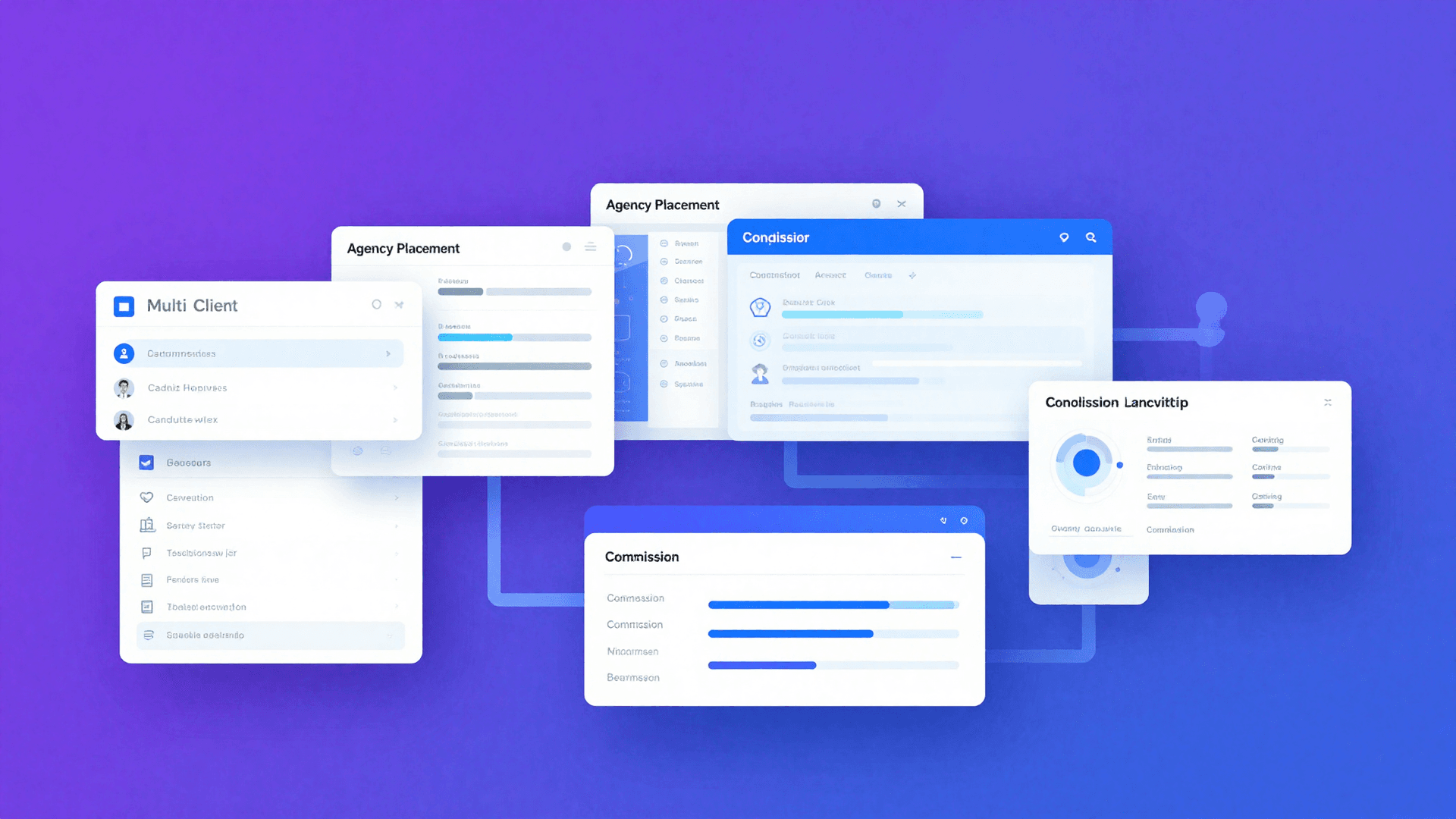
Choosing the right ATS software for recruitment agencies is one of the more consequential technology decisions a staffing firm can make in 2026. As candidate volumes surge, client expectations climb, and competition intensifies, agencies still relying on spreadsheets and manual follow-ups are losing ground to firms running on purpose-built applicant tracking systems. This guide breaks down the top platforms, their features, pricing, and real-world strengths, so you can make a confident, informed choice instead of guessing based on a vendor’s sales pitch.
What Is ATS Software for Recruitment Agencies and Why Does It Matter?
Quick Answer: ATS software for recruitment agencies is a specialized platform that manages candidate sourcing, multi-client pipelines, job board integrations, and CRM workflows in one system. Unlike in-house HR tools, agency-focused ATS platforms are built to handle multiple clients and roles at the same time, which cuts time-to-hire and improves placement rates.
Not every applicant tracking system is built with agencies in mind. Many enterprise-grade systems are designed for internal HR teams filling a handful of roles at a single company, which is a very different job than what a staffing firm does day to day. Recruitment agencies operate in an entirely different environment: managing dozens of clients, hundreds of open roles, and thousands of candidates at any given moment, often across several industries at once.
According to the Society for Human Resource Management (SHRM, 2026), organizations using an ATS reduce their average time-to-hire by up to 40%, a metric that directly translates to agency revenue and client retention. For staffing firms where speed is currency, that advantage is hard to ignore.
The ATS market has matured a lot as of 2026. Leading platforms now offer deep CRM functionality, AI-powered candidate matching, automated outreach sequences, multi-client pipeline management, and direct integrations with job boards, LinkedIn, and communication tools like Slack and Microsoft Teams. Agencies evaluating a new platform today have far more to compare than they did even a couple of years ago.
Key Statistics Every Recruitment Agency Should Know in 2026
Understanding the data behind ATS adoption helps agencies justify investment and benchmark their own performance against industry standards.
- According to LinkedIn’s Global Talent Trends Report (2026), 75% of recruiters say that using an ATS has meaningfully improved their ability to identify qualified candidates faster.
- SHRM (2026) reports that agencies using integrated ATS-CRM platforms see a 28% higher client retention rate compared to those using standalone tools.
- According to Aptitude Research (2026), 68% of staffing agencies with more than 10 active clients cite multi-client pipeline management as their single biggest operational challenge without a dedicated ATS.
- The global ATS market is projected to reach $3.2 billion by 2026, according to MarketsandMarkets (2026), driven largely by mid-size staffing agency adoption.
- Agencies using AI-powered candidate matching reduce their average sourcing time by up to 35%, according to Bullhorn’s State of Staffing Report (2026).
What Makes an ATS Ideal for Recruitment Agencies Specifically?
The features that matter most to an in-house HR team are often different from what a recruitment agency needs. Understanding this distinction can save an agency from a costly, months-long mistake when evaluating platforms.
According to James Colino, Head of Staffing Technology at the American Staffing Association, the most critical differentiator is whether the platform was architected around a client-candidate relationship model instead of a simple job-applicant model. The former supports agency workflows natively; the latter usually requires expensive customization to bend it into shape.
A recruitment agency ATS has to handle all of the following at the same time:
- Multi-client pipeline management: The ability to track candidates across multiple client accounts without data bleed or confusion between roles.
- Integrated CRM functionality: Business development tools built in — contact management, client call logs, deal tracking, and follow-up reminders.
- Automated candidate outreach: Email and SMS sequences triggered by pipeline stage changes, saving recruiters hours of manual follow-up each week.
- Job board integrations: One-click posting to Indeed, LinkedIn, Glassdoor, and niche boards without leaving the platform.
- AI-powered matching and ranking: Intelligent scoring that surfaces the best-fit candidates from your existing database before you source externally.
- Compliance and reporting: GDPR, EEOC, and data retention tools built in, plus real-time dashboards to track placements, revenue, and recruiter performance.
- Collaboration tools: Internal notes, @mentions, and shared candidate profiles so teams can work together on high-priority placements.
Top ATS Software Platforms for Recruitment Agencies in 2026: Comparison Table
The table below compares the leading ATS platforms purpose-built for or highly suited to recruitment agencies. Data reflects 2026 pricing and feature sets as publicly available from each vendor.
| Platform | Best For | Starting Price | CRM Built-In | AI Matching | Multi-Client Pipelines | Free Trial |
|---|---|---|---|---|---|---|
| Bullhorn | Large staffing agencies | Custom pricing | Yes (native) | Yes | Yes | No |
| Recruit CRM | Agencies of all sizes | $85/user/month | Yes (native) | Yes | Yes | Yes (14 days) |
| Manatal | Small to mid-size agencies | $15/user/month | Basic | Yes | Yes | Yes (14 days) |
| Recruiterflow | Executive search firms | $99/user/month | Yes (native) | Yes | Yes | Yes (14 days) |
| Lever | Growth-stage agencies | Custom pricing | Yes (native) | Yes | Limited | No |
| Recruitee | Collaborative hiring teams | $199/month flat | No | Basic | Limited | Yes (18 days) |
| Vincere | Mid-to-large agencies | Custom pricing | Yes (native) | Yes | Yes | No |
| JobAdder | Boutique and niche agencies | $149/user/month | Yes (native) | Basic | Yes | Yes |
Pricing shown is approximate; check vendor websites for current rates.
In-Depth Reviews: Best ATS Platforms for Recruitment Agencies in 2026
1. Bullhorn — Best for Large Staffing and Enterprise Agencies
Bullhorn is a market leader in ATS and CRM software for staffing agencies. Built from the ground up for recruitment workflows, it offers a deeply integrated CRM, AI-powered candidate matching, automated communication sequences, and a detailed reporting suite.
Bullhorn’s AI engine scans your existing candidate database before any external sourcing begins, a feature that saves large agencies significant time and money on roles that could have been filled internally. Its automation tools handle everything from interview scheduling to post-placement check-ins, so no candidate or client relationship falls through the cracks during a busy hiring cycle.
Strengths:
- Industry-leading CRM built natively into the ATS
- Deep integrations with LinkedIn Recruiter, Indeed, and major job boards
- Highly configurable pipelines and custom workflows
- Enterprise-grade reporting and analytics dashboards
- Strong compliance tooling for GDPR and EEOC
Weaknesses:
- Pricing is custom and typically expensive — not suitable for solo recruiters or very small agencies
- Steep learning curve; onboarding can take weeks
- Interface can feel dated compared to newer entrants
Best for: Agencies with 20+ recruiters managing high volumes across multiple clients and verticals.
2. Recruit CRM — Best All-in-One ATS and CRM for Growing Agencies
Recruit CRM is purpose-built for recruitment agencies and combines a powerful ATS with a full-featured CRM in one platform. It supports Kanban-style pipelines, email sequencing, resume parsing, and client management, all without requiring third-party integrations for the core functionality most agencies need day to day.
The platform’s Chrome extension lets recruiters source candidates directly from LinkedIn profiles, automatically populating the CRM with contact details and work history instead of requiring manual data entry. According to Recruit CRM’s own product benchmarks, users report saving an average of 7 hours per week on administrative tasks after onboarding.
Strengths:
- Exceptional ease of use with minimal onboarding time
- Native ATS + CRM eliminates the need for separate tools
- AI resume parser with high accuracy rates
- Strong LinkedIn sourcing integration via Chrome extension
- Responsive customer support with fast resolution times
Weaknesses:
- Reporting and analytics are less advanced than Bullhorn or Vincere
- Per-user pricing can become costly as teams scale beyond 15 users
Best for: Independent recruiters and boutique agencies that need a complete ATS-CRM solution without enterprise complexity.
3. Manatal — Best Budget ATS for Small Recruitment Agencies
Manatal has quickly become one of the more popular ATS choices for small and mid-size agencies, largely because it delivers AI-powered features at a price that won’t strain a lean budget. Starting at just $15 per user per month, it offers AI candidate scoring, multi-pipeline management, and social media sourcing tools that would normally be reserved for pricier platforms.
Manatal’s AI recommendation engine analyzes job descriptions and scores candidates from your database against open roles, ranking them by predicted fit. This matters most for small agencies where recruiters are stretched thin across too many roles and need technology to handle more of the repetitive screening work.
Strengths:
- Exceptional value — most affordable AI-powered ATS on the market
- Clean, modern interface with a short learning curve
- AI candidate scoring and recommendation engine
- Multi-language support — strong for international agencies
- 14-day free trial with full feature access
Weaknesses:
- CRM functionality is basic compared to Bullhorn or Recruit CRM
- Limited automation depth for high-volume outreach sequences
- Customer support hours may not suit all time zones
Best for: Solo recruiters and small agencies (under 10 users) that need AI-powered ATS features without enterprise pricing.
4. Recruiterflow — Best for Executive Search and Retained Recruitment
Recruiterflow is built specifically for agencies that run retained, contingency, and executive search mandates. It pairs an ATS with a sales-oriented CRM, which suits firms where business development and candidate management are equally important, day-to-day activities rather than separate departments.
The platform’s sequence-based outreach tools let recruiters build multi-step email and SMS campaigns triggered by candidate actions or pipeline stage changes. Its reporting suite gives principals and team leaders visibility into both recruiter activity and business development metrics without switching between separate tools.
Strengths:
- Outstanding CRM with built-in sales pipeline and deal tracking
- Powerful email sequencing and automation engine
- Purpose-built for retained and executive search workflows
- Chrome extension for LinkedIn sourcing
- Clean, intuitive interface that new users adopt quickly
Weaknesses:
- Higher per-user cost makes it expensive for large frontline recruiting teams
- Less suited to high-volume contingency staffing at scale
Best for: Executive search firms and boutique agencies focused on retained mandates and long-term client relationships.
5. Lever — Best for Collaborative Hiring with ATS and CRM Combined
Lever is a well-established ATS and CRM platform that emphasizes collaboration across hiring teams. While it started life as an in-house HR tool, its full suite, known as LeverTRM (Talent Relationship Management), has evolved over time to serve agencies managing complex, multi-stakeholder hiring processes.
Lever’s visual pipeline, @mention collaboration features, and structured interview kits make it especially strong for agencies that embed closely with client hiring teams during searches. Its nurture campaigns let recruiters maintain warm relationships with passive candidates over months, not just during an active search.
Strengths:
- Intuitive visual pipeline with drag-and-drop stage management
- Strong collaboration tools for team-based hiring
- Solid candidate nurture and CRM capabilities
- Excellent integration ecosystem
- Detailed diversity and inclusion analytics
Weaknesses:
- Multi-client pipeline management requires workarounds — not native
- Custom pricing without transparent tiers makes budgeting harder
- Better suited to embedded recruitment models than traditional agency staffing
Best for: RPO providers and agencies that work closely alongside client HR teams on complex, collaborative searches.
6. Vincere — Best for Mid-to-Large Agencies Wanting Full Business Intelligence
Vincere is a comprehensive recruitment operating system that goes beyond standard ATS and CRM functionality to include financial management, timesheets, payroll integration, and business intelligence dashboards. It is purpose-built for staffing agencies and stands out for firms that want a single platform to run their entire operation, not just their hiring pipeline.
Its BI suite provides real-time visibility into placement revenue, consultant performance, client profitability, and fill rates, data that agency directors and MDs need to make strategic decisions without pulling reports from several disconnected systems first.
Strengths:
- End-to-end recruitment operating system — ATS, CRM, finance, BI in one
- Outstanding business intelligence and real-time reporting
- Purpose-built for agency workflows at scale
- Strong candidate and client portal functionality
- Payroll and timesheet management included
Weaknesses:
- Implementation is complex and can take several months
- Custom pricing — typically a significant investment
- Feature depth can overwhelm smaller teams
Best for: Mid-to-large agencies that want a single platform to manage recruitment, finance, and business performance reporting.
7. Recruitee — Best for Team Collaboration on Candidate Evaluation
Recruitee is a collaborative hiring platform that excels at structured evaluation processes. Its strengths lie in team scorecards, evaluation templates, and shared candidate timelines, which makes it useful for agencies that involve multiple stakeholders in candidate assessment rather than leaving the decision to one recruiter. It offers flat-rate pricing, which makes budgeting predictable as headcount grows instead of scaling per seat.
Strengths:
- Flat-rate pricing — cost-effective for growing teams
- Strong structured evaluation and scorecard tools
- Clean, modern UI with fast onboarding
- 18-day free trial
Weaknesses:
- No native CRM — significant limitation for agency use
- Limited multi-client pipeline management
- AI features are basic compared to competitors
Best for: Agencies focused heavily on structured, collaborative candidate evaluation processes rather than high-volume pipeline throughput.
How to Choose the Right ATS for Your Recruitment Agency: A Step-by-Step Process
According to Sarah Brennan, Founder of Accelir and recognized HR technology analyst, the most common mistake agencies make when selecting an ATS is evaluating features before defining workflows. Mapping your current process first means the platform you choose speeds up how you already work, instead of forcing you to rebuild your process around the software.
- Audit your current workflow: Document how candidates move from sourcing to placement today. Identify every bottleneck, manual step, and tool your team uses.
- Define your non-negotiables: Determine whether native CRM, AI matching, multi-client pipelines, or specific integrations are absolute requirements versus nice-to-haves.
- Set a realistic budget: Factor in per-user costs, implementation fees, onboarding time, and the cost of migration from your current system.
- Request demos for your top three choices: Use real scenarios from your agency — not the vendor’s scripted demo — to test how the platform handles your actual workflows.
- Evaluate integration compatibility: Confirm that the ATS connects natively with your existing tools — email, LinkedIn, job boards, payroll, and communication platforms.
- Check compliance capabilities: Ensure the platform supports GDPR, EEOC, and any industry-specific data retention requirements relevant to your markets.
- Run a pilot with a real team: Before full rollout, run a 30-day pilot with a small team on live roles. Measure time-to-hire, recruiter adoption rate, and candidate experience feedback.
- Negotiate onboarding support: Confirm what implementation assistance is included and what carries an additional cost. Poor onboarding is the number-one reason ATS adoptions fail.
3 Unique Factors Competitors Overlook When Reviewing Agency ATS Platforms
Database Decay and Candidate Re-engagement Tools
Most ATS reviews focus on sourcing new candidates, but the hidden value in any agency’s ATS is its existing database. According to Bullhorn’s State of Staffing Report (2026), the average recruitment agency has over 60% of its active database sitting dormant: candidates who applied or were placed previously but have received no contact in over 12 months.
The best ATS platforms for agencies include automated re-engagement campaigns, database health scoring, and duplicate detection tools that turn this dormant data back into active placements instead of letting it sit unused. When evaluating platforms, specifically ask vendors how their system identifies and re-engages stale candidate records.
Client Portal and Transparency Features
Agencies that offer clients a branded portal, where hiring managers can review shortlisted candidates, provide feedback, and approve next steps, consistently report higher client retention. Very few ATS reviews address this feature specifically, yet it is one of the strongest competitive differentiators an agency can offer a client who is used to email chains and spreadsheets.
Vincere and Recruit CRM both offer white-labeled client portals. When reviewing platforms, ask whether the portal supports structured feedback collection, candidate status visibility, and offer management, rather than just passive profile viewing that a client has to interpret on their own.
Revenue Attribution and Per-Placement Profitability Reporting
Knowing which clients, roles, and recruiters generate the most revenue, and profit, is intelligence agency principals genuinely need. Yet most ATS platforms deliver activity reporting (calls made, CVs sent) instead of financial performance reporting (revenue per placement, margin by client, cost per hire).
Vincere leads the market here with its embedded BI suite. Bullhorn and Recruiterflow offer strong reporting add-ons that cover much of the same ground. When evaluating any platform, request a live demonstration of revenue attribution and per-consultant profitability reporting before committing to a contract.
ATS Integration Ecosystem: What Your Platform Should Connect To
A standalone ATS, no matter how powerful on its own, creates silos if it does not talk to the rest of your tech stack. The platforms that deliver the most value for agencies are the ones with deep, native integrations across the recruitment tools they already use every day.
| Integration Category | Examples | Why It Matters for Agencies |
|---|---|---|
| Job Boards | Indeed, LinkedIn Jobs, Glassdoor, Reed | One-click multi-board posting saves hours per week |
| LinkedIn Recruiter | LinkedIn Recruiter, LinkedIn InMail | Source and sync candidates without manual data entry |
| Email and Calendar | Gmail, Outlook, Google Calendar | Log all communications automatically in candidate records |
| Communication | Slack, Microsoft Teams, Zoom | Real-time team collaboration on live searches |
| Video Interviewing | Spark Hire, HireVue, Zoom | Conduct and record interviews within the ATS workflow |
| Payroll and Finance | Xero, QuickBooks, Sage | Automate contractor payments and track placement revenue |
| Background Screening | Checkr, Sterling, TrustID | Trigger checks automatically at the right pipeline stage |
What is the best ATS software for recruitment agencies in 2026?
The best ATS for recruitment agencies in 2026 depends on agency size and workflow. Bullhorn leads for large agencies, Recruit CRM is ideal for growing mid-size firms, Manatal is best for small teams on a budget, and Recruiterflow excels for executive search. Each offers native CRM integration and multi-client pipeline management as core features.
How is an agency ATS different from an in-house ATS?
An agency ATS is architected around a multi-client, multi-role model with an integrated CRM for business development. An in-house ATS manages internal hiring for a single employer. Agency platforms support client portals, contractor management, revenue tracking, and outbound recruiting workflows that in-house tools rarely offer natively.
Do small recruitment agencies need an ATS?
Yes. Even solo recruiters benefit from an ATS because it centralizes candidate data, automates follow-ups, and provides searchable records that prevent missed opportunities. Platforms like Manatal start at $15 per user per month, making ATS adoption accessible for even single-person agencies managing multiple concurrent roles.
Can an ATS replace a CRM for recruitment agencies?
A purpose-built agency ATS with native CRM functionality, like Bullhorn, Recruit CRM, or Recruiterflow, can fully replace a separate CRM. However, a standard ATS without CRM capability cannot. Always verify whether client management, deal tracking, and business development features are included natively before assuming CRM functionality is covered.
What is the most affordable ATS for recruitment agencies?
Manatal is the most affordable AI-powered ATS for recruitment agencies, starting at $15 per user per month with a 14-day free trial. Recruitee offers a flat-rate plan starting at $199 per month for unlimited users, which becomes cost-effective for larger teams. Both provide multi-pipeline management and job board integrations at their base tier.
How long does it take to implement an ATS for a recruitment agency?
Implementation timelines vary significantly by platform and agency size. Manatal and Recruit CRM can be operational within a few days. Bullhorn and Vincere typically require four to twelve weeks of configuration, data migration, and training. Agencies should factor implementation time into their selection process and negotiate dedicated onboarding support before signing contracts.
Does an ATS help with compliance and GDPR for recruitment agencies?
Yes. Leading ATS platforms for agencies include built-in GDPR compliance tools such as candidate consent tracking, right-to-erasure workflows, data retention policies, and audit logs. Agencies operating in the EU or handling EU candidate data should confirm that their chosen platform holds current GDPR compliance certifications and supports data processing agreements.
What ATS integrates best with LinkedIn for recruitment agencies?
Bullhorn, Recruit CRM, and Recruiterflow all offer strong LinkedIn integration via Chrome extensions that allow recruiters to import candidate profiles directly into the ATS with one click. Bullhorn additionally integrates with LinkedIn Recruiter at a deeper API level, enabling InMail synchronization and candidate activity tracking within the platform.
How does AI improve ATS performance for recruitment agencies?
AI in modern agency ATS platforms performs candidate-to-role matching by analyzing job descriptions and scoring existing database records, dramatically reducing sourcing time. AI also powers resume parsing, duplicate detection, engagement prediction, and automated outreach timing. Agencies using AI-powered matching report up to 35% faster sourcing cycles compared to manual database searches.
What should I look for in an ATS demo as a recruitment agency?
During an ATS demo, test the platform against your real workflows, not the vendor’s scripted scenarios. Specifically evaluate how the system handles multi-client pipeline separation, CRM contact management, automated outreach sequences, job board posting, and reporting on recruiter and revenue performance. Request a live data migration example and confirm what onboarding support is included in the contract.
Making the Right Choice: Final Thoughts and Next Steps
The best ATS software for recruitment agencies in 2026 is not a one-size-fits-all answer. Bullhorn leads at enterprise scale. Recruit CRM delivers the most complete ATS-CRM combination for growing agencies. Manatal offers strong value for lean teams. Recruiterflow is the go-to for executive search. Vincere is the choice for agencies that want a full recruitment operating system rather than just a hiring tool.
What all the top platforms share is a design philosophy built around the agency model: multi-client pipelines, integrated CRM, automated outreach, and reporting that connects recruiter activity to business revenue. These are the pillars any shortlist should be measured against.
Before committing to any platform, take advantage of free trials where available, run pilots on live roles, and involve your frontline recruiters in the evaluation rather than deciding from the top down. The best ATS is the one your team will actually use consistently every day, not the one with the longest feature list.
Ready to compare ATS platforms side by side with verified user reviews, detailed feature breakdowns, and real pricing data? Explore the full ATS category on Spotsaas to find the platform that fits your agency’s size, workflow, and growth ambitions.
Related Articles
Applicant Tracking Software
Hidden ATS Costs in 2026: What Every HR Team Must Know Before Buying
Continue reading →

Applicant Tracking Software
How to Measure the Real ROI of Your ATS in 2026
Continue reading →

Applicant Tracking Software
ATS Tools for Small Teams: Hire Faster and Smarter with Less Effort
Continue reading →
AI Software
AI Matching in ATS: What It Is, How It Works and Why It Matters for Hiring
Continue reading →