
From Inbox to Offer: How ATS Automation Enhances Candidate Experience in 2026
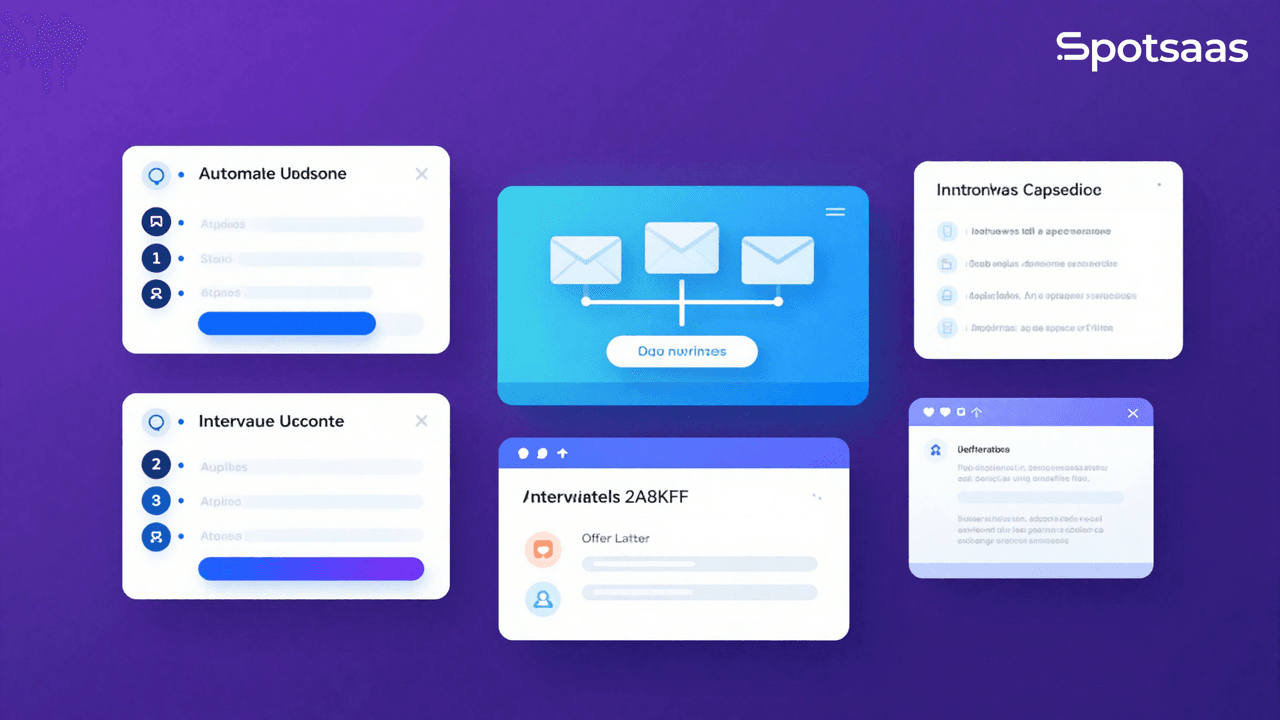
The hiring landscape in 2026 is faster, more competitive, and more candidate-driven than ever before. ATS automation — the engine powering the modern inbox-to-offer recruitment workflow — is what separates organizations that consistently attract top talent from those that lose candidates to silence and slow processes. When your applicant tracking system operates with intelligent automation, every touchpoint from the first application acknowledgment to the final offer letter becomes faster, smarter, and more human-centered.
This guide breaks down exactly how ATS automation works at every stage of the hiring funnel, which platforms lead the market in 2026, and how to build a candidate experience that converts applicants into enthusiastic new hires.
What Is ATS Automation and Why Does It Matter in 2026?
Quick Answer: ATS automation uses rule-based triggers and AI-driven workflows to handle repetitive recruiting tasks — resume parsing, candidate scoring, email acknowledgments, interview scheduling, and offer generation — without manual recruiter input at every step. This reduces time-to-hire by up to 40% while measurably improving candidate experience and employer brand perception.
An Applicant Tracking System (ATS) is software that manages the full recruitment lifecycle, from job posting to signed offer letter. Automation within that system means intelligent actions fire automatically based on candidate behavior, application status, or predefined rules — with no recruiter needing to trigger each step manually.
When a candidate submits an application, an automated ATS can parse their resume, score their fit against job requirements, send a personalized acknowledgment email, and route their profile to the right recruiter — all within seconds of submission. The candidate feels seen and valued. The recruiter saves hours of manual triage work.
According to LinkedIn Talent Solutions (2026), companies using recruiting automation report a 40% average reduction in time-to-hire. That speed is not just an operational win — it directly shapes how candidates perceive your employer brand before they ever speak to a human on your team.
As of 2026, with talent shortages persisting across technology, healthcare, logistics, and skilled trades, a slow or silent hiring process is enough to push your best candidates toward a faster competitor. ATS automation has shifted from a competitive advantage to a baseline operational requirement for any organization serious about talent acquisition.
How Does the Inbox-to-Offer ATS Workflow Actually Work?
The inbox-to-offer workflow describes the complete journey an application takes — from the moment it lands in your system to the point a candidate receives and signs an offer. Automation touches every single stage of that journey, eliminating the bottlenecks that historically caused candidate drop-off, recruiter burnout, and extended time-to-fill metrics.
Here is how a fully automated ATS workflow operates end-to-end in 2026:
- Application Receipt and Resume Parsing: The moment a resume arrives — whether via a careers page, job board, LinkedIn, or even a direct email inbox — the ATS ingests and parses it automatically. AI-powered parsers extract skills, experience, education, and contact data into structured candidate profiles in seconds.
- Automated Candidate Scoring: Using predefined job requirements and AI matching algorithms, the system scores each candidate against the role. Recruiters open their dashboard to ranked shortlists rather than unsorted piles of resumes.
- Instant Acknowledgment Email: Within seconds of application submission, the candidate receives a personalized confirmation email. This single automated touchpoint dramatically reduces candidate anxiety and sets a positive first impression of your employer brand.
- Smart Routing to Hiring Managers: Candidates who meet threshold scores are automatically routed to the appropriate hiring manager or recruiter queue. No manual forwarding, no lost emails, no duplicated effort.
- Automated Interview Scheduling: Qualified candidates receive self-scheduling links that sync with recruiter and hiring manager calendars in real time. Platforms like Greenhouse offer native scheduling automation that eliminates the back-and-forth email chains that cost days of time.
- Interview Reminders and Preparation Emails: Automated sequences send candidates role-specific preparation content, logistics details, and reminder messages before each interview stage. Candidate show rates improve significantly with these touchpoints.
- Post-Interview Status Updates: Rather than leaving candidates in silence after interviews, automated status triggers send timely updates at each decision point — advancing, holding, or respectfully declining candidates with personalized messaging.
- Offer Letter Generation and E-Signature: Once a hiring decision is made, the ATS auto-generates a compliant offer letter populated with the candidate’s name, role, compensation, and start date. E-signature workflows complete the process without a single printed document.
- Onboarding Handoff: Upon offer acceptance, the ATS automatically triggers onboarding workflows — background check requests, document collection, IT provisioning alerts, and new hire orientation scheduling — so day one readiness begins before the candidate’s start date.
Each of these steps historically required manual recruiter action. Automating the full sequence means recruiters redirect their energy toward relationship-building, employer branding, and strategic workforce planning — the activities that actually require human judgment.
Why Does the Inbox Still Matter? ATS Vendors and the Email Problem
One persistent challenge in modern recruiting is that candidates still send resumes directly to recruiter email inboxes — bypassing career portals entirely. According to SHRM (2026), over 35% of unsolicited applications arrive via direct email, particularly for senior roles and niche technical positions where candidates reach out to specific hiring leaders.
This creates a dangerous gap. Applications that live in personal inboxes instead of ATS platforms are invisible to the hiring pipeline. They receive no automated acknowledgment, no scoring, no status tracking, and no audit trail for compliance purposes.
Leading ATS vendors have addressed this with email integration features that function as a bridge between inbox and platform. Tools like Lever offer dedicated recruiting email addresses that automatically ingest forwarded resumes into the ATS, parse them, and create candidate profiles — converting inbox chaos into structured pipeline data.
The best ATS platforms in 2026 also integrate directly with Gmail and Outlook, allowing recruiters to log candidate interactions, schedule interviews, and move candidates through pipeline stages without ever leaving their email client. This inbox-native approach reduces adoption friction and ensures no candidate falls through the cracks.
How Does AI Transform ATS Automation Beyond Basic Rules?
Rule-based automation handles predictable, linear tasks well. But the most powerful ATS platforms in 2026 layer machine learning and generative AI on top of rules-based logic to handle the nuanced, judgment-intensive parts of recruiting that previously required human expertise.
According to Josh Bersin, HR Industry Analyst at The Josh Bersin Company, AI-powered ATS platforms are now capable of predicting candidate quality with greater accuracy than human screeners in high-volume roles, reducing both time-to-hire and early attrition simultaneously.
Key AI capabilities transforming ATS automation in 2026 include:
- Semantic Resume Matching: AI understands synonyms, adjacent skills, and transferable experience — recognizing that a candidate listing “React.js” is relevant to a role requiring “modern JavaScript frameworks” even without an exact keyword match.
- Predictive Candidate Scoring: Machine learning models trained on historical hiring data predict which candidate profiles correlate with successful hires, tenure, and performance in your specific organization — not just generic benchmarks.
- AI-Powered Email Assistants: Generative AI drafts personalized recruiter outreach, follow-up sequences, and rejection communications at scale. Candidates receive thoughtful, contextually relevant messages rather than obviously templated form letters.
- LinkedIn and Social Profile Enrichment: Modern ATS platforms automatically enrich candidate profiles by pulling publicly available LinkedIn data, turning a basic resume submission into a comprehensive candidate dossier within seconds.
- Bias Mitigation Screening: AI screening tools flag potentially biased language in job descriptions and apply structured scoring criteria that reduce the influence of demographic factors on early-stage screening decisions.
- Conversational AI Chatbots: ATS-integrated chatbots conduct initial candidate screening conversations, collect availability, answer FAQ questions about the role, and pre-qualify applicants 24 hours a day — including nights and weekends when recruiters are offline.
Which ATS Platforms Lead the Market for Automation in 2026?
Not all ATS platforms offer the same depth of automation. The table below compares the leading options evaluated for automation capabilities, candidate experience features, and pricing as of 2026.
Pricing shown is approximate; check vendor websites for current rates.
According to G2’s Recruiting Software Report (2026), Greenhouse and Ashby rank highest for automation depth, while Breezy HR and JazzHR lead in ease of implementation for teams without dedicated recruiting operations resources.
What Does ATS Automation Mean for Candidate Experience Specifically?
Candidate experience is the sum of every interaction a person has with your organization during the hiring process. ATS automation directly shapes that experience at every touchpoint — and the data is unambiguous about its impact.
According to CareerBuilder (2026), 78% of candidates say that how they are treated during the application process directly influences their decision to accept an offer — and their likelihood of recommending your organization to peers, regardless of outcome.
The specific candidate experience improvements ATS automation delivers include:
- Immediate Acknowledgment: Candidates no longer submit applications into an apparent void. Automated confirmation emails sent within seconds of submission signal that their application was received and is being reviewed.
- Consistent Communication: Automated status update triggers ensure every candidate receives timely communication at every decision point — advancing, interviewing, holding, or declining — rather than experiencing days or weeks of silence.
- Faster Time-to-Interview: Automated scheduling tools reduce the average time from application to first interview from 5-7 days to under 24 hours for qualified candidates.
- Personalized Messaging at Scale: AI-generated personalization layers candidate names, role specifics, and relevant context into every automated message — avoiding the cold, generic tone that signals low-effort employer branding.
- Respectful Rejection Experiences: Automated rejection workflows send timely, warm decline messages to candidates who are not selected — a small but significant act that protects employer brand reputation among the majority of applicants who will not receive offers.
- Mobile-First Interactions: Modern ATS platforms deliver scheduling links, status updates, document requests, and offer letters in mobile-optimized formats that work seamlessly on any device.
How to Set Up ATS Automation That Actually Works: A Step-by-Step Implementation Guide
Implementing ATS automation effectively requires deliberate configuration, not just feature activation. Here is a proven implementation framework used by high-performing talent acquisition teams in 2026:
- Audit Your Current Hiring Funnel: Map every step from application receipt to offer acceptance. Identify where candidates currently experience delays, silence, or confusion. These pain points become your automation priority list.
- Define Pipeline Stages and Triggers: Work with hiring managers to define the exact stages in your hiring pipeline for each role type. For each stage transition, define what automated action should fire — email notification, calendar invite, scorecard request, status update.
- Build Your Email Template Library: Create personalized, on-brand email templates for every automated communication type: acknowledgment, screening invitation, interview confirmation, status update, offer, rejection, and onboarding initiation. Review with HR and legal for compliance.
- Configure Resume Parsing and Scoring Rules: Set up the must-have requirements, preferred qualifications, and disqualifying factors for each role. Train your ATS scoring model on the specific attributes that predict success at your organization.
- Integrate Email and Calendar Systems: Connect your ATS to Gmail or Outlook and sync recruiter and hiring manager calendars to enable automated scheduling. Test the integration thoroughly before going live.
- Set Up LinkedIn and Job Board Integrations: Connect your ATS to job distribution platforms and LinkedIn Recruiter to ensure all applications route into the same system regardless of source. Platforms like Ashby offer native multi-source ingestion that consolidates all candidate data in one place.
- Enable Offer and E-Signature Workflows: Configure offer letter templates with dynamic field population for candidate name, role, compensation, and start date. Connect to an e-signature tool to complete the offer acceptance loop without manual document handling.
- Test Every Workflow End-to-End: Before going live, run test applications through every pipeline stage to verify that all triggers fire correctly, all emails deliver properly, and all integrations function as expected.
- Train Recruiters on the New System: Automation only works if recruiters understand what the system handles automatically versus what still requires their input. Provide clear documentation and live training on the new workflow.
- Monitor, Measure, and Iterate: Track key metrics including time-to-first-response, time-to-interview, offer acceptance rate, and candidate satisfaction scores. Use this data to refine automation rules, adjust email timing, and improve scoring criteria continuously.
3 Unique Capabilities That Define ATS Leaders in 2026
Beyond standard automation features, the ATS platforms pulling ahead of the market in 2026 share three distinctive capabilities that competitors have not yet replicated at the same depth.
1. Ambient Recruiting Intelligence
Leading platforms now operate as ambient intelligence layers across all recruiter activity — not just within the ATS interface itself. They surface candidate recommendations inside Gmail, flag re-engagement opportunities for silver-medalist candidates from previous searches, and push pipeline health alerts to hiring managers through Slack or Teams integrations. Recruiting intelligence is no longer confined to a dashboard recruiters have to remember to check.
2. Candidate-Facing Automation Portals
The most candidate-centric ATS platforms in 2026 give applicants their own self-service portals where they can track application status in real time, reschedule interviews, upload additional documents, and communicate with recruiters — all without requiring recruiter manual action. This transparency dramatically reduces the volume of inbound status inquiry emails that consume recruiter bandwidth.
3. Compliance-Aware Automation
As hiring regulations evolve across jurisdictions — including pay transparency requirements, EEOC reporting mandates, and GDPR-compliant candidate data handling — the leading ATS platforms build compliance logic directly into automation workflows. Offer letters auto-populate salary ranges where legally required. Candidate data retention policies trigger automatically at defined intervals. Audit trails are maintained without any manual record-keeping effort from recruiting teams.
ATS Automation vs. Manual Recruiting: What the Data Shows
According to Aptitude Research Partners (2026), organizations with fully automated ATS workflows report offer acceptance rates 14 percentage points higher than organizations relying on primarily manual processes — a direct financial impact given the cost of extended vacancy and re-sourcing efforts.
Common ATS Automation Mistakes That Damage Candidate Experience
Automation implemented carelessly can harm candidate experience as severely as no automation at all. These are the most common implementation errors talent acquisition teams make in 2026 — and how to avoid them.
- Over-automating communication: Sending too many automated emails creates noise and erodes trust. Every automated touchpoint should serve a clear candidate need. Audit your sequences regularly for messages that candidates consistently ignore or unsubscribe from.
- Generic rejection messaging: An automated rejection is far better than no rejection — but a visibly templated, impersonal decline message leaves a negative brand impression. Invest in well-crafted rejection templates that feel human even when sent automatically.
- Scoring model bias: AI scoring models trained on historical data can perpetuate existing biases if not regularly audited. Validate your candidate scoring criteria against demographic outcome data on a quarterly basis to catch and correct any disparate impact patterns.
- Failing to monitor trigger failures: Automation workflows break. Calendar integrations disconnect. Email sequences fail to fire. Without active monitoring dashboards and alert systems, candidates can fall into silent gaps that feel identical to manual neglect.
- No human override protocols: The best ATS automation always includes clear protocols for when human judgment should override automated decisions — particularly for senior roles, internal candidates, and referred applicants where relationship context matters more than algorithmic scoring.
Frequently Asked Questions
What is ATS automation in recruiting?
ATS automation refers to the use of rule-based triggers and AI-driven workflows within an Applicant Tracking System to handle repetitive recruiting tasks automatically — including resume parsing, candidate scoring, email communications, interview scheduling, and offer generation — without requiring manual recruiter input at every step.
How does an ATS handle resumes received in email inboxes?
Modern ATS platforms offer dedicated recruiting email addresses or Gmail and Outlook integrations that automatically ingest resumes forwarded or sent directly to those addresses. The system parses the resume, creates a candidate profile, and routes the application into the appropriate pipeline — converting inbox email into structured ATS data without manual data entry.
Can you use an ATS for free with Gmail?
Some ATS platforms offer free tiers with Gmail integration, including tools like Breezy HR and JazzHR at entry-level plans. However, truly robust automation features — AI scoring, full workflow triggers, e-signature integration — typically require paid plans. Free Gmail-connected ATS tools are suitable for very small teams with limited hiring volume.
How does ATS automation improve candidate experience?
ATS automation improves candidate experience by eliminating response delays, sending immediate application acknowledgments, providing consistent status updates at every hiring stage, enabling self-service interview scheduling, and delivering personalized communications at scale. Candidates feel informed and respected throughout the process, which directly increases offer acceptance rates and employer brand perception.
What is an AI-powered email assistant for recruiters?
An AI-powered email assistant for recruiters is a tool — often embedded within an ATS or available as a standalone integration — that uses generative AI to draft personalized outreach messages, follow-up sequences, and candidate communications. It reduces the time recruiters spend writing individual emails while maintaining a personalized, contextually relevant tone for each candidate interaction.
How does ATS automation reduce time-to-hire?
ATS automation reduces time-to-hire by eliminating manual delays at every stage of the hiring funnel — instant resume parsing, automated scoring, same-day interview scheduling, real-time status updates, and automated offer generation all compound to reduce the average hiring cycle by 35 to 40 percent compared to fully manual recruiting workflows.
Does ATS automation work for LinkedIn sourcing?
Yes. Leading ATS platforms integrate with LinkedIn Recruiter to import candidate profiles directly into the ATS, trigger automated outreach sequences, and track candidate engagement across LinkedIn interactions. Some tools effectively turn LinkedIn into a fully integrated recruiting CRM and ATS front end, enabling sourcing and pipeline management in a unified workflow.
What happens when a recruiter receives resumes directly by email?
Resumes received directly by email are at risk of being lost, delayed, or never entered into the formal hiring pipeline. The best practice is to use an ATS with email forwarding ingestion or a dedicated recruiting inbox that automatically parses and imports emailed resumes into the ATS system, ensuring every candidate receives proper tracking and timely communication.
How do ATS vendors address the inbox versus platform problem?
ATS vendors address the inbox-versus-platform gap through dedicated recruiting email addresses that auto-ingest forwarded resumes, native Gmail and Outlook plugins that allow recruiters to manage candidates without leaving email, and AI tools that monitor recruiter inboxes and flag candidate emails for automatic ATS import — eliminating the risk of inbox-only candidate management.
What should I look for in an ATS with strong automation features?
Look for an ATS with native email and calendar integration, AI-powered resume parsing and candidate scoring, configurable workflow triggers for every pipeline stage, automated interview scheduling with self-service candidate links, offer letter generation with e-signature capability, onboarding handoff automation, compliance-aware workflows, and real-time monitoring dashboards to track automation performance and flag failures.
Start Building a Smarter Hiring Workflow Today
ATS automation is no longer a future capability — it is the operational foundation of every high-performing talent acquisition team in 2026. From the moment a resume lands in your system to the moment a candidate signs their offer letter, every automated touchpoint is an opportunity to demonstrate that your organization values people’s time, communicates with respect, and moves with the urgency that top talent demands.
The difference between a candidate accepting your offer and accepting a competitor’s often comes down to which organization made them feel seen, informed, and valued throughout the process. ATS automation is the infrastructure that makes that experience consistent and scalable — regardless of hiring volume, team size, or role complexity.
Whether you are evaluating your first ATS or looking to upgrade your current platform’s automation capabilities, the right starting point is an honest assessment of where your current workflow creates candidate friction. From there, the path to inbox-to-offer automation is a series of deliberate, measurable steps — each one compounding into a hiring process your candidates will talk about positively, whether they receive an offer or not.
Explore detailed reviews, feature comparisons, and verified user ratings for the leading ATS automation platforms on SpotSaaS to find the solution that fits your team’s size, budget, and hiring goals.
Related Articles
Applicant Tracking Software
ATS Tools for Small Teams: Hire Faster and Smarter with Less Effort
Continue reading →
Applicant Tracking Software
How Collaborative ATS Tools Improve Internal Hiring Communication
Continue reading →
Applicant Tracking Software
How To Choose The Best Job Board Software For 2026
Continue reading →
Applicant Tracking Software
Best Tools for Cross-Functional Hiring Across Teams and Departments
Continue reading →