
Leads are the part of a business everything else depends on. Without them, you don’t get customers, and the company doesn’t run — no matter how good the product itself is.
But in a competitive market, getting leads is a real challenge. The product you’re selling is sold by many other companies too. New products launch every week, features get copied almost instantly, and customer retention keeps dropping.
So the question is: how does your SaaS stay competitive and generate leads at scale?
Traditional lead generation methods — cold lists, generic email blasts, slow qualification — no longer get the job done. Buyers expect relevance, speed, and value. That’s where AI has stepped in.
AI is changing how companies attract, identify, and convert high-intent leads. Here’s how.
The Traditional SaaS Lead Generation Funnel

Here’s a closer look at the traditional methods and the problems they caused. These methods involved a lot of guesswork, long hours, and repetitive tasks.
1. Manual Lead Research Consumed Huge Amounts of Time
In the traditional funnel, SaaS teams depended on manual lead sourcing. SDRs spent hours compiling information into spreadsheets or CRMs by combing through LinkedIn, scanning company websites, and searching for job titles.
It wasn’t a strategic approach — more like a scavenger hunt done by hand. And because everything had to happen manually, even a small set of leads took far too long to convert. By the time a rep finally reached the outreach phase, most of their energy had already gone into administrative work instead of qualifying or converting prospects.
2. Generic Messaging Became the Default
Research consumed so much time that teams had little left for personalized outreach. Instead, they leaned on broad, templated messaging meant for “everyone but no one in particular.”
Prospects from different industries, roles, or pain points received identical emails and sequences. Naturally, these messages didn’t resonate with the audience they were meant for.
Slowly, open rates dropped, replies slowed down, and prospects began ignoring outreach that clearly wasn’t written for them. The funnel kept running, but with diminishing returns.
3. Lead Qualification Was Slow and Largely Manual
Lead qualification lagged because of the manual work behind it. Reps checked lead details by hand, tracked interactions, and prioritized accounts based on intuition or scattered signals rather than a real system.
This meant teams sometimes spent time on low-intent leads simply because they’d responded once, while genuinely interested leads waited too long to connect with a sales rep. Without automation or predictive scoring, the process stayed reactive, inconsistent, and prone to human error.
4. Lack of Real-Time Insights Limited Decision-Making
The biggest gap in traditional lead generation was the absence of real-time visibility. Old funnels couldn’t detect when a prospect revisited the website, compared pricing, or became more active in their buyer journey.
Teams worked with outdated or incomplete data, so the timing of outreach rarely matched the buyer’s actual intent. That led to missed opportunities, poorly timed calls, and a funnel that felt out of sync — which hurt customer experience and cost teams trust.
5. Low Conversion Rates Became the Norm
With slow research, broad messaging, and delayed qualification stacked together, converting leads was an uphill climb. Reps spent enormous time on tasks that didn’t directly move deals forward.
The traditional funnel simply didn’t scale. It depended too much on manpower and too little on intelligence, and it had almost no ability to adapt in real time to what a buyer was actually doing. As competition in SaaS grew, this old approach couldn’t keep up.
How AI Begins to Transform the Funnel

AI transforms the funnel by tackling the biggest inefficiencies first and unlocking new capabilities along the way, especially when paired with ai lead generation tools that automate research, targeting, and qualification at scale.
Here’s how AI rebuilds each part of the funnel.
1. AI Speeds Up Lead Research With Real-Time Intelligence
The first major shift AI brought to lead generation was its ability to process large amounts of data in seconds. Instead of relying on manual research, AI tools now scan signals from website behavior, CRM activity, firmographic details, job changes, content interactions, and third-party intent sources.
SaaS teams no longer waste hours identifying the right accounts. AI automatically builds dynamic lead lists, ranks companies based on fit and buying signals, and updates them in real time as new information arrives — like having a researcher who never sleeps and never misses a detail.
As a result, outreach becomes intentional. Instead of pushing generic sequences, teams know exactly which leads are worth talking to, when they’re active, and what messaging is likely to land. AI turns the top of the funnel from a guessing game into a strategic starting point.
2. AI Improves Targeting With Behavior-Driven Personalization
AI models can pick up on:
- Website intent
- Content consumption
- Engagement history
- Account-level behavior
- Industry patterns
That lets SaaS companies build micro-personalized messaging at scale.
Say a VP of Sales visits your pricing page twice and reads an article on pipeline forecasting.
AI picks up on this pattern and sends a personalized sequence focused on forecasting gaps, tailored to a VP-level persona.
That’s personalization that feels natural rather than automated. Prospects come away feeling like your brand actually knows them.
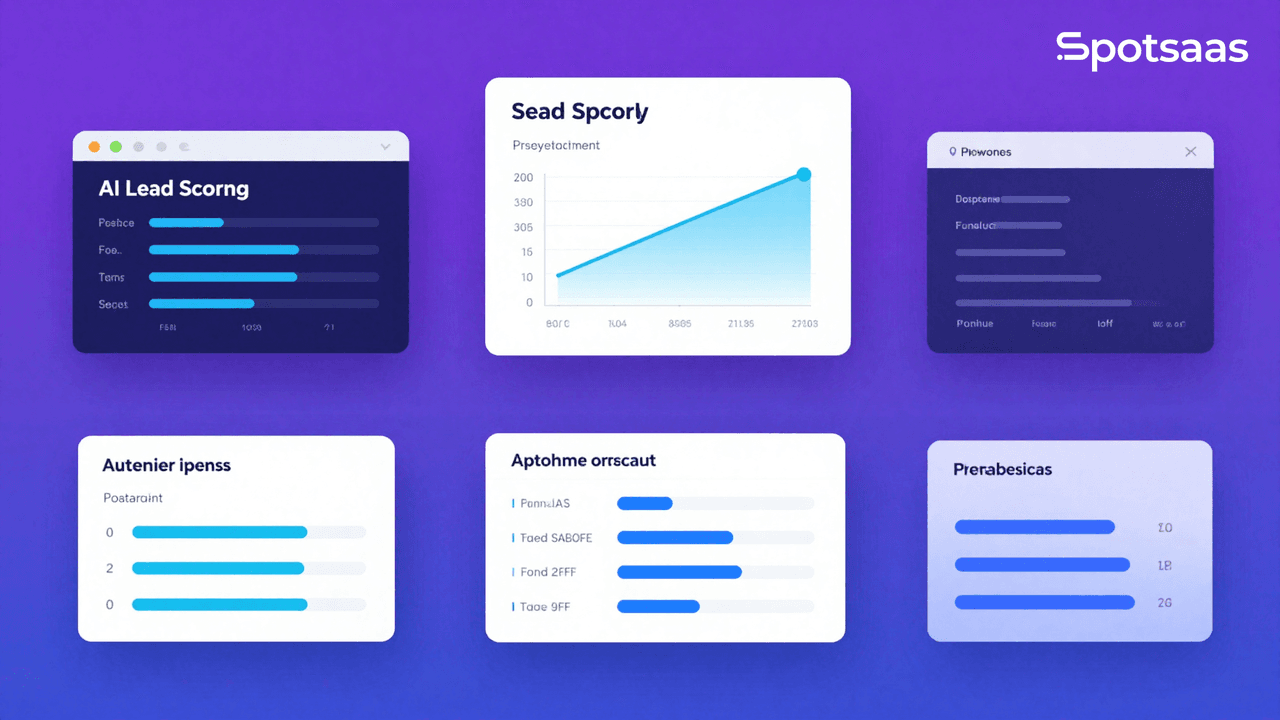
3. AI-Driven Lead Scoring Adds Precision to Qualification
One of the biggest improvements AI brings to the funnel is predictive scoring. Instead of assigning points based on static rules, AI evaluates dynamic signals like:
- Browsing depth and sequence
- Product-feature interest
- Intent keywords
- Industry buying patterns
- Content engagement
- Timing recency
- Similarity to previously closed-won leads
AI labels a lead as “warm” or “cold” and forecasts the likelihood of conversion. It predicts which prospects will request demos, which accounts are close to evaluating vendors, and which ICP segments typically close faster.
This precision lets sales teams focus their energy where it matters most. High-intent leads get immediate attention, while low-intent ones are nurtured with thoughtful automation until they’re ready.
Qualification becomes smarter, faster, and far more accurate than the manual guesswork of the old funnel.
4. Automation Speeds Up the Middle of the Funnel
Before AI, the middle of the funnel was where most opportunities slowed down. Prospects waited too long between touchpoints, SDRs juggled repetitive tasks, and follow-ups slipped through the cracks. AI automation fixes this by building workflows that adapt based on real behavior.
- If a buyer revisits the pricing page, AI sends a targeted email.
- If they spend time reading feature docs, AI triggers a tailored demo offer.
- If they show high intent, AI routes them directly to sales.
- If they go quiet, AI shifts them into a nurture journey built around their interest.
This keeps prospects warm without overwhelming the sales team. Reps step in at the right moment instead of chasing leads who aren’t ready yet.
In many SaaS funnels, AI voice agents are now playing a big role in speeding things up too. This is where a text-to-speech interface, such as Falcon TTS API, comes into play.
As companies looked for ways to scale conversations without scaling costs, demand grew for multilingual, ultra-fast voice automation. Falcon’s low-latency architecture, delivering sub-150ms time-to-first-audio and supporting up to 10,000 concurrent calls, lets SaaS teams build real-time voice agents that qualify leads instantly, across regions, at just 1 cent per minute.
Instead of waiting hours for a callback, prospects get immediate, human-like assistance. Teams no longer have to trade off between speed, cost, and experience — Falcon fits into AI-first funnels without forcing those trade-offs on anyone.
5. AI Receptionists Handle First Contact Across Every Channel
Modern SaaS buyers research on their own timeline. They browse your site at midnight, send questions via chat during lunch breaks, and call your main line outside business hours. They expect quick answers to basic questions without waiting for your team to get back to them — and when they don’t get one, they move on to a competitor who can.
AI receptionists solve this by acting as your always-on front line. They handle inbound calls, web chat, SMS, and social media messages. When a prospect reaches out, the system greets them, answers common questions, captures their information, and figures out what they actually need.
What makes this valuable is context retention across touchpoints. A prospect who chatted on your website yesterday and calls today doesn’t have to repeat themselves — the system already knows where they are in their research and continues the conversation naturally. Your sales team only steps in once leads are genuinely qualified, which saves hours on early-stage inquiries that go nowhere.
Your best prospects get faster responses, your team focuses on high-value conversations, and fewer opportunities slip through the cracks because someone reached out after hours.
6. Intent Detection Brings Better Timing Into the Funnel
AI no longer waits for prospects to fill out forms. It spots buying intent before a lead even identifies themselves, picking up on:
- Pricing page revisit spikes
- Product comparison loops
- Sudden activity in help docs
- Repeated feature searches
- Cross-device browsing
- Competitor research behavior
What used to be invisible is now fully visible.
AI alerts sales teams when a lead is heating up, giving them the right moment to start a conversation. Timing becomes a competitive advantage instead of a gamble — reaching out to a buyer at the right time, while they’re actively considering solutions, increases conversion rates.
The Future of AI in SaaS Lead Gen
Here are the three biggest shifts shaping the future of SaaS lead gen:
1. Predictive Funnels Will Replace Reactive Funnels
The next evolution of SaaS lead generation is all about prediction. AI will help teams understand what leads are likely to do next.
Predictive models will read micro behaviors:
- How long does a prospect hover over a pricing page?
- Which features do they keep revisiting?
- What content sequence do they follow?
Even small signals show whether they’re comparing competitors.
Instead of waiting for a lead to raise their hand, AI will score and surface them before they’re fully active. This flips the funnel: sales teams stop chasing leads and start responding to high-intent moments AI has already flagged. The result is a funnel that runs faster, smoother, and with fewer dropped opportunities.
2. Conversational AI Will Become the First Touchpoint for Most SaaS Buyers
AI will increasingly open conversations with prospects using AI voice technology.
Across SaaS, real-time AI voice agents and chat-driven assistants will increasingly serve as the first layer of engagement.
They’ll answer queries, qualify leads, route them to the right workflows, and handle repetitive follow-ups instantly, without making prospects wait for a human rep’s availability.
This shift creates a funnel where:
- Every inbound visitor gets immediate attention
- Every lead receives personalized responses
- Every qualifying question is handled systematically
- Every sales team enters conversations when prospects are already ready
3. AI-Driven Product-Led Growth Will Become the New Standard
SaaS buyers want to try a product before they talk to anyone.
AI will turn product-led growth (PLG) into a self-guided engine built into the funnel itself.
AI will track how users interact with a product trial, spot friction points, trigger contextual onboarding flows, and automatically convert usage patterns into qualified opportunities. A prospect who tests a feature intensively will get nudges, support, or recommendations tailored specifically to their journey.
The upcoming SaaS funnel will blend:
- PLG analytics
- Real-time intent detection
- Automated onboarding
- Instant conversational support
Everything becomes personalized and continuously refined as more data comes in.
The SaaS Funnel Is Getting Smarter
AI is redefining how SaaS companies attract, qualify, and convert buyers.
Traditionally, the funnel was manual, slow, and generic. With AI, it’s fast, predictive, and genuinely personalized.
AI brings real-time insights, automated qualification, and personalized nurturing together, giving SaaS teams a funnel that adapts as quickly as their customers do.
The takeaway is simple:
SaaS companies that adopt AI early will build smarter funnels, reduce inefficiencies, and stay ahead of competitors that still rely on outdated playbooks.
To explore more SaaS guides, visit Spotsaas.

- Independent picks for exactly what you just read about
- Matched to your team size & needs
- Vendors don't pay for placement
Step 1 of 4
How big is your team?
We tailor recommendations to companies your size.















Related Articles
AI Software
How AI-Powered ATS Tools Boost Diversity in Hiring — Real DEI Use Cases (2026)
Continue reading →
AI Software
5 Powerful AI Features Revolutionizing Hiring Workflows in 2026
Continue reading →
AI Software
How To Choose The Best Image Recognition Software For 2026
Continue reading →
AI Software
Best AI Resume Screening Tools in 2026 to Hire Faster
Continue reading →