
A Comprehensive Guide to SailPoint: Understanding the Role of Identity Management Platforms in Enterprise Security

Tracking who has access to what inside a company is hard, and it gets harder as the number of employees, applications, and cloud services grows. Identity management platforms address this by managing user identities and controlling access across an organization, which is why they have become central to enterprise security.
This article looks at SailPoint, one of the established vendors in this space, and explains how it manages access to help protect a company against potential threats. The sections below cover what the platform does, how it fits into existing systems, and how it compares with alternatives.
Read on for a practical breakdown of how SailPoint helps safeguard business assets.
Key Takeaways
- SailPoint is an identity management platform that improves enterprise security by managing user access and keeping accounts aligned with internal policies and external regulations.
- The platform connects to both legacy systems and cloud services, and it automates provisioning and onboarding so companies spend less time on setup and run less risk of manual errors.
- SailPoint applies machine learning to spot patterns and anomalies in user behavior, surfacing signals that help block unauthorized access and cyber threats before they spread.
- Against other platforms, SailPoint offers strong policy enforcement, AI-based recommendations, a straightforward interface, detailed compliance reporting, configurable workflows, operational cost savings, and customer recognition from industry analysts such as Gartner.
The Importance of Identity Management in Enterprise Security
Identity management is a foundation of enterprise security. It works as more than a gatekeeper: it is the layer that decides how data and access are protected across an organization, and it applies those decisions to every account.
Every sign-in or access request is a chance for a breach if identities are managed poorly. SailPoint reduces that exposure with machine learning algorithms that recognize normal patterns and flag anomalies, so only authorized users reach sensitive systems.
That capability matters because cyber threats keep changing. With centralized control, organizations use SailPoint to apply the same access policies to every user account and application, whether those resources sit on-premises or in the cloud.
A single approach to identity governance also makes regulatory compliance easier to meet, and it lowers costs by removing manual work from provisioning and onboarding.
Because it strengthens security while cutting operational cost at the same time, identity management is a core part of protecting enterprise assets not an optional add-on.
Comprehensive Overview of SailPoint
SailPoint is an identity management platform built for enterprise security. It pairs a set of governance features with integration into systems companies already run, which makes it a useful tool for reducing cyber risk and keeping data access in line with compliance requirements.
Key Features
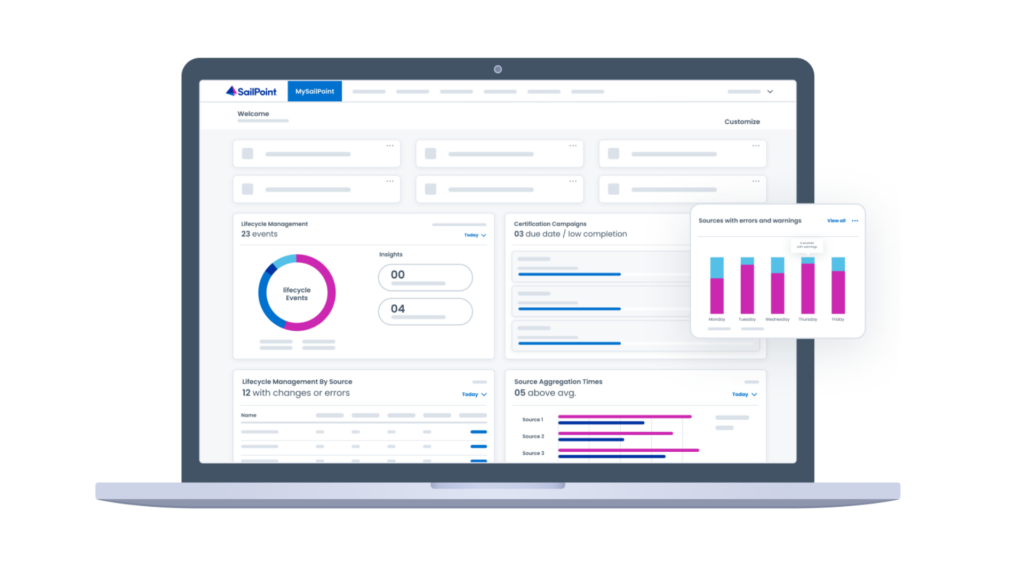
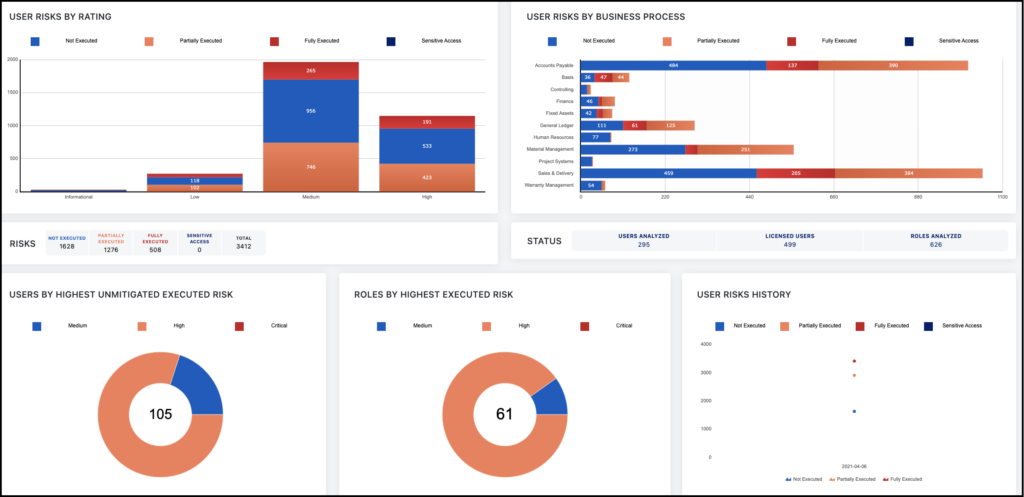
SailPoint focuses on identity governance and the security controls that surround it. Its features are aimed at the access-management problems that come with connected, multi-system enterprise environments.
| Feature | Description |
|---|---|
| Identity Governance | The core of the platform. This feature manages digital identities and keeps access rights aligned with policies and regulations. It gives a clear view of who can access what inside your organization. |
| Direct Integration | The system connects with your current infrastructure. Whether you run legacy systems or cloud services, SailPoint keeps identity management consistent across every platform. |
| Provisioning and Onboarding | Speed matters, and SailPoint automates provisioning for new users and applications. This removes manual errors and gets people productive faster, part of the $2 million saved annually reported by many enterprises. |
| Cloud Platform Adaptability | The Identity Security Cloud Platform is built for current demands and scales to enterprise needs without giving up control or performance. |
| Machine Learning Insights | AI technology delivers instant insight into identity data, giving organizations analysis that keeps pace with changing risks at speed and scale. |
| Efficient Automation | Automated workflows take routine administrative tasks off people’s plates, which raises efficiency across departments. |
| Maturity Assessment Tools | These provide benchmarks against industry best practices, so companies can find weak spots in their identity security strategy using SailPoint’s evaluations. |
Integration with existing systems
One of SailPoint’s strengths is fitting into an organization’s existing IT infrastructure without forcing a rebuild. With it, companies can manage access rights across a wide range of systems and applications while current operations keep running.
It works as a bridge between different parts of the IT environment, moving identity data between them and keeping them in sync.
Using SailPoint’s ecosystem integration lets businesses put strong identity governance and access controls in place. The platform handles the hard part of matching cloud resource management with on-premises data security needs.
The result is that each user holds the right level of access, policy compliance is maintained, and day-to-day operations stay efficient across the whole technology stack.
SailPoint’s Role in Mitigating Cyber Risk
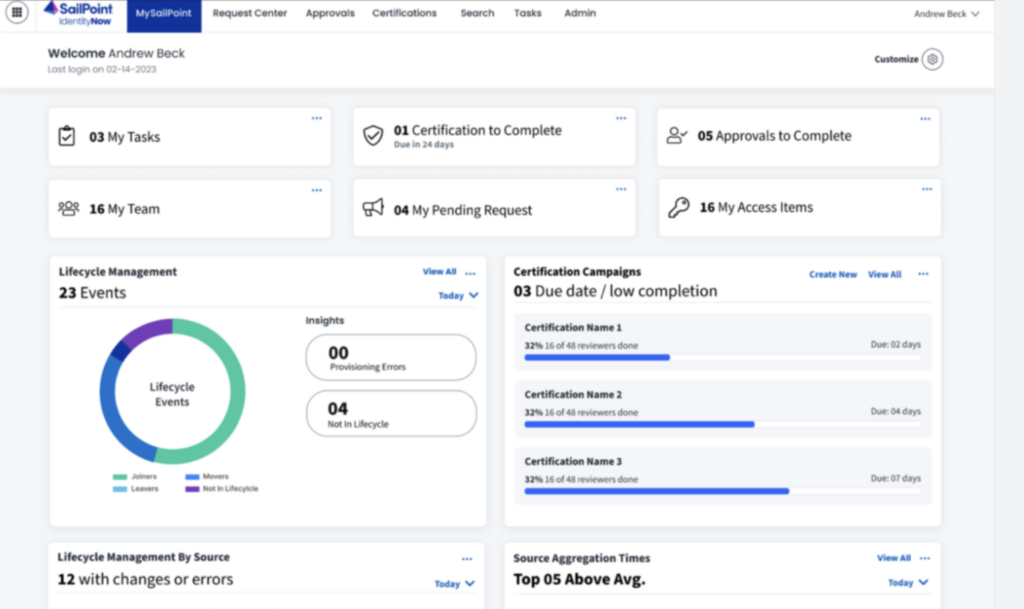
SailPoint’s products have saved companies $2 million annually. The Identity Security Cloud Platform provides centralized control at enterprise scale for identity security. Its intelligence feature uses machine learning and AI to deliver instant insight into identities and access, and it does so at speed and scale.
The platform’s automation handles identity processes and decisions, which drives efficiency across the whole organization.
Comparing SailPoint with Other Similar Products
Placing SailPoint next to competing tools shows where its advantages lie in the identity management market. Identity governance is a complicated area, and the platform a company picks has a direct effect on its security posture. The table below sets out the key differences.
| Feature | SailPoint | Competitor A | Competitor B |
|---|---|---|---|
| Identity Governance | Strong policy enforcement and risk management | Basic compliance controls | Advanced reporting capabilities |
| Access Management | Direct integration with enterprise systems | Manual processes take over | Automated provisioning available |
| AI and Machine Learning | Intelligent recommendations and anomaly detection | Limited use of AI for insights | AI-driven access decisions |
| User Experience | User-centric interface with self-service options | Clunky user experience | Intuitive design but less functionality |
| Compliance Reporting | Comprehensive reporting for audit and compliance | Overly simplistic reporting tools | Detailed reports with customization options |
| Customizability | Highly configurable policies and workflows | Minimal customization | Some customizable features |
| Cost Efficiency | Average cost with high ROI through savings and efficiencies | Lower upfront costs but higher operational expenditures | High cost with potential for significant returns |
| Customer Recognition | Acknowledged by Gartner, with high customer satisfaction | Rarely recognized in industry analyses | Occasionally noted but with mixed reviews |
Across this comparison, SailPoint stands out as a full-featured platform with meaningful cost savings and shorter provisioning times. Its place in the Gartner Peer Insights Customer First Program and its Customers’ Choice distinction point to a consistent track record in identity governance and administration.
Conclusion
SailPoint’s Identity Security Platform gives organizations centralized control and instant insights, which helps secure every identity across a modern enterprise. Its machine learning and AI tools let teams understand and manage identities at scale while spending less effort doing it.
The platform’s integration across ecosystems keeps access control consistent for data, applications, systems, and cloud resources. Its Customers’ Choice recognition in Gartner Peer Insights backs up its standing in Identity Governance and Administration.
(Image Credit: SailPoint)
What Identity Governance Actually Delivers
Identity governance sits above day-to-day access management and answers a different question: not “can this person log in” but “should they still be able to”.
Access reviews
Periodic certification where managers confirm their people still need what they hold. This is the single most common audit requirement in regulated industries, and doing it in spreadsheets is where most organisations discover they need a platform.
The failure mode is rubber-stamping — reviewers approving everything because the list is long and unfamiliar. Good tooling reduces that by showing what changed since the last review rather than presenting the full list each time.
Role modelling and least privilege
Grouping entitlements into roles so access is granted by job function rather than by copying whoever sat there before. Access creep — permissions accumulated across internal moves and never removed — is what role modelling exists to prevent, and it is why long-tenured employees frequently hold the broadest access in an organisation.
Separation of duties
Enforcing that no individual holds a combination of permissions enabling fraud — creating a vendor and approving payments to it being the classic pair. Governance platforms detect these conflicts across systems, which is where manual review reliably fails because the two permissions live in different applications.
Is Governance Worth It Below Enterprise Scale?
The platforms in this category are built for organisations with thousands of identities and hundreds of applications, and the licensing reflects that. Below a few hundred employees the honest answer is usually no.
What does transfer at any size is the practice. A quarterly review where managers confirm their team access, a documented joiner-mover-leaver process, and a check that nobody can both create and approve payments are all achievable with an identity provider report and a calendar reminder.
The trigger for buying is generally regulatory — an auditor asking for evidence of periodic certification — or scale, when the review has grown beyond what one person can assemble by hand.
What an Implementation Actually Involves
Governance platforms have a reputation for long deployments, and the reason is rarely the software.
Data quality is the real project
Governance depends on knowing who someone is, who they report to, what they do, and what they can reach. Most organisations discover their HR data, directory and application entitlements disagree — orphaned accounts, people with two identities, systems where entitlements are opaque strings nobody can interpret.
Cleaning that up is the bulk of the work and it cannot be skipped, because certifying access from an inaccurate inventory produces confident, worthless output.
Application onboarding is incremental
Each connected application needs its entitlement model understood and mapped. Prioritise ruthlessly: the systems holding regulated data and the ones auditors ask about first, everything else later.
Attempting to onboard everything before going live is the most common reason these programmes stall for a year without delivering anything.
Reviewers need help, not lists
The programme lives or dies on whether managers engage with certification. Give them context — what changed since last time, what looks anomalous compared to peers — rather than an alphabetical list of entitlement names.
A review completed thoughtfully on twenty items beats a rubber-stamped review of two hundred, and auditors increasingly ask how reviewers were supported.
Measure the outcome
Orphaned accounts closed, average time to revoke a leaver, separation-of-duties conflicts resolved, and certification completion. These demonstrate value in terms a board understands, which is what sustains the programme past its first year.
Governance Without the Platform
If a full governance platform is out of scope, the practices still transfer and satisfy most of what auditors ask for.
Export access from your identity provider quarterly and have managers confirm their team’s permissions in writing. Maintain a documented joiner-mover-leaver process and evidence that it was followed. Check the handful of genuinely dangerous permission combinations — creating a vendor and approving payment being the classic — by hand.
That is a calendar reminder and a spreadsheet. It will not scale past a few hundred identities, and it will not survive an auditor asking for automated certification, but it covers the substance until it does.
Common Governance Findings
Auditors and first access reviews tend to surface the same handful of issues, which is useful to know in advance.
Orphaned accounts belonging to people who left. Standing administrative rights granted for a project that ended. Access accumulated through internal moves and never removed. Service accounts with no owner and unchanged credentials. And separation-of-duties conflicts spanning two systems, which manual review reliably misses because no single system shows both halves.
None of these require sophisticated tooling to find the first time — an export and a few hours will surface most of them. What tooling provides is finding them continuously rather than once a year.
Frequently Asked Questions
What is the role of identity management platforms in enterprise security?
Identity management platforms are central to protecting sensitive information and controlling who can reach resources inside an organization.
How does SailPoint enhance enterprise security?
SailPoint strengthens enterprise security by managing user identities, enforcing access policies, and detecting attempts at unauthorized access.
Can identity management platforms benefit small businesses as well?
Yes. Small businesses also gain from identity management platforms, which help maintain data integrity and keep out unauthorized access.
Is it necessary for all employees to use identity management platforms in an organization?
Having every employee use identity management platforms is important, since it enforces secure access controls and protects confidential company data.
What are the practical advantages of implementing SailPoint’s identity solutions?
Adopting SailPoint’s identity solutions can improve regulatory compliance, lower operational costs, strengthen cybersecurity, and simplify how user access is governed.
Compare alternatives to the tools in this post
Related Articles
Cybersecurity
10 Best CrowdStrike Alternatives in 2026 (Ranked for Every Security Team)
Continue reading →
Cybersecurity
Best Cybersecurity Software in 2026: Complete Guide for Every Business Size
Continue reading →
Cybersecurity
Best Identity and Access Management Software (IAM) in 2026
Continue reading →
Buyers guide
How To Choose The Best Security Awareness Training Software For 2026
Continue reading →