
Boost Your Sales with Our Ultimate Guide to Marketing vs Branding – Don’t Miss Out!

If the line between the concepts of marketing and branding feels blurry, you are not alone. Many businesses struggle to tell apart these two critical aspects of a successful business strategy, and treat the two as the same thing even though they play separate roles.
This blog will guide you through the distinct roles and goals of marketing and branding, and show how each one contributes to your company’s success. Here is how the two differ and where they overlap.
Key Takeaways
- Marketing promotes and sells products or services. It concentrates on driving sales and capturing audience attention in the short term.
- Branding creates a distinct identity, builds customer relationships, and establishes long-term recognition by shaping how customers perceive a company’s values and image.
- Both marketing and branding matter for business success. Marketing tactics support branding work to grow revenue.
- Well-known examples of branding and marketing campaigns include Nike’s “Just Do It,” Coca-Cola’s “Share a Coke,” and Apple’s “Get a Mac.”
Understanding the Difference Between Branding and Marketing
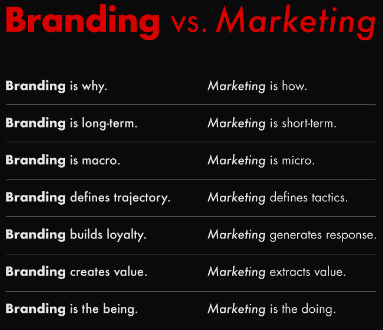
Each has its own definition, goals, and outcomes, yet the two stay closely linked in reaching overall business success.
Definitions of branding and marketing
Branding is the work of creating a unique name, logo, design, or symbol that identifies a company’s products or services and sets them apart from others. The aim is to build a recognizable presence in the market that attracts and keeps loyal customers.
Marketing is the active process of promoting and selling those products or services. It covers tactics such as advertising, sales promotions, public relations, and research into consumer behavior, so the product is positioned well in the marketplace.
Differences in goals and outcomes
The goal of branding is to build a strong company identity, create awareness, and earn customer loyalty. It works on the long term by shaping how customers perceive a brand’s values, image, and connection with its audience.
Marketing, by contrast, works to drive sales and win new customers in the short term. It captures attention through advertising campaigns, promotions, and market research that reveals how consumers behave.
Branding builds relationships and recognition over time, while marketing tactics are geared toward raising sales and producing immediate results in the near term. The two strategies operate together, and each supports the other, to reach overall success for a company.
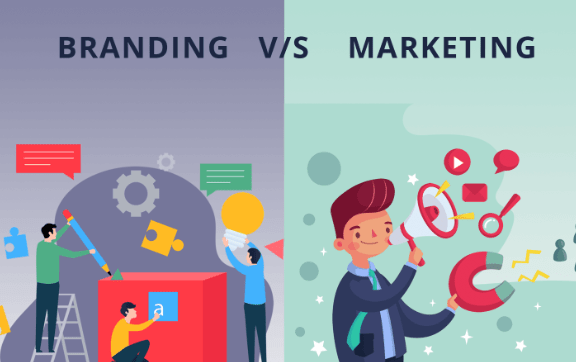
The two are tightly connected and pursue the same goals. Marketing is the tactical side that promotes products or services, drives sales, and captures audience attention through advertising and promotions.
Branding is the long-term strategy that builds customer relationships, sets a company’s identity and values, and creates recognition. The tie between the two comes down to how they support each other: effective marketing campaigns depend on a strong brand identity to connect with consumers on an emotional level and stand apart from competitors.
When companies build branding into their marketing work, they can improve their image, raise awareness, and ultimately drive sales through strategic, deliberate messaging and positioning. You can see this integration play out in various advertising campaigns where a brand’s values line up with what the target audience prefers and cares about, which in turn raises customer loyalty and engagement.
The Importance of Branding
Branding matters for building customer relationships, setting company identity and values, and creating long-term recognition.
Building customer relationships and loyalty
Building customer relationships and loyalty sits at the center of branding. When companies keep their promises and give customers strong experiences, they earn trust and form lasting relationships.
This work means understanding what the target audience needs and wants, engaging with them through personalized interactions, and asking for feedback to make products or services better.
With sound branding strategies, a business can build a loyal customer base that keeps supporting the brand and turns into a group of advocates who recommend it to others and spread positive word-of-mouth recommendations to their own networks.
Establishing company identity and values
Setting a company’s identity and values is a core part of branding. It means deciding who your company is, what it stands for, and what makes it different. Once you define that identity and those values, you create a foundation that guides your business decisions and your dealings with customers.
That foundation builds trust and loyalty among your target audience, because people can line up with the values your brand represents. A strong identity also sets you apart from competitors, so customers find it easier to recognize and remember your brand.
Through steady branding work, you can settle on a genuine identity and a set of values that connect with your customers on a deeper level.
Creating long-term brand recognition
Branding is central to creating long-term recognition. By keeping promises and delivering quality products or services, companies build trust and loyalty with customers.
Through branding methods such as logo design, messaging, and visual identity, a business can settle on a distinct, recognizable image that connects with its target audience.
Over time, that image firms up the brand’s place in the market and raises awareness among customers. Strong recognition brings more customer loyalty and repeat business with it.
Also, understand the Difference between Brand Marketing and Product Marketing.
The Role of Marketing
Marketing drives sales, captures audience attention, and promotes products and services. Here is how marketing tactics and strategies feed into a company’s overall success.
Driving sales and customer acquisition
Marketing carries much of the work of driving sales and winning customers. Through advertising, promotions, and public relations, marketing sets out to capture the attention of the target market and promote the products or services on offer.
By running market research and studying consumer behavior, marketing teams can build strategies that position their products or services to meet what customers need and prefer.
That work ultimately opens up more sales opportunities and helps businesses expand their customer base. With its focus on generating immediate results, marketing complements branding efforts by turning brand identity into concrete, tangible actions that drive revenue growth.
Grabbing audience attention and promoting products/services
Marketing does a lot of the work of catching an audience’s attention and promoting products and services. Through tactics such as advertising, sales promotions, and public relations, marketing strategies are built to create awareness and spark interest in what the company offers.
By understanding consumer behavior and market research, marketers can pin down the target audience’s needs and preferences and shape their messaging to fit. Whether through a striking advertisement or compelling content, marketing is about holding the audience’s attention while showing the distinct value of a product or service.
Beyond catching attention, marketing also promotes products and services by spelling out their benefits and persuading customers to buy. With careful positioning and clear communication, marketers can show how an offering meets a specific customer need and delivers value.
By drawing on thorough market research about consumer behavior, preferences, and demographics, alongside advertising campaigns that speak to the target audience’s desires or pain points, marketing helps businesses stand out from competitors while generating leads from potential customers.
In short, marketing gives businesses a strong way to catch their audience’s attention by promoting products and services in creative ways built for their target markets.
Learn how Brand Managers are different from Marketing Managers.
Short-term tactics and strategies
Short-term tactics and strategies carry a lot of weight in marketing because they focus on immediate results. These tactics are built to catch audience attention and drive sales over the short term.
Examples of short-term tactics include advertising campaigns, promotions, public relations, and market research. Used well, these tactics let companies raise awareness quickly, generate leads, and increase conversions.
While long-term branding builds lasting customer relationships, short-term tactics help companies hit their immediate goals and lift revenue. Businesses should balance long-term branding strategies with short-term marketing tactics to get the most out of both.
The Synergy Between Branding and Marketing
Branding and marketing work together to create a strong combined effect that drives business success.
How branding and marketing work together
Branding and marketing pair up to make a strong impact for companies. Branding builds the foundation of a company’s identity, values, and image, and marketing is the vehicle that carries that brand to the target audience.
By combining their efforts, businesses can amplify their messages and raise customer engagement. A strong brand identity, for example, helps marketing campaigns connect with consumers on a deeper level.
In turn, effective marketing tactics bring awareness to the brand and help build loyalty among customers. In effect, branding provides the framework for marketing strategies, while marketing amplifies and reinforces the brand’s message in order to drive sales and reach the company’s business goals.
Examples of successful branding and marketing campaigns
Well-known branding and marketing campaigns can guide businesses that want to make an impact in the market. One example is Nike’s “Just Do It” slogan, which has come to stand for the brand’s message of determination and drive.
That campaign set Nike apart from its competitors and connected with consumers on a deep emotional level at the same time, which is part of why it has endured for so long.
Another example is Coca-Cola’s “Share a Coke” campaign, which put different names and phrases on personalized bottles. That approach let consumers feel a personal tie to the brand, which raised loyalty and engagement.
The campaign worked well at creating buzz and driving social media conversations.
Apple’s “Get a Mac” advertising campaign, which featured Justin Long as the cool Mac guy and John Hodgman as the nerdy PC guy, also worked well at positioning Apple products as sleek, modern, and a step ahead.
By spelling out the key differences between Macs and PCs through relatable characters, the campaign successfully shifted and influenced how consumers viewed Apple products.
The benefits of integrating branding and marketing efforts
Combining branding and marketing brings several benefits to a company. First, it keeps messaging and visuals consistent across every marketing channel, which strengthens how well the brand is recognized and remembered.
When branding lines up with marketing strategies, companies create a strong, unified identity that connects with their target audience. Combining branding and marketing also makes for a more consistent customer experience, since the brand promise is communicated the same way throughout the buyer’s journey.
That combination also lets companies build stronger customer relationships by earning trust and loyalty through consistent messaging. By bringing branding and marketing together, businesses can raise their overall impact while driving sales and creating long-term brand value.
Conclusion
Branding and marketing are both essential parts of a sound business strategy. Branding builds customer loyalty and sets a company’s identity and values, while marketing drives sales, catches attention, and promotes products or services.
By combining these two elements well, businesses can create strong brand recognition and connect with their target audience to reach long-term success.
FAQs
What is the difference between marketing and branding?
Marketing involves tactical goals to promote a product or service, while branding is a strategy that defines the identity of your product positioning in the marketplace.
How does branding support marketing strategy?
Branding shapes brand management which sets guidelines for all marketing strategies, ensuring consistent messaging across all platforms.
Can I prioritize one over the other u0026#8211; Marketing vs Branding?
Both are important as they play different roles. While tactical goals in marketing can bring quick sales, an effective branding strategy provides long-term value and customer loyalty.
Does my small enterprise need both Branding and Marketing?
Yes! Regardless of your business size, having both strong branding and targeted marketing will help you stand out in competition and ensure sustained growth.

- Independent picks for exactly what you just read about
- Matched to your team size & needs
- Vendors don't pay for placement
Step 1 of 4
How big is your team?
We tailor recommendations to companies your size.















Related Articles

Marketing Automation
PPC vs CPC: The Complete Guide to Understanding Digital Advertising Metrics
Continue reading →

Best Tools
Best Web Analytics Tools & Software: A Complete 2026 Guide
Continue reading →

Best Tools
5 Best Marketing Automation Software Tools in 2026: Find the Best Tool for Your Business
Continue reading →

Buyers guide
What Is Marketing Automation? A Complete Guide for 2026
Continue reading →