
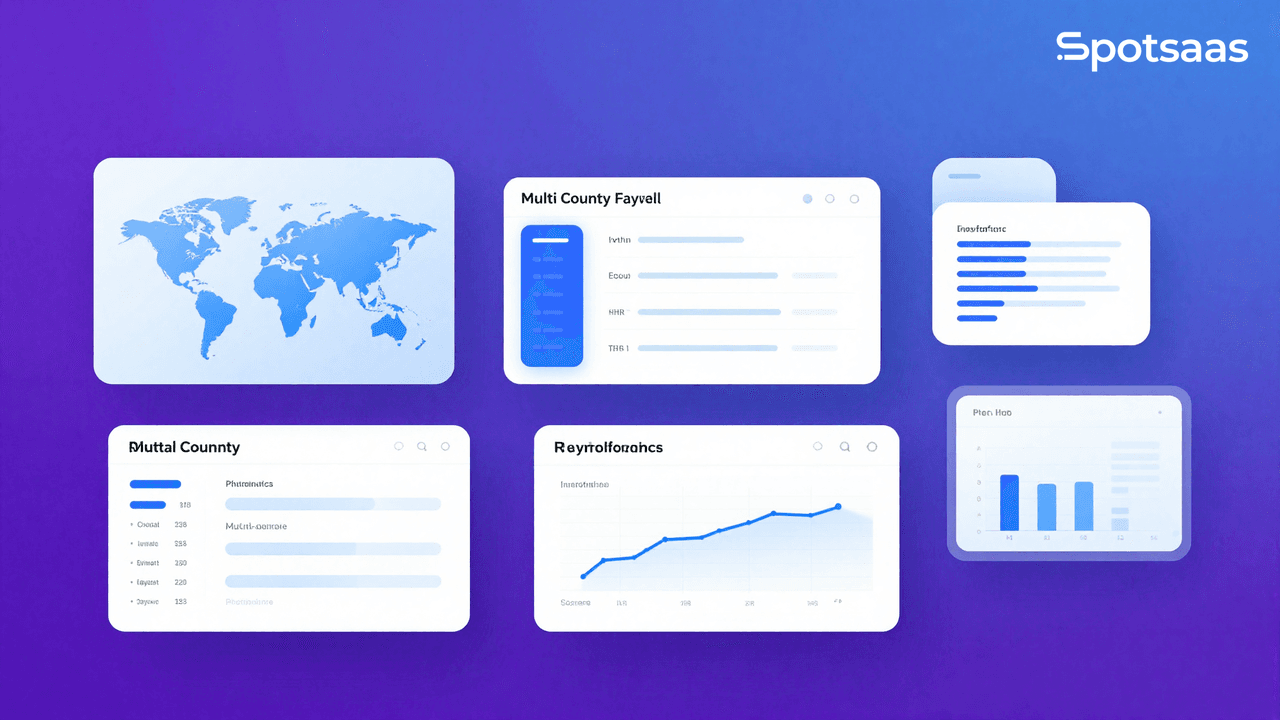
Rolling out a global HR system touches payroll, compliance, IT, and every employee across every region your company operates in — which is exactly why it tends to feel unmanageable if you don’t break it into stages. Try to tackle it all at once and it’s easy to lose track of who’s responsible for what.
This post lays out that process stage by stage: what to assess before you start, how to choose the right system, and the project plan that actually gets it live across every region without losing anyone along the way.
Key Takeaways
- Assess your existing HR systems to identify any gaps or limitations that may hinder the implementation of a global HR system.
- Identify potential roadblocks, such as lack of executive support or resistance from employees, and develop strategies to overcome them.
- Scope out the necessary tools and resources, considering features like payroll integration, collaboration tools for remote teams, and language translation capabilities.
- Establish a budget that covers all aspects of the implementation, including software licenses, hardware upgrades, training costs, and additional resources.
What is a Global HR System and Why You Need One
A Global HR System is a centralized platform that simplifies and streamlines HR management across multiple countries and regions, benefiting organizations by reducing costs, improving the employee experience, and ensuring legal compliance.
Centralizing and simplifying HR management
Pulling multiple HR functions into one system cuts out the redundant processes that pile up when every region runs its own tools, and that alone tends to move the needle on productivity — the same request no longer has to be filed three different ways depending on which office it originated in.
Less time goes into administrative busywork, which frees HR staff to spend it on strategic work instead — performance, development, retention. Error rates drop too, since data lives in one place rather than being retyped across disconnected platforms every time someone needs it.
The “simplifying” half of the equation comes from the interface itself: an intuitive, automated system takes less manual effort to navigate, for HR staff and employees alike.
Put together, that consolidation gives leadership something they didn’t have before — accurate, real-time data spanning recruitment, payroll, and performance, all in one view instead of stitched together from separate reports.
Streamlining the employee experience
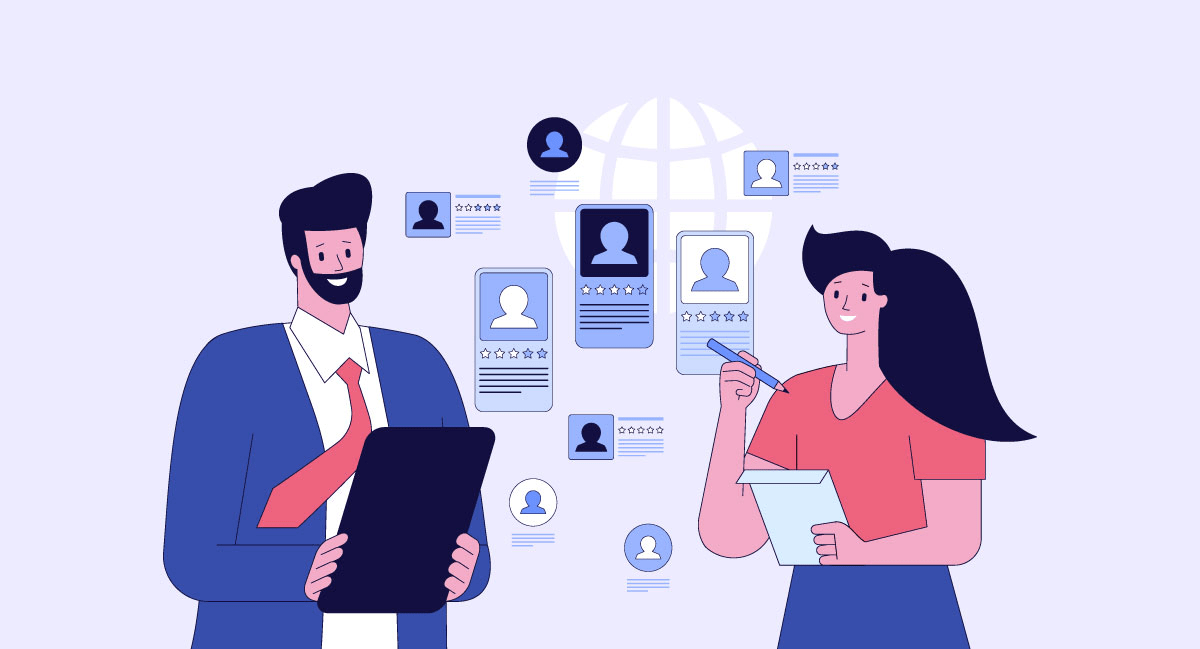
In the realm of global HR systems, streamlining employee experiences means building processes that hold up the same way whether someone’s in Manila or Munich, instead of a patchwork that varies by office.
Consistency itself is a productivity lever: employees waste less time confused about which specific process or policy applies to their situation.
Done well, a global system gives every employee one intuitive portal for personal data, benefits enrollment, time-off requests, and whatever else they’d otherwise need to email HR about.
That self-service shift is what actually reduces the administrative load on regional HR teams — fewer routine requests landing in their inbox means more room for the work that actually requires a person’s judgment.
Reduced costs
Consolidating onto one global system usually costs less than running separate regional HR platforms — both the initial spend and what it takes to maintain them going forward.
Automation compounds the savings: fewer manual tasks means staff time goes further, and a platform covering the full employee journey tends to lower operational costs the longer it’s in place.
Budgeting gets simpler too. One consolidated software line is a lot easier to track than a dozen regional contracts with different renewal dates and currencies — a global HR system pays off on the finance side as much as the workforce-management side.
Preparing to Implement a Global HR System
Assess your existing HR systems, identify any potential roadblocks, scope out the necessary tools, and establish a budget to ensure a smooth implementation of your global HR system.
Assess existing HR systems
Before building anything new as part of implementing a successful global HR system, get a clear picture of what’s already running and where it falls short. That assessment should cover:
- Evaluate the functionalities of your current HR systems and their effectiveness in meeting your organization’s needs.
- Identify any gaps or limitations in your current systems that may hinder the implementation of a global HR system.
- Assess the level of integration between different HR systems and evaluate their compatibility with a global solution.
- Consider the scalability of your current systems and their ability to support the expansion of your workforce in different regions.
- Take into account the user experience and usability of your current HR systems, considering both employee and administrative perspectives.

Identify roadblocks
Naming the obstacles ahead of time is what lets you plan around them instead of getting blindsided mid-rollout when implementing a global HR system. The usual suspects:
| Challenge | Description |
|---|---|
| Lack of executive support | Securing buy-in from leadership is pivotal for resource allocation and overcoming resistance from stakeholders. |
| Resistance from employees | Addressing concerns and communicating benefits are key to minimizing resistance from employees who are accustomed to existing systems or fear job losses. |
| Data complexity and migration | Consolidating and migrating data from various sources and ensuring integrity and security are crucial for a smooth transition. |
| Integration challenges | Coordinating with IT teams to integrate the new HR system with existing applications can present technical complexities. |
| Cultural differences | Adapting the HR system to diverse cultures, languages, and work practices and providing cross-cultural training are essential for managing a global workforce. |
| Compliance with local regulations | Ensuring compliance with the labor laws and employment regulations of each country requires thorough understanding of local requirements. |
| Lack of user adoption | Providing training programs, user-friendly interfaces, and ongoing support are vital to promote user acceptance and engagement. |
| Budget constraints | Limited budget may pose challenges in selecting the right HR solution and may require compromising on desired features. |
Scope out necessary tools
With gaps and roadblocks mapped, the next question is what actually needs to be built or bought — the specific software and technology that will run HR at global scale.
Payroll that handles multiple currencies and tax jurisdictions is usually non-negotiable. Collaboration tools for distributed teams and language translation support tend to matter just as much once the system spans more than one region, since a workforce spread across time zones and languages needs more than a shared spreadsheet to stay coordinated.
Matching tools to requirements this carefully up front is what keeps the rollout from stalling on a missing capability discovered halfway through.
Establish budget
A global HR rollout needs a budget that accounts for more than the software license — hardware upgrades, training time, and contingency for the resources you didn’t anticipate needing all belong in the number. Skip any of those categories at the planning stage and they tend to reappear later as an unbudgeted line item.
Setting that figure early gives every stage of the project funding to draw on, and it makes tracking spend against plan far easier than discovering overruns after the fact.
Get the budget wrong and even a well-planned rollout can stall for lack of funds at exactly the wrong stage — it’s worth erring generous on the estimate.
How to Choose a New Global HR System
When choosing a new global HR system, it is important to prioritize the employee experience, consider the necessary features, and select a solution that covers the entire employee journey.
Prioritize employee experience
Building the selection process around employees, not just HR’s admin needs, is what determines whether the system actually gets adopted once it’s live.
That means a genuinely user-friendly interface, navigation that doesn’t require a training manual, and experiences that adjust to a person’s specific role instead of a one-size-fits-all dashboard.
Look for self-service access to HR information, mobile support for employees who aren’t at a desk all day, and automation that removes routine tasks from everyone’s plate, not just HR’s.
A system that gets these right pays off twice — better operational efficiency, and higher employee satisfaction because the tool doesn’t get in people’s way.

Consider features needed
Feature checklists vary by organization, but these are the ones worth evaluating against your specific requirements:
| Feature | Description |
|---|---|
| Employee Self-Service Portal | Facilitates easy access to HR information and processes for employees. |
| Integration with Other Systems | Enables seamless data management by integrating with payroll, timekeeping, and other business systems. |
| Reporting and Analytics | Offers advanced capabilities for analyzing data and making informed decisions. |
| Multilingual Support | Accommodates a diverse workforce with support for multiple languages. |
| Mobile-Friendly Interface | Ensures convenient access from various devices, anywhere and anytime. |
| Workflow Automation | Streamlines HR processes to enhance overall efficiency. |
| Compliance Management | Provides tools to assure adherence to global regulations and policies. |
| Training and Development Modules | Supports employee growth through various learning and development initiatives. |
| Employee Engagement Tools | Includes surveys and recognition programs to foster a positive workplace culture. |
| Customizable Dashboards and UI | Allows tailoring of dashboards and user interfaces to meet specific organizational needs. |
Choose a solution that covers the entire employee journey
Payroll and benefits are table stakes — the better test of a global HR system is whether it also covers recruitment, onboarding, performance management, training, and offboarding in the same platform.
A system that spans the full lifecycle gives employees one place to find everything they need at every stage of their employment, instead of switching tools depending on what they’re trying to do.
It pays off for HR too: data sharing and analysis across processes gets easier when it’s not fragmented across point solutions, which sharpens decision-making and cuts down on redundant work.
When evaluating a system against the full employee journey, check for:
– Features that address each phase of the employee lifecycle.
– Scalability to accommodate future growth.
– Integration capabilities with other business systems.
Implementation Project Plan
With a system selected, the work shifts to execution. Here are the key steps involved in building an implementation project plan for a global HR system.

Identify team
The people driving the project forward matter as much as the software itself. That team should include staff or representatives from each major country or region the system will cover, not just headquarters staff working from assumptions about how things run elsewhere.
Local knowledge from a diverse group is what keeps regional needs and requirements from getting overlooked during planning — a rollout designed entirely from headquarters tends to miss the local nuances that only show up once someone on the ground flags them.
Cross-department collaboration — HR, finance, IT working together, not in sequence — is what actually gets a rollout of this size across the finish line without one department’s blind spot becoming everyone’s problem.
Beyond regional representation, look for expertise in project management, technology implementation, change management, and communication when assembling the team — the technical rollout and the people side of it require different skills.
Set stages and milestones
Clear stages and milestones are what keep a multi-region rollout on track instead of drifting. The core steps to define:
| Step | Description |
|---|---|
| Define Project Scope | Determine the specific functionalities and objectives that the global HR system should achieve. |
| Create a Timeline | Develop a realistic timeline, breaking down tasks into smaller steps to ensure consistent progress. |
| Identify Key Milestones | Set specific milestones to track important achievements and progress throughout the implementation. |
| Assign Responsibilities | Distribute roles and responsibilities clearly among team members and communicate expectations. |
| Monitor Progress | Regularly review and adjust the progress against set milestones, addressing challenges promptly. |
| Celebrate Successes | Acknowledge and celebrate each achieved milestone to boost morale and motivate the team. |
Plan data migration
Moving employee data into the new system is one of the higher-risk stages of the rollout, and it’s worth planning it deliberately instead of treating it as a technical afterthought — corrupted or incomplete records that make it into the new system tend to be far harder to fix after go-live than before. The checklist to work through:
- Identifying the existing data that needs to be migrated to the new system.
- Assessing the quality and accuracy of the data.
- Determining any data cleansing or consolidation requirements.
- Establishing a timeline for the migration process.
- Allocating resources and personnel responsible for handling the migration.
- Conducting thorough testing and validation of the migrated data.
Pilot test and evaluate
Pilot testing catches problems while the blast radius is still small — a handful of users, not the whole company — which makes it far cheaper to fix a broken workflow now than after it’s live everywhere. Here’s the process:
| Step No. | Action | Description |
|---|---|---|
| 1 | Selection | Choose a small group of employees from different regions or countries for the pilot test. |
| 2 | Implementation | Implement the new HR system with the selected group and gather their feedback. |
| 3 | Evaluation | Assess how the system addresses the needs and challenges specific to each region or country. |
| 4 | Issue Identification | Spot any issues or obstacles that arise during the test and seek solutions. |
| 5 | Data Collection | Gather data on key metrics like user adoption, satisfaction, and efficiency improvements. |
| 6 | Data Analysis | Analyze the collected data to check if the HR system meets its goals. |
| 7 | Improvement | Use feedback and insights from the pilot test to refine the system before a global launch. |
Train and upskill
A system nobody knows how to use doesn’t deliver value no matter how well it was built. Training needs to be deliberate, not an afterthought bolted on at launch:
- Conduct comprehensive training needs assessments to identify the specific skills gaps and requirements of employees.
- Develop tailored training programs that cater to different job roles and levels within the organization.
- Utilize various training methods such as workshops, online courses, job shadowing, and mentoring to provide diverse learning opportunities.
- Assign dedicated trainers or subject matter experts who can guide employees through the learning process.
- Provide ongoing support and resources for employees to enhance their understanding and proficiency in using the global HR system.
- Encourage active participation and engagement in training activities through interactive sessions, practical exercises, and real-life scenarios.
- Monitor progress regularly by conducting assessments or quizzes to gauge knowledge retention and identify areas for improvement.
- Offer continuous learning opportunities through refresher courses or advanced training modules to keep employees updated with any system updates or changes.
Roll out and assess
Rollout is where the plan meets reality — the system goes live for employees across every region it’s meant to cover, and that transition needs to be planned and paced carefully, not flipped on everywhere simultaneously.
Training has to accompany the rollout, not follow it, so people know how to use the system from day one instead of stumbling through it.
From there, ongoing assessment is what catches problems early enough to fix rather than living with. Regular evaluation surfaces issues and improvement areas so the system keeps meeting the organization’s needs rather than slowly drifting out of step with them.
Iterate as needed
No global HR system launches perfect, and treating it as a finished product after go-live is a mistake. Continuous refinement based on real feedback is what keeps it working, especially once usage patterns diverge from what the pilot group demonstrated.
Actively soliciting input from stakeholders and end users — not waiting for complaints to surface on their own — is what surfaces the adjustments worth making, whether that’s a fix, a workflow tweak, or a new feature.
Treated this way, the system keeps improving in usability and performance well past launch, and stays ahead of the unforeseen issues that inevitably show up once real usage patterns emerge.
Conclusion
A successful global HR system rollout comes down to careful planning, honest assessment of what’s already in place, and real collaboration across departments — not just picking the software with the longest feature list. Every stage covered here, from initial assessment through pilot testing and iteration, exists to catch problems before they reach the entire workforce.
Prioritize the employee experience, weigh the features that actually matter for your organization, and follow a defined implementation plan, and the payoff is a workforce that’s easier to manage and a business that stays compliant across every region it operates in — at lower cost than running separate regional systems ever allowed.
Frequently Asked Questions
What is a global HR system?
A global HR system is a software platform that allows organizations to manage their human resources processes and data across multiple countries or regions.
Why is it important to implement a global HR system?
Implementing a global HR system can streamline and standardize HR processes, improve efficiency, provide better access to employee information, and ensure compliance with local labor laws and regulations in different countries.
What are the steps involved in implementing a global HR system?
The steps involved in implementing a global HR system include conducting an impact analysis, selecting the right vendor or software, configuring the system to meet organizational needs, conducting user training, testing the system for functionality and data accuracy, and finally rolling out the system to all users.
How long does it take to implement a global HR system?
The duration of implementing a global HR system varies depending on factors such as the complexity of the organization’s requirements, size of the workforce, availability of resources for implementation tasks. Generally speaking though, implementation can take several months to over a year from start to finish.
What challenges might arise during the implementation process?
Common challenges that might arise during the implementation process include data migration issues, integration with existing systems or platforms within an organization’s IT infrastructure, resistance from employees due to change management concerns or lack of familiarity with new technology.

- Independent picks for exactly what you just read about
- Matched to your team size & needs
- Vendors don't pay for placement
Step 1 of 4
How big is your team?
We tailor recommendations to companies your size.















Related Articles
HR software
Paycor Pricing in 2026: What It Actually Costs
Continue reading →
HR software
UKG Pro Pricing in 2026: What It Actually Costs
Continue reading →
HR software
ADP Pricing in 2026: What It Actually Costs
Continue reading →
HR software
Paylocity Pricing in 2026: What It Actually Costs
Continue reading →