

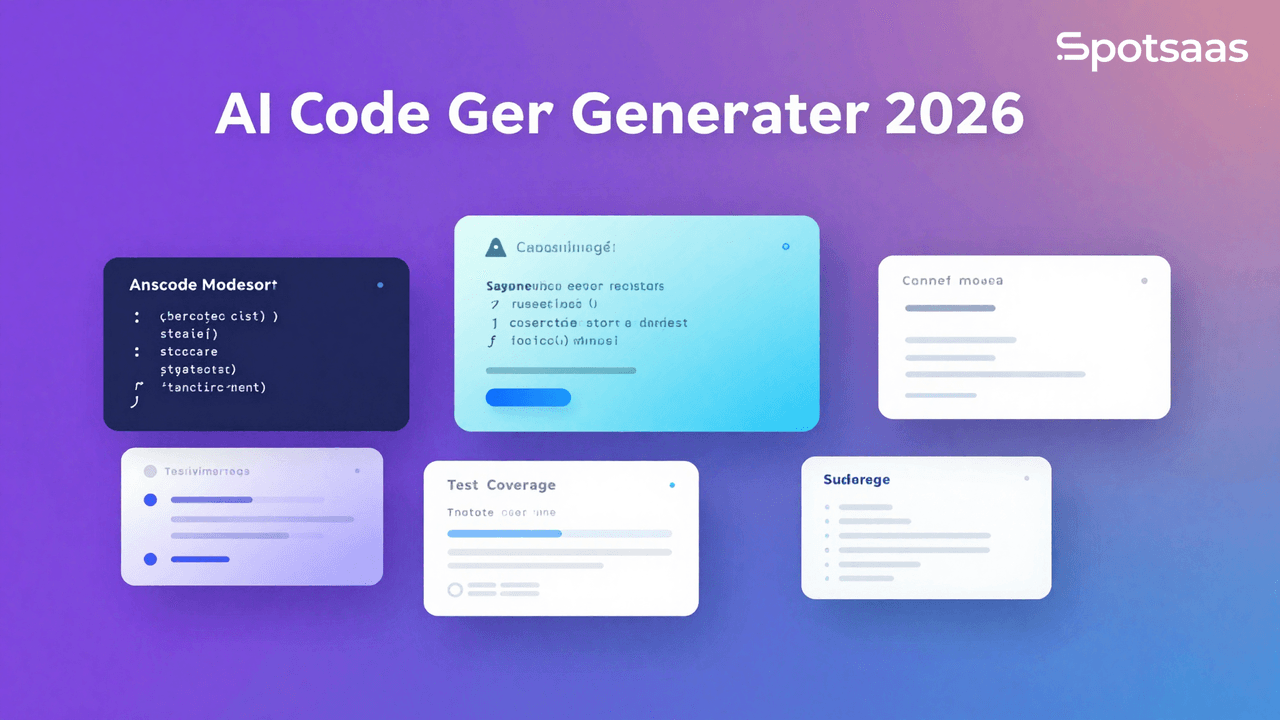
AI code generators have changed how developers write and maintain software day to day. These tools use artificial intelligence to generate, complete, and debug code, letting developers streamline their workflows, cut down on errors, and speed up project timelines across the board.
With a growing number of platforms on the market, though, picking the right AI code generator for your needs takes some real thought and comparison. This guide walks through the features, challenges, benefits, and trends that can help you make the best choice for your team.
What is AI Code Generation Software?
AI code generators are software tools that use artificial intelligence and machine learning algorithms to produce code automatically, or to assist a developer with writing it themselves.
These tools can complete functions, generate code snippets, suggest optimizations, and even flag bugs before they become real problems. By interpreting natural language commands, they turn plain user prompts into ready-to-use code.
Key Features of AI Code Generators
Here are some of the core features worth looking for when evaluating any AI code generation platform:
| Feature | Description |
|---|---|
| Multi-language Support | The ability to generate code in different languages (e.g., Python, JavaScript, C++). |
| Natural Language Prompts | Allows users to describe tasks in plain English, and the tool generates the corresponding code. |
| Code Auto-Completion | Predicts and completes code as you type, speeding up the development process. |
| Error Detection and Debugging | Automatically identifies and suggests fixes for syntax and logic errors. |
| Code Documentation Generation | Creates inline comments or full documentation for the generated code. |
| Test Case Generation | Generates unit tests to ensure code quality. |
| Integration with IDEs | Works with popular development environments (like VS Code, JetBrains, or GitHub Copilot). |
| Customizable Templates | Allows users to define templates for repetitive tasks or specific use cases. |
Who Uses AI Code Generators?
AI code generators are useful for a wide range of users across a company, not just engineers:
| User Type | Use Case | Benefit |
|---|---|---|
| Software Engineers | Generate APIs, automate repetitive code | Faster coding, fewer errors |
| Data Scientists | Build ML models, preprocess datasets | Focus on optimization, time savings |
| Students and Educators | Generate practice exercises, learn coding concepts | Real-time feedback, faster learning |
| DevOps Teams | Automate CI/CD pipelines and infrastructure templates | Faster deployment reduced human error |
| Freelancers and Small Teams | Build MVPs and prototypes quickly | Faster project delivery, more time for clients |
| Product Managers and Designers | Experiment with code, build prototypes | Validate ideas faster, improve communication |
Benefits of AI Code Generators
AI code generators offer a variety of benefits, including:
Faster Development and Time Savings
One of the biggest benefits of AI code generators is that they speed up the development process. By automating repetitive tasks and auto-completing code snippets, developers can produce code more efficiently, which matters most when working under tight deadlines or building prototypes and MVPs. Projects get delivered faster, which improves an organization’s agility and time-to-market, and lets businesses respond quickly to market demands while putting more resources toward innovation and quality.
Error Reduction and Cleaner Code
AI code generators come with real-time syntax error detection and debugging features, which keep code clean and functional from the start. They help developers avoid common mistakes, like typos and logic errors, that could turn into bugs later in the project. Fewer bugs mean lower maintenance costs and better software performance, since catching errors early cuts down on the time and resources spent troubleshooting and debugging.
Increased Productivity and Focus on Higher-Level Tasks
With routine coding tasks, like generating basic functions or templates, handled by AI, developers get more time for strategic and creative problem-solving. That shift lets them focus on architectural design, feature innovation, or optimizing complex algorithms, which enhances both individual and team productivity and gives developers room to take on more projects or invest in continuous improvement.
Better Documentation and Automated Testing
Some AI code generators automatically generate inline comments and documentation, which makes code easier to maintain and extend later on. Unit tests and test cases can also be generated by AI tools, helping developers validate code functionality as they go. Better documentation makes it easier to onboard new developers and hand off projects smoothly, while automated testing improves code quality and reduces the risk of errors during future updates.
Learning Support and Skill Development
AI code generators can also act as mentors for beginner developers, suggesting improvements, coding patterns, and best practices in real time. These tools support learning by explaining errors, recommending more efficient solutions, and demonstrating proper coding techniques, which helps developers, especially those early in their careers, build their skills faster and contribute more effectively to their teams.
Challenges of AI Code Generators
Despite their advantages, AI code generators come with some real challenges:
Dependency on AI Outputs
Relying too heavily on AI-generated code can get in the way of developers understanding the logic underneath it. Over time, that dependency can weaken problem-solving skills, leaving developers reliant on the tool rather than their own expertise, and struggling to debug or modify code when the AI generator produces incorrect or suboptimal output. Use AI code generators as assistive tools, not replacements — developers should still review and understand the code AI generates to keep building their own knowledge.
Limited Creativity and Problem-Solving
AI tools are trained on existing datasets, which makes them effective at generating standard solutions but limits their creativity when it comes to unique or unconventional problems that need human insight. Projects with innovative requirements often need more human involvement to reach a genuinely creative solution, so it makes sense to reserve AI code generators for routine coding tasks and rely on human judgment for complex problem-solving and creative development.
Quality Control Issues
AI-generated code isn’t immune to flaws. These tools can catch syntax errors, but they may still introduce inefficiencies or subtle logic bugs that affect performance, which can lead to poor performance, higher maintenance costs, and vulnerabilities if left unchecked. Developers need to review, test, and optimize AI-generated code to make sure it meets project requirements and quality standards.
Data Privacy and Security Concerns
Cloud-based AI tools often send code and data to third-party servers for processing, which raises data privacy and code security concerns, especially for projects handling sensitive or proprietary information. Businesses may end up exposing critical business logic or proprietary code to external providers, risking data breaches or non-compliance with regulations. Where possible, opt for on-premise or self-hosted AI tools, and confirm that any AI vendor complies with data protection regulations.
Limited Language or Framework Support
Many AI code generators support popular programming languages like Python, JavaScript, or Java, but may lack support for less common languages or legacy systems, which limits their usefulness for projects that depend on niche frameworks or older technologies. Developers working with legacy systems, like COBOL, may not find adequate support, which reduces the tool’s value for that kind of project. Before adopting an AI code generator, verify its language and framework support against your needs, and consider a hybrid approach that pairs AI tools with traditional coding practices.
Alternatives to AI Code Generators
If AI code generators are not the right fit for your project or your team right now, here are some alternatives worth considering:
| Alternative | Use Case |
|---|---|
| Code Snippet Libraries | Use for quick access to reusable code blocks. |
| Traditional Code Editors (IDEs) | Ideal for manual coding with syntax highlighting and debugging tools. |
| Pair Programming Tools | Collaborate with another developer for real-time coding and problem-solving. |
| Outsourcing Development | Hire freelancers or agencies for complex projects where AI tools fall short. |
How Much Do AI Code Generators Cost?
The cost of AI code generators depends heavily on the platform you choose and the features it offers:
Freemium Plans
Some platforms, like GitHub Copilot, offer limited free access with basic features for individuals or open-source projects.
Subscription Plans
Many tools charge monthly or yearly fees, with prices ranging from $10 to $100+ per user per month, depending on usage limits.
Enterprise Pricing
For large teams or companies, vendors often offer custom pricing with advanced features, dedicated support, and security options.
Usage-Based Pricing
Some platforms charge based on API calls or lines of code generated, which works well for businesses with usage that fluctuates.
How to Choose the Best AI Code Generator
Here are the key steps to selecting the right platform for your team:
Define Your Needs
Identify which programming languages, frameworks, and features you need (for example, Python for machine learning or JavaScript for web development).
Test Demos and Free Trials
Many vendors offer free trials — use them to evaluate a platform’s real-world performance and how well it fits your existing workflow.
Check for Integration Capabilities
Make sure the tool integrates cleanly with your IDE (like VS Code or JetBrains) and with other tools your team already uses, like GitHub.
Evaluate Support and Documentation
Reliable customer support and clear documentation matter for troubleshooting issues and learning a platform’s more advanced features.
Consider Scalability and Pricing
Choose a platform that fits your budget now and also offers scalable plans as your needs and team grow.
Involve Your Team
Gather feedback from the team members who will use the tool daily, so it actually fits how they work.
Implementation Tips
- Start with a Small Pilot Program: test the tool on a small project to gauge its impact before rolling it out to the entire team.
- Provide Training and Onboarding: offer training sessions to help your team get comfortable using the new platform effectively.
- Monitor Performance Metrics: track metrics like code quality, error rates, and development speed to measure the tool’s real impact.
- Optimize Workflows Based on Feedback: continuously refine your workflows using feedback from the developers actually using the tool.
Latest Trends in AI Code Generators (2024)
| Trend | Description | Example |
|---|---|---|
| Generative AI for Full Projects | Some platforms now generate entire codebases for small applications. | Developers use AI to create basic mobile apps from scratch. |
| AI-Powered DevOps Automation | Automates infrastructure setup and deployment pipelines. | AI tools generate CI/CD pipelines for cloud applications. |
| Natural Language to Code in Real-Time | Real-time conversion of spoken or written commands into code. | Developers describe tasks verbally, and AI generates the code. |
| Collaborative Coding with AI | AI assists teams by suggesting improvements during live coding sessions. | Teams use AI during pair programming for error detection. |
Conclusion
Choosing the best AI code generator in 2024 comes down to understanding your development needs, your team structure, and your budget. Start by identifying the languages and frameworks you actually use, then evaluate platforms based on features like auto-completion, debugging tools, and IDE integration.
Don’t skip testing demos, involve your team in the decision-making process, and plan for a smooth rollout with proper training and feedback loops built in from the start.
Related Articles
AI Software
How AI-Powered ATS Tools Boost Diversity in Hiring — Real DEI Use Cases (2026)
Continue reading →
AI Software
5 Powerful AI Features Revolutionizing Hiring Workflows in 2026
Continue reading →
AI Software
How To Choose The Best Image Recognition Software For 2026
Continue reading →
AI Software
Best AI Resume Screening Tools in 2026 to Hire Faster
Continue reading →