
Improving Grading Efficiency and Consistency with Gradescope Online Assessment Platform

Grading large stacks of assignments can overwhelm even the most organized educators. Gradescope, used at more than 2,600 universities globally, offers a modern answer to this long-standing problem.
This post looks at how Gradescope’s online platform speeds up grading and keeps scores uniform across submissions. Below are the tools that make marking work faster and more predictable.
Key Takeaways
- More than 2,600 universities worldwide use Gradescope to help educators grade assignments more quickly and uniformly.
- The platform supports a range of subjects and can handle multiple-choice questions as well as complex assignments like coding, with the help of AI-assisted grading features.
- Dynamic Rubrics let teachers make real-time changes that automatically update across all graded work, which simplifies regrade requests and keeps communication with students clear.
- AI technology in Gradescope learns each instructor’s grading style for greater consistency and has been applied to over 700 million questions around the world.
- Question and rubric-level statistics give detailed insight into student performance, helping instructors refine their teaching methods and provide targeted feedback.
What is Gradescope?
Gradescope is a grading tool for education technology that speeds up the grading process for educators across many disciplines. Its features change how instructors handle both digital and paper-based assignments.
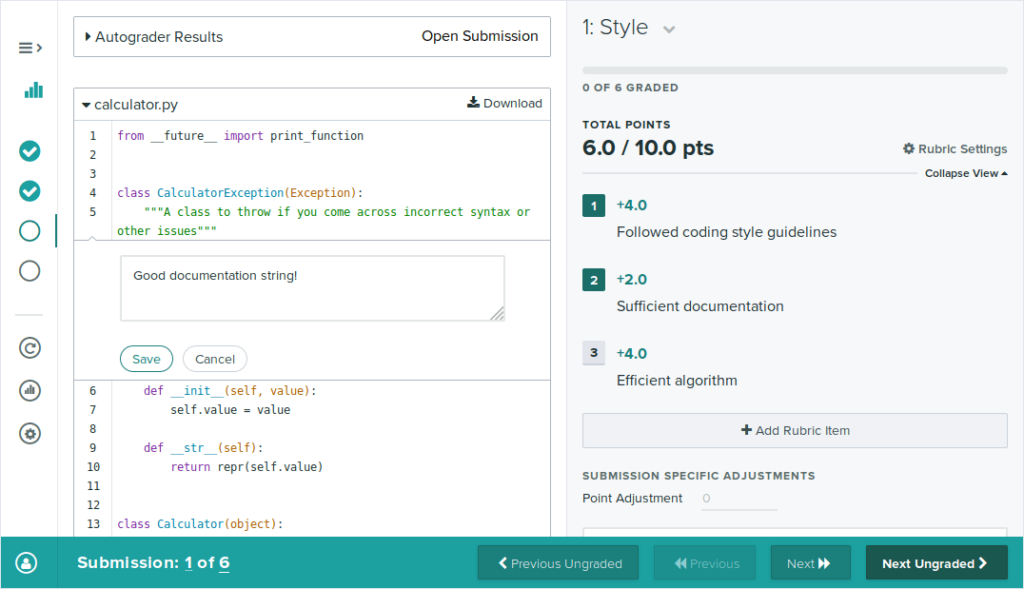
Adjusting feedback to fit individual student needs is straightforward, and that support carries through to both learning outcomes and academic integrity. Instructors can shape comments per question rather than writing the same notes by hand for every paper.
The platform works across many subjects, from Computer Science to Economics, so it can grade multiple-choice questions as well as complex code assignments. The same tool that handles a short quiz can also mark longer, open-ended work.
It includes AI-assisted grading features that improve consistency and sharply cut the time teachers spend evaluating work. Educators can create dynamic rubrics tied to specific questions, which Gradescope uses to provide immediate analytics about student performance. That lets teachers take a more deliberate approach to instruction and curriculum changes.
Features of Gradescope
The platform offers dynamic rubrics for flexible grading and feedback, AI-assisted grading to speed up the assessment process, and question and rubric-level statistics for insight into student performance.
Dynamic Rubrics
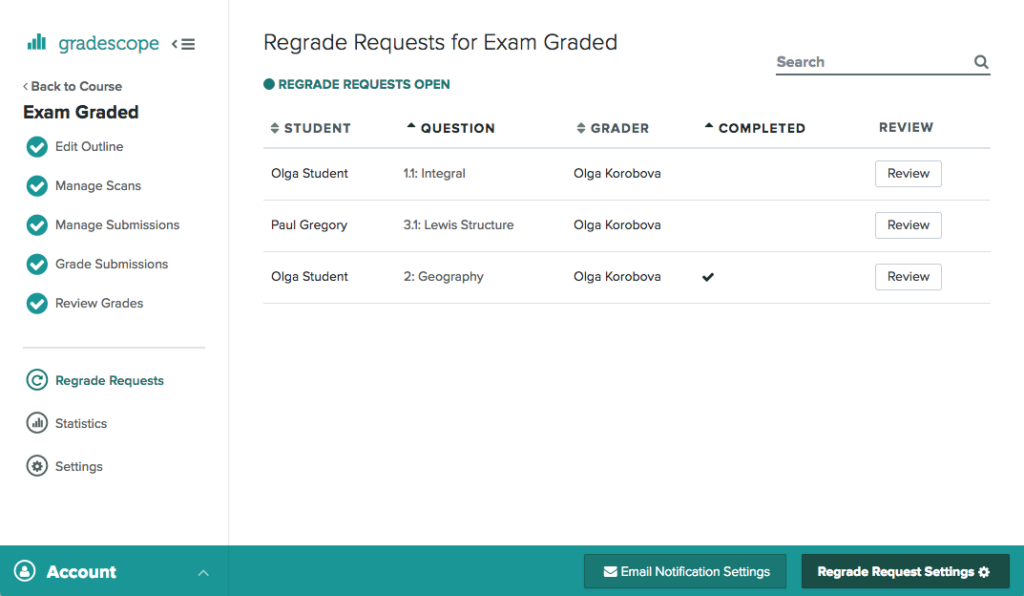
Dynamic Rubrics on Gradescope change how instructors give feedback on digital assignments. With this feature, educators can build detailed rubrics that spell out specific questions and grading criteria matched to their course’s needs.
These standards guide students and show them where to focus for improvement. Rubric changes are easy to make: educators can adjust criteria at any point, and the updates apply automatically across all previously graded work.
The flexibility of Dynamic Rubrics supports a fairer grading process and speeds up regrade requests online. Students using browsers such as Chrome, Firefox, or Safari get an efficient review system where adjustments are clear and appear right away.
This removes confusion and makes assessment more transparent for everyone involved. Feedback becomes actionable as students work through PDFs or screen reader-compatible materials, guided by precise instructions that help them improve their academic work.
AI-assisted Grading
With Gradescope’s AI-assisted grading, instructors can speed up the grading process for subjects like Computer Science, Math, and Economics. The feature supports both variable-length assignments and fixed-template assessments, which improves efficiency across different types of academic work.
It adapts to each instructor’s grading style over time, making it easier to stay consistent even in large classes.
Teachers benefit from the inline scoring details that AI-assisted grading provides, giving students greater transparency and more tailored feedback. It lets educators grade faster and also examine how well each question worked so they can improve future courses.
To date, Gradescope has applied this technology to grade over 700 million questions worldwide.
WileyPLUS Review 2024: Maximizing Student Engagement And Learning Outcomes
Question & Rubric Level Statistics
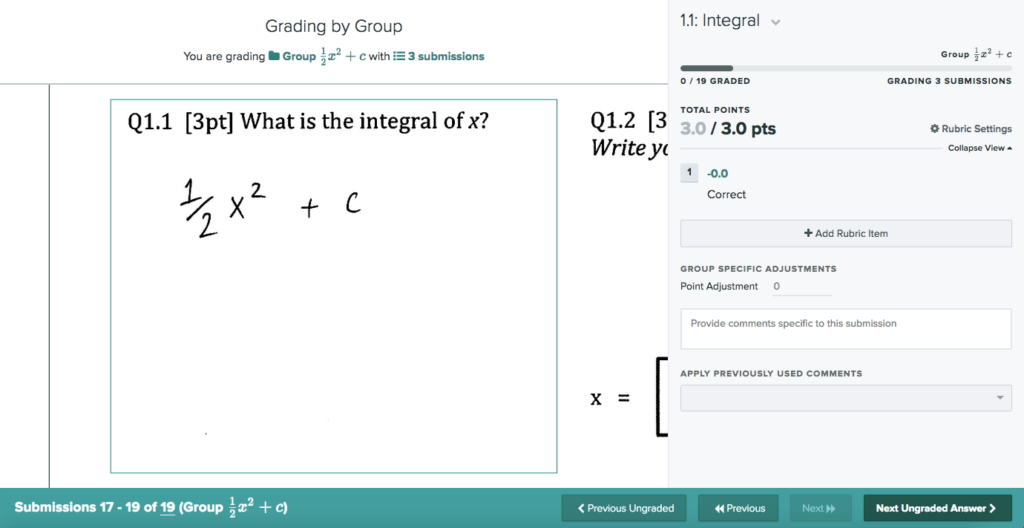
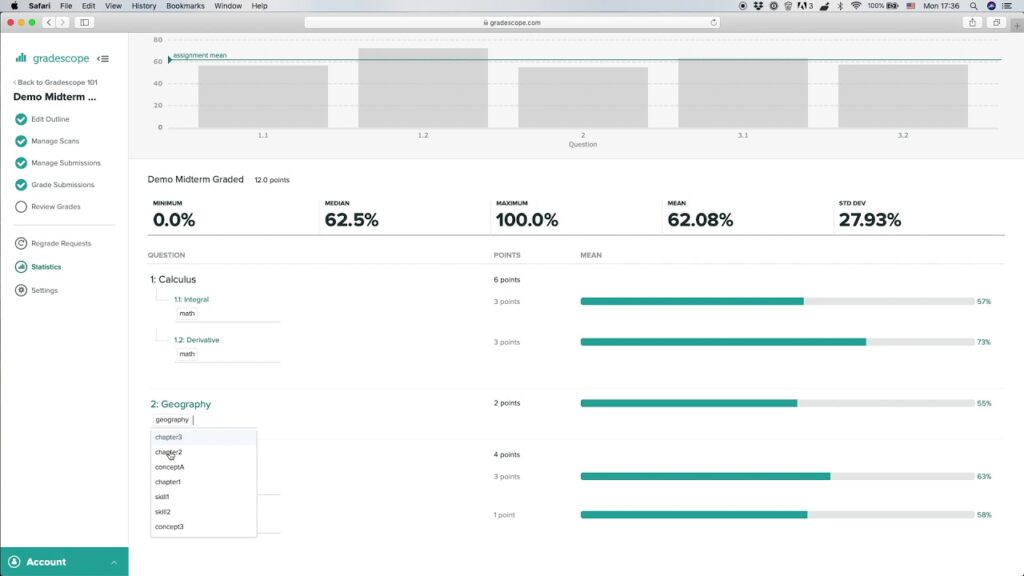
Gradescope offers question and rubric-level statistics that let instructors examine the finer details of student performance. These detailed analytics show how students are doing on individual questions and specific rubrics, giving a full picture of academic progress.
The feature gives instructors the data they need to make well-informed decisions about their teaching methods and evaluation strategies. Seeing scores broken down by rubric line shows which criteria tripped students up most.
Using question and rubric-level statistics, instructors can spot where students are struggling or excelling and adjust their instruction accordingly.
Conclusion
Grading efficiency and consistency matter in academic settings. With Gradescope’s dynamic rubrics, instructors can simplify assessment by setting clear grading criteria for a range of assignments.
AI-assisted grading speeds up the review of student submissions, saving time while keeping accuracy high. And detailed question and rubric-level statistics provide useful analytics on student performance, so instructors can make data-driven decisions that improve their teaching.
By putting these features to work, educators can improve their grading practices and better support student learning.
(Image Credit: Gradescope)
Frequently Asked Questions
What is Gradescope, and how does it improve grading efficiency?
Gradescope is an online platform that changes how educators mark assignments and exams, improving grading consistency and saving significant time.
Can Gradescope handle various types of assessments?
Yes. Whether you’re dealing with multiple-choice tests or complex written responses, Gradescope’s system handles the process for every assessment type.
How does Gradescope ensure fair and consistent grades for students?
The platform’s tools keep a standardized grading rubric across all submissions, so each student is evaluated equally on their work.
Is setting up Gradescope complicated for instructors new to the platform?
No. Instructors can set up their courses on Gradescope quickly and see immediate gains in grading precision and time management.

- Independent picks for exactly what you just read about
- Matched to your team size & needs
- Vendors don't pay for placement
Step 1 of 4
How big is your team?
We tailor recommendations to companies your size.















Related Articles

Buyers guide
How To Choose The Best Online Learning Platform For 2026
Continue reading →

Education Software
Best LMS Software in 2026: Complete Guide for Every Team Size
Continue reading →

Education Software
Legends of Learning: 2,000+ K-8 Games, Free Teacher Plan
Continue reading →

Education Software
ThinkWave Educator 2026 Review: Gradebook, School Management Software, and Support Overview
Continue reading →