
Are you puzzled about the difference between content marketing and content writing? If so, know that they are two separate, yet interconnected disciplines in digital marketing. This article seeks to provide a clear distinction between these two key aspects of creating an effective online resource.
Intrigued? Let’s get started on this exciting journey to better understanding!
Key Takeaways
- Content marketing focuses on creating and distributing valuable, relevant content to attract and engage a specific target audience.
- Content writing involves crafting written material for different platforms using various techniques and best practices.
- The main focus of content marketing is driving profitable customer action, while content writing aims to deliver quality written material that captures the attention of readers.
- Content marketing targets a specific audience through strategic planning and distribution of valuable content, while content writing generally caters to a broader audience.
Understanding Content Marketing
Content marketing is a marketing discipline that involves creating and distributing valuable, relevant, and consistent written content to attract and retain a clearly defined audience.
Definition
Content marketing is a strategic marketing approach that involves creating and distributing valuable, relevant, and consistent content to attract and retain a clearly defined audience.
The ultimate goal is to drive profitable customer action. This discipline goes beyond selling products or services but aims at providing useful information that can solve the audience’s issues and meet their preferences.
On the other hand, content writing refers to crafting compelling written content primarily for digital media formats such as blogs, articles, scripts for videos and podcasts, social media posts among others.
It’s more of a technical job drawing on skills like research ability, knowledge about different types of written content including SEO writing, copywriting and blogging; besides understanding commercially thoughtthrough marketing nuances.

Goals and objectives
Content marketing and content writing have distinct goals and objectives. In content marketing, the primary goal is to attract and engage a target audience through valuable and relevant content.
Tools that can summarize text quickly are invaluable for marketers managing large volumes of content. This helps simplify the creation and planning process. Additionally, using an AI humanizer can make automatically generated content feel more natural and engaging for readers.
Instead of blindly trusting such tool, we strongly recommend looking into the features of humanizer tools. This will make you stay in line with whether that tool is capable of bypassing AI or not.
The objective is to build brand awareness, establish thought leadership, drive customer loyalty, and ultimately generate leads or sales. Content marketers aim to create a roadmap for their content strategy by conducting research on their target audience’s issues, preferences, and online resources they rely on.
They strategically choose the channels and formats that will resonate with their audience the most. On the other hand, in content writing, the main objective is to create high-quality written content that serves various purposes such as informing, entertaining, or persuading readers.
Strategies and tactics
Content Marketing and Content Writing both require effective strategies and tactics to achieve their goals. In content marketing, these strategies involve creating a roadmap for the entire process, conducting thorough research on the target audience’s issues and preferences, and selecting the most appropriate channels and formats to reach them.
On the other hand, in content writing, strategies focus on understanding different platforms such as copywriting, SEO writing, blogging, etc., and using techniques and best practices specific to each platform.
Both disciplines require technical expertise but differ in terms of their overall purpose – while content marketing aims at commercially thought-through marketing with a strong focus on achieving business objectives through content creation and distribution; content writing primarily focuses on producing well-written content that engages and provides value to readers.
Understanding Content Writing
Content writing means producing written material for different platforms, using a mix of techniques and best practices suited to each one.
Definition
Content marketing and content writing are two distinct disciplines within digital marketing. Content marketing is the strategic process of creating and distributing valuable, relevant, and consistent content to attract and engage a specific target audience. It requires planning, research, and analysis to build a roadmap that aligns with the goals and objectives of a business or brand.
Content writing, by contrast, focuses on producing high-quality written content itself for platforms such as websites, blogs, social media posts, and articles. It uses techniques and best practices to craft compelling narratives that speak to the target audience’s problems, preferences, or needs.
Both roles involve writing for online audiences, but the emphasis differs: content marketing is driven more by strategy, while content writing is primarily the technical craft of producing the engaging written material that strategy calls for.
Writing for Different Platforms
Content writing spans websites, blogs, social media, and more, and each platform comes with its own requirements and audience expectations.
When writing for a website, the priority is informative content that’s optimized for search engines. When writing for social media platforms, the content should be concise and attention-grabbing to hold the audience as they scroll through their feed. Blog posts call for a more conversational tone and storytelling techniques to capture and keep a reader’s interest over a longer piece.
Content writers who succeed across platforms are the ones who understand how to adjust their writing style and approach to match where the content will be read and who will be reading it, rather than writing one way and reusing it everywhere. In short, tailoring style to platform is what separates writing that gets read from writing that gets skipped.
Techniques and Best Practices
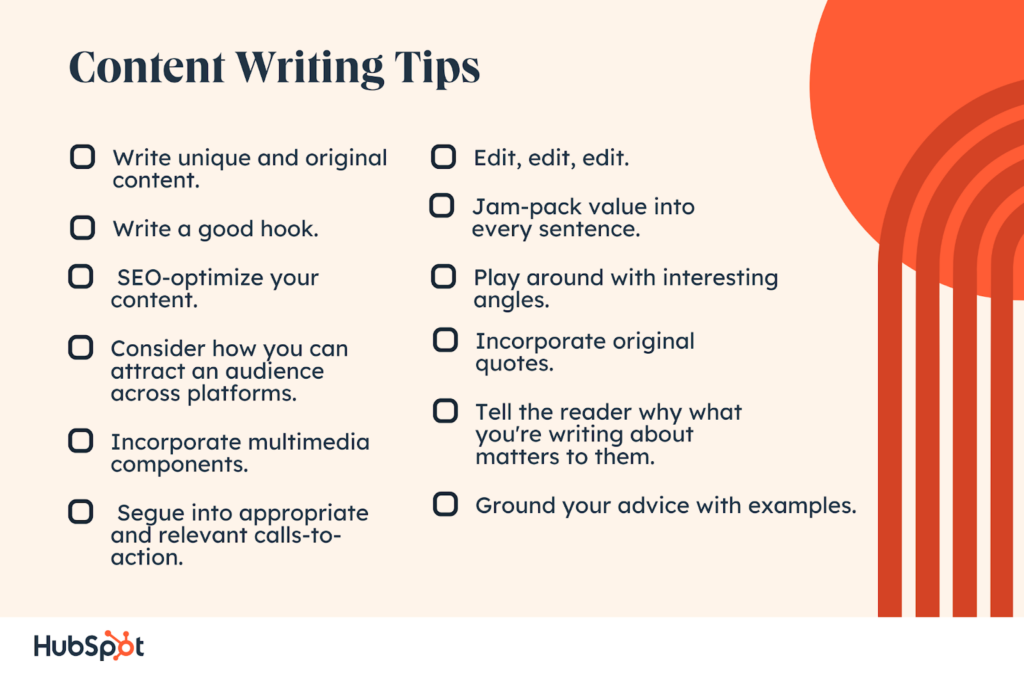
Strong content writing relies on a handful of consistent techniques and best practices. The first is thorough research: gathering the relevant information needed to understand the audience’s issues, preferences, and needs before writing a word for the piece.
The second is adapting writing style and tone to the platform, whether that’s a blog post, a social media post, or a website article. Proper formatting matters too – headings, bullet points, and subheadings enhance readability and make content easier to scan.
Finally, effective SEO strategies, such as keyword optimization and meta descriptions, help improve visibility in search engine results so the content actually gets found. Together, these techniques and best practices are what let content writers create compelling written content that effectively communicates with its intended audience.
The Key Differences between Content Marketing and Content Writing
Content marketing focuses on creating and distributing valuable content to attract and engage a specific target audience, while content writing is the act of crafting written content for various platforms.
Discover the key differences between these two disciplines in this informative blog post.
Focus and purpose
Content marketing and content writing differ in their focus and purpose. Content marketing is a strategic approach that aims to attract, engage, and retain a target audience through valuable and relevant content.
The primary goal of content marketing is to drive profitable customer action by providing helpful information or entertainment. On the other hand, content writing focuses on creating well-crafted written material for various platforms like websites, blogs, social media, and more.
It involves using different techniques and best practices to engage readers with compelling storytelling or informative articles. While both disciplines contribute to digital marketing efforts, their main emphasis differs – content marketing aims at driving business results while content writing focuses on delivering quality written material to capture the attention of readers.
Target audience
Content marketing and content writing have different target audiences.
In content marketing, the focus is on attracting and engaging a specific target audience through strategic planning and distribution of valuable content. The content marketer conducts thorough research to understand their audience’s issues, preferences, and online habits.
They create various types of written content that address these needs, such as blog posts, articles, social media updates, and more. By tailoring the messaging to resonate with their target audience, they aim to build trust and establish their brand as an authority in the industry.
On the other hand, content writing typically involves creating written material for a broader audience. Content writers are responsible for producing high-quality copywriting or SEO writing that can be used across different platforms like websites, advertisements or blogs.
While they may consider some aspects of targeting based on demographics or interests when crafting their pieces, their main objective is often to inform or entertain many readers.
Their work focuses more on effectively communicating information rather than directly influencing specific customer segments.

Measuring success
Measuring success in content marketing and content writing goes beyond the number of likes, shares, or page views. It involves tracking key metrics that align with your goals and objectives.
For content marketing, success is measured by factors such as increased website traffic, higher conversion rates, improved brand awareness, and customer engagement. Content writing success can be measured through factors like readability, grammar accuracy, user feedback, and effectiveness in conveying the intended message to the target audience.
By analyzing these metrics and making data-driven decisions, you can optimize your content strategies for better results.
Conclusion: Finding the Right Balance
understanding the differences between content marketing and content writing is essential for finding the right balance in your marketing strategy. Content marketing focuses on creating and distributing valuable, relevant content to attract and retain a specific target audience.
On the other hand,
involves crafting engaging written material for various platforms using techniques like copywriting and SEO writing. By combining both approaches effectively, you can create compelling content that drives engagement and builds brand awareness.
Frequently Asked Question
1. What is the primary difference between content marketing and content writing?
2. How does social media play a role in Content Marketing versus Content Writing?
3. Can I start my career in either field without taking any courses?
4. Why is understanding the distinction between these two fields significant to my marketing strategy?

- Independent picks for exactly what you just read about
- Matched to your team size & needs
- Vendors don't pay for placement
Step 1 of 4
How big is your team?
We tailor recommendations to companies your size.















Related Articles

Buyers guide
How To Choose The Best Audience Response Software For 2026
Continue reading →

Best Tools
Best Web Analytics Tools & Software: A Complete 2026 Guide
Continue reading →

Best Tools
5 Best Marketing Automation Software Tools in 2026: Find the Best Tool for Your Business
Continue reading →

Buyers guide
How To Choose The Best Contest Software To Boost Engagement For 2026
Continue reading →