
What is Cloudbeds? Check out Latest Pricing, Features and Best Alternatives
Cloudbeds is cloud-based software for running independent lodging properties. The platform handles reservations, connects to booking channels, and lets properties take direct bookings without paying extra commission fees.
As more hospitality work moves online, Cloudbeds gives property owners one place to oversee day-to-day operations.
Hotel Tech Report named it the top Property Management System and Hotel Management System of 2022, so it carries real weight in the industry. Cloudbeds sells three service plans — Growth, Professional, and Complete — matched to different property sizes and types.
Pricing is not published, though. You have to contact the company directly to get a quote for your property.
The system integrates with other software and offers support by email, chat, and phone, with live representatives available 24/7 plus training resources such as webinars.
Competitors such as Hostaway and monday.com are worth a look, but many users rate Cloudbeds highly for value and for the time it saves, even while pointing out a few areas that could be better.
The rest of this article walks through how the software handles administrative work online — from channel management to detailed analytics — and what it costs to run a hospitality business on it.
Here is what you need to know before deciding whether it fits your property.
Key Takeaways
- Cloudbeds bundles property management software with a booking engine to handle operations for many types of lodging businesses.
- Options such as a mobile-responsive design and Google Analytics integration let owners adapt the software to how their property works and to what guests expect.
- Pricing plans are set by property size, and there are no hidden commission fees. Optional costs can apply depending on the services or upgrades an owner picks.
- Customer reviews describe Cloudbeds as a time-saver with responsive support, though some ask for more features.
- When weighing alternatives, properties should look at their own needs, budget, the features they want, and the efficiency other hospitality systems might add.
Understanding Cloudbeds: A Comprehensive Overview
Cloudbeds is cloud-based software for running independent lodging properties. It brings reservations, channel connections, and commission-free direct bookings into a single platform.
As hospitality work shifts online, the software gives owners one place to manage their property instead of juggling separate tools.
Hotel Tech Report named it the top Property Management System and Hotel Management System of 2022. Its Growth, Professional, and Complete plans map to different property sizes and needs.
Pricing stays private, though — you have to ask the company directly for a quote that fits your property.
The system connects to other software and offers support by email, chat, and phone, with live representatives on call 24/7 and training resources such as webinars.
Competitors such as Hostaway and monday.com exist, but many users rate Cloudbeds highly for value and time saved, while still naming a few weak spots.
The sections below cover how the software moves administrative tasks online, from channel management to analytics, and what running your business on it involves.
Read on for the specifics that will help you judge whether it suits your property.
What Cloudbeds is and its role in hospitality management
Cloudbeds is a reservation management system built for independent lodging businesses. Its tools — including property management software and a booking engine — cover operations for vacation rentals, bed-and-breakfasts, inns, and hotel groups.
Its main job is to make managing reservations across several channels less complicated.
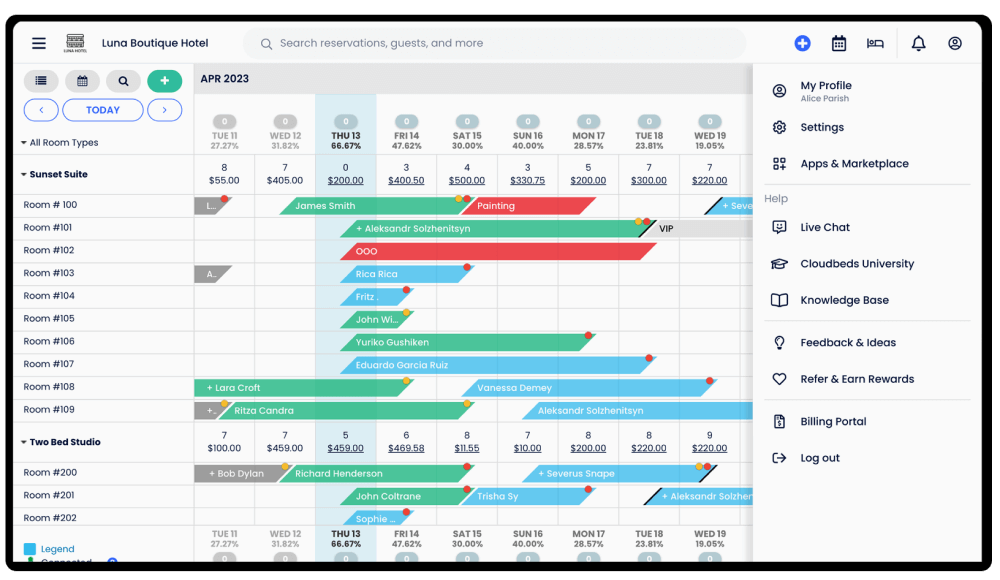
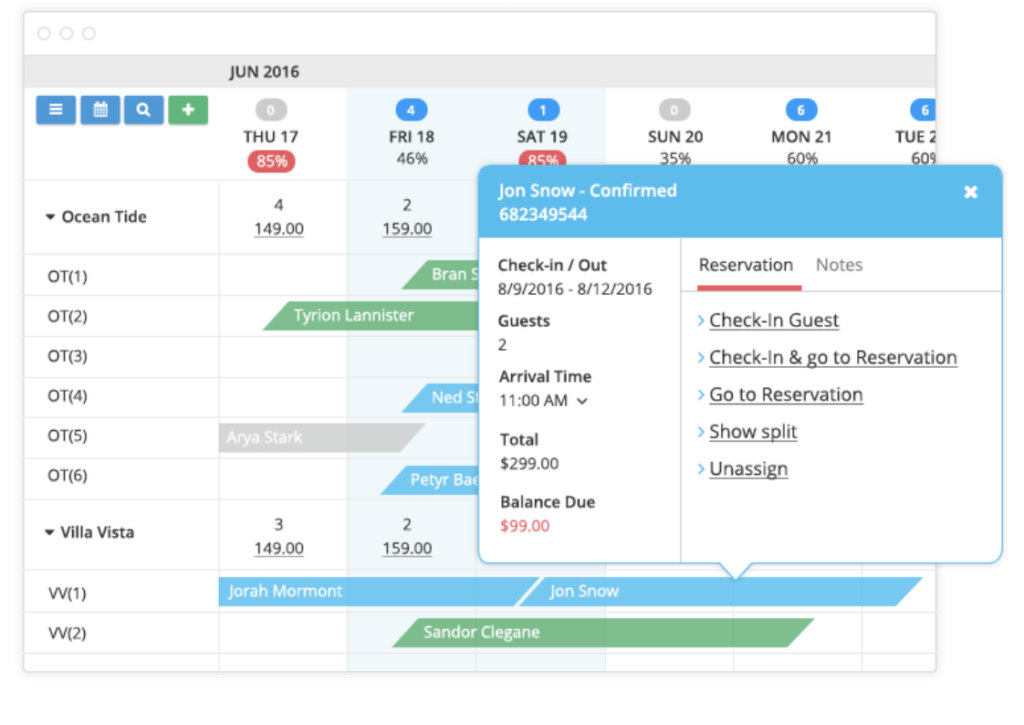
The Cloudbeds Channel Manager pushes room inventory out to online travel agencies, cutting down on overbookings and keeping rates consistent across sites. When a room sells on one channel, the inventory count updates on the others, so two guests are far less likely to book the same room at the same time. Keeping rates matched everywhere also stops a property from showing the same room at different prices on different sites, which can confuse guests and cost the property a booking.
Because it integrates with those channels, property managers keep control of their bookings and reach more of the market without paying extra commission fees. A single property can appear on several travel agencies at once while still handling every reservation from one screen, instead of logging into each site separately to update availability.
Hospitality businesses use these features to improve both guest experiences and daily operations. The channel manager takes care of distribution, and the booking engine and property management tools cover the rest of the guest journey, from the first reservation through check-out.
Core and add-on features that set Cloudbeds apart
Beyond the core management role, Cloudbeds adds features that improve the booking experience. Its customizable booking engine lets hotels show their own brand with custom logos, colors, and fonts.
Owners can edit the design with CSS so it matches their existing website, and the mobile-responsive layout keeps that look consistent on phones, tablets, and desktops. A guest who moves from a hotel’s main site to its booking page sees the same branding throughout, which makes the direct booking feel like part of the property rather than a separate tool.
Cloudbeds charges no commission on bookings, so every dollar a guest pays goes to the property rather than to a middleman. An integrated rate checker also lets guests compare prices without leaving the booking page, which helps them decide faster and reduces the chance they leave to check rates elsewhere.
At checkout, properties can offer room upgrades or special packages to earn more per booking, turning a standard reservation into a chance to sell a better room or an add-on. All of this pairs with data tracking through Google Analytics integration, which reports on customer behavior and transactions so owners can see how guests move through the booking process.
Who Can Benefit from Using Cloudbeds?
Cloudbeds works for many kinds of hospitality businesses, from boutique hotels to vacation rentals, giving each one centralized control over its operations.
It fits the needs of independent property owners, hostel managers, and B&B operators who want a single system to run guest experiences and manage revenue.
Profiling the typical users of Cloudbeds’ services
Hospitality businesses of every size use Cloudbeds, from small inns to boutique hotels. Owners like how it simplifies managing their lodging.
It suits a wide range of accommodation providers, handling everything from reservations to check-out. Bed-and-breakfasts, hostels, and vacation properties all run their operations on it.
Independent hoteliers benefit most, since the software takes the friction out of complex tasks. It is built for owners who want one platform that also supports apartments and campgrounds, so a single account can cover several different property types under one login.
These users typically want a tool that centralizes bookings, manages revenue, and improves guest satisfaction without burying them in technical jargon or clumsy workflows. For a small team that does not have a dedicated IT person, having reservations, rates, and guest details in one place is often the deciding factor over a system that spreads those tasks across separate tools.
Cloudbeds Pricing: Tailored Plans for Different Needs
Cloudbeds prices its plans to fit properties of any size, and the plan you pick can grow with your business. The analysis below breaks down how that pricing works.
Breakdown of pricing models for various property sizes and types
Cloudbeds shapes its pricing around property size and accommodation type, so a small B&B and a large hotel resort each get a plan built for their situation.
There are three main plans: Growth for smaller properties, Professional for mid-sized properties, and Complete for larger operations that need more support. Growth fits a small inn or B&B that needs the basics, Professional adds capacity for a property with more rooms and more bookings to manage, and Complete is aimed at larger operations that want the fullest set of support.
Each tier carries a fixed monthly cost, which makes budgeting straightforward and keeps expenses predictable. Because the amount does not swing with the number of bookings, an owner knows the software line in the budget before the month starts and does not have to guess at it.
Because the plans are matched to how a property operates, owners can put their attention on revenue management and guest service rather than surprise fees.
The pricing also scales as a business changes, so a property that grows can move to a plan that fits its new size.
Explanation of additional fees, if any
Knowing the full cost of a service matters for budgeting. Cloudbeds keeps its pricing clear, with no hidden commission fees, so customers keep all the revenue from their bookings.
Some optional extras can cost more, though. If a hotel wants to offer upgraded rooms, event tickets, or special dining at reservation or checkout, those add-ons are billed on top of the plan. A property that keeps its offering simple can skip them, while one that sells a lot of extras pays for that capability.
These charges let properties offer more to guests and earn more per booking. They are optional, so managers choose them based on guest demand rather than being forced into them, and can turn a given add-on on or off as their offering changes.
Owners should factor these extras into the overall cost of Cloudbeds. Knowing about them up front means no unexpected line items later.
Unique Selling Points of Cloudbeds
Cloudbeds stands out with a strong feature set that runs online bookings and supports revenue strategy — a real help for properties that want to improve operations and guest satisfaction.
The discussion below goes into how those features work.
Highlighting Cloudbeds’ standout features and functionalities
Cloudbeds runs a commission-free, mobile-friendly booking engine aimed at travelers who book on their phones. The booking pages adjust to any screen, so guests can reserve a room on the go.
Multilingual support adds to that reach, helping properties serve guests in different languages so a traveler booking from another country can read the process in their own. The platform also supports marketing with campaign management tools and customizable design templates, which let a property run promotions without building each piece from scratch.
On the operations side, the software includes performance analytics and an interface that tracks activity in real time, so owners can see bookings and changes as they happen rather than waiting for a daily summary. Hoteliers can run email marketing with ready-made templates and check how each campaign performs through detailed reports, which shows which messages bring in bookings and which do not.
These tools are built for the demands of managing a property online.
The next section looks at how the interface and overall ease of use hold up in daily work.
Cloudbeds’ User Interface and Ease of Use
Cloudbeds is known for a clear, easy-to-navigate interface that keeps the many parts of hospitality management manageable.
The design keeps things simple, so hoteliers can handle reservations and guest interactions without a steep learning curve.
Assessing the software’s accessibility and user-friendliness
How a software’s interface handles real work says a lot about whether it fits its users. Cloudbeds keeps its layout clear, so properties of any size can navigate it and manage their operations without much trouble.
Because it is cloud-based, owners can log in from any device, anywhere, and stay on top of bookings and guest interactions while away from the front desk.
Language options open it up to a global user base, and built-in tools such as a currency converter handle international transactions so a guest can see a price in their own currency. Support runs around the clock by email, chat, and phone, which matters for a property that takes bookings from time zones far from its own.
That mix means help is always available to users worldwide, whatever hour a problem comes up. The commission-free, mobile-friendly booking engine adds to the ease of use by letting guests reserve directly without extra steps, so a booking that starts on a phone can be finished on the same screen.
Integration Capabilities of Cloudbeds
Cloudbeds connects with a wide range of software systems, so properties can run their operations from one hub. From accounting software to revenue management tools, it ties different technology together across the hospitality stack.
Exploring how Cloudbeds works with other software systems
Cloudbeds connects readily with other software, which makes it a flexible tool for hospitality management. Users can link it to the applications they rely on every day so information passes between services without manual work.
Connecting to Google Analytics, for example, gives owners deeper insight into transactions and guest behavior — data that helps them make better decisions about the property, such as which booking pages guests drop off from and which bring in reservations.
Compatibility is central to how Cloudbeds is designed, so different platforms work together and stay in sync. When a booking is made or changed in one place, the connected systems reflect it, which cuts down on the manual re-entry that leads to mistakes.
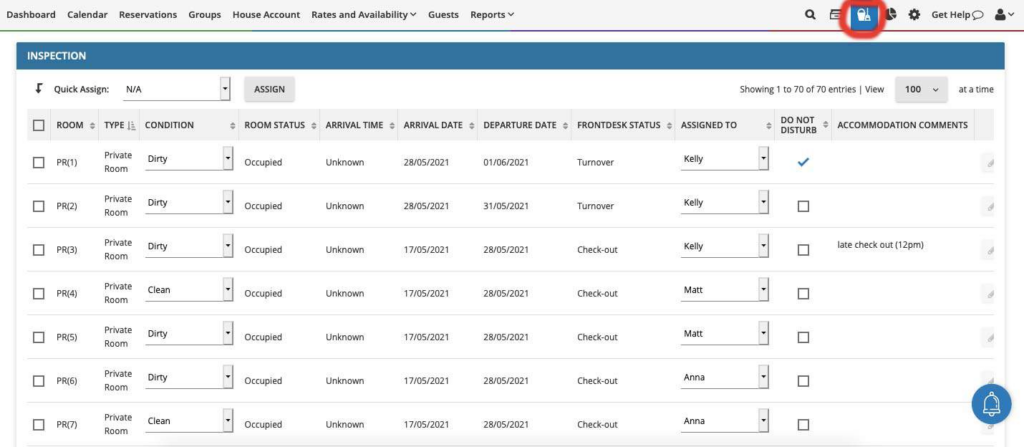
Whether it is syncing reservations with online travel agencies or linking housekeeping schedules to the front desk, the system supports the connections that keep operations running smoothly.
Users can expect an interface built for easy connections, forming a solid link between Cloudbeds and any third-party software their business success depends on.
Real User Reviews: What Customers Say About Cloudbeds
Reviews from real lodging businesses show how Cloudbeds performs day to day. Their feedback covers what the software does well and where it falls short.
Summarizing feedback from various lodging businesses
Many lodging owners say Cloudbeds saves time and delivers good value for money, making daily tasks easier to manage.
They are especially happy with the support team, pointing to quick answers and hands-on help when problems come up.
Not every review is positive. Some users want more features, and a few note that certain issues take longer to resolve than they would like.
Even so, most stay optimistic about where the platform is headed and value the customization it offers for their specific needs. The mix of praise for time saved and support alongside requests for more features gives a fair picture: it does the core work well, and there is still room to grow.
Comparing Cloudbeds to Competitors
The hotel management software market is crowded, and Cloudbeds competes on a distinct set of features. This section looks at the differences that matter to buyers — where Cloudbeds is strong and where other tools may do better.
Analysis of how Cloudbeds stands against other hospitality management systems
Cloudbeds ranks near the top among hospitality management systems and is a common pick for lodging businesses. Hotel Tech Report named it the No. 1 Property Management System and No. 1 Hotel Management System in 2022, which reflects its performance and reliability.
The platform combines channel management, dynamic pricing, and an online booking system, all aimed at making operations easier for hoteliers.
As cloud-based SaaS, it is easy to access without giving up features like multi-language support or customizable templates.
It also offers round-the-clock live support by email, chat, or phone, so help is close at hand. With those tools, properties can manage inventory and connect Cloudbeds to the other software they use.
Next, we look at some of the top alternatives to Cloudbeds on the market today.
Top Alternatives to Cloudbeds
Cloudbeds is not the only option in hospitality management software. Several platforms take their own approach to property management, booking systems, and integrations, giving hoteliers room to find the tool that matches how they work.
Listing and briefly describing other popular hospitality management solutions
Hotel management software comes in many forms. One well-known alternative is Oracle’s Opera Property Management System, built for large hotel chains that need enterprise-grade features.
Opera handles reservations, front desk operations, reporting, and customer relationship management, which suits a large chain that needs one system to cover many properties and departments at once.
Another option is RMS Cloud, a property management system with easy online booking and a built-in channel manager. For a property already using several booking sites, having the channel manager built in means one less separate tool to set up and maintain.
RMS Cloud makes it simpler to manage rates across platforms and to improve revenue management. It also speeds up check-in and supports tailored guest services, so front desk staff spend less time on paperwork and more time with guests.
Some hotels also connect e-commerce platforms such as Shopify to sell add-ons directly through their own websites, treating extras like a shop checkout rather than a manual request handled over email or at the front desk.
Selling to guests from the reservation stage opens up extra revenue through room upgrades or special events without commission fees — something properties that want to keep all their profit value.
Each system has its own strengths depending on your property’s size, goals, and comfort with technology. Cloudbeds does well on things like its customizable booking engine and Google Analytics integration, but checking the alternatives can point you to more specialized features for your needs.
Exploring the Hospitality Software Landscape: Features, Pricing, and Best Alternatives
Hospitality software has changed how properties run, with features that cover reservations, rate management, reporting, and email communication. Most run in the cloud for access across devices and offer support by email, chat, and live help around the clock.
For independent property managers, these tools improve efficiency and the guest experience.
Each product prices itself differently to fit different business sizes and needs. A commission-free booking engine appeals to properties that want direct bookings without extra costs.
Integrations add more value by connecting to third-party services, so a property can keep the tools it already uses instead of replacing them. Before choosing, owners should weigh these factors against their own operational requirements — the size of the property, the mix of channels it sells on, and the budget it has to work with all shape which system is the best fit.
Making the Right Choice: Cloudbeds or an Alternative?
Picking a hospitality management system matters to your business, whether that is Cloudbeds with its broad feature set or a competing platform that fits your needs more closely.
The decision comes down to understanding the differences and how each one affects your day-to-day work, so you invest in the right tool for managing your property and serving guests.
Guidance on selecting the best option for your hospitality business
Choosing property management software depends on your needs, budget, and the features you want. Cloudbeds does well with its drag-and-drop calendar and channel management, which pull bookings from several platforms into one place.
It also works with third-party integrations to keep operations connected. Reviewers often praise its customer service and multi-language support, which makes it a strong option for a global market.
Check every pricing plan carefully to be sure it fits the size and type of your property. If your business needs different features or integrations, look at alternatives such as Hostaway or Smoobu.
A system should make your operations more efficient, so pick the one that best meets that goal to stay competitive.
With real user experiences in mind, you can move ahead confident about how the right software improves guest satisfaction and daily operations.
The next section covers what customers say about their own experiences with Cloudbeds.
Conclusion
Cloudbeds gives your hospitality business a single place to run operations, built around a strong booking engine and channel management.
Its integrations help you fill more rooms and grow revenue, and its clear interface makes independent property management less of a chore.
Weigh the details against your needs — for many properties, Cloudbeds is a solid way to improve the guest experience.
(Image Credit: Cloudbeds)
FAQs
1. What exactly is Cloudbeds?
Cloudbeds is a software platform that helps hotels and other hospitality businesses manage their bookings, guests, and operations online.
2. Can I see the pricing for Cloudbeds on their website?
Yes, you can find the latest pricing options for Cloudbeds by visiting their official website.
3. What are some main features of Cloudbeds?
Cloudbeds offers features like online booking management, channel management, payment processing, and reporting analytics.
4. Are there any alternatives to using Cloudbeds?
There are various alternatives to Cloudbeds available such as Booking.com Engine, Airbnb Management Software or Oracle’s OPERA Cloud Services.
5. Does Cloudbeds provide support if I need help with the software?
Yes, Cloudbeds provides customer support to help you with any issues or questions about using their software.

- Independent picks for exactly what you just read about
- Matched to your team size & needs
- Vendors don't pay for placement
Step 1 of 4
How big is your team?
We tailor recommendations to companies your size.













Related Articles

Customer Support Software
13 Best Intercom Alternatives in 2026 (For Every Budget)
Continue reading →
Customer Support Software
Best Customer Support Software in 2026: Complete Guide for Every Team Size
Continue reading →
Best Tools
15 Best Zendesk Alternatives in 2026: Cheaper, Simpler, More Powerful
Continue reading →
Buyers guide
How To Choose The Best Restaurant Takeout and Delivery Software For 2026
Continue reading →